It's wonderful to work with such fabulous new teachers! Last week, as we were talking about getting started with personal narratives, Ashley and Melinda suggested that we start with the emotions chart that we've been using in reading.
This makes perfect sense--after all, a personal narrative should be based on strong emotions. And students were already working on using emotion words to explain how characters feel at different parts in a story. So putting together the chart and the personal narratives helps to bridge the reading and the writing quite nicely.
I made this page to help students think about how events in their lives and the emotions that they felt. (If you have plenty of time, you could also have students create a Life Map--always a fun activity! But I'm really feeling the pressure of having only 35 days of instruction left.)
It turned out to be fun and quick way to get kids brainstorming ideas for their personal narratives. After they filled out the chart, they moved around the room to interview each other and share their stories. This helped them to quickly figure out which stories they liked best.

Showing posts with label emotions. Show all posts
Showing posts with label emotions. Show all posts
Tuesday, April 17, 2012

Thursday, April 12, 2012
Scaffolding the Inference Process
Last time, I wrote about modeling the use of a chart for tracking inferences. This week, students were in charge, working in pairs or triads to read a book and create the inference chart. It has worked fairly well. Here are some things to keep in mind if you are trying to help struggling readers make and record their inferences.
Selecting texts
I chose texts that were quite easy for students. With this lesson, I wanted them to concentrate on making inferences, not struggle with decoding. At the same time, the texts need to have some meat to them.
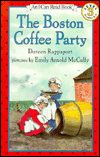
The Boston Coffee Party
 A fabulous bookroom find! I like this one because it's an easy read, but has some lasting questions to think about. The illustrations are informative and engaging.
Sam the Minuteman
Another good find with a Revolutionary War theme.
My Rotten Red-Headed Older Brother
Some students had already read this earlier this year, but there is value in going back to a book, especially for the purpose of making and tracking inferences. It's been a favorite of the groups who have been reading it.
A Chair for My Mother
This book is good for some students. The flashback in the book makes the narrative a little more complex, even though the text is quite simple.

Charlie Anderson
This cute book has a surprising ending. Great for the animal loving kids!
Scaffolding for Making Inferences
But even with good modeling and great texts, some kids really struggle. This is the hardest part of making inferences--getting kids to animate the process. In fourth grade and beyond, there are some kids who are happy to read the words aloud and not go any further.
To help the kids realize that they need to make inferences, I put Post-Its at different spots in the books. (This actually isn't as time-consuming as it sounds. I quickly did this while the students were doing independent reading, putting questions in only one book per group.) For some groups, I wrote a specific question (How do you think the character feels? What trait could describe___?); for others, I just put a note that said, "Make an inference here."
Tools for Students
I love, love, love giving kids lists of related words. This emotion chart is another good scaffolding tool for students. They really do refer to it as they read, looking for the words that capture their inference. It's always encouraging to hear kids talking about whether a character would feel "depressed" or "grief-stricken" in a given situation, referring to the text to support their ideas. A character traits chart is also helpful. These tools give them more support in making inferences.
Listen in, but don't help too much
If I have chosen appropriate books and built the proper scaffolding, I shouldn't have to help groups of readers too much. Instead, I go around and listen to the conversations that kids are having. I want these readers to grow and become independent--I need to step away and let them do this on their own. (For me, this is probably the hardest part!)
As I listened to kids, I did hear a few weird inferences. This doesn't concern me as much as it once did. I think it's part of the practice process, reflecting a bit of risk-taking for the reader. When kids read together, they'll often talk each other out of these weird inferences.
Why the inference chart again?
Part of my goal is to help students realize how often they are making inferences...and be able to identify both the text clues and their own background knowledge they are using. The chart is a great low-risk tool to help them do this.
Selecting texts
I chose texts that were quite easy for students. With this lesson, I wanted them to concentrate on making inferences, not struggle with decoding. At the same time, the texts need to have some meat to them.
The Boston Coffee Party
Sam the Minuteman
Another good find with a Revolutionary War theme.
My Rotten Red-Headed Older Brother
Some students had already read this earlier this year, but there is value in going back to a book, especially for the purpose of making and tracking inferences. It's been a favorite of the groups who have been reading it.
A Chair for My Mother
This book is good for some students. The flashback in the book makes the narrative a little more complex, even though the text is quite simple.
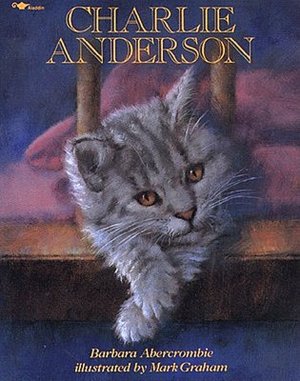
Charlie Anderson
This cute book has a surprising ending. Great for the animal loving kids!
Scaffolding for Making Inferences
But even with good modeling and great texts, some kids really struggle. This is the hardest part of making inferences--getting kids to animate the process. In fourth grade and beyond, there are some kids who are happy to read the words aloud and not go any further.
To help the kids realize that they need to make inferences, I put Post-Its at different spots in the books. (This actually isn't as time-consuming as it sounds. I quickly did this while the students were doing independent reading, putting questions in only one book per group.) For some groups, I wrote a specific question (How do you think the character feels? What trait could describe___?); for others, I just put a note that said, "Make an inference here."
Tools for Students
I love, love, love giving kids lists of related words. This emotion chart is another good scaffolding tool for students. They really do refer to it as they read, looking for the words that capture their inference. It's always encouraging to hear kids talking about whether a character would feel "depressed" or "grief-stricken" in a given situation, referring to the text to support their ideas. A character traits chart is also helpful. These tools give them more support in making inferences.
Listen in, but don't help too much
If I have chosen appropriate books and built the proper scaffolding, I shouldn't have to help groups of readers too much. Instead, I go around and listen to the conversations that kids are having. I want these readers to grow and become independent--I need to step away and let them do this on their own. (For me, this is probably the hardest part!)
As I listened to kids, I did hear a few weird inferences. This doesn't concern me as much as it once did. I think it's part of the practice process, reflecting a bit of risk-taking for the reader. When kids read together, they'll often talk each other out of these weird inferences.
Why the inference chart again?
Part of my goal is to help students realize how often they are making inferences...and be able to identify both the text clues and their own background knowledge they are using. The chart is a great low-risk tool to help them do this.
Wednesday, March 21, 2012
Fiction Inferences: Character Emotions
Our state testing has provided a nice way to transition from our study of text structure into fiction inferences. As I look ahead, I'm excited to be going back to learning about character emotions, delving into character traits, and trying out literature circles.
Springtime fourth graders are so different from autumn fourth graders, which makes the study of literature exciting. They are can find details in stories that they couldn't see before, grasp some deeper ideas, and make some new connections. It's a great time to be a fourth grade teacher.
Making inferences about emotions and traits
It's important for students to be able to see how they can make inferences about characters and traits. But many readers are limited by a meager vocabulary. When I give readers organized lists of words, they can see the shades of meaning and make stronger inferences. (And word lists are such an efficient way to help students learn many new words at once!)
For example, I shared the word chart below with students as we read the book Shortcut by Donald Crews. We talked about how the children's initial worried feeling deepened to panic when they jumped off the tracks to avoid the oncoming freight train. When students work with these lists with their partners, their talk includes deeper, richer language: Are the characters anxious or relieved? Are they content or cheerful?
Other good books for looking at emotions:
 Sunflower House by Eve Bunting
My Rotten Red-Headed Older Brother by Patricia Polacco
I Will Surprise My Friend! by Mo Willems
Squanto's Journey by Joseph Bruchac
Springtime fourth graders are so different from autumn fourth graders, which makes the study of literature exciting. They are can find details in stories that they couldn't see before, grasp some deeper ideas, and make some new connections. It's a great time to be a fourth grade teacher.
Making inferences about emotions and traits
It's important for students to be able to see how they can make inferences about characters and traits. But many readers are limited by a meager vocabulary. When I give readers organized lists of words, they can see the shades of meaning and make stronger inferences. (And word lists are such an efficient way to help students learn many new words at once!)
For example, I shared the word chart below with students as we read the book Shortcut by Donald Crews. We talked about how the children's initial worried feeling deepened to panic when they jumped off the tracks to avoid the oncoming freight train. When students work with these lists with their partners, their talk includes deeper, richer language: Are the characters anxious or relieved? Are they content or cheerful?
Other good books for looking at emotions:
My Rotten Red-Headed Older Brother by Patricia Polacco
I Will Surprise My Friend! by Mo Willems
Squanto's Journey by Joseph Bruchac
Subscribe to:
Posts (Atom)