Showing posts with label visualizing. Show all posts

Saturday, February 28, 2015

Making Inferences in Nonfiction

It sure has felt like Antarctica at school this week!
    As intermediate readers move into more complex, dense informational texts, they need to make more and more inferences. Talking about these inferences and the thinking behind them is essential.

    I created a new text with embedded questions to help readers get to this level of inferencing. Embedded questions are great for helping readers to notice key details in texts. The text is chunked so that it looks less intimidating, and readers know where they will find the clues they need to devise answers.

Visualizing
    Visualizing is a kind of inference! After all, authors never explain all of their details in a description. Authors depend on readers to fill in critical details from their own prior knowledge. In turn, those details help readers to fill in other gaps in a text.
    Consider the text at the right. How did people try to find a southern land mass? The word "sailors" is a key here. 

  1. Read the text aloud with students.
  2. Ask students, "Can you find the sentence that helps you to visualize how people tried to find a southern land mass?" Some will be able to; others may be confused by the mention of Greeks at the beginning of the passage.
  3. Demonstrate underlining the sentence. 
  4. Think aloud: If sailors tried to find Antarctica, what would they be using? Ships! Would they have modern ships? Why or why not? Students may recognize The Age of Exploration as a clue to the time period, or they may not. 
  5. What other details from the text could we add to our visualizations? Icebergs, sea ice
    This led to such interesting questions and comments from students. Some students didn't recognize that "southern land mass" refers to Antarctica. Others started wondering--why didn't the sailors steer around the icebergs? Why was the sea ice such a problem? I followed up with a video from my Antarctica playlist to answer their questions at the end of class.


Pronoun/Antecedent Inferences
    Pronoun/antecedent inferences are essential to understanding expository text. Often, students have trouble tracking these, especially when the pronoun is in a different sentence from the antecedent.
    In this example, we marked the text with arrows to show the relationship between the pronoun and the antecedent. This helped to prepare students for the inference question: What is the name of one of the three research stations? 
    If this seems remarkably easy, I assure you that it is not simple for many struggling readers, especially ELLs. We had to discuss whether the station would be "Nathaniel Station" or "Palmer Station", and why! 
 

    Making inferences helps readers to put the pieces of a text together. These kinds of inferences need to be explicitly taught and discussed. 
    To make your own embedded questions, take a look at some informational text that you are sharing with students. Cut it apart and add inference questions--visualizing, pronoun/antecedent, text-based inferences, and reader-based inferences. How do your readers respond? 


For more on kinds of inferences, you can see Chapter 4-7 of my book, The Forest AND the Trees: Helping Readers to Use Details in Texts and Tests.

Here is the Antarctica text that I used in my lesson:


Making inferences from Emily Kissner

Notes
Looking for more texts to compare? I just finished Spring Paired Passages, which includes texts about weather sayings and tulips. Great for test prep, but with interesting enrichment and extension possibilities as well!


Sunday, August 31, 2014

Mental models for comprehension

    If it's the beginning of the school year, I must be talking about mental models! In reading, a mental model is a reader's representation of the text. It's no exaggeration to say that everything I do in reading for the rest of the school year will depend on whether or not students can build rich, elaborate mental models based on the details from the text.
A view of my school from the hillside. After our mental
models discussions, we went to the hillside to try to
draw a map of the school, using our mental models and
what we saw.

    If I can teach students how to access and talk about their mental models, then I can quickly figure out where comprehension is breaking down. These lessons need to start early!

   This year, I began with just a few images and sentences. Students were sitting up on the carpet, close enough so that I could quickly look at them and see their reactions. (This is so much easier with fourth graders than with sixth graders.)

    cat

    I started with this because it is so simple. I asked, "What are you seeing in your mind? Why?" It is really amazing that just a few marks on the page can make everyone picture the same thing!  Except--our cats weren't really the same. Without information about what the cat looks like, everyone was picturing a slightly different cat. This is what readers do all the time.

  The cat sat on the bed.

   I showed this sentence, but did not read it aloud. I wanted students to do this step. Then we talked about how our mental models changed.

The giant cat sat on the bed.

    When kids start to laugh at this sentence, I know that they are making mental models! Students liked talking about how their mental models updated to reflect this new information.

The giant cat sat on Mrs. Kissner's bed.

   Now more kids laughed, and interestingly enough most of them looked at me as soon as they finished reading the sentence. This is a totally natural reaction. To show them how they can use their mental models to build an inference, I asked, "How do you think I would feel about this?" They shared different emotions--scared, mad, unhappy--all of which could be supported. They don't know me very well yet so they don't know that a giant cat on my bed would probably make me feel curious, intrigued, and appreciative.

    The next step was to have students work with partners to figure out some clues that an alien left. At the start of the year I always have trouble foreseeing how students will do with various activities, and this one was no exception. Students talked and shared as they worked, and some were truly puzzled by the clues.  This was all good information for me! After all, when we read longer texts they will need to build even richer, more detailed mental models...the more I know about their processes, the more I can offer the right support.


    If your students would like to know more about Zomack, he is in the story "Boring, Boring, Boring" included in the Visualizing PowerPoint and Activities pack. If you have already downloaded it, do check out the new version with updated formatting and more activities.

    Taking the time to develop the importance of a changing mental model is vital. As transitional readers move from stories with picture support to stories without picture support, they need to work much harder to build mental models and visualize concepts from the text. Taking the time to set this up from the start is important for later success.

Other posts about mental models
Clicks and Clunks and Mental Models
Helping Kids to Build Mental Models
Help for Word Callers: Using Manipulatives


Tuesday, August 26, 2014

Reading Assessments for the Start of the Year

     Another school year has begun! At the start of the year I am always eager to find out as much about my new readers as I can. I know that I need to hit the ground running if I want to move my readers and help them grow. At the same time, I don't want to burden kids with too many assessments. My goal is to keep things light and fun.

The Read-Aloud Test
    This is as easy as it gets. Read aloud an an interesting text with very few pictures. Watch how kids react.
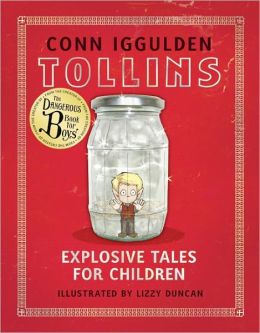
    It's that simple! Well--not really. The book selection is the key part. With one group of readers I'm reading aloud Tollins: Explosive Tales for Children. If you have never met the Tollins, this book is well worth it. It has a very dry, British feel to the humor and is wonderful for helping me gauge the reactions of my readers. Which kids are laughing? Which are staring at the wall? Which readers look shocked at the treatment of fairies?
    In my other class I am reading aloud Toys Go Out. I've written about this book before, and I still love starting with it. This book is excellent for helping students to understand how readers build mental models. (It's funny, too.)

"What was the last book that you read that you liked?"
    I ask this question as I am trying to match books to readers in the first few days of reading class. Sometimes kids speak confidently about books and series. Sometimes they will describe a book that will help me to choose the next book to give them. And sometimes they will look at the floor and mumble a bit. Each of these is an important thing for me to know about a reader! By watching how readers interact with books, I can get a good sense in the first few days of which readers will need more targeted help.

Visualizing Assessment
    Fourth graders are good at using picture clues. So good, in fact, that I really need to pull away picture clues early on to see what they can do with simple text. A visualizing assessment is a wonderful tool for this.
    I tell readers: "I really want to know what is going on in your head as you read. Because I can't see inside, I'd like to you to do your best to draw a picture of what you visualize as you read. It doesn't have to be perfect, and I'm not looking at your artwork, so feel free to add labels if you want to."


 Another visualizing assessment in my book The Forest and the Trees: Helping Readers Identify Details in Texts and Tests. I've found that it's helpful to have several different versions to use throughout the year.

QRI Word Reading
    I learn so much about readers when I administer the QRI (Qualitative Reading Inventory). In the first few frantic days of school, I don't really have time to sit down and give a QRI my full attention. But I can give the first part of the assessment--the word reading part! This gives me some very early information that I can use to help students with book selection, and helps me to pull the right selections to use with students.
    I never do the QRI with all students. However, it's very helpful for students who seem to be struggling or seem to reading well above grade level. I love to sit down and really listen to these students read.

These quick assessments help me to find out some basic information about the readers in my room, early in the school year. They help to get me through the first few weeks of slow going as we look at routines and procedures. These assessments are a nice balance to my other main job of the first few weeks--getting books to readers! What assessments do you like to use early in the school year?


Thursday, May 22, 2014

Reading, Visual Imagery, and STEM

I'm fascinated by exploring how readers tie together words on a page and images in their heads. Drawings really help to show a teacher what students are imagining as they read and how they are building mental models. (You can see this Visualizing Assessment for an example.)  Sketch-to-stretch is one of my favorite content area reading strategies.

In his chapter in the book Literacy in the Arts Gary Woolley writes, "Imagining story ideas during reading links information in working memory and makes the encoding and recall of information more efficient." I've seen this with my students as they read both narrative and expository texts--drawing pictures and attaching new vocabulary to concepts help students to go beyond shallow surface processing.

It's interesting to see how this plays out in the real classroom. To get ready for our cavern field trip, we read a text about caverns. Students first drew what they thought caverns look like. This picture is pretty typical--a few cave features, lots of lovely artwork, but nothing that shows how caverns form or what they might be like inside.

Then students read a text about caverns. Interestingly, they did not spontaneously go back to their original drawings to add more. It took a great deal of prompting on my part to encourage the groups of students to go back to their pictures: "Do you know the names of some of the cavern features now? What could you add to your cavern picture?"

On Monday, we went on our field trip to the cavern. I felt the power of the preparation when students gasped as they went in: "Oh, Mrs. Kissner! It's beautiful!"

The words that had been lacking after the reading selection were being used now, even before they were introduced by the tour guide. "Is that flowstone? I think it is."

"Mrs. Kissner, where is the limestone?"

"I feel the water! I'm going to grow rocks on me!"

"Oh, which are the ones that grow down? Stalac somethings."

It was a really neat experience and really enhanced by the students' interest. When we returned to school on Wednesday, then, I wanted to take the time to process what we had done.

"Let's go back to our cavern drawings," I started to say. But then something changed. Maybe it's seeing all the awesome projects in my Twitter feed, maybe it's my experience with STEM club--I changed the task from "Let's draw a cavern" to "Let's find a way to create a cavern."

Kids started to collaborate, forming loose groups. Some students did created drawings, but they were rich, multi-layered affairs, with keys to symbols and labels. Other students turned to paper engineering. How could you make a cavern out of construction paper? It became quite the engineering challenge as students experimented with rulers and cardboard to create three-dimensional scenes. Luckily I had a parent volunteer in for the morning, so she helped as I pulled out more materials (aluminum foil! wax paper! rubber bands! Playmobil people!) and engaged students in conversation about what they were doing.

Here are some products:


The second cave experienced a real-life sinkhole, as the house caused the whole thing to sink in at first. "Mrs. Kissner! It fell apart!" This was a great connection to sinkholes, which I was going to teach about anyway, so it was a very productive setback. I pulled everyone together for a few minutes after music class to talk about the sinkhole and show some videos of how they look in the real world.

On the other side of the room, I was worried about one group that had a cup of water. Then they explained: "The cave that we went to had a room that was carved by water and an underground lake, so we're putting an underground river in ours."

It was interesting to see how they dealt with the task of creating a cave in three dimensions, and how this task allowed them to explore the concept in new ways. Their creations were different from the typical "class project" in that their products were not uniformly beautiful, but all showed some learning.

 I'm wondering:
-What details about this task will stick with kids in 3 weeks, 3 months, 3 years? What big ideas will they remember about caverns?
-What STEM concepts did they learn while working on their caverns?
-How did the real life experience and the reading interact?
-Luckily, I had started packing away some books for the end of the year, and so I had some empty shelf space for temporary cave display. But what will I need to do next year to make room for these kinds of projects?

Saturday, August 24, 2013

Starting the Year with Self-Monitoring

One of the main challenges of the beginning of the year for me is keeping my focus on reading and thinking. It is easy to get wrapped up in classroom decoration ("I must buy more sparkly fish!") and administrative details ("I must print out at least 10 class lists and set up my substitute folder and make a spreadsheet for intervention groups!").

But I make a conscious effort in these first few weeks to save two slots in my working memory. (It's hard!) One slot I reserve for students--for the kids who are in front of me, right now, at this time. The other slot I reserve for deeper thinking about what the kids are doing and how they are processing. What materials am I giving to students? What do these materials say about the classroom and the work that we will do here together?

So this year I want to begin with really strong instruction in self-monitoring. To me, self-monitoring is the heart of reading comprehension. I love to think about reading as world-building, with readers processing text at various levels--surface, textbase, and situation model--as they read.  (This view of reading is based on work by van Dijk and Kintsch--this website summarizes the theory and provides more references.)

The best way that I have found to help readers self-monitor is to use the "click" and "clunk" strategy. (Here is an article that explains it nicely.) This strategy is perfect for the start of the year because it focuses on micro-level understanding. Do I understand this sentence? If the answer is yes, the sentence "clicks". If the answer is no, it "clunks". Then, readers can try to put together the meaning of the entire passage.

Here is a little graphic organizer that I created to help students think about clicking and clunking. As you can see, every clunk leads to some kind of action on the part of the reader.


Click or clunk from Emily Kissner

The next step is to put this into action with a passage. This year I'd like to try to use the first few paragraphs of The Story of the Amulet by Edith Nesbit. (If you're not familiar with E. Nesbit, find her books online...they are over 100 years old, but so influential in the world of children's fantasy!) After students read it and monitor their clicks and clunks, they will draw and share pictures of the world that they built in their minds.

My husband, who teaches third grade, found the passage to be a little hard for his students, so I wrote a new passage for him. He has a robot/space theme going on in his classroom this year.


Whatever passage you choose, start with something that provides a bit of challenge for students. Talking about their clunks and how they solve they will help students to realize that reading takes risk--but that the risks can be rewarding.

Good luck as you start your school year! Wish me luck as I attend my first rounds of meetings and try to save slots for students and deeper thinking.

News and Notes
This week I finally finished a new September reading homework packet. Four more weeks for October are on their way.

For more texts that focus on visualizing, try out the Visualizing PowerPoint and Activities packet.

If you are finding that your readers are having lots of clunks, try out the Making Inferences with Transitional Readers packet for focused work on inferences and visualizing.


Sunday, June 24, 2012

Visualizing and the Common Core

Last Tuesday, I presented a workshop called "Reading Strategies and the Common Core". (I'll be doing it again at KSRA in October if you are interested in seeing it.) We had a great conversation about how reading strategy instruction fits in with the content standards of the Common Core.

Visualizing is not mentioned in the standards. However, teaching about visualizing fits pretty neatly within several standards. (I'll be referring to the general K-5 standards below, not the grade-specific ones.)

Key Ideas and Details, 1: Read closely to determine what the text says explicitly and to make logical inferences from it; cite specific textual evidence when writing or speaking to support conclusions drawn from text.

Visualizing is a kind of inferring. When readers visualize, they fill in missing details with their own background knowledge. It can be fun to talk with readers about how they visualized a sentence or paragraph, and find out which words or phrases led them to create the pictures they built.

The assessment page below can help you to see how readers are (or are not) making inferences as they read.


Key Ideas and Details, 3: Analyze how and why individuals, events, and ideas develop and interact over the course of a text.

At first, it may be hard to see how visualizing fits in here. But this standard requires readers to track ideas within a text. Tracking requires mental energy! The concentration and stamina that students build from trying to create mental images from text will help them to track more abstract ideas later. On a more concrete level, visualizing events from a text helps readers to understand and process what happens.

Craft and Structure, 4: Interpret words and phrases as they are used in a text, including determining technical, connotative, and figurative meanings, and analyze how specific word choices shape meaning or tone.

As teachers begin teaching figurative language, often they focus on the identification--Can you find a simile? A metaphor? But the new standards point heavily toward interpretation. What does this simile mean? How does the author develop an idea by comparing these items? What is the author trying to tell us with this personification?

This is where visualizing becomes important.  Consider the poem "The Railway Train" by Emily Dickinson:

I like to see it lap the miles, 
And lick the valleys up,
And stop to feed itself at tanks;

Visualizing the train as it moves across the countryside is the sure way to understand how the personification builds the author's main ideas. (Side note--Does anyone else visualize the Island of Sodor with this poem? One more sign that raising two sons will irrevocably change the brain!)

As you can see, visualizing is one reading strategy that will still be important to readers as we transition to the Common Core.

Update August 2014: Here are some additional Visualizing Resources from my TpT store.


Friday, March 2, 2012

Helping Kids to Build Mental Models

What is a mental model? I worked with my readers to figure this out this week. We had already talked about the word "model" in social studies class. (This site from National Geographic has a nice lesson for understanding what a model is.) I told students, "Mental means in your brain. So a mental model is a model of a text in your brain."

We went back to the last text we had shared together, and discussed how we pictured this text in our brains. My students are familiar with the words visualize and schema, so we looked at how readers use visualizing and their schema as they build mental models.

These mental models will be important for us as we move into more complicated texts this spring. Some of the stories that are ahead will have holes in the narratives, flashbacks, or twist endings. Having a mental representation of the text will be vital for readers to comprehend these more complex narratives.

The first step, then, is to help readers see what happens when their mental models shift. How could I get students to understand this? I decided to try an error detection exercise. In these kinds of tasks, a reader needs to read to find an error. I was very cautious about this--I don't want kids to think that reading is about finding the mistake!--but I wanted them to understand what it feels like when there is a detail that just doesn't fit.

They loved it! We used choral reading to read the passage together. When they found the error in the first passage, some started laughing. "I can picture it, but it doesn't make sense," one student said. Then, they had to figure out a word that could fit in the text. This was a little trickier for them, but all of them figured out a word that would fit.

The next passage was a little more difficult. It was interesting watching students as they worked on this one. They came up with different ways to fix the passage. Some changed the weather in the sentence, while others changed the kind of field that the game would be played on. After we did a few more, students worked with their partners to write their own little texts. Some of them turned out very well--one group wrote about a girl who was playing basketball and "kicked" the ball into the net. At the end, we talked about how they had built mental models for each text. They found the whole activity very enjoyable, which is always a plus!

If you try this with your students, here are some questions to ask:

-What are you visualizing?
-What background knowledge do you need to use?
-How did the mistake affect your mental model?

...and, of course, keep the search for errors short and sweet. Next, we're using what we've learned to read a text with a twist ending. Readers will need to make some fast adjustments to their mental models to understand what is going on. Instead of changing the text, they'll have to change their mental models. Hopefully, finding these errors will have given them some scaffolding for this next step.

Thursday, July 7, 2011

Teaching Visualizing

I love to teach visualizing. After all, there is a whole chapter about it in my book The Forest AND the Trees! It doesn't really work to tell nine-year-olds, "You need to read at the level of your situation model." But when I tell them, "Let's try to use the details to make a picture in our minds," something clicks. They understand how to make mental models. This gets them to that deeper level of reading that's so hard to describe for young readers.

But not all readers visualize in the same way. This makes teaching visualizing even more fascinating--when we talk about what we visualize, we realize how dependent we are on our background knowledge and experiences. As a teacher, I have come to a new appreciation of how the texts and stories I share become situated in students' schemas. Consider what happened last week when I asked a student to visualize "a green tractor in a birthday hat."

"I thought of the book we read yesterday," the student said. "The one with the robin."

This threw me for a loop. How would a book about a robin relate to a mental image of "a green tractor in a birthday hat"? But then the student reached behind me to get the book I Am Going! by Mo Willems. He turned to the page that had Elephant wearing a funny hat--a hat that happened to have a picture of the ubiquitous Pigeon from Don't Let the Pigeon Ride the Bus.

"See?" he said. "I pictured the tractor wearing a hat like that. It was funny."

This is the power of talking about visualizing--this student was able to trace how he used a mental image from a previous book to create a new mental image. This is also the power of sharing great books and background experiences with children on a regular basis! The experiences we share today will become the visualizations of tomorrow.

Here are some resources for teaching visualizing:
Visualizing Activities and Powerpoint
 Available from TeachersPayTeachers ($3, because it took me so long to write the three stories that are included!)

Visualizing blog post (6/25/11)

Saturday, June 25, 2011

Help for Word Callers: Changing Visual Images

Have you ever tried to open a can with a can opener, only to find that the cutting mechanism hasn't engaged? You can turn and turn the crank--but that can will never open. The opener is just sliding along the surface.

In a way, this is what reading is like for kids who don't attach meaning to the words in the text. They read and read, skimming along the surface. Yet they never dig into the text and open up the meaning.

Our job as teachers, then, is to help those little can openers engage! When I work with students who show this tendency, I try to think about how I can help the students to move below the surface of the text to open up the meaning.

Previously, I wrote about how teachers can use drawings to help readers make meaning from text, as well as how you can use manipulatives. Today's strategy is quite simple, and yet is very effective with students.

I first saw this in my son's kindergarten class. I'm sure that it has a proper name, and is probably written up in a book somewhere. If you know, please leave a comment.

The premise is simple: Take a sentence from the text that has visual imagery, but is somewhat ambiguous. Before showing students the text, share this sentence with them, and have students draw a picture to show the visual image that they create.

Here's how it worked with students. I was reading "Wings in the Water" with them, from the 2/3 Toolkit Texts book. I chose these sentences to share:

"A huge, flat creature leaps out of the sea. It skims over the water and flips backward with a splash."

The two boys who read the sentences started talking about it right away. What could it be? A penguin? They discarded this idea. One of them said, "I think I know what it is, but I don't know its name. Maybe it's a shark." The other pointed out that a shark really isn't flat. As they talked about these sentences, they were using all of the habits of successful reader--going back to the text (just the two sentences), looking at the meanings of words, trying to wring every single detail from the clues.

After a few moments, I gave them the text, which is about manta rays. "Oh! So that's what they're called," one of the boys said. I noticed the other one going back to his picture and drawing a manta ray. Skilled readers experience that visual flicker of a changing mental image all the time. For less skilled readers, it's a kind of new feeling. We paused a bit and talked about how their ideas of the text had changed. What was it about? Now that they were looking at pictures of the topic, how did they match up with the two sentences they had read?

100+ aquarium pictures, no rays. Oh well!

Students who are word callers often don't dig around in sentences. With this activity, they have to look at each word and connect them to try to build some meaning. When they have built an idea, they may learn from looking at the text that they need to change their ideas--and this is okay. This is what skilled readers do all the time.

What I like most about this strategy is the simplicity of it. It doesn't require much preparation--just finding suitable sentences from the text, and coaching students through the process of drawing what they visualize. And yet the rewards can be worthwhile, getting students to engage with text and make new connections.

While it won't work for every text, it certainly is another good tool for helping students. One more thing to help open up those cans of meaning!

Sunday, January 31, 2010

Gwen and the Witch

I Last year, as I was working with retelling, I noticed that my students loved stories with repetition. So I wrote the story "Gwen and the Witch" to share with them. As I worked with the story, I added retelling figures, questions, sample summaries, a retelling page...all of the materials that make teaching easier. I put it all together and posted it at TeachersPayTeachers. Here's the link:

http://www.teacherspayteachers.com/Product/Visualizing-Lesson-Story-and-Activities

Let me know what you think!