This week, we have been working on cause and effect text structure. Cause and effect is deceptively difficult for young readers. On the surface, it seems simple--cause and effect text structure just shows causes and effects. Easy, right?
In text, however, causes and effects are often more difficult. Cause and effect text structure often has a strong chronological aspect. Causes always come before effects. However, many authors of cause and effect texts state the effects first.
Why do writers do this? In many cases, the effect is more interesting than the cause. Authors start with the cause to get the readers' attention. In other texts, the causes are somewhat mysterious or counterintuitive. The author puts the effect first in order to build some suspense and show how the causes were discovered.
Texts that are organized like this present a problem for the standard cause and effect graphic organizer. Where to put the cause? Where to put the effect? Should an organizer reflect the way that the text is organized? Or should it reflect the way that the causes and effects happen in real life? I lean toward representing ideas as they actually happened instead of how they appear in the text, and this is what I've done with my fourth graders this week. (I generally try not to mess with the rules of causality.) A clever reader could probably play around with an interesting way of representing these ideas in a way that shows both the order in the text and the order in real life.
Tips for teaching cause and effect text structure
Look for causes and effects in real life: There are many opportunities throughout the school day to reinforce cause and effect. When the announcement came on Thursday morning regarding indoor recess for the millionth day, I said, "The cause is cold weather. What is the effect?" and the students groaned, "Indoor recess." Sometimes you can create chains of causes and effects.
Have students think forward about possible effects: People are notoriously bad with this forward thinking. However, considering possible effects of events is an important life skill. Trying this with normal, everyday events helps students to think about effects. "What if tomorrow were 60 degrees? What would be an effect of that?" Students: "We would be happy! We could play outside! We could have recess!" (You may notice a theme of cold weather here...it has been an unusually cold March. Sunshine and a high of 25 degrees on the second day of spring is no fun.)
Look for causes and effects in read aloud: With my struggling readers, I read aloud Face to Face with Lions this week. There are examples of causes and effects on just about every page. We made charts of these causes and effects. We also watched this video about chinstrap penguins, which has some interesting causes and effects. (Cause: Penguins eat krill. Effect: They have pink droppings.)
If you are looking for cause and effect texts, you may want to look at these resources:
Text Structure Pinterest board
Cause and Effect Texts
Introduction to Text Structure
Notes from this week
-The revised Figurative Language pack is available. Lots of standardized test practice if that is on your mind right now!
-Links to videos are on my Reading Videos Pinterest board, along with indications for which texts or activities they go accompany.
-I'm working on materials for comparing texts...write to me at elkissn@yahoo.com if you'd like to field test some comparison charts and texts!

Sunday, March 24, 2013

Thursday, March 14, 2013
Peregrine Falcons, Chronological Order, and More!
Over the last two weeks, we've been looking at chronological order text. I like to start with this text structure for several reasons:


-Chronological order text is similar to narrative structure.
-Chronological order matches what students experience in their lives.
-Chronological order is easy to understand and analyze.
This year, I went carefully through my collection of texts to try to find the texts that my students would find the most interesting and engaging. One of my favorite kinds of chronological order text is the animal life cycle text. Last fall, I wrote a new set of texts that includes a text about how peregrine falcons raise their young. This text was a good starting point for students, as it follows a fairly short span of time. (And peregrine falcons are awesome!)
After reading the text, we went online to check out the peregrine falcon cams. Our local peregrine, up the road in Harrisburg, was at the nest when we checked. And she laid her first egg between Tuesday and Wednesday! This was so amazing. Kids started going back to the text to see when the eggs might hatch.
After we worked through the animal life cycle texts, I wanted students to experience a procedural text. Procedural texts exist in kind of hypothetical time. They do not explore events that have actually happened, but look at steps in a process. We talked about the organization of procedural texts as I displayed a few examples of recipes and crafts projects. Then, students read the "Fabric Scrap Easter Eggs" text from Chronological Order Texts.

Reading procedural texts with the goal of answering questions is much different from reading procedural texts with the goal of completing the task. Today's tests, of course, value answering questions over performing tasks. (Anyone else remember the MSPAP tests of the 90s? Kids actually had to perform the tasks on those tests...which probably led to its own set of challenges.)
I love the Easter eggs text because it is about the way that we always dyed eggs when I was little. My students had little patience for the process. When they got to Step 5, some of them were downright annoyed. "You mean you could go through all of those steps, get all that fabric and cut it up, and then have it not even work? Why would anyone want to do this?" Ah well, these are the questions that we ask of procedural text.
I was tempted to give the assessment at this point. I am trying to be more efficient this year, and compact topics into more manageable chunks. But I just couldn't do it. I wanted students to have some experience with a chronological order text about a historical event.

To make the task a little more interesting, I didn't give students the texts right away. Instead, they had some pictures and a map. "What will this text be about?" I asked them. "What clues do you have?" They pieced together the evidence and tried to make some guesses. There was a building on fire,horses pulling an old-fashioned fire truck, and an untitled map of a city along Lake Michigan. The map did have some labels of locations.
"This is a fire truck, because I've seen it in a museum," one girl told her partner. In another group, a student found the 10-point font "Chicago Railroad" on the map and said, "I bet this is about Chicago." Another student looked up at my Student Learning Map, which I had posted two weeks before, and said, "Look, that text says 'Great Chicago Fire' and we have some pictures of buildings on fire. So I bet that's the text that we're going to read." (Honestly, I'd forgotten that I'd put it up there!)
This fifteen-minute activity helped to get the students much more engaged in the text, which they read with their partners. Our next step will be to use the figures to act out the action and to create our own graphic organizers. Will students be able to merge content and structure to make a creative organizer? I hope so.
Every year I wonder if I should come up with one theme to unite all of my text structure readings...and every year I enjoy putting together a patchwork of different texts. In the weeks to come, as we look at other structures, we'll revisit the peregrine falcon and the Great Chicago Fire, as well as look at some other topics.
Tuesday, March 5, 2013
Nonfiction Read-Aloud
Last week, I finished reading aloud There's A Boy in the Girls' Bathroom with my end-of-day class. It was a wonderful moment--we had been working through the book since Thanksgiving, squeezing in five minutes of reading here and there. Despite the fact that we didn't have long blocks of reading time, kids were still able to really identify with Bradley and his emotional journey through the book.
They couldn't wait to see what we were going to share next, and had plenty of suggestions. But my choice surprised them. Instead of diving into another novel, I pulled out Saving the Ghost of the Mountain: An Expedition Among Snow Leopards in Mongolia.
They were not happy.
"I don't like nonfiction," one boy grumbled. "This doesn't look good at all," sighed a girl.
But I have a real purpose for sharing this book. The Quest for the Tree Kangaroo, also by Sy Montgomery, is an exemplar Common Core text for grades 4/5. When I saw that Sy Montgomery also had a book about the snow leopard--a big favorite at my house--I managed to get 10 copies of the book for my classroom.
I wasn't sure of what exactly to do with the book, however. What would be the best way to use it? How would kids react to it? Instead of jumping in blindly, I decided to start slowly. A read-aloud is the perfect way to get us all thinking about the text. I can really attend to the words and how the text is structured. Kids can share their thinking. And I can begin to figure out how this book will fit into my classroom instruction.
It's so important for kids to start reading long-format nonfiction like this! Left to their own devices, intermediate readers gravitate toward short nonfiction books like world record books, joke books, or animal books. These are all fun to read and not without merit. However, kids need the nudge to get into nonfiction that unfolds over multiple pages--that uses a variety of different text structures to explain ideas.
To help us all feel immersed in text, I project the text with the Elmo (my first year with a document camera--it's wonderful!) and have a student hand out the remaining copies for students to share.
We're already discovering a lot. In the first three pages, we noticed several examples of similes and metaphors. (This was neat, as we have just finished our poetry unit!) Montgomery compares the snow leopards to ghosts, and we talked about why she made this comparison and how she supports it. Now in Chapter 3, we are looking at how she juggles chronological order. Within the broad chronological structure of telling about the expedition's journey to the Gobi, she employs a kind of micro-chronology of what a meal at Nadia's grandmother's house is like. This is real text complexity.
As we continue with text structure, I look forward to finding examples of the different structures within this book. Sharing it together is a good first step!
Notes
I have some Pinterest boards! Here they are:
Text Structure Books
Books for Teaching Figurative Language
They couldn't wait to see what we were going to share next, and had plenty of suggestions. But my choice surprised them. Instead of diving into another novel, I pulled out Saving the Ghost of the Mountain: An Expedition Among Snow Leopards in Mongolia.
They were not happy.
"I don't like nonfiction," one boy grumbled. "This doesn't look good at all," sighed a girl.
But I have a real purpose for sharing this book. The Quest for the Tree Kangaroo, also by Sy Montgomery, is an exemplar Common Core text for grades 4/5. When I saw that Sy Montgomery also had a book about the snow leopard--a big favorite at my house--I managed to get 10 copies of the book for my classroom.
I wasn't sure of what exactly to do with the book, however. What would be the best way to use it? How would kids react to it? Instead of jumping in blindly, I decided to start slowly. A read-aloud is the perfect way to get us all thinking about the text. I can really attend to the words and how the text is structured. Kids can share their thinking. And I can begin to figure out how this book will fit into my classroom instruction.
It's so important for kids to start reading long-format nonfiction like this! Left to their own devices, intermediate readers gravitate toward short nonfiction books like world record books, joke books, or animal books. These are all fun to read and not without merit. However, kids need the nudge to get into nonfiction that unfolds over multiple pages--that uses a variety of different text structures to explain ideas.
To help us all feel immersed in text, I project the text with the Elmo (my first year with a document camera--it's wonderful!) and have a student hand out the remaining copies for students to share.
We're already discovering a lot. In the first three pages, we noticed several examples of similes and metaphors. (This was neat, as we have just finished our poetry unit!) Montgomery compares the snow leopards to ghosts, and we talked about why she made this comparison and how she supports it. Now in Chapter 3, we are looking at how she juggles chronological order. Within the broad chronological structure of telling about the expedition's journey to the Gobi, she employs a kind of micro-chronology of what a meal at Nadia's grandmother's house is like. This is real text complexity.
As we continue with text structure, I look forward to finding examples of the different structures within this book. Sharing it together is a good first step!
Notes
I have some Pinterest boards! Here they are:
Text Structure Books
Books for Teaching Figurative Language
Friday, March 1, 2013
Comparing Poems
Classroom ready materials for comparing poems and other texts can be found here: Comparing Texts and Comparing Texts 2
As the last part of our quick unit on figurative language and poetry, the students and I spent the last week looking at how to compare poems and write paragraphs to share our comparisons.
Whew. It's a difficult process for students. On the one hand, students often spontaneous make comparisons as we move through poems--"That one reminds of me of..." or "This is just like..." However, to write successful comparison paragraphs, students need to learn how to do more thoughtful, thorough comparisons.
 Using a chart
A chart is essential for helping students to compare poems. Sometimes people try to use Venn diagrams for this purpose. Venn diagrams are great for set theory and fun visual gags...but terrible for planning writing! A chart sets up the important criteria for what is to be compared. Because testing season is coming up, I told students that they won't be able to use a prepared chart for our state tests, but that they can make their own comparison charts.
It's interesting to watch students use the chart. When I model this for struggling readers, I work with one poem at a time. This kind of careful reading and analysis takes a lot of concentration, and struggling readers often have trouble with the attentional shifts needed to go back and forth between texts. On the other hand, strong readers often prefer to work in the opposite way. They thrive on the extra challenge of going back and forth between texts and often create strong insights, seeing differences in the ways that the author developed the topics.
Do we have to fill out the whole thing? That's the beauty of it--I tell students that we only need to fill in 4 or 5 blocks. We look for the criteria that are the most interesting for the poems that we have. Interestingly, kids always like to fill in the block for figurative language and sound devices!
 Scaffolded response frame
A scaffolded response frame is useful for students who are still learning compare and contrast structure. Let's face it--this describes just about every elementary school writer! A nice middle level of scaffolding is to project the scaffolded response, but have students write their own responses.
Is it formulaic? Yup. Does it lead to scripted, formulaic writing? Some of the responses on the last assessment were the best that I've seen. Helping students with the topic sentence and the transitions freed up some processing space for them to do some deeper thinking about the texts. Kids used quotation marks to show where they were quoting from poems, using specific details, coming up with similarities that I hadn't considered. These are good things!
Choosing Poems
This is the hardest part. It's tempting to stick with poems that have the same topic. But even poems with the same topic don't always make the best comparisons. Last week I chose two hawk poems. The whole lesson fell kind of flat--besides the same topic, the poems didn't really have anything interesting or compelling enough about them to spend a great deal of time talking about.
Two poems that worked very well were "Hello, Moon!" by Patricia Hubbell (found in Hey, You!: Poems to Skyscrapers, Mosquitoes, and Other Fun Things) and "The Moon's the North Wind's Cooky" by Vachel Lindsay. These poems both explored the changes in the moon in an interesting way, with lots of differences in the use of figurative language and structure to talk about.
Comparing poems was an interesting and rigorous way to end our study of poetry...but I do think that we are all ready to go on to text structure next week!
News and Notes
Last week I overhauled the Cause and Effect for Teaching Text Structure packet and added some new texts. Could someone please let me know if they have had success with the download?
I'm working on changes to the Figurative Language pack, with some new poems, assessments, and activities to add.
I added vocabulary quizzes to the Spring Reading Homework packet. I have added weekly vocabulary quizzes to my classroom this year and I really like the results.
As the last part of our quick unit on figurative language and poetry, the students and I spent the last week looking at how to compare poems and write paragraphs to share our comparisons.
Whew. It's a difficult process for students. On the one hand, students often spontaneous make comparisons as we move through poems--"That one reminds of me of..." or "This is just like..." However, to write successful comparison paragraphs, students need to learn how to do more thoughtful, thorough comparisons.

A chart is essential for helping students to compare poems. Sometimes people try to use Venn diagrams for this purpose. Venn diagrams are great for set theory and fun visual gags...but terrible for planning writing! A chart sets up the important criteria for what is to be compared. Because testing season is coming up, I told students that they won't be able to use a prepared chart for our state tests, but that they can make their own comparison charts.
It's interesting to watch students use the chart. When I model this for struggling readers, I work with one poem at a time. This kind of careful reading and analysis takes a lot of concentration, and struggling readers often have trouble with the attentional shifts needed to go back and forth between texts. On the other hand, strong readers often prefer to work in the opposite way. They thrive on the extra challenge of going back and forth between texts and often create strong insights, seeing differences in the ways that the author developed the topics.
Do we have to fill out the whole thing? That's the beauty of it--I tell students that we only need to fill in 4 or 5 blocks. We look for the criteria that are the most interesting for the poems that we have. Interestingly, kids always like to fill in the block for figurative language and sound devices!

A scaffolded response frame is useful for students who are still learning compare and contrast structure. Let's face it--this describes just about every elementary school writer! A nice middle level of scaffolding is to project the scaffolded response, but have students write their own responses.
Is it formulaic? Yup. Does it lead to scripted, formulaic writing? Some of the responses on the last assessment were the best that I've seen. Helping students with the topic sentence and the transitions freed up some processing space for them to do some deeper thinking about the texts. Kids used quotation marks to show where they were quoting from poems, using specific details, coming up with similarities that I hadn't considered. These are good things!
Choosing Poems
This is the hardest part. It's tempting to stick with poems that have the same topic. But even poems with the same topic don't always make the best comparisons. Last week I chose two hawk poems. The whole lesson fell kind of flat--besides the same topic, the poems didn't really have anything interesting or compelling enough about them to spend a great deal of time talking about.
Two poems that worked very well were "Hello, Moon!" by Patricia Hubbell (found in Hey, You!: Poems to Skyscrapers, Mosquitoes, and Other Fun Things) and "The Moon's the North Wind's Cooky" by Vachel Lindsay. These poems both explored the changes in the moon in an interesting way, with lots of differences in the use of figurative language and structure to talk about.
Comparing poems was an interesting and rigorous way to end our study of poetry...but I do think that we are all ready to go on to text structure next week!
News and Notes
Last week I overhauled the Cause and Effect for Teaching Text Structure packet and added some new texts. Could someone please let me know if they have had success with the download?
I'm working on changes to the Figurative Language pack, with some new poems, assessments, and activities to add.
I added vocabulary quizzes to the Spring Reading Homework packet. I have added weekly vocabulary quizzes to my classroom this year and I really like the results.
Monday, February 4, 2013
Interpreting Figurative Language
One of the key aspects of teaching figurative language is helping students to interpret figurative language. How do we go about doing this? Luckily, the best way to build interpretation skills is by sharing and talking about wonderful poems together.
I shared this stanza from an Emily Dickinson poem with my students:
Frequently the woods are pink,
Frequently are brown;
Frequently the hills undress
Behind my native town.
First we found the personification in the third line. This line makes fourth graders giggle--what is going on? Why is there a poem about undressing?
Once we have identified the personification, we need to think about what the author is trying to reveal. What is the author trying to show us about the trees? What is happening? I taught this with three different groups today, and they all came to their understanding at different points. With one group I had to show the seasonality of the poem (in what season would we find the woods pink? brown?) before they were able to grasp the meaning of the personification. But each group eventually figured out that the slightly shocking "undress"ing that was going on in the poem was really the trees losing their leaves in the fall.
 Our next step is to use the Figurative Language chart to identify and interpret figurative language from various poetry books. There are several great things about this chart. On the left hand side, students have to copy the text accurately, building their skills to the "accurate quoting" specified in the Common Core. After choosing the kind of figurative language, students have to interpret it on the right side. I also like to use this chart with short stories and expository pieces that are strong in figurative language, such as "Eleven" by Sandra Cisneros or One Tiny Turtle by Nicola Davies.

Today, I modeled how to use this chart with the book Sierra by Diane Siebert. Teaching children how to just copy a line or two from a poem is important, but it takes time. ("Look at how I am putting the exact same punctuation that the author uses as I write down this line.") The modeling step is also important to show the quality of thinking that you are expecting. Our first example was the simile in the opening lines of the book: "I am the mountain,/Tall and grand,/And like a sentinel I stand." We had to talk about what a sentinel is, how a sentinel is not like a mountain, and how the simile shows us something new about the mountain. One girl expressed it perfectly: "The mountain is like a sentinel because the mountain stands tall and still, just like a sentinel, and it stays there as long as it has a job to do."
Tomorrow, students will work on this with other poems and books from my classroom collection.
I'll be adding the figurative language chart to my figurative language activities in a few weeks. (I have to update the Powerpoint, too, with some new examples and poems!) If you would like it in the meantime, feel free to grab the image or write to me.
I shared this stanza from an Emily Dickinson poem with my students:
Frequently the woods are pink,
Frequently are brown;
Frequently the hills undress
Behind my native town.
First we found the personification in the third line. This line makes fourth graders giggle--what is going on? Why is there a poem about undressing?
Once we have identified the personification, we need to think about what the author is trying to reveal. What is the author trying to show us about the trees? What is happening? I taught this with three different groups today, and they all came to their understanding at different points. With one group I had to show the seasonality of the poem (in what season would we find the woods pink? brown?) before they were able to grasp the meaning of the personification. But each group eventually figured out that the slightly shocking "undress"ing that was going on in the poem was really the trees losing their leaves in the fall.
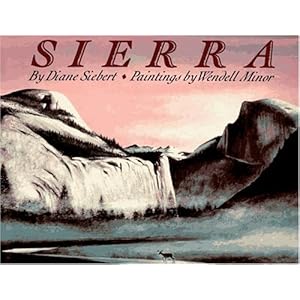
Today, I modeled how to use this chart with the book Sierra by Diane Siebert. Teaching children how to just copy a line or two from a poem is important, but it takes time. ("Look at how I am putting the exact same punctuation that the author uses as I write down this line.") The modeling step is also important to show the quality of thinking that you are expecting. Our first example was the simile in the opening lines of the book: "I am the mountain,/Tall and grand,/And like a sentinel I stand." We had to talk about what a sentinel is, how a sentinel is not like a mountain, and how the simile shows us something new about the mountain. One girl expressed it perfectly: "The mountain is like a sentinel because the mountain stands tall and still, just like a sentinel, and it stays there as long as it has a job to do."
Tomorrow, students will work on this with other poems and books from my classroom collection.
I'll be adding the figurative language chart to my figurative language activities in a few weeks. (I have to update the Powerpoint, too, with some new examples and poems!) If you would like it in the meantime, feel free to grab the image or write to me.
Wednesday, January 30, 2013
Having Fun with Poetry!
Now we're taking a short poetry break between nonfiction units. What fun! Here are some things that are working really well in my classroom.

Poetry Display: Over the past few years, I've scoured the used bookstores to gather enough poetry books so that every student can have a book. Now I have a poetry display with a wide variety for students to browse during independent reading, before school, and during free time. They really like them! This year, my students love The Random House Book of Poetry for Children...one of my personal favorites as well. I think I'll have to attach a GPS tracker to this book to keep track of it! Another favorite is Mary Had a Little Jam, a book of silly rhymes.
 Exploring Poetry: I also like to use class time to get students used to browsing through poetry book. I used the Exploring Poetry poster below to get our explorations started. While some students will just sit down and look at poetry, others need more of a scavenger hunt approach. They eagerly started working with the sticky notes to mark different poems. The sticky notes are left in the books throughout the unit, so that other students can see the breadcrumbs left behind.
Common Language
I started the unit by talking about poetic structure, and we worked to find the number of lines and stanzas in poetry. Taking just a few minutes to do this makes talking about poems much easier. I've also started out with having students do a few copying tasks. Readers have to see that everything in a poem is a choice made by the author, and rewriting a short poem is a great way to examine line breaks, capitalization, and punctuation.
 Poetry Anthology
This year, I want students to experience reading and rereading poems for different purposes. I put together an assortment of poems into a booklet that I copied for students. This booklet is useful because students can write directly on the poems and mark favorite passages. Instead of just seeing poems on single pages, students are going back to the same poems again and again--"Oh, I think there's personification in the stinkbug poem!" or "This is my favorite!"
All of the poems are written by me or in the public domain...I'll be adding it to one of my poetry packs shortly. Write to me if you'd like to try it.
Now we're moving forward into examining figurative language. It's so much fun to see how students respond!
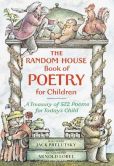
Poetry Display: Over the past few years, I've scoured the used bookstores to gather enough poetry books so that every student can have a book. Now I have a poetry display with a wide variety for students to browse during independent reading, before school, and during free time. They really like them! This year, my students love The Random House Book of Poetry for Children...one of my personal favorites as well. I think I'll have to attach a GPS tracker to this book to keep track of it! Another favorite is Mary Had a Little Jam, a book of silly rhymes.

Common Language
I started the unit by talking about poetic structure, and we worked to find the number of lines and stanzas in poetry. Taking just a few minutes to do this makes talking about poems much easier. I've also started out with having students do a few copying tasks. Readers have to see that everything in a poem is a choice made by the author, and rewriting a short poem is a great way to examine line breaks, capitalization, and punctuation.

This year, I want students to experience reading and rereading poems for different purposes. I put together an assortment of poems into a booklet that I copied for students. This booklet is useful because students can write directly on the poems and mark favorite passages. Instead of just seeing poems on single pages, students are going back to the same poems again and again--"Oh, I think there's personification in the stinkbug poem!" or "This is my favorite!"
All of the poems are written by me or in the public domain...I'll be adding it to one of my poetry packs shortly. Write to me if you'd like to try it.
Now we're moving forward into examining figurative language. It's so much fun to see how students respond!
Monday, January 28, 2013
Trouble with Transition Words
As I've been working with my students on creating main ideas and building paragraphs, one nagging problem has come up again and again: the use of transition words in writing.
In some ways, using transition words is like summarizing. It's easy to tell kids how to do it. Curriculum guides seem to assume that just teaching the rules will lead to proficiency. But those of us in the classroom know just how deep the chasm between knowing and doing can be.
Is using transition words as important a skill as summarizing? Maybe not. But I'm beginning to believe that transitions deserve much more time in the curriculum. As I look at writing units ahead, I'm planning to take a more detailed, nuanced approach to teaching transition words. Here are some steps that I'm taking.
Knowing that transition words are important
On the first day back from break, I taught what I thought was a solid lesson about using transition words. We read a paragraph, found the main ideas, and highlighted the transition words. "Transition words connect ideas," I told students. Then, just before recess, I did some quick-check closure. I pulled popsicle sticks and asked some closure questions--"Why are transition words important? What are some examples of the transition words that we found in the paragraphs?"
The sound of the crickets chirping was deafening. Like some kind of blobbish jello, the word "transition" had slid right past my students' ears and brains. They couldn't tell me what transitions were, nor how the words are important.
Was the lesson so horrible? An experience that I had that very night shed some light on the issue. In my spare time, I've been trying to learn German--mostly because there are lots of available online resources from Deutsche Welle, and because I want to feel what it's like to learn to read academic language in another language. As I tried to read a very simple paragraph, I noticed that I was sliding right over the transition words. In my attempt to build meaning, I focused mostly on the verbs and nouns.
This is probably what happens to many students, especially those who do not have much experience with academic language. They are so caught up in the search for meaning with the content words that the function words kind of slide right by. (Just like my lesson!)
I couldn't fix this in one day of instruction. But I could make sure that they caught hold of the word "transition" and recognized it as something important--even if they didn't have a firm grasp of what it meant. The next day, I started the lesson by saying that everyone would need to be able to tell me what a transition is by the end of the class. The promise of some additional preferred activity time upped the stakes! This time, my goal was more achievable--I just wanted them to know that transitions exist. We met this goal.
Adding transition words
 The next step was to teach transition words--by their absence. I gave students paragraphs that I developed from the blue whale details we had looked at before. I left blanks for the transitions, and gave students a word bank of transitions. It's nothing really new or earth-shattering, but it helped me to see how students were thinking. Many of them were happy to use "in fact" twice in the first paragraph--which led us to a discussion of variety.
The use of transitions like "even though" is extremely difficult for fourth grade writers. Think about how much meaning is conveyed in these two little words. Now think about how hard it would be to write without access to this construction. Transitions like "even though", "however", and "despite" are essential to conveying and understanding complex ideas. This is why I've come to believe that transitions are so vital for learning. Not only are they important for good writing, but they are also important for understanding complex ideas.
Transition Explosion
Once students became more aware of transitions, I started noticing them everywhere. And they aren't always being used appropriately. But I think this is an essential phase of student development. They know that something needs to connect two ideas, but they aren't sure of which word to use. I'm much happier at this stage than the previous stage. With my early adopters (you know, the kids who really take in lessons and move quickly to the action phase!), I'm seeing the phrase "As you can see..." pop up again and again in reading responses, and "despite" showing up in science class.
Right now our work with transitions is mostly focused on the typical statement and support paragraphs. As we move into other text structures, it will be interesting to see if students can generalize what they have learned, or if we'll need to go through every step in the process again.
One thing is certain--transitions are far from simple for intermediate learners!
In some ways, using transition words is like summarizing. It's easy to tell kids how to do it. Curriculum guides seem to assume that just teaching the rules will lead to proficiency. But those of us in the classroom know just how deep the chasm between knowing and doing can be.
Is using transition words as important a skill as summarizing? Maybe not. But I'm beginning to believe that transitions deserve much more time in the curriculum. As I look at writing units ahead, I'm planning to take a more detailed, nuanced approach to teaching transition words. Here are some steps that I'm taking.
Knowing that transition words are important
On the first day back from break, I taught what I thought was a solid lesson about using transition words. We read a paragraph, found the main ideas, and highlighted the transition words. "Transition words connect ideas," I told students. Then, just before recess, I did some quick-check closure. I pulled popsicle sticks and asked some closure questions--"Why are transition words important? What are some examples of the transition words that we found in the paragraphs?"
The sound of the crickets chirping was deafening. Like some kind of blobbish jello, the word "transition" had slid right past my students' ears and brains. They couldn't tell me what transitions were, nor how the words are important.
Was the lesson so horrible? An experience that I had that very night shed some light on the issue. In my spare time, I've been trying to learn German--mostly because there are lots of available online resources from Deutsche Welle, and because I want to feel what it's like to learn to read academic language in another language. As I tried to read a very simple paragraph, I noticed that I was sliding right over the transition words. In my attempt to build meaning, I focused mostly on the verbs and nouns.
This is probably what happens to many students, especially those who do not have much experience with academic language. They are so caught up in the search for meaning with the content words that the function words kind of slide right by. (Just like my lesson!)
I couldn't fix this in one day of instruction. But I could make sure that they caught hold of the word "transition" and recognized it as something important--even if they didn't have a firm grasp of what it meant. The next day, I started the lesson by saying that everyone would need to be able to tell me what a transition is by the end of the class. The promise of some additional preferred activity time upped the stakes! This time, my goal was more achievable--I just wanted them to know that transitions exist. We met this goal.
Adding transition words
The use of transitions like "even though" is extremely difficult for fourth grade writers. Think about how much meaning is conveyed in these two little words. Now think about how hard it would be to write without access to this construction. Transitions like "even though", "however", and "despite" are essential to conveying and understanding complex ideas. This is why I've come to believe that transitions are so vital for learning. Not only are they important for good writing, but they are also important for understanding complex ideas.
Transition Explosion
Once students became more aware of transitions, I started noticing them everywhere. And they aren't always being used appropriately. But I think this is an essential phase of student development. They know that something needs to connect two ideas, but they aren't sure of which word to use. I'm much happier at this stage than the previous stage. With my early adopters (you know, the kids who really take in lessons and move quickly to the action phase!), I'm seeing the phrase "As you can see..." pop up again and again in reading responses, and "despite" showing up in science class.
Right now our work with transitions is mostly focused on the typical statement and support paragraphs. As we move into other text structures, it will be interesting to see if students can generalize what they have learned, or if we'll need to go through every step in the process again.
One thing is certain--transitions are far from simple for intermediate learners!
Subscribe to:
Posts (Atom)