Showing posts with label poetry. Show all posts

Wednesday, June 26, 2024

Comparing Poems: A Look Back

 Time Warp: I originally wrote this blog post more than 10 years ago! As I was looking over past posts, I realized that I worked with the ideas in this post over this past year.

---------------------------------------------------------------

As the last part of our quick unit on figurative language and poetry, the students and I spent the last week looking at how to compare poems and write paragraphs to share our comparisons.

Whew. It's a difficult process for students. On the one hand, students often spontaneous make comparisons as we move through poems--"That one reminds of me of..." or "This is just like..." However, to write successful comparison paragraphs, students need to learn how to do more thoughtful, thorough comparisons.

Using a chart
A chart is essential for helping students to compare poems. Sometimes people try to use Venn diagrams for this purpose. Venn diagrams are great for set theory and fun visual gags...but terrible for planning writing! A chart sets up the important criteria for what is to be compared. Because testing season is coming up, I told students that they won't be able to use a prepared chart for our state tests, but that they can make their own comparison charts.

It's interesting to watch students use the chart. When I model this for struggling readers, I work with one poem at a time. This kind of careful reading and analysis takes a lot of concentration, and struggling readers often have trouble with the attentional shifts needed to go back and forth between texts. On the other hand, strong readers often prefer to work in the opposite way. They thrive on the extra challenge of going back and forth between texts and often create strong insights, seeing differences in the ways that the author developed the topics. (2024 update: As I work with gifted and enrichment students, I now see how much our strong readers love to work on topics like this! It's an easy way to add differentiation.)

Do we have to fill out the whole thing? That's the beauty of it--I tell students that we only need to fill in 4 or 5 blocks. We look for the criteria that are the most interesting for the poems that we have. Interestingly, kids always like to fill in the block for figurative language and sound devices!

Scaffolded response frame
A scaffolded response frame is useful for students who are still learning compare and contrast structure. Let's face it--this describes just about every elementary school writer! A nice middle level of scaffolding is to project the scaffolded response, but have students write their own responses.

Is it formulaic? Yup. Does it lead to scripted, formulaic writing? Some of the responses on the last assessment were the best that I've seen. Helping students with the topic sentence and the transitions freed up some processing space for them to do some deeper thinking about the texts. Kids used quotation marks to show where they were quoting from poems, using specific details, coming up with similarities that I hadn't considered. These are good things! (2024 update: When I did a similar activity with a group of gifted students, I expected that they would chafe against the formula of the frame. Nope! They wanted the frame even more than other students.)

Choosing Poems
This is the hardest part. It's tempting to stick with poems that have the same topic. But even poems with the same topic don't always make the best comparisons. Last week I chose two hawk poems. The whole lesson fell kind of flat--besides the same topic, the poems didn't really have anything interesting or compelling enough about them to spend a great deal of time talking about.

Two poems that worked very well were "Hello, Moon!" by Patricia Hubbell (found in Hey, You!: Poems to Skyscrapers, Mosquitoes, and Other Fun Things) and "The Moon's the North Wind's Cooky" by Vachel Lindsay. These poems both explored the changes in the moon in an interesting way, with lots of differences in the use of figurative language and structure to talk about.

(2024 note: To differentiate this for my enrichment students, I gave them poetry books and let them choose the poems to compare. This gave them a purpose to strategically read many poems and talk about them together.)

Comparing poems was an interesting and rigorous way to end our study of poetry...but I do think that we are all ready to go on to text structure next week!

Tuesday, June 15, 2021

Why You Should Teach Emily Dickinson's Poems in Sixth Grade

 In looking for poems to share with students, I love to go with the work of Emily Dickinson. Here's why!

Her life story is intriguing to students

Today's students find Emily Dickinson's life fascinating. Her reclusive nature and quiet life are mysterious, and counter to what many students experience. Teaching about Emily Dickinson helps students to consider how an author's life experiences impact their work.

Emily Dickinson's poems are great for teaching theme

Helping students to identify themes in poems and to write to explain those themes is a big task in sixth grade! Luckily, Emily Dickinson's more popular poems have fairly transparent themes. "If I Can Stop One Heart from Breaking" and "I'm Nobody! Who Are You?" are two that work especially well.

Emily Dickinson's poems appear on standardized tests

I know that this isn't a reason to teach a particular author's work, but the fact that Emily Dickinson's poems frequently appear on tests is important to me. I always emphasize to students that they should try to enjoy what they read on tests...and if they can recognize an author's name and meet the text as if they are greeting a friend, then that makes the testing experience much more pleasant for them. 

You can sing them!

I frequently torment my students by singing to them, and the poems of Emily Dickinson work really well for this. In "Crash Course," (which is a great resource for teacher background!) John Green sings Dickinson's poems to "I'd like to teach the world to sing," but I prefer to sing the poems to "The Addams Family." It works because of the meter of Emily's poems...and is also a great way to show students what meter is.

Ready to use resource

This spring, I made a hybrid resource for my students to showcase the life of Emily Dickinson. I like to have a weekly assignment for students to work on, and this resource includes activities for vocabulary, informational text comprehension, and poetry.


Thursday, February 7, 2019

Introducing a Poetry Unit


This week I started teaching my poetry unit, which is both exciting and scary! It's exciting because I love poetry, and I love the chance to immerse my students in poems. It's scary because each year is so different from the last and I never know how students will react.

Prepare or find a poetry collection

To immerse students in poems, it's good to have a collection of poetry that they can refer back to, again and again. I have one put together in Figurative Language PowerPoint and Activities. This year, I added two sonnets (available here) to my existing collection.

Putting together a poetry collection can be as simple as gathering poems that you want to teach! By adding poems with similar themes, you can invite natural comparisons. Some of my favorites that are in the public domain include:
-The Wind, Robert Louis Stevenson
-Who Has Seen the Wind? Christina Rossetti
-The Moon's the North Wind's Cookie, Vachel Lindsay
-Perhaps You'd Like to Buy a Flower? Emily Dickinson
-Where Go the Boats? Robert Louis Stevenson
-Paper Boats, Rabindranath Tagore

In addition to the poetry collection (mostly made up of public domain poems), I also have shelves full of diverse poetry, picture books that I've picked up from prowling used book sales and the reduced price sections at discount bookstores. These poems give students windows into worlds beyond.


Find out what students already know

It's important to get an idea of what experiences students are bringing with them to the poetry experience. This year, I learned about their prior experiences with a carousel activity. I made six small posters with topics:
-Famous Poets
-Figurative Language
-How I Feel About Poetry
-Poems I Know
-Speaker in Poetry
-Poetic Structure

Then, students moved from poster to poster in small groups. Let me tell you, I learned so much from watching students and listening to their conversations! From the "Figurative Language" poster I observed that students can generate names of some kinds of figurative language, but that there is some confusion between figurative language and other literary devices. From the "Poets We Know" poster I saw that students couldn't really generate a list of poets, but that my name was on there. :)

Use visuals

Animated and illustrated versions of poems are so engaging! On the first day, we looked at "Ozymandias" and watched this amazing version.


Then we talked about what the poem might mean. First conversations with big poems need to be open and nonthreatening, focused less on getting right answers and more on talking about what big ideas might be lurking beneath the words. Don't worry if you don't know what meanings are lurking beneath the words! It can be a joint voyage of discovery.

On a less dramatic note, I also shared this poem that I read aloud. We talked about how the poem makes us feel calm and peaceful...a great entry into deeper discussions of tone and mood.


Give students the words to discuss

Great conversations need lots of words! This Poetry Help Sheet (available in Comparing Texts 2) is a quick and easy tool for students to use to have discussions. As an end to our second day of poetry,
students read the help sheet and used words from the page to talk about one of the poems in their collection. What is so important is that students are in control of choosing the poems and deciding how to talk about them.

Of course students had questions about these words and topics, which led to even more interesting conversations...for example, what does whimsical mean, anyway?

First experiences with poetry can make all the difference in whether students enjoy poems or look at poetry as a chore. By making your first lessons open-ended and engaging, you can help students love poetry!


Saturday, January 21, 2017

Teaching Sonnets in Sixth Grade

Last week I wasn't sure about teaching sonnets with sixth graders, but now I can tell you: sonnets are awesome!

Okay, our discussion of "Ozymandias" was highly influenced by this video:


I don't know if I've every seen such a brilliant combination of text and image. I used it to introduce the lesson, and students were hooked. (Note: Kids didn't know where the original recording was from, and I wasn't about to tell them.)

Shelley's sonnet doesn't quite follow all of the typical conventions of a sonnet, so I supplemented with "Still will I harvest beauty where it grows" by Edna St. Vincent Millay. After a review of rhyme scheme, we analyzed this poem. I talked it up to kids as an amazing game that poets are playing. Can they find a way to express an idea within these incredible constraints?

After they were amazed by the rhyme scheme, I asked students to count the syllables on the lines. "Pick a random line and count," I said. Students started clapping and reciting the poem to themselves. Around the room they started calling out: "Ten!" "10!" "Ten!"

All of this structural analysis actually happened before we looked at meaning.

And this is a shift from my usual style. I like to go for meaning, meaning, meaning before we look at structure. In a sonnet, though, the meaning is hidden in the structure. Understanding and appreciating the structure first gives students that charge to dig deeply for meaning.

When it came time to look for meaning, some students were able to quickly find the theme of "Still will I harvest...", especially because it's stated in the first line. With the help of a stuffed moose as poetry translator, I guided students through the images in the poem. Then we connected the theme of the poem to the images within it.

"The ideas go across the lines," one student commented. "One of the things being described starts on one line, and ends on another. Is that because it's a sonnet?"

What a great question to consider! Students were able to take what we had learned with "Still will I harvest beauty..." and go back to "Ozymandias." With the help of the visuals from the animation, they could paraphrase the theme.

So wow. Later on in the day I overheard two boys talking to each other while they were supposed to be doing quiet writing; I found out they were trying to recite "Ozymandias" to each other. I felt like I won teaching.


Wednesday, January 18, 2017

I'm teaching a sonnet next week...

   I'm teaching a sonnet next week, and I'm not sure how I feel about it.

   Growing up I read my mother's literature anthologies, the thick books of poems and stories for seventh and eighth graders, and I read some of her college textbooks too. These books came from a dank room we called the library, but was really an unfinished room in our basement; what we'd call a bonus room today. Even now when I think of certain poems and stories I remember the damp smell of books that spent many years there.

   I read my mother's anthologies, but I had the good sense to skip the sonnets. I read some of the narrative poems--I was a sucker for a good story, the more blood and sorrow the better, and I loved encountering Lord Randal again and again in different books. But I really loved the modern poems, stripped of all but the most important words, like the ones by Gwendolyn Brooks or found inside the gift of a watermelon pickle. Perhaps I was a lazy reader.

   Or perhaps I just had the good sense to skip sonnets. Rhyme I could deal with, but only in the hands of someone like Robert Frost, and a poem written just to meet a set pattern of rhymes seemed an absolute waste of time. Plus sonnets tended to have extra words like O and I really didn't like that. Sonnets, in my opinion, weren't long enough to tell a good story or short enough to really grab my attention and leave me breathless.

    On my second or third reread of A Wrinkle in Time I did notice what Mrs. Whatsit said about sonnets, and it made me reconsider a bit. Maybe sonnets were not such a lost cause after all.


  So I consented to read a few sonnets, and while I still didn't like the form I could at least like some of the sentiments, especially in "If Thou Must Love Me..." by Elizabeth Barrett Browning. But I still skipped the sonnets in most of the poetry books I read. I think that, besides the form, I also was just too young to appreciate the themes. After all, what 12-year-old is really looking back on lost loves as in "What lips my lips have kissed" by Edna St. Vincent Millay? 

   And this is what gives me such pause as I think about teaching sonnets next week. Sonnets pose both a structural and a thematic challenge to young readers. They come from another age, an age when poems followed rules and when every word, carefully chosen, conveys a meaning that may not be initially apparent. Teaching students about reading a sonnet should take time, time to look at what a sonnet is and what it is not, time for students to move through the stages of disliking sonnets and into enjoying them.

    According to my basal series lesson plan, I have 5 total days to teach lyric poetry, sonnets, personification. Well, four days actually, because the fifth day is supposed to be for assessment.

   Which brings me back to where I began: I'm teaching a sonnet next week, and I don't know how I feel about it.


Saturday, January 16, 2016

Close Reading Tip: Connect Images to Text Evidence

    I just love this quick routine for building student skill with finding text evidence. Yesterday, as we were reading the classic "The Land of Counterpane" by Robert Louis Stevenson, I showed students classic illustrations of the poem. Here is one of my favorites, a 1907 illustration by Jessie Wilcox Smith.

   Not only does the illustration help to give students crucial context for the poem, but it gives us a quick, engaging task for finding text evidence. "Can anyone find a line in the poem that connects to this image?"

   Suddenly students had a real reason to go back into the text, and they loved scanning the illustration for tiny details. They eagerly plunged back into the text to find the lines that connect directly to the image.

    A quick image search yielded other illustrations, as this poem has been heavily anthologized. We looked at the similarities and differences, always going back to the text--how does this connect to specific lines in the poem? Because we were also working with a companion expository text (found in my Comparing Texts 2 bundle), our next step was to broaden our comparison to see if sentences from the expository text could be connected to the poem. And they could!

   Matching images to texts is highly motivating for readers, and it's fun to do. Even better, though, it builds connections for learners. What are your favorites for this kind of activity?


Sunday, February 2, 2014

Comparing Poems: An Invitation to Close Reading

  I am finally wrapping up poetry. In November, I foolishly thought that I could squeeze the unit into the fourteen days between Thanksgiving. Hahahahahah! Between days off for school and extra time to let ideas percolate, the unit has stretched into thirty days. I don't regret it. Looking back, I don't see any lessons that were blind alleys or unproductive tangents.

  Our culminating activity is a little project to compare poems. Over the years I have collected a decent collection of poetry books for my classroom, augmented by strategic bookroom purchases. (All of the books can be found on my Figurative Language Pinterest board.) My dream was for students to dive into the books and read a variety of poems by different authors.

Step 1: Read at least 5 poems from 2 different books

Step 2: Choose two poems to compare
After students read and explored the poems, they had to choose two to compare. Luckily a grandparent volunteer was in the room with me on this day to help! We ran back and forth to the copier to make copies of the selected poems so that students could trade books around and still keep the poems they wanted. (Why make copies? If I had had students write out the copies by hand, some would have tried to find the shortest poems possible. Life in fourth grade.)

Step 3: Use a chart to compare the poems
Fourth graders really need some guidance in comparing poems. This chart helps students to focus on some key criteria to consider.

As students worked, I went around the room...partly to answer questions, and partly to read all of the great poems! Students did find some neat parallels. "Takeout" in Pieces and "Regurgitate" in Antarctic Antics share a topic, while another student found that "Spring Wind" in The Great Frog Race compares nicely with "Windy Nights" by Robert Louis Stevenson.

The best part, of course, is how the activity led students to ask questions and really consider aspects of the poems. Of course, I didn't answer all of the questions for students; in most cases, we went back to the poem together to try to think through them.
-Do you think this is a simile?
-Is this poem saying what I think it's saying?
-What is the theme of this poem?

...and my favorite question:
-What is an artichoke, anyway?

Getting fourth graders to slow down and really read a poem carefully is not an easy task. In this activity, the act of comparing led students to dive deeply into the poems. How are they different? How are they similar?

Step 4: Write a paragraph to compare the poems
We've written several of these paragraphs together, and I've given students feedback on their work so far. I used the feedback only process instead of feedback + grade, underlining great topic sentences, marking transition words ("Use these words again! They really help the reader to see how ideas connect!"), and circling specific text details. Some students asked to get their previous paragraphs from their folders so that they could refer to them as they wrote again.

Step 5: Create an illustration that shows aspects of both poems
Students are really excited about this step, and are thinking through their illustrations with care. This seems quite easy, but depending on the poems, it can be more tricky. Students are really looking forward to this step and keep coming up to me to show me all of the details they've included.


July 2014 Update
-You can find an iPad activity for students to use to compare poems here.
-This Frolyc activity invites readers to compare three texts: a poem, a video, and an informational text.

Sunday, January 26, 2014

Teaching Tone in Poetry

   I started teaching about tone several weeks ago. As part of a thank you letter unit, we learned about formal and informal language. I was pleasantly surprised by how quickly the students were able to distinguish between formal and informal. In fact, the words have become part of our classroom discourse. Consider:
   Thursday: I was writing directions on the whiteboard. "You need to finish your rural, urban, and suburban--" I paused, considering whether to write essay or writing prompt, and a student filled in, "--thingie."
  "Sure," I said, because it was amusing, and I wrote thingie on the board. The other students started laughing.
   "Mrs. Kissner," one said, "I'm surprised that you wrote that, because usually you're more formal."
   Thursday dismissal time: A student asked, out of the blue, "Mrs. Kissner, are you formal with your family, or informal?"
   Friday: A student came in from math breathless with excitement. "Mrs. Kissner, ___ and I are so informal all the time. We're starting the Awesy club--it's short for Awesome. Right, __?"
   The other student grinned from the other side of the room. "Totes."

   As we were comparing poetry, then, I decided to take a quick look at tone. Knowing how authors control word choice comes naturally from a discussion of formal and informal, and I was pretty confident that my students would be able to notice tones that were playful, thoughtful, and so forth. Identifying tone has students looking very carefully at a poem, selecting the words that show the tone. This is the kind of careful reading that I want my students to engage in.
   To introduce this to students, I showed them one of my favorite commercials ever: the Ikea lamp commercial. Students were easily able to pick out how the creators cultivated a sad tone:


   (For our discussion, I did stop it before the narration at the end. Older students may recognize that the narration pretty much negates everything that came before it in the commercial, which could lead to an interesting discussion of why the creators chose to do this.)

    In a poem, however, authors can't use tools like music, lighting, or rainfall--all they have to work with are words. But the words can show a great deal. We looked at the poem "Classroom Creature"and talked about how the metaphor creates a playful tone. Students then tried to find the words that create this tone: ravenous and devour, when applied to a pencil sharpener, are playful.


   In this kind of activity, a word bank is very helpful for all students. Many do not have much experience with this kind of academic writing and need some examples of good adjectives to use. I used a scaffolded chart that showed students what they could look at to compare.
   Lots of great thinking went on as students worked on this. Even students who struggle with reading were able to read and reread the poems to consider the questions. The last box, "What the metaphor reveals about the subject", was difficult for some students. However, it gets at the heart of poetry. What was the speaker showing us about the pencil sharpener by making this comparison? Its usefulness? Its quietness? This is a deep analysis of the metaphor and its role in the text. Even though the poem is fairly simple, the thinking that students had to do was more complex.
    All in all, we had a great time talking about tone and how it is created in a poem. The next challenge will be to see if students can apply this independently!

**I didn't think it was important to go into the difference between mood and tone at this point in time. If you think otherwise, please leave a comment!

Notes
-The poems from this lesson are my own. They are included in my Figurative Language pack. You may feel free to use the poem and chart from this blog post for classroom use.
-I finally have Daily Sentences in a folder on Google Drive. I've gone to Week 17 in creation, and I'm at Week 12 with my students. I'm so pleased with my students' progress and I think that this structure is working for them! Please send your Gmail address to me at elkissn@gmail.com and I will give you permission to view the folder and download the documents.
-Anyone still using the Spelling units? I'd love to hear your feedback--I'm thinking of making some changes for next year.


Friday, January 17, 2014

Comparing Poems to Other Texts

  I love comparing texts as it always helps us to notice something new about texts and our world. As we have gone on with learning about figurative language, students read the poem "Wake Up". I put it in a recorded form to make it easy for students to read:


We talked about how the simile in the poem compares the call of the cardinal to an alarm clock. Unfortunately, spring is still so far away from us here in Pennsylvania that we don't hear any cardinals in the early mornings! Instead, I found this video to share with students:


What is so interesting is how the video really highlights some of the information from the poem. What a great way to help students compare multimedia texts. Some questions to discuss:
-How do the images enhance the words?
-How are the purposes of the videos different?
-Which text might you choose to learn specific facts?

...and, even more interesting to consider:
-How do these two texts enhance each other?

In the end, both texts together really create a new kind of synthesis. They work together well to present an idea about cardinals and spring time. So much of current text comparisons have us analyzing the texts separately--what does this text do? What about this one? But now I am thinking that it is almost better to consider new questions. How do they work together? Which texts should be paired, and why?

After we worked with the poem, I put on the Cornell Feeder Cam to fill up some transition time. I haven't used the bird cams much this year and I was interested to see how students would react. They loved it! I found two bird books that had been languishing on the shelves and the students eagerly leafed through the pages, trying to identify the birds that we were seeing. Even more surprisingly, some students were spontaneously making similes: "Mrs. Kissner, that bird is as fat as a truck!" (It was quite a plump evening grosbeak.) While no cardinals came to the feeder, we did get to see several woodpeckers and a nuthatch. It was a lovely way to bring nature into the classroom on cold and frosty days.

Notes
-You can find the Comparing Poetry activity on Frolyc. It is ready to publish to your students' iPads!
-The cardinal poem and an informational text are also available in my Figurative Language pack. Great for RL 4.7 or 5.7!

Sunday, January 12, 2014

Revisiting Poems with a Poetry Collection

    When planning for poetry, it's worth the time investment to put together a core set of poems. This can be as simple as a stapled packet, or more elaborate as a small book bound with a plastic comb binding.

   As I have worked through poetry over the last few weeks, I've given students class time here and there to read the poems in their booklets. As we learn new concepts, I get to hear them talk about familiar poems in new ways. Revisiting the same poems again and again helps students to realize that there are layers of meaning within poems, layers that may not be apparent on a first read.

    For example, on Friday, I taught about similes. Then the students scattered throughout the room, on a mission to find five similes to share with the class. "Look! There is a simile in this one!" a student said, bringing me Sea Fever. Other students were surprised to find the simile in "Twinkle Twinkle, Little Star"--a simile that they have probably sung since they were small children, but never noticed.

    Some of the poems in my poetry collection are included in our Readers Theatre scripts, which students are preparing to present on Tuesday. "Classroom Creature is a simile," one student said. "That's the poem that I'm reading for our scripts." Now, the poem in question is actually an extended metaphor comparing a pencil sharpener to a creature. But this observation, and the student's familiarity with the poem, allowed us to have the simile versus metaphor conversation pretty early. How great!

  Putting together a poetry collection to share with your class is a pretty easy task, and well worth the time investment. I have one already formatted for copying available in my Figurative Language packet, but you could easily make your own. Choose poems that show a wide variety of techniques, from simple and familiar nursery rhymes to more complex and thoughtful poems. Over the weeks of your poetry unit, you will be able to see students revisit poems to find new meanings and new techniques.

Notes
-Our thank you letters unit is chugging along nicely! This week, the students loved taking sentences that were written formally and rewriting them informally. I've never seen this level of writing control in fourth graders before. Daily Sentences are now in a folder on Google Drive. If you are interested in viewing them, write to me with the Gmail address and I'll add you to the permissions.
-As I am working on poetry, I'm beginning to dust off my nonfiction introduction unit, looking at which materials I want to use and which I want to adjust. If you are headed in this direction, you may want to check out my book, Summarizing, Paraphrasing, and Retelling, or my Main Ideas and Details Unit.


Wednesday, January 8, 2014

Speaker and Poetry on the iPad

Here is a blog post about an activity that I made for speaker and poetry:

Poetry Activities with Activity Spot

You can read Part 1 of the blog post here:

Part 1

...and find the activities in Activity Spot here:

Speaker in Poetry (grades 5 and 6)

Speaker and Speaker Attitude (grades 3 and 4)


Tuesday, January 7, 2014

Personification and Poetry

Find classroom-ready resources for teaching about personification and other forms of figurative language here: Figurative Language PowerPoint and Activities   

One of the mixed blessings of teaching elementary school is that I teach so many different things in a day. Take Monday. The day began with two reading classes, in which I tried to wrap up personification. Then it was lunch, and then spelling. Luckily spelling was easy with the introduction of Multiple Meaning Words. After spelling I moved on to science, with a lesson on living and nonliving things. It turned out really well, thanks to the handy acronym MRS GREN. Then it was time for writing, in which I introduced formal and informal writing. Finally I shepherded the students off to art, at which time I sat down for some co-planning with the special education teacher. Whew!

   I really enjoyed the reading lesson, in which I taught personification. Sometimes I get frustrated when people try to reduce personification to talking animals. Personification is so much more! On Monday, we worked with the poem "The Wind" by Robert Louis Stevenson.

Our first step was to number the lines of the poem. Now, some people would think that this is a very low-level task. But it's essential for talking about poetry. As soon as we started I saw that this was a problem for some students. "Doesn't this mean that there is a choice?" one student asked. I looked to where she was pointing. In this day of bubble tests, she thought that the word "O" at the start of lines 5 and 6 was a choice like on a bubble test! Numbering lines helped me to quickly see this misconception and put it to rest.

After reading the poem together, students went to work in different places around the room to answer some questions on their own. I do love reading and sharing poetry, but I also need to see what students can do on their own. I was able to circulate and help students individually, something that I love doing.

Finally, students had to find an example of personification and use it to complete a scaffolded open-ended response question. The three parts to the question helped me to see where students were having trouble. Some students didn't pick a very strong example of personification. Others had trouble connecting the personification to what the author was trying to show. This is the heart of figurative language!

   Consider this exchange. One student chose "I felt you push, I heard you call" as personification. "What is the author trying to show us with this?" I asked.
   "That the wind is blowing?" she guessed.
   Across the table, another student said, "Can I tell her?" I shook my head but he persisted, making wind sounds. "What do you think the author is trying to show?" I said.
   Eventually she figured it out. "That the wind makes noise," she said.
   Exactly! On the other side of the room, a student wrote, "The author says that the wind sings because he is showing that the wind is whistling like a song."When we got back together to share our responses, he came to share his at the document camera.
   As we were wrapping things up, I asked a question. "When do you think this poem was written?" The one detail in the poem that would point to the time period is the line "like ladies' skirts across the grass".  Students found the line in the poem and talked about how it meant that this poem was probably written in a time when women wore long skirts. (It was published in A Child's Garden of Verses in 1885.)
   This activity wasn't cute or glamorous, but it was meaningful. Looking deeply at examples of personification and asking the question, "What is the author showing us with this?" helps students to move into understanding longer and more complex poems.

Sunday, December 22, 2013

Engaging Students in Complex Poetry

Last week I stumbled upon a way to engage students in reading complex poetry. It was a wonderful, magical moment--made even more enchanting by the fact that students were completely immersed in a poem twenty minutes before dismissal a week before the holiday break!

Behind the Scenes
    I love to start our study of poetry with accessible, easy poems that students can read and decode without much effort. After some success with these poems, students are much more willing to read more complex poems that require more thought.
    I have loved John Masefield's "Sea Fever" ever since I first read it in my seventh grade literature anthology. (Oh, I adored that book--a huge volume of different stories and poems!)  It is a perfect poem to read and revisit during a poetry unit, as it can be discussed in many different ways, looking at speaker, speaker's attitude, figurative language, and more.
    But how could I introduce it in a way that would engage students? I decided to try out Keynote for this. I quickly put the poem into Keynote, using a different slide for each line and a different background for each stanza. On a snow day, I recorded myself reading the poem in Keynote, and then took it over to iMovie, where I added some ocean sound effects. The entire process took about an hour.


During Class
   I wanted students to have experience with this poem over multiple readings. For our first reading, I had pretty low expectations--I just wanted to see if students could connect their printed version with the video version. Could they find the way that I had marked the different stanzas?
   It turned out somewhat differently. Students noticed the marking of the different stanzas on our second viewing, with lots of comments along the way. ("Is that you?" "Wow!" "Why don't you talk like that during class?") With ten minutes left in class, I decided to show it one more time as a choral reading, inviting students to read along.
   But students had different ideas. They couldn't help but call out their questions. I paused on the line with a star to steer her by when one student asked, "Why would you steer with a star?" Another answered, "Oh! They must have looked at the constellations!" We hadn't progressed much more when we got to the wheel's kick and the question, "How can a boat have wheels?" This didn't need much discussion--I just pantomimed steering a boat with the wheel and said, "You know, the big wheel they use to steer with."
   By this point I realized that the choral reading wasn't happening. In fact, it had evolved into more of a close reading--students were really focusing on each line, carefully considering the meaning. I have taught this poem many times, but I have never had students try to get so much out of it. Feeling brave by the end, I asked, "Who is the speaker?"
   Of course, some answered, "You are," because I was the one reading the poem. But another student protested. "No, she's reading it, but she's not the speaker. The speaker is inside the poem." Tentative answers were offered--"The speaker is someone who likes the ocean" "A person who works on a boat".

What Worked 
   Several things came together to make this lesson work well. First of all, I chose a high-quality poem to share. Something about this poem resonates with students--we are about 4 hours from the beach, close enough to visit every summer or two, but far enough away that students really do feel that longing to get back to the beach.
   The visual format of the poem also changed the experience for students. Many of the readers in this group have trouble accessing the right background knowledge to help them visualize effectively. The simple photographs in the video gave them a cue to access their "beach scenery" schema. Also, showing the poem one line at a time helped to give students a clear focus.
   Finally, I have to remember to keep an open, encouraging attitude, especially when we look at text for the first time. I went into this with a very low-level expectation for a first read. The students totally overwhelmed me by going beyond my expectations. I knew where I eventually wanted to go, and so I could steer the conversation onward when students showed that they were ready. But it was so wonderful to have students move beyond what I expected, instead of feeling like I was in the position of "pulling teeth" to get students to an expected level of understanding. This is something worth remembering for the rest of the poetry unit and beyond.

Thursday, December 5, 2013

Introducing Poetry: Lines and Stanzas

Back at the start of November, I noticed that there were only 14 teaching days in December. 14 days! Instead of introducing nonfiction, as I usually do this month, I decided to squeeze in poetry. In many ways, poetry is the perfect topic for a month in which schedule changes are the norm. (Only 15 minutes of reading class because of a holiday show/Santa's workshop/artist visit? Let's read a poem!)

I like to start poetry with some informal reading. Yesterday, students had some time for free reading of poems in the morning. One student found the poem "Candy Cane" by Valerie Worth in a book of holiday poems (specifically, Christmas Poems selected by Myra Cohn Livingston). She brought it to Morning Meeting to share with the class. Here are the first two stanzas:

Candy Cane
Hot wintry
mint, striped
round with
fire and snow.

Sweet icicle
that melts
and burns
and chills...

Of course this poem sparked discussion. How can a candy cane by hot? How can it burn and chill? Luckily I had a bag full of starlight mints--close enough to a candy cane--that I could hand out to the students. We talked about how our experiences with the mints were similar to the poem, and how they were different. Along the way, I was also able to listen to what kinds of language students were bringing to the classroom. How were they describing the poem? I only heard the word "stanza" once, which told me that this was not a well-known concept in the room.

Today, we explored the idea of lines and stanzas. We looked at poems with short lines, long lines, and multiple stanzas. (I used the PowerPoint in the Poetry Unit for Poetic Structure, but you could easily do this with any poems.) This is so important because students need to know how to navigate a poem. Once they know about lines and stanzas, we can quickly talk about how to get to a particular spot.

After a whole group lesson, we did a carousel activity. Students rotated to different poems that I had around the room and described them--title, lines, stanzas, and a picture to represent the main idea. I watched to see if they could record the title of a poem with quotation marks (some used parentheses instead!) and listened to their conversations to see if certain words came up. I hoped to hear alliteration, personification, and simile....but I didn't. When I introduce them, students may recall what they've learned before. At this point in time, however, students don't have access to these words to talk about poems. Good to know! And finding this out from a busy, talkative activity is so much nicer than learning it from an assessment.

Finally, students had some free time. Some chose to escape from poetry and go right back to their independent reading books. (The Amulet series is hugely popular in my room right now.) Others started to try writing some poems. (Alas, many jumped right into acrostics...looks like I'll have to break out the book Silver Seeds to talk about meaningful acrostics.) Still others read from their poetry collections, a book of poems that I have put together to use as our core resource for our poetry unit. All in all, it was a nice start to our precious few days of focusing on poetry.

Other Poetry Posts
Having Fun with Poetry

Poetry Picture Books for Making Inferences

Student Poetry Conferences


Monday, July 1, 2013

Kinds of Text: Poetry, Drama, and Prose

In my early reading years I did not have a good attitude toward the word prose, mostly because Anne of Green Gables described boring days as "prosey". I wasn't really sure of what prose was back then, but if Anne didn't like it, then I didn't like it either.

As an older reader I realized that prose is not necessarily dull (although the word "prosey" can be found in a number of old books from the 1800s). It's good that I have come to like prose, as it is included in the fourth grade Common Core standards. Students will need to be able to explain "major differences between poems, drama, and prose."

So what are these major differences? It's easy to think about how these different kinds of text are built in different ways. Here is a chart that I made to show this to students:


As you can see, structure is the key to differentiating among these kinds of text. Fiction and nonfiction can apply to any of these texts.

Wow, this will be a tough thing to teach at the beginning of the year. (Or rather--it will be easy to show students the chart and explain it; what will be difficult will be making sure that students can easily access and apply the information.) I'm planning to adapt some of the activities that I already use, like sorting mini-texts, and I've created some new things to help students look more carefully at comparing texts.

Wednesday, January 30, 2013

Having Fun with Poetry!

Now we're taking a short poetry break between nonfiction units. What fun! Here are some things that are working really well in my classroom.

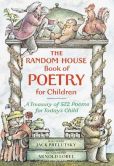
Poetry Display: Over the past few years, I've scoured the used bookstores to gather enough poetry books so that every student can have a book. Now I have a poetry display with a wide variety for students to browse during independent reading, before school, and during free time. They really like them! This year, my students love The Random House Book of Poetry for Children...one of my personal favorites as well. I think I'll have to attach a GPS tracker to this book to keep track of it! Another favorite is Mary Had a Little Jam, a book of silly rhymes.

Exploring Poetry: I also like to use class time to get students used to browsing through poetry book. I used the Exploring Poetry poster below to get our explorations started. While some students will just sit down and look at poetry, others need more of a scavenger hunt approach. They eagerly started working with the sticky notes to mark different poems. The sticky notes are left in the books throughout the unit, so that other students can see the breadcrumbs left behind.

Common Language
 I started the unit by talking about poetic structure, and we worked to find the number of lines and stanzas in poetry. Taking just a few minutes to do this makes talking about poems much easier. I've also started out with having students do a few copying tasks. Readers have to see that everything in a poem is a choice made by the author, and rewriting a short poem is a great way to examine line breaks, capitalization, and punctuation.


Poetry Anthology
This year, I want students to experience reading and rereading poems for different purposes. I put together an assortment of poems into a booklet that I copied for students. This booklet is useful because students can write directly on the poems and mark favorite passages. Instead of just seeing poems on single pages, students are going back to the same poems again and again--"Oh, I think there's personification in the stinkbug poem!" or "This is my favorite!"

All of the poems are written by me or in the public domain...I'll be adding it to one of my poetry packs shortly. Write to me if you'd like to try it.

Now we're moving forward into examining figurative language. It's so much fun to see how students respond!

Wednesday, March 2, 2011

Poetry Picture Books for Making Inferences

When teaching poetry, it's often easy to just break it down into small bits. This bit is personification, this bit is alliteration, this bit is a simile.

But poetry is more than these small bits. Instead, readers need to try to figure out what the author is saying. This process requires a reader to make multiple inferences--sometimes in very few lines of text. Teaching poetry goes hand in hand with teaching inferences. Readers need to use their background knowledge to reach for the meaning of the poem. While the figurative language is important, it's only a piece of the puzzle.

Where to find good poetry for kids? I've had tremendous luck at discount bookstores, like the ones that you find at outlet malls or vacation spots. I have also had luck with combing the shelves of used book sales at libraries. These two sources have opened my eyes to some great books of poetry that I may not have otherwise found. (Plus, they're often inexpensive!) Here are some of my favorites--and the ones that I've picked up for my classroom are all from discount or secondhand sources. While you may not be able to buy them directly anymore, you may still be able to get them from libraries.

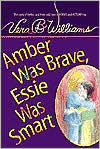
Amber Was Brave, Essie Was Smart: This is a story told in poems. I love the title poem for teaching character traits. Author Vera B. Williams tells us these traits right off the bat, and then supports them with specific details. Throughout the rest of the book, the story of the sisters and their situation unfolds. The copy that I picked up had a different cover, so I think there may still be older editions floating around that you can get for cheap!

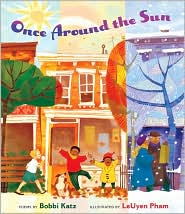
Once Around the Sun: This book goes through the year with a poem for every month. The poems are filled with personification, alliteration, and similes...but even better, the poems are about kid-friendly, concrete topics. The colors of the illustrations evoke the feelings of the seasons. The poems are wonderful for helping students to see how they can take a poem apart to find the different kinds of figurative language, but put it back together to look for a main idea. Definitely a must for your classroom library.

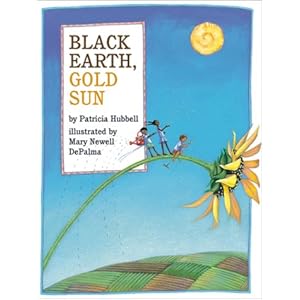
Black Earth, Gold Sun: I love gardening, and this book of gardening poetry is one of my favorites. I bought it as a discard from a library. Just today I read the first poem with a previewing group, looking at how the author uses a simile to compare the freshly dug earth to a chocolate cake. (What an image!) The poems have nice specific vocabulary words to stretch the students' understandings, with supportive pictures help them to put the pieces together.

Hey, You! Poems to Skyscrapers, Mosquitoes, and Other Fun Things: I bought several copies of this over the weekend, and then promptly turned them over to other teachers--so I haven't had much of a chance to explore it much. Hopefully I'll get my copies back.

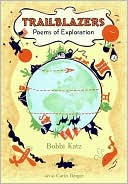
Trailblazers: Poems of Exploration: This book makes a wonderful history connection. Bobbi Katz writes poems from the points of view of various explorers. She chooses a diverse bunch, going beyond the obvious people. Definitely worth looking for, especially if you teach social studies.

Saturday, October 2, 2010

Acrostic Poems

I am not a huge fan of acrostic poems. In my experience, they often lead to young writers valuing form over ideas--trying to cram words into the set form without really saying anything fresh or new.

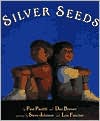
Silver Seeds, though, has changed my mind. This beautifully illustrated book of acrostics, written by Paul Paolilli and Dan Brewer, is a collection of lovely acrostics. Each one is about something related to nature. They go beyond the usual one word per line and share fresh, interesting comparisons and descriptions. I would enjoy reading the poems even if I didn't know that they were acrostics!

I shared this with my students as we were finishing up our process paragraphs. Many students had already finished their final drafts, so I wanted to introduce a different form of writing for them to try out in their journals while the rest of the students continued to finish. This book was perfect--an introduction to a form of poetry, a chance to see how they understood metaphors (surprisingly well), and an invitation to try out a different form of writing.


Monday, April 12, 2010

Student poetry conferences

"Mrs. Kissner, look at my poem!"

Me: "Uhhh...."

For a long time, I was tongue-tied when students brought me their poems. I just didn't know what to say. Like many teachers, I was worried that my comments would somehow stifle their creativity. I didn't want to be the mean teacher who ruined a student's love of poetry.

But a lame, non-specific "Great job!" doesn't work very well, either. What about the poem is great? The fact that the child was able to put some words on the page? The fact that the student spent five minutes engaged on a task? If I don't know what was "good" about a student's piece of writing, chances are the student doesn't know either.

The fact is, I know that the students in my room are capable of writing poetry--pretty good poetry, in fact. In order to improve my commenting, I needed to think about what I like about poetry. I've found that the textbook Sound and Sense is a great reference. When I am about to teach poetry, I pull this book down from the shelf and reread snatches of it here and there. (As a matter of fact, my original copy bears the stains of many meals, as I will often prop it on the counter and read it while I cook.)

As I read students' poems and talk about them, I usually keep these questions in mind.

What is the main point of the poem?
Often, some kids will start out by writing poems with nonsensical rhymes: "Bubbles, bubbles, like to fly,/ Bubbles, bubbles, in the sky./Now I pop./Goodbye!" These writers think that the rhyming is the essence of poetry. For these writers, lots of hands-on, concrete experiences will help them attune their senses and get them writing about what they really see, instead of what they think they should write. In the past few weeks, I've had good luck with writing about tadpoles and bubbles.

Often, the conversation about an empty rhyming poem will include these questions:
-Tell me about your rhyming words. Why did you choose them?
-What are you telling the reader?
-What are you saying that the reader doesn't already know?
-Try observing ______ again. Write down all of the words that come to mind.

How does the poem look?
Young writers often jump into writing poetry by writing every idea that comes to mind. Their poems go from margin to margin, looking more like a paragraph than a poem. For these writers, it helps to have some copies of poems in different forms reproduced and readily at hand. (I really like the poems in Pieces by Anna Grossnickle Hines.)

-How is your poem different from this one?
-What can you do to make this look more like a poem?
-Which words should go on lines together? Which ones should be apart?

Which parts are the strongest?
Many poems are of varying quality--there are parts that are strong, and there are parts that are not as strong. I've taken to circling the really great parts. "I love this image/idea/personification," I tell the student. "How could you make the rest of the poem just as strong?"

Today, one student was writing about a bubble popping. She ended her poem, "I pop. Goodbye!!:)"

I said, "Do you think the bubble would be so happy about popping?"
She went back to her seat, thought for awhile, and added a word: "I pop. Sigh. Goodbye."
I said, "What a great change! Just one little word gave the whole line a different feeling."

-Which part of the poem do you like best? What do you think your readers will like best?
-How can you make the middle part stronger?

Often, it's the ending that trails off into nothingness. Students have an idea of how long the poem needs to be, and they write empty words to fill up space. For these students, I'll say, "I think that there's a place where the poem needs to end. Can you find it?" I said this twice today, and each time the student knew exactly where the poem should have ended.

-Do you think there is a better ending?
-How can you leave the reader with a really strong thought?
-I think your ending needs work. What can you do to make it better?

Is it consistent?
I love that my students are playing around with speaker. They are using different speakers in their poems, adding dialogue, showing different points of view. But sometimes they are so excited that they lose their focus. Today, I read several poems that abruptly changed speaker midway through. These changes were distracting and confusing to the reader.
-Who is the speaker in your poem? Is it the same the whole way through?
-How can you show the different voices in your poem? (One student cleverly thought to use different colors of marker--it worked! What a great solution.)
-How is the first part different from the second part?
-Where do you think a writer might get confused?

Well, it was a rushed morning, filled with lots of ideas and writing (and bubbles!), but it was productive. With some strong comments, I could guide my students toward writing even better poems.