Showing posts with label theme. Show all posts

Tuesday, June 15, 2021

Why You Should Teach Emily Dickinson's Poems in Sixth Grade

 In looking for poems to share with students, I love to go with the work of Emily Dickinson. Here's why!

Her life story is intriguing to students

Today's students find Emily Dickinson's life fascinating. Her reclusive nature and quiet life are mysterious, and counter to what many students experience. Teaching about Emily Dickinson helps students to consider how an author's life experiences impact their work.

Emily Dickinson's poems are great for teaching theme

Helping students to identify themes in poems and to write to explain those themes is a big task in sixth grade! Luckily, Emily Dickinson's more popular poems have fairly transparent themes. "If I Can Stop One Heart from Breaking" and "I'm Nobody! Who Are You?" are two that work especially well.

Emily Dickinson's poems appear on standardized tests

I know that this isn't a reason to teach a particular author's work, but the fact that Emily Dickinson's poems frequently appear on tests is important to me. I always emphasize to students that they should try to enjoy what they read on tests...and if they can recognize an author's name and meet the text as if they are greeting a friend, then that makes the testing experience much more pleasant for them. 

You can sing them!

I frequently torment my students by singing to them, and the poems of Emily Dickinson work really well for this. In "Crash Course," (which is a great resource for teacher background!) John Green sings Dickinson's poems to "I'd like to teach the world to sing," but I prefer to sing the poems to "The Addams Family." It works because of the meter of Emily's poems...and is also a great way to show students what meter is.

Ready to use resource

This spring, I made a hybrid resource for my students to showcase the life of Emily Dickinson. I like to have a weekly assignment for students to work on, and this resource includes activities for vocabulary, informational text comprehension, and poetry.


Thursday, July 17, 2014

Picture Books for Teaching Theme

I like to use picture books to teach theme--just as I like to use picture books to help students summarize stories. Here are some of my favorites. (Yes, I use the same books year after year. We don't have much of a book budget, and I order a few more copies of my favorites every year to build up to a class set. For that reason, I'm drawn to paperbacks.)

Can you just take any book off the shelf and use it for teaching theme? Yes and no. Every story has some kind of theme, but some are harder to find than others. Also, some stories point to only one theme. I prefer to teach with stories that have multiple themes. These stories yield some rich discussions as students try to support their thinking.

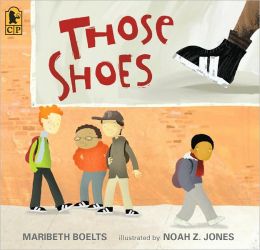
Those Shoes
This is a sweet story of a boy who wants "those shoes", but can't afford them. It resonates with my students and is an example of how a small, slice-of-life story can still carry a theme.

Students like to try to wordsmith different themes for this story, but the concrete plot line makes it easy for them to support a theme that works. This inexpensive paperback is a great choice for a classroom library or teacher bookshelf.


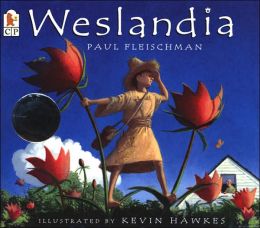
Weslandia
Every time I teach this book I love it a little more! Wesley's journey from tormented victim to intrepid adventurer is a wonder to behold, and Paul Fleischman is just an amazing writer. The kids love the illustrations as well.

Just looking at Wesley's changes in the pictures gives readers a strong insight into the theme of the story. This is another book that resonates with students, and leads to some interesting discussions about the theme.  (I also have a set of resources for this book over on TpT.)


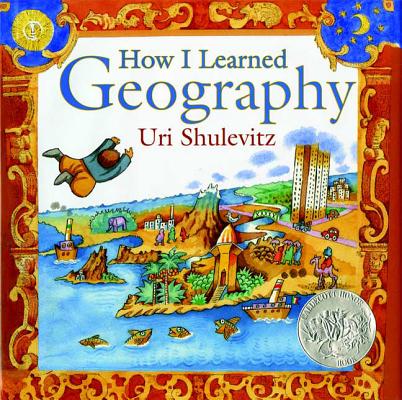
How I Learned Geography
This book is one that I revisit throughout the year, as we look at maps in our geography unit, as we work on personal narratives, and as we explore theme. It is more of a memoir and is alternately classified as "autobiographical" or a "fictional recasting".

Whatever the line between fiction and reality, this book is great to share. My kids think it is interesting that our home state of Pennsylvania is included in a list of faraway places--they have never considered that their everyday ordinary is someone else's distant exotic. Students often have different ideas about the theme. Some bring up the event of the father buying the map instead of buying food, while others focus on the narrator's use of imagination.

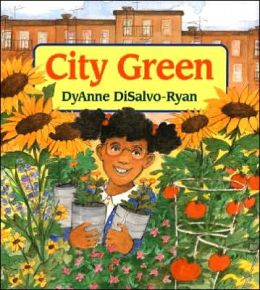
City Green
This is another book which has character change at the heart. It would make a nice companion book to Weslandia, as City Green also shows plants making a difference to people's lives. Students passionately argue for various themes in this story, depending on whether they focus on the character of Old Many Hammer or Marcy. I love it when they can support their thinking!

Beautiful Oops
Students love this book! It really shows how a mistake can be turned into something positive. This book has a stated theme, which leads us into a discussion of paraphrasing versus quoting. Should we put the theme into our own words? Should we use quotation marks to show that we are stating the words of the author? These questions are just perfect for beginning of year fourth graders.


There are so many other great books that you can use to teach theme. What are your favorites?


Tuesday, July 15, 2014

The Challenges and Delights of Teaching Theme

Although they might seem quite different, teaching theme and teaching summarizing have some similarities. Both require teachers to help students see beyond the clutter of details to reach for the gist of the story. An understanding of theme enhances a student's summary of a story--and knowing how to summarize helps readers to infer themes. When planning for a school year, it almost becomes a chicken and egg problem--which should we teach first?

For me, the answer is neither. And both. (This is what makes me so frustrating to the people I work with!) Looking at summarizing narratives and theme as an ongoing exploration instead of a one-and-done unit leads to much deeper learning and far better discussions. These ideas are so intertwined that they cannot be reduced to step one, step two, step three teaching. Instead, they can become a shared foundation for a new community and classroom.


Just like teaching summarizing, teaching theme can be frustrating. Many young readers are very literal and confuse theme with plot. After all, many authors never state a theme directly. It can be confusing for young readers to "find" something that, from their perspective, isn't even there!

Theme bulletin board: I like to display common themes on a bulletin board that I keep up for most of the year. My formatted theme set is available free from Slideshare, or you can make a more beautiful version that fits in with your classroom decor. As we read different stories, we write titles on notecards and add them to our bulletin board. This helps students to see that stories with very different plots can share themes--an idea which will become important as we compare stories later.

Read aloud: Starting the year with many short read-alouds helps us to think about summarizing and theme at the same time. I don't map out my read-alouds weeks in advance--instead, I have a handy selection of my favorite books that I choose from each day. I just never know what will be happening in the classroom and which book will be the best match for our mood!

Theme reference page: Giving students a list of themes helps them to match themes to stories all year long. It is always wonderful to see students looking at their theme list on their own.

Stories with stated and unstated themes: It is so important for students to see examples of both. I like to suggest to students that they reread the last page or paragraph of a story to look for a stated theme--if the author included it, chances are it's somewhere at the end! 

Theme Resources
Theme Unit: This includes three stories and activities to help students recognize and explain themes in stories. I don't usually write about the stories I've written because I'm secretly afraid that someone will tell me I shouldn't write stories anymore. Isn't that silly? One of the stories ("The Arguing Knights and the Hungry Dragon) is a version of a tale that I made up for my sons--here is the original bit from an old blog post. Another story is a retelling of a Grimm fairy tale, while the last, "Evening Adventure", was written after my students fell in love with metafiction. 

Theme PowerPoint: This is a very simple introduction to theme. 

Theme is a challenge for students, but delightful in the end. After all, theme is what literature is all about! Reading stories from different authors and different places that show the same aspects of human experiences makes us all more human. Sharing that experience with 25 other people is just magical.


Tuesday, September 25, 2012

Stories and Activities for Teaching Theme

I'm working on some new stories and activities for teaching theme. I'm trying to create activities that draw students' attention to some higher level literary devices as well as giving them some concrete tools for identifying and supporting theme. Right now I have three different stories, best suited for readers in grades 3-5.

If you would like to test drive them with your students, leave a comment or write to me by October 1. I'll try to get things sent out by next week. I'd love to see some more followers too!

Sunday, July 15, 2012

Common Themes

Last spring, I made a formatted set of themes mini-posters. This year, I'm going to use them to create a bulletin board in my classroom. After we read a text, we'll put the title of the book on an index card and post it under the theme.

Here are the mini-posters on Slideshare:

Common themes formatted
View more presentations from Emily Kissner

Other theme posts:
Troubleshooting theme

Teaching theme


Wednesday, November 16, 2011

Troubleshooting Theme

Teaching theme can be a real challenge. When kids have trouble, here are a few tactics that I've used.

Give kids a list of themes: I can't say it often enough--this transforms your teaching of theme. When kids have a list of themes in front of them, they can understand the abstract nature of the task. Leave some blank spaces on your lists to add themes as you encounter them in text. (You can find a list in Summarizing, Paraphrasing, and Retelling, or write to me for a copy.)

Use lower level texts for teaching theme: This year, I had wonderful success with Mole and the Baby Bird. Now, this is a very easy text. We read it three times before we looked at the the theme. First we watched this wonderful video version. Then we read it again and sequenced the events. By the third reading, I had gotten to that wonderful point where the readers felt secure enough to speak up, offering their own inferences and interpretations. This was the time to bring up theme.

When kids only talk about theme in reference to stories that are a bit of a stretch for them, they'll always put theme in that fuzzy part of their brain where they store ideas that don't quite make sense. Using easy stories helps to make theme a little more comprehensible.

Don't just use fables: Fables seem like they would be perfect for teaching theme. But the moral of a fable is a shade different from the theme of a story. Morals are stated, and the point of a fable is to teach the moral. Most stories, however, have more layers of meaning. Sticking to fables can give kids the idea that themes will always be stated, which is not necessarily true. (You can tell that I started my career with the literature teachers in middle school! No one stands around the copier in an elementary school debating the difference between moral and theme.)

When in doubt, use an Eve Bunting book: This makes for easy differentiation. Go to the library and check out a selection of Eve Bunting books. Struggling readers can read Sunflower House, which has a stated theme in a story told in verse. Other readers can work with Train to Somewhere or Gleam and Glow. Compare themes across books. What do you notice about Eve Bunting as an author? What themes do you see repeated? (Patricia Polacco is another author whose works would be good for this.)

Raise the level of concern: So one day I earnestly taught about theme. I showed the Powerpoint, discussed examples, shared a story. At the end of the session, I asked students to write down an explanation of theme, or an example of a theme. Not one kid could.

This started a serious discussion about what was happening in class versus what was supposed to happen in class. It made an impact, because the kids tuned in to our next conversations about theme. They wanted to learn! They knew that it was important! (They didn't want to hear me lecture again?) Regardless of the reason, things improved.

Connect to other media: Kids often know more about theme than they know. Every single episode of Star Wars: The Clone Wars starts with a statement of theme. So many kids have some knowledge of theme and how it is expressed in a story. Not that they realize this, of course. "Oh, you mean that screen they show before the episode starts?" they ask. Yes! Other popular shows have strong themes as well.

Tell them a theme: If you're working to have kids try to support a theme, sometimes it helps to give students a theme that goes along with a story, and then have them find reasons to support it. What I love about this is that it often spurs students to come up with a different theme, just to be contrary. If they can support it, that's great!

Keep track of themes throughout the year: Make a poster to keep track of themes that you uncover in stories.

Enjoy teaching theme! It's a wonderful journey!

Monday, November 1, 2010

Teaching Theme

*updated 6/18

Theme presents a new challenge for transitional readers. It's not enough to just read the words and figure out who did what to whom in the story. Now they need to synthesize everything from the story to come up with a deeper meaning. For students who are just beginning to think abstractly, this is a tough task.

Students can have several problems with finding theme. At first, many students try to talk about theme by using characters and events from the plot. After all, teachers say, "Use specific details!" These students are confusing theme with summarizing. Students also tend to confuse "theme" with "moral". Many stories, especially fables, have morals. But a moral is not quite the same as a theme. When authors write a story with a clear moral, there is an underlying assumption of right and wrong, and the author clearly wants the reader to do something. Theme is more open to interpretation, and doesn't have as much of an action component.

Here are some things that I do to help students learn about themes:

Universal Themes Chart: Give students a list of common themes. Then, they can try to match stories to the themes. I've had students return to this chart again and again as they read new books throughout the year.


Classroom themes chart: Use a long roll of paper and write themes across the top. Then, students can write titles that they've read (or titles from a class reading list) under the appropriate themes. The same title may appear under different themes, launching a good discussion. I love to hear students talking to each other about books that they have read and the themes they show. Students can write the titles of appropriate movies, also.


Great books for teaching theme: It's so sad that picture books go out of print so quickly! I love Mole and the Baby Bird, which you might be able to find at your local library. Pumpkins, which is still in print, is a lovely little story with an easy to recognize theme.  Older students have enjoyed Fly Away Home by Eve Bunting and The Memory Coat by Elvira Woodruff.

Theme in different genres: Help students to see that biographies, poems, and stories can all express themes. It's eye-opening for students to see how two texts from different genres and with different topics can express the same themes.

Questions about theme: These can bring about interesting conversations.
-Can a story have more than one theme? Why or why not?
-Can a story have a theme that the author didn't intend?
-Are there stories that don't have themes? What are they like?

Theme Powerpoint: I'm trying to make my Powerpoints shorter. :) Here is one that I made to be a very simple introduction to theme.


Theme Unit
In this resource from TeachersPayTeachers, you can find three stories, lesson plans, and activities to help your readers in grades 3-6 work with theme.


Thursday, March 18, 2010

Planning Personal Narratives

I have to admit--I made it through my entire school career without ever once writing a personal narrative. Not once. I filled out the bubbles on the SRA sheets, I answered questions on the lines of my workbook, and I balanced my preferred reading books on my knees under my desk. But I can't remember ever writing a personal narrative.

And this is a shame. As a genre, the personal narrative is a wonderful way for young writers to make sense of their world. There is so much to consider in the writing of a personal narrative. What does the audience know already? What does the audience need to know? Which events are important to explain in detail? Which events can be skipped?

This week, students have been starting to plan their personal narratives. The true power of the personal narrative is to help students look back on events that have happened to them, put those events in context, and figure out the "so what?" Why is this a memorable experience? Why does it stand out in my memory?

I decided that the issue of theme was too important to wait until the end of the writing process. If we think about themes early in the writing process, then students are more likely to weave their themes into their narratives. (That's the hopeful view!)

First, students read the book Those Shoes and talked about the theme. (This is a nice little first-person narrative that tells about a boy who longs for a pair of expensive shoes, but does not get them.)

Then, they looked at a list of themes that I had prepared. It's easier for students to talk about theme when they have a variety of themes in front of them. Here's a link to a version that I put on Slideshare:

Choosing a Theme

Many students easily chose a theme from the list, and explained to their partners why that theme fit their narratives. Some had themes that they wanted to add to the list, which was wonderful! Some students were torn between two themes. In these cases, students decided to either combine both themes into their narratives, or wait until they get into the writing to see which theme is strongest.

In each class, one student shared their story at length so that the class could help them with the theme. Fourth grade narratives are always entertaining! We talked about how sometimes what we think will be boring (a wedding) turns out to be fun...how we can learn from our mistakes (alas, from a poor pet's demise)...and how working together leads to better decisions (choosing a puppy).

I can't wait to see how the narratives turn out. At this point in the process, things look very promising.