Showing posts with label narrative. Show all posts

Sunday, January 24, 2016

Summarizing Narratives


     For many students, summarizing a narrative is far easier than summarizing nonfiction. Narratives are organized in time order, the way that we experience life. The underlying structure of the narrative summary is already built in to our daily experiences. 
    But this doesn't mean that summarizing narratives is easy. Easier, yes, but not at all easy. In fact, students often struggle with many parts of summarizing a narrative. Here is what I look at when I assess student summaries. These are arranged in priority order--to me, it's important to work on comprehension before dealing with writing a summary in present tense.

Comprehension: Did students understand the story? It seems obvious, but many teachers miss the fact that a failure to summarize is based in a failure to comprehend. A great way to explore this with your class is to have them summarize an easy story. With the comprehension weight lifted from their shoulders, students can focus more on the process of summarizing. If you listen to students as they collaborate, you may hear some great metacognitive statements. 

When students are summarizing a narrative that is at or beyond their reading level, they will need more support and structure. Consider giving them the introductory sentence for the summary, a list of words to include, or a scaffolded summary. (Scaffolded summaries can be found in Daily Warm-Up Activities for Narrative Texts.)

Important events: Very capable students often write the longest summaries. "But everything is important!" a student argued. And she's not wrong. When students can really comprehend how all of the events in a story fit together, they want to include all of those fascinating events.

Of course, a summary needs to be shorter than the original text! I  use the question "Which event does not contribute to the outcome of the story?" to help students choose which events to leave out. 

For example, as my students were reading the drama "Perfectly Happy", (available here) many wanted to include all of the trades that the main character made. Looking at examples of how different students left out events or collapsed the list of events helped students to figure out what needs to be included in the summary.

When I realized that students were having trouble with choosing important events to include in their summaries, I taught a series of lessons about how to plan the narrative summary. Students used sketchnoting to take notes--and went back to their notes for the next assignment!


Paraphrasing dialogue: Once students have understood the story and can explain which events are most important, they sometimes fall into the habit of including key dialogue in a summary. I especially see this with stories in which important events unfold through dialogue. (Right now I even have a sign hanging in my classroom: Do not include dialogue in a summary!) 

In my Summarizing Stories bundle, I have some activities that focus on helping students to paraphrase dialogue. You can also show some dialogue from the story, or, to make it even more engaging, from a video. How can students paraphrase this dialogue? 

Using present tense: Many of my students are now working on this aspect of summarizing. After four weeks of summarizing narratives, they have a good handle on the basics and are working on the finer points. Encouraging students to use present tense in their summaries will lead them to more success in high school--and helps them to consider the role of verb tense in their writing. It's a great example of how writing and grammar work together.

Saturday, July 12, 2014

Picture Books for Summarizing Stories

Picture books are a great way to help students summarize. After an engaging shared read, teachers and students together can work to summarize the story. This helps students to learn about how to find important events, which details to include (and which ones to skip!), and how to use academic language to write a skillful summary.

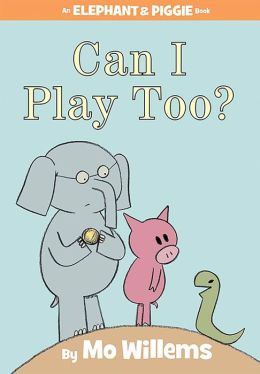
Can I Play Too? by Mo Willems is fun for readers of all ages. There is a problem presented in the story, an attempted solution that doesn't work at all (kids love this page), and a happy ending.

The combination of dialogue and pictures removes all temptation for kids to copy events from the text. Instead, they need to translate what happens on the page into new words. Perfect for summarizing!

With older students, this book is a great way to introduce theme and try to weave a theme into a summary. Would it be best to put the theme at the beginning? Or at the end?


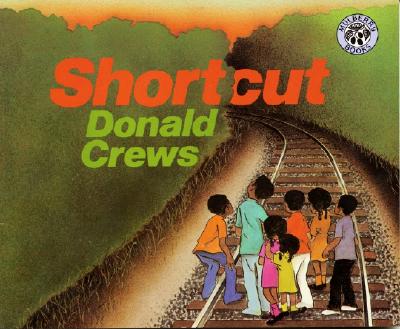
Shortcut by Donald Crews is one book that I would not be able to teach without. I use it for so many things--personal narratives, character emotions, point of view, and summarizing. Like Can I Play Too?, the pictures carry a great deal of weight in the story. This book really shows the flatness of a summary versus a narrative as a finished summary of this book includes the main events, but carries none of the suspense and excitement of the original. This is definitely a book that you will love to have on your bookshelf.

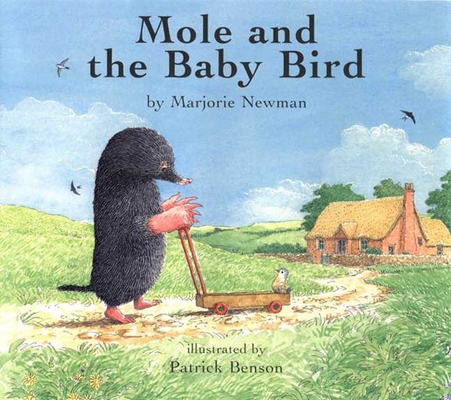
Mole and the Baby Bird by Marjorie Newman looks as if it is meant for a very young reader. However, many readers can identify with the main character's desire to keep a wild bird as a pet. This is a good book to read with students who are struggling with how to represent dialogue in a summary. How can we translate the character's words into sentences? This book is also helpful to use to review the difference between summarizing and retelling. Many students identify so closely with the events in the book that they want to include every detail in a summary. Which events can be deleted, and why?


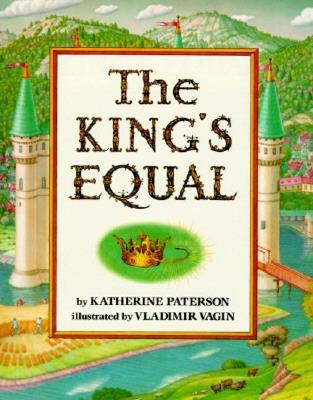
The King's Equal by Katherine Paterson is one of the first "magic books" that I shared with groups of children. I read it aloud to campers at bedtime during one of my three summers as a camp counselor...it was the perfect length to read a chapter each night. Written like a fairy tale, this story is a perfect length for chunk summarizing, or summarizing bits of a story at a time. Try writing a summary of each chapter with students. Then, at the end of the book, look at the chunk summaries all together. Do they represent the entire book? Would it be better to rewrite a summary of the text as a whole? These questions help readers to think deeply about how a story unfolds, and how to represent these plot complications in a summary. (I wrote an entire set of activities for this book--you can find it here.)

You can find more activities for summarizing stories in this unit, Summarizing Stories, from TeachersPayTeachers. For more on summarizing, check out my book, Summarizing, Paraphrasing, and Retelling.

What books do you like to use to teach summarizing stories?

Monday, July 1, 2013

Kinds of Text: Poetry, Drama, and Prose

In my early reading years I did not have a good attitude toward the word prose, mostly because Anne of Green Gables described boring days as "prosey". I wasn't really sure of what prose was back then, but if Anne didn't like it, then I didn't like it either.

As an older reader I realized that prose is not necessarily dull (although the word "prosey" can be found in a number of old books from the 1800s). It's good that I have come to like prose, as it is included in the fourth grade Common Core standards. Students will need to be able to explain "major differences between poems, drama, and prose."

So what are these major differences? It's easy to think about how these different kinds of text are built in different ways. Here is a chart that I made to show this to students:


As you can see, structure is the key to differentiating among these kinds of text. Fiction and nonfiction can apply to any of these texts.

Wow, this will be a tough thing to teach at the beginning of the year. (Or rather--it will be easy to show students the chart and explain it; what will be difficult will be making sure that students can easily access and apply the information.) I'm planning to adapt some of the activities that I already use, like sorting mini-texts, and I've created some new things to help students look more carefully at comparing texts.

Tuesday, April 24, 2012

Collapsing Lists of Events

Right now, we're working on writing summaries of stories. And it's a difficult task! Every year, I find myself starting at the beginning once again, helping young readers to find their way through text. Summarizing brings together so many different skills.

One skill that readers need for effective narrative summarizing is the ability to collapse lists. Collapsing a list is simply renaming a list of specific ideas with a general term. For some items, this is fairly easy--the list of cherries, pineapples, and strawberries can be collapsed to fruit.

In other lists, however, it's a little harder. This task is made even more difficult for struggling readers who may not always understand each component of the list, either due to decoding problems or a lack of background knowledge. The list of Little Round Top, Devils Den, and the Peach Orchard is easy to collapse for Civil War buffs or residents of Gettysburg--these are sites on the battlefield. But someone without this background knowledge would not be able to collapse this list.

In narratives, readers often find themselves collapsing lists of events. I decided to target this when I saw that my students were writing long, rambling summaries. Students and I did a choral reading of the paragraph below:


We hadn't gotten to the fourth sentence before a student called out, "Pizza!" We looked at which clues had helped them to figure out that the text was referring to making a pizza. Then, students worked to write a sentence to collapse the list. In this case, their sentence was also a summary of the paragraph.

You would think it would be very easy, but many of my students struggle with vocabulary tasks. For ELL students,  choosing an appropriate verb is often the hardest part of this. Some of them even had trouble identifying the name of the character, Art. We talked about what they were imagining and what problems they were having. Then, we modeled a good summary of the paragraph.

The second text was also interesting to read. Many of the students know someone named Ethan. I said, "You might picture the Ethan that you know as you read this. But be sure to use the details in the text to build your picture of Ethan--not just what you think you already know."  This time, I read each sentence, and the students read it after me. (I use every chance to model good phrasing and expression!)

"A baby!" one of the students exclaimed. Then we went through and underlined all of the details that helped us to figure this out--the high chair, the tears, the sippy cup. I drew a quick picture of a sippy cup on the board for those students who didn't know what one is, along with clarifying how "'nana" would be spelled if the author were referring to a grandmother.

How would you collapse this list of events? For most adults, the word just trips off the tongue--a tantrum! After a few minutes, one student in my group offered this word, which turned out to be new to about half of the group. These sentences came much more easily, especially once students had this perfect word that encapsulated the entire list of events.

Our next step, of course, is to try this with longer texts. Tomorrow, students will have fun little scripts with dialogue. They will collapse the conversation, trying to capture what information the characters exchanged by writing one sentence. It should be fun--especially the conversation with the cat who drives a car. (Let me know if you'd like a copy of the scripts--I'll post them once I've tried them out with students!)


Monday, August 1, 2011

Getting Started with Kinds of Text

Last time, I wrote about moving beyond calling every text a "story".  As I work on planning my first unit for the school year (yikes!) I'm reviewing and dusting off all of my resources for learning about different kinds of text.

Introducing Narrative, Informational, Persuasive, and Poetic Text
I updated this Powerpoint and posted it. Last year, I wrote it to show how texts with the same topics can reflect different purposes and different kinds of text. It worked very well and gave the students a good starting point for talking about text. These words became some of our first vocabulary words for the school year.

Persuasive and Informational Text
I wrote this blog post last year about how students have such trouble with figuring out when authors are trying to persuade them. (Update on my youngest son's susceptibility to infomercials: Now he is a hardened skeptic, deriding all infomercials as being useless. How quickly they grow up!)

Narrative and Expository Text
Another blog post from last year, this one with Jack and Jill rewritten in different forms.

Readers Theatre
Three scripts to help students learn about author's purpose. (Yes, they're pretty silly!)

What other resources have you found for teaching about kinds of text?

Saturday, July 30, 2011

Fiction, Nonfiction, Expository, Narrative...

Okay, I have to admit it. I hate it when people refer to every text as a "story".


I understand that it's second nature. After all, when I was growing up, our reading class was organized around the basal reader. Every week we read the next story. So I was conditioned to call any piece of text longer than a paragraph a "story".

But not every text is a story. In the past few years, I've tried to be more careful when talking about text with kids. The word "story" does slip out now and again, and I correct myself. It's important to me that kids associate the word "story" with the parts of a story grammar. Using this word to describe an article would send the total wrong message.

Part of the problem, of course, is the question of what else to call these texts. If you look at the literature, you'll see that there are many different ways to refer to texts, just adding to the confusion. Here's a quick rundown.

Fiction/Nonfiction: A Question of Content
The difference between fiction and nonfiction is easy. Fiction texts are not strictly true (while they may contain true events or real people), while nonfiction texts are based on facts. These distinctions are based on what is in the text. Sometimes, a reader has to read very carefully to figure out if something is fiction or nonfiction.

Expository/Narrative: A Matter of Organization
The differences between expository and narrative text are not as well-known (even to other teachers, I've discovered.) Narrative texts tell a story. It's easy to find a beginning, middle, and an end. Usually, narrative texts have characters, settings, conflicts, and a theme.

Expository texts, on the other hand, are structured to explain information. Instead of using the narrative structure, authors of expository text use a host of other text structures. (Lots more on expository text structures here and here and here!)

The tricky part
In the classroom, it's sometimes easy to use "nonfiction" as a shorthand for "expository". It's true--most expository text is nonfiction, and most nonfiction text is expository. But biographical and autobiographical writing is a notable exception. A personal narrative, for example, is a true account of a story from someone's life--a nonfiction narrative.

At the same time, I've seen more and more expository fiction lately. Many students like to read encyclopedic style guides to comic book characters. These guides follow an expository structure, but convey fictional information.

This points to teaching students the words expository and narrative, of course. Some teachers don't like to do this because it adds to the overall vocabulary load of students, and I can understand their point.  I think that fourth graders can easily handle it. Teachers in younger grades, I'd love to hear your thinking on when these terms can make their way into the language of the classroom.

So what do we call it?
Instead of using the word "story", what should we call texts? Well, I usually fall back on the word "text". (Make sure that you teach this word early in the year. If you work with ELL students, show them the difference between "text" and "test".) I also throw in the words selection and passage, as these are likely to show up on standardized tests.

And, of course, there is much to be said for sending the question back to the students. What should we call this piece of text that we're looking at? What does it remind you of? How is it similar to other texts you've read? Even if they do not know the strictly correct terms, they can often give texts names that will help them to make connections across genres.

"Can I have that book that tells you what different things are?" one kid asked when he wanted a field guide. "You know, it has pictures, and tells you names." Another student, when browsing through picture books, noticed that some had people on every page, while others didn't. Were these fiction/nonfiction? Narrative/expository? It would be interesting to find out.

As I unpack my classroom this August after another classroom move, I know that I'm going to leave my classroom library slightly disorganized. Looking at these kinds of text in the first week of school--and talking about how we can put them in categories--will be a great way to start the year.

Sunday, October 17, 2010

The Acorn Mystery

Last week, Aidan and I visited a local park. We found some really neat acorns--smooth, shiny, and already starting to sprout! We filled our pockets to bring them home to see if we could get them to grow.

Well, the next day, we had a surprise--all of the cups and pots had been knocked over! Aidan was upset, and at first blamed his older brother. But we soon realized that Zachary wasn't to blame. Two days before, Aidan had seen a squirrel in the yard, and had taken me to see where it hid under the shed. Well, it became pretty obvious who stole all of our acorns.

This was too good of a story to pass up! I wrote it for my husband's third grade class, changing a few details and adding a flashback. I added some teaching pieces too, like a multiple meaning word page and a sheet with multiple choice questions. Here is the link to it:

http://www.teacherspayteachers.com/Product/The-Acorn-Mystery-Story-and-Activities

When it came to making pictures, I had a problem. Should I draw a picture of a squirrel (much harder than acorns!) or not? I consulted with my husband, who decided wisely that a picture of a squirrel would change the entire reading experience. He is trying to get his third graders to read without relying entirely on picture clues. A picture of a squirrel would give the solution away. Instead, the reader needs to read the text to solve the mystery.

Whew! I'm not sure if I could have drawn a convincing squirrel.

Tuesday, September 21, 2010

Narrative and Expository Text

Today, we talked about the differences between narrative and expository text. This is tough for fourth graders! When we look at books, they are pretty good at figuring out the difference between the narrative and the informational, the fiction and the nonfiction. However, with shorter pieces, they are struggling.

My fourth grade colleague (thanks, Colleen!) suggested that we look at variations of nursery rhymes, and try to figure out what kind of text they are.

Text 1
THE HILL-Two children were injured today in an apparent fall down a hillside.
The children, named Jack and Jill, were going up the hill to get a pail of water. At some point in their climb, Jack fell down. Jill soon followed. Witnesses say that she "tumbled" down the hill.
"All I wanted was a glass of water," Jill said. "But I didn't get it."
The children received minor injuries, but are reported to be doing well.

Text 2
I have never realized what a dangerous game tag could be. When my brother suggested that we go and get water, I said, "Sure!" I like going up the hill. Jack and I decided to play tag as we went up the hill.


But this wasn't a good idea. Because Jack was running, he didn't see the big rock on the hill. He tripped, and then I fell too. It was so embarrassing! I couldn't stop myself and just kept crashing and turning. It was also painful.


When I got down to the bottom, I looked at Jack. He had a cut on his head! (He was also crying.) I ran home to get our parents. I've learned an important lesson--never play tag on a hill.

What did students think? Well, as I predicted, they found these two texts to be challenging. Part of the problem is that both texts have quotations. Both also, in a sense, tell a story. Another problem is that the big feature of a newspaper article, the dateline, was of no significance for students.

The big difference between the narrative and the informational piece, as I told students, is in how they relate the events. A narrative, at its heart, reflects on events. A narrative doesn't just tell what has happened. Instead, it examines and considers the events, reshaping them and showing their significance. The fact that Jill ends the narrative by reflecting on a lesson learned shows this (in a very rudimentary form, of course!)