Showing posts with label summarizing. Show all posts

Monday, September 5, 2022

Quick Reading Assessments


The start of the new school year is almost upon us! My classroom exists in a perpetual state of chaos and disorder!

While it's hard to leave those lazy mornings and sunny afternoons behind, it is exciting to think about preparing for my new group of students. Once I clear a space in my new (smallish) room and figure out my schedule, these are the go-to assessments that I will pull.

Summarizing Narratives

   Learning about how our students process and summarize narratives is a good first step. A student's summary yields a wealth of knowledge about how they approach reading stories, how they understand story structure, and whether they are reading at the local level (looking at individual sentences) or at a global level (thinking of the text as a whole). 

    The problem with student summaries is that they take a long time for students to write, and they take a long time for teachers to read! I've streamlined the process by creating a checklist with key events and ideas from the text. This checklist makes assessing summaries much easier...and makes it possible to share the task with a co-teacher or an instructional assistant. This year, I'm planning to use these tasks for progress monitoring with my enrichment students.

QRI

    I love using the QRI as a quick assessment! The flexibility of using narrative or expository text really adds to the picture of what a reader can do. If you're not familiar with the Qualitative Reading Inventory, the book is a series of short texts and questions for readers of different levels. First, use the word list to get an idea of how students read words out of context. Then, select a text for the student to read, doing a running record as you go, and then ask the student 6-8 questions about what they read. The questions are split into inferential and explicit questions, which adds another layer of nuance into the interpretation of results.

    Now...the manual has lots of directions for getting even more specific with your scoring, but I can do a quick version of the assessment in about 15 minutes. My trick is to split up the word reading and passage reading over multiple days. I have students read aloud from the word list on one day, then score and pull passages for the next day. This helps me to keep my file crate of materials in order! For many students, I skip the retelling portion (after all, I'm scoring summaries!) and set them up for look-backs from the start. Looking back to the text is a skill that I want to encourage, after all!

    The best part of the QRI is how knowledgeable you can sound when talking with other teachers and parents. "This student reads really well with words out of context, and shows a wide range of word-solving skills. When they're reading the text, however, they have trouble with word-solving," or "Wow! This reader does wonderfully with narrative passages that have familiar content. When faced with an unfamiliar topic, though, they have great difficulty, even when new concepts are explained in the text." This is actionable information obtained in a quick, positive session.


Saturday, January 14, 2017

Text-Dependent Analysis: Analyzing Student Responses

    This year, my students have been writing text-dependent analysis essays every other week as part of the Wonders program. It's been interesting to see how students develop with this form of writing. In my state, there is a huge emphasis on the text-dependent analysis for standardized testing, and one of my challenges this year is to keep the text-dependent analysis from overtaking every other form of writing in my classroom.

    It's not hard to figure out why students struggle with this kind of writing. Students write what they read. What 12-year-old is going to have much experience with reading text-dependent analysis essays? For that matter, many teachers that I know don't read text-dependent analysis much either.

    I've gotten really good at reading student summaries and finding incremental progress along the way. For example, I know that every reader goes through the "about" summary phase when summarizing expository text. While the about summary is not on its own a good summary, it seems to be a necessary step for readers and shows real progress over a copy-and-delete summary.

    Faced with 30 text-dependent analysis essays, I've felt a bit lost. What kinds of responses show progress? What patterns can I find? It's been tough to sift through it all, and I'm still really feeling out my way. However, here are a few patterns that I've noticed.

    Most of my students are the point where they know that they had better not turn in an essay that is less than 1 or two pages long! (Even though the program only gives kids one page to write their essays, I always give them an extra page to write more.) However, some students are having trouble with reading and understanding the prompt.


    Students also have entered sixth grade knowing that they need to include quotations from the text in their essays. Now, I've been in the game twenty years, and I must say that even my struggling students compare favorably in this regard to those that I taught 20 years ago. Adding text quotes just wasn't something that was taught at the fifth grade level.
    But some responses indicate that my students have over-learned the use of text quotes. They want to let the text quotes speak for themselves instead of explaining why they are needed. I know that teachers in eighth grade will probably groan and say, "I wish these students would stop writing 'This shows that...'!" However, in sixth grade, the use of this transition indicates a step in the right direction.
     Often, when I ask students, "Why did you put this quote from the text?" they will come out and explain their thinking. I say, "You need to write down that great thinking so that I can read it!"


    I've noticed that asymmetrical development is actually a promising sign. These responses have one really well-developed body paragraph and one sadly neglected one. Often, once I point this out to students in their feedback they realize that they need to develop both areas of analysis to equal quality. Students need to know that they won't be kept in from recess or punished for spending a long time to complete a strong essay. Spreading the work out over multiple days helps with this too.


    What patterns have you noticed in students' text-dependent analysis essays?

Sunday, January 1, 2017

Summary and Analysis: An Approach to Middle Level Homework

 I like to look at "homework" as an ongoing set of reading activities that students can do either in or out of school. Some students like to do reading activities at home on their own or with adults. This is great! For students who don't have that home support, I like to build in flexibility within the school day for students to do the activities in the classroom. It's not hard to manage this approach and makes everything about my teaching life so much easier.

 When I taught fourth grade, I spent years devising meaningful homework assignments with vocabulary, fluency practice, and writing. (You can find the January set here.) I loved these packets because they were fun and interesting for kids and adults.

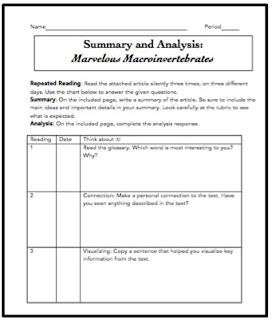
The move to sixth grade forced me to think of a new homework routine. What kinds of activities did sixth graders need for ongoing practice and response? I devised the Summary and Analysis packets to answer this question. Each packet contains an article, a summarizing prompt with a rubric, an analysis response question, also with a rubric, and a comprehension quiz.

I started with the texts. The teacher side of me said, "I need high-quality, well-researched texts related to our science topics, please!" The writer side of me harrumphed, procrastinated, and finally came through.

I assign texts on an alternating week schedule, with assignments due every other Thursday. This gives students plenty of time to work on the assignment both in and out of class. To add to the enjoyment and understanding of the texts, I often show a video or two about the topic--here is my playlist: Article Response Playlist.

Through the months I've tweaked the routine a bit. At first I thought that students would read the texts and generate responses and questions on their own. They found this very challenging, however, which led me to adding some questions to the assignment cover sheets. I've found it interesting how much students resist repeated readings, even with the support that I provide in the classroom. The repeated readings are so important for fluency and for comprehension! I still have trouble convincing students of this, however.

A key component of each packet is the summarizing task. I feel on pretty solid ground as I teach students how to summarize--after all, I've written a book about it--but every year students find new and interesting ways to baffle me. This year, my own son took to writing "about" summaries, which led to some funny home conversations while I was scoring student work! (For more on these, check out this blog post from last year.)

One scaffolding tool that I didn't get to write about in my book is the simple topic/details frame. I've added some of these to the Summary and Analysis packets to help students see how the texts are developed. Very simply, these graphic organizers show the headings in the text and provide space for students to write key ideas. They work well for students and can be provided with varying levels of support.

After students summarize, they respond to a prompt. Most of these are analysis prompts. Some lead to an essay, while others can be answered completely in just a paragraph or two. These analysis prompts are very challenging for sixth graders, many of whom still confuse content with structure. Most of the analysis questions ask students to think about how a piece is written, and sometimes students try to answer by writing about content or rewording their summaries. This shows me that analysis is a skill that needs continued practice and feedback!

A summary and analysis routine is easy to implement with any texts! If you are interested in checking out what I have written, you can find a bundle here.


Thursday, March 31, 2016

Comparing Texts: New Passages!


This year I've been working on new Article Response sets to use as ongoing practice and homework with sixth graders. They have worked wonderfully all year and I'm thrilled to share them.

All of the response sets are set up in a similar pattern: cover sheet, summarizing prompt, response prompt, and text. Each also has a comprehension quiz.

At the start of the year, I planned to send these home as homework. As the year has progressed I've changed my thinking! We start class with ten minutes of independent reading followed by ten minutes of working on the texts and responses. Some days I do a mini-lesson about summarizing or writing a response, while on other days students partner read. A two-week span for each packet gives us enough time to have thoughtful conversations without feeling pressured to produce.

"Damon and Pythias" and "The Two Travelers"

The latest two sets have been focused on comparing narratives. I think that comparing texts is such a meaningful, authentic purpose for close reading. When kids read two texts and spontaneously offer comparisons, I know that good things are happening!


This text set pairs a retelling of "Damon and Pythias" with a version of the fable by Aesop "The Two Travelers". Both of these stories examine the meaning of loyalty and friendship, but in very different ways! For students dealing with sixth grade drama, the concept of loyalty is fascinating to discuss.

We acted out both stories in class. Acting out stories helps readers to grasp the action and better understand the events. When it came time to summarize "Damon and Pythias", students really were able to consider which events were important to the outcome of the story and which were not! The fable "The Two Travelers" teaches a lesson about friendship through a non-example, and raises an interesting question for students--did the bear in the story really talk?

"Damon and Pythias" is also the basis for the 2003 film Sinbad: Legend of the Seven Seas. If you are working on comparing texts, this is a great opportunity to compare a story to a film.

"The Elves and the Shoemaker" and "The Magical Cyber Elf"


This text set has been perfect for reviewing key content for standardized testing! I started with thinking about the classic fairy tale "The Elves and the Shoemaker". How could this story be translated for modern times? Because I am currently up to my ears in yearbook work the modern story "The Magical Cyber Elf" came to mind.

There have been so many great concepts to review with this text set. We used "The Elves and the Shoemaker" to review the parts of a plot diagram and talk about theme. Then, we used "The Magical Cyber Elf" to discuss point of view and how a shifting point of view can influence the unfolding of events in a story. We had some great conversations about how the themes of the two stories are very similar, even though the settings and conflicts differ.

If you try these text sets, let me know what your students think!


Sunday, January 24, 2016

Summarizing Narratives


     For many students, summarizing a narrative is far easier than summarizing nonfiction. Narratives are organized in time order, the way that we experience life. The underlying structure of the narrative summary is already built in to our daily experiences. 
    But this doesn't mean that summarizing narratives is easy. Easier, yes, but not at all easy. In fact, students often struggle with many parts of summarizing a narrative. Here is what I look at when I assess student summaries. These are arranged in priority order--to me, it's important to work on comprehension before dealing with writing a summary in present tense.

Comprehension: Did students understand the story? It seems obvious, but many teachers miss the fact that a failure to summarize is based in a failure to comprehend. A great way to explore this with your class is to have them summarize an easy story. With the comprehension weight lifted from their shoulders, students can focus more on the process of summarizing. If you listen to students as they collaborate, you may hear some great metacognitive statements. 

When students are summarizing a narrative that is at or beyond their reading level, they will need more support and structure. Consider giving them the introductory sentence for the summary, a list of words to include, or a scaffolded summary. (Scaffolded summaries can be found in Daily Warm-Up Activities for Narrative Texts.)

Important events: Very capable students often write the longest summaries. "But everything is important!" a student argued. And she's not wrong. When students can really comprehend how all of the events in a story fit together, they want to include all of those fascinating events.

Of course, a summary needs to be shorter than the original text! I  use the question "Which event does not contribute to the outcome of the story?" to help students choose which events to leave out. 

For example, as my students were reading the drama "Perfectly Happy", (available here) many wanted to include all of the trades that the main character made. Looking at examples of how different students left out events or collapsed the list of events helped students to figure out what needs to be included in the summary.

When I realized that students were having trouble with choosing important events to include in their summaries, I taught a series of lessons about how to plan the narrative summary. Students used sketchnoting to take notes--and went back to their notes for the next assignment!


Paraphrasing dialogue: Once students have understood the story and can explain which events are most important, they sometimes fall into the habit of including key dialogue in a summary. I especially see this with stories in which important events unfold through dialogue. (Right now I even have a sign hanging in my classroom: Do not include dialogue in a summary!) 

In my Summarizing Stories bundle, I have some activities that focus on helping students to paraphrase dialogue. You can also show some dialogue from the story, or, to make it even more engaging, from a video. How can students paraphrase this dialogue? 

Using present tense: Many of my students are now working on this aspect of summarizing. After four weeks of summarizing narratives, they have a good handle on the basics and are working on the finer points. Encouraging students to use present tense in their summaries will lead them to more success in high school--and helps them to consider the role of verb tense in their writing. It's a great example of how writing and grammar work together.

Thursday, October 22, 2015

Summarizing Nonfiction...Again and Again and Again


It's been nine years since I wrote a book about summarizing, and I keep feeling like I learn more and more. This year, as I've moved back into sixth grade, I decided to start the year with frequent summarizing tasks. I'm teaching summarizing, but I feel like I'm the one who is learning lessons!

This year's summaries are based on a set of four expository texts about water. Each text has a similar structure and text features. My goal was to build on repeated experiences and frequent feedback to level up my students' summarizing skills.

Here are some of the things that I have learned (and re-learned!) so far this year.

Provide limited space for the summary
    Conscientious sixth graders want to do well! In many cases, this means that they write summaries that are almost as long as the original text. There are two different profiles for the writer of the long-winded summary. On the one hand, you'll see kids who are proficient readers and have a large working memory produce these summaries. They just have a big capacity for details, and they understand everything in the text. On the other hand, some kids who are struggling but conscientious will create these summaries. They're not sure of which details are most important, but they want to please the teacher and so they put them all in.
    My problem when I get these summaries? I'm too soft-hearted! These kids have obviously worked hard, and at the start of the year it's tough for me to hand them back for the kids to redo.
    When I provide limited space for the summary, though, I let the lines do the heavy lifting. "Make sure your summary fits in the space," I say, and when kids ask for extra paper, I give them a small sticky note.
    How much space should you provide? A good rule of thumb is to think about how much room it would take to write a sentence for each paragraph, and then add 3 or 4 more. This gives kids with big handwriting enough room to write a good summary without going overboard.

Teach students to chunk the summary process
    Some students look at the article and think, "I can never summarize that!" In many texts, though, kids can use the headings to guide them through. This is especially helpful for chunking a summarizing assignment for students with learning disabilities. "Don't worry about the whole thing today," I tell students. "Let's just do this first chunk."
    This also helps students who tend to summarize in a knowledge-telling fashion. These students write everything they remember about the text, in the order in which they remember it. A summary written like this tends to sound like a list of random facts instead of an organized summary. By reminding students to go back to the text, you can give them an anchor for their thoughts.

Beware the "about" summary

    Around about the third summary I start to see the topic-based summaries creeping in. Students are becoming more efficient with their summarizing and decide to take a shortcut.
    These are actually signs of good progress. Usually, I end up writing about twenty times: "Don't say what the article was about--actually include the information!" Once kids see the difference, they realize that the 'about' summary is quite empty of actual facts.

Look for growth over the long haul
    The development of summarizing skill is a long process. As readers grapple with more and more complex texts, they need to see how they can wrestle ideas to the page to write a summary. Students won't necessarily become strong summarizers after one lesson, or two, or even three. However, the good news is that repeated summarizing can build comprehension as well. I like to think of teaching summarizing as test-prep I can live with!


Monday, June 22, 2015

Building Content Area Reading Skills: Nominalizations

This summer, I'm reading The Tale of the Dueling Neurosurgeons at the recommendation of my 16-year-old. While I would never use this with elementary students, reading this book helps me to think about content area reading and the challenges that our students face as they read in the content areas. As I look toward a switch to sixth grade, I'm looking at more sophisticated content area reading selections, and so I want to be ready! 

Content area reading brings some big challenges for readers. Readers have to learn new vocabulary, figure out the style of the writer, and understand new concepts. One aspect of content area reading that I find especially intriguing for readers is the idea of nominalizations. 

Here is an easy example of a nominalization:
nominalization
Northern water snakes can be brown, gray, or reddish. These differences in coloration can cause confusion among wildlife viewers.

In this sentence, the word coloration refers to the different colors that are possible for the northern water snake. Nominalizations are great for writers. Writers can change a verb into a noun and flexibly refer to a whole range of concepts. This is why we see nominalizations so often in formal, content area text--they are efficient, they are precise, they carry loads of meaning in a little space.

However, nominalizations can be tough for readers, especially when they refer to an abstract concept. Consider this example:


The word "restoration" is important to the text. However, readers may have trouble making the connection between the previous sentence and the meaning of restoration. Instead, they may think that the paragraph beginning with restoration is introducing a new topic. An entire section of the text will be fuzzy for them, which will cause problems for making inferences later in the text! 

Clearly, teaching content area text means that we need to find and teach these tricky words. Here are some ideas to remember.


For further reading:


Bergen, Benjamin, Shane Lindsay, Teenie Matlock, and Srini Narayanan. 2007. “Spatial and Linguistic Aspects of Visual Imagery in Sentence Comprehension.” Cognitive Science  31: 733-764.

Fang, Zhihui, Mary Shleppegrell, and Beverly Cox. 2006. “Understanding the Language Demands of Schooling: Nouns in the Academic Registers.” Journal of Literacy Research  38:3, 247-273.


Tuesday, January 13, 2015

Improving story summaries by summarizing dialogue

When it comes time to summarize stories, many intermediate readers just don't know what to do with the dialogue. They know that dialogue is important, and that it carries information. But they also know that they shouldn't include too much dialogue in a summary.

The great news is that teaching readers how to summarize dialogue is pretty fun. "Don't include dialogue in a summary" is easy to say. But what should readers do instead?

This is what we practice! Short, funny skits are the ideal tool for this.

Here is one that students read in small groups after they finished their passage-based essays. You can imagine the laughter that spread through the room as students progressed further into the script!

So then students perform the script, and we talk about how to summarize the dialogue. What happened? With imaginary rewind buttons we can have the performers repeat parts of the script as necessary--very fun--and we have been known to mute them on occasion.

A list of words to summarize dialogue is helpful. I love word lists in general because they are such an efficient way to build word knowledge quickly. Many readers will return to word lists weeks and months after a lesson to find just the right word for an activity.

If you have students struggling with summarizing stories, try spending some time on summarizing dialogue. You'll hear some interesting insights and have great conversations!

Links
Summarizing Stories  includes more activities for summarizing dialogue, as well as the script and word list included here.


Tuesday, December 9, 2014

You can do better than a generic summary frame

   This week, Pinterest has repeatedly coughed up a pin with a generic summary frame. "Use with any informational text!" the caption reads. This generic summary frame has lots of color and a bright, cheerful font. Basically it looks like this: "I read the text ____________. First ______________. Then I learned that ________________. Finally I found out ____________________."
   I wince every time I see it. If there is one thing that I know about teaching summarizing, it is that one frame cannot be used with every informational text.

Summarizing

   I first learned this more than 10 years ago, as I researched my first book, Summarizing, Paraphrasing, and Retelling. Intrigued by what I was observing in my classroom, I read scores of articles about summarizing, reading about how readers develop summarizing skills and how teachers can support this process.
    And there is so much to learn about summarizing! A teacher can learn so much about a student's reading processes by looking at a student summary. Some summaries are too long. Others do not reflect the main ideas of the text. Other students use the "copy and delete" strategy, copying some ideas from the text and leaving out others.

Topic Summaries

   One kind of summary that is particularly thorny for intermediate readers is what I call the "topic summary". This summary just gives a run-down of the main topics in a text: "I read about mummies. First the author explained how mummies are made. Then the author described why mummies are important. Finally the author told about mummies today."
    This is not a good summary! Notice how it just discusses the topics, but not the main ideas. When I have students who write these summaries (and usually they are strong readers), I know that we need to discuss the difference between topics and main ideas. These topic summaries can often be written by just running down through the headings of the text. But do they show a deep and rich understanding of the content? Not at all.
    Another problem with the topic summary is that it uses chronological order transitions instead of reflecting the structure of the text. In fact, a topic summary reads more like an account of the reader's experience of the text instead of showing the author's ideas.

Generic Summary Frames

    ...but what does a generic summary frame lead kids into writing? Yup. A topic summary.
    Teaching readers how to summarize is hard. But we need to acknowledge and embrace this difficulty instead of looking for a simple fix. Generic summary frames attempt to circumvent the real cognitive work of crafting a summary and boil it down into something simple. Getting really good at this kind of writing will not naturally lead into being able to write sophisticated summaries.

What to do instead?

    Lots of things! The first step is to figure out what students can do independently. Give them an appropriately leveled text and have them write a summary.

Blank stares
   If they don't have any clue of how to begin, this tells you to start with some model summaries. Use short, familiar texts to show students what a good summary looks like.

Scattered summaries
    When students have a shaky understanding of a text, they produce oddly scattered summaries. This represents students' attempts to play the game of summarizing--they pick out ideas from here and there, without understanding how the whole text hangs together.
     Techniques that focus on basic comprehension really help students who are writing these summaries. Try retelling nonfiction texts. When kids put ideas into their own words, they have to wrestle with the language and pin down the meaning. Next, show students how authors signal main ideas in a text with headings and topic sentences.

Long summaries
    If students write really long summaries with the main ideas of the text, they are probably comprehending well. Start by telling students, "Okay, cross out one sentence from your summary." Expect some resistance--"It's all important," or "I can't decide!" After some time, though, students will probably find at least one sentence to take out. Repeat, repeat, repeat! Eventually students will bring you their work and say, "Don't tell me to take out a sentence, because I already thought about everything that was most important and I only wrote that."

Making a scaffolded summary
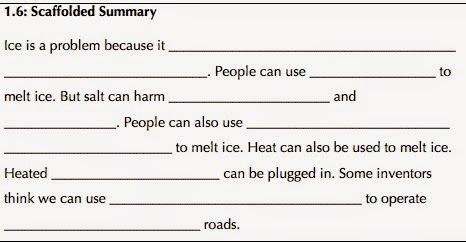
    All students can benefit from a scaffolded summary. Simply write a good summary of a text, and then decide which parts to give to students, and which parts to leave out.
    In a scaffolded summary, you can decide how much support to give to students. The scaffolded summary at the right is a very supportive frame, which gives students a great deal of language. It can become easy for kids to think of this kind of task as simply "fill in the blanks", so be sure to connect this to meaningful summarizing. (This particular summary is from Daily Warm-Up Activities, Grade 3).
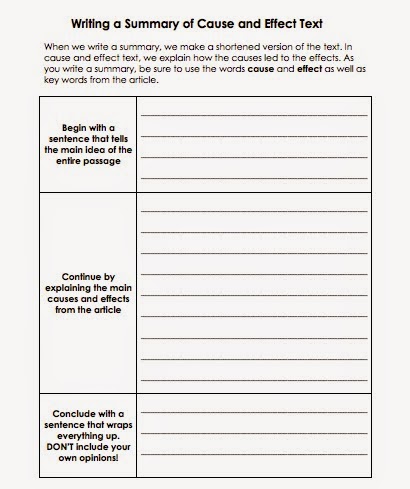
    A scaffolded summary with less support can be seen here. Notice that this frame does not give any language specific to the text, but gives suggestions based on the text structure. It's different from a generic summary frame because it does not claim to be suitable for all passages--in fact, it only works for cause and effect text.
    Lately I've found that teaching summarizing as I teach each text structure yields great benefits. This page is from Cause and Effect Activity and Texts.


    Teaching students how to summarize is hard. Anyone who says differently is selling something...probably a generic summarizing frame.

Saturday, July 12, 2014

Picture Books for Summarizing Stories

Picture books are a great way to help students summarize. After an engaging shared read, teachers and students together can work to summarize the story. This helps students to learn about how to find important events, which details to include (and which ones to skip!), and how to use academic language to write a skillful summary.

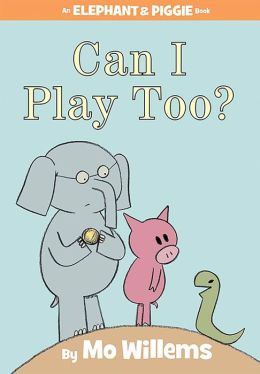
Can I Play Too? by Mo Willems is fun for readers of all ages. There is a problem presented in the story, an attempted solution that doesn't work at all (kids love this page), and a happy ending.

The combination of dialogue and pictures removes all temptation for kids to copy events from the text. Instead, they need to translate what happens on the page into new words. Perfect for summarizing!

With older students, this book is a great way to introduce theme and try to weave a theme into a summary. Would it be best to put the theme at the beginning? Or at the end?


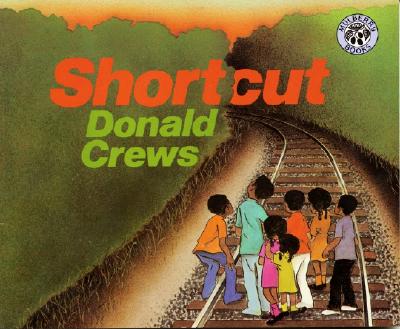
Shortcut by Donald Crews is one book that I would not be able to teach without. I use it for so many things--personal narratives, character emotions, point of view, and summarizing. Like Can I Play Too?, the pictures carry a great deal of weight in the story. This book really shows the flatness of a summary versus a narrative as a finished summary of this book includes the main events, but carries none of the suspense and excitement of the original. This is definitely a book that you will love to have on your bookshelf.

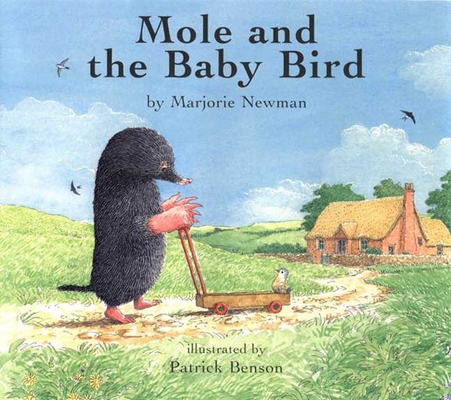
Mole and the Baby Bird by Marjorie Newman looks as if it is meant for a very young reader. However, many readers can identify with the main character's desire to keep a wild bird as a pet. This is a good book to read with students who are struggling with how to represent dialogue in a summary. How can we translate the character's words into sentences? This book is also helpful to use to review the difference between summarizing and retelling. Many students identify so closely with the events in the book that they want to include every detail in a summary. Which events can be deleted, and why?


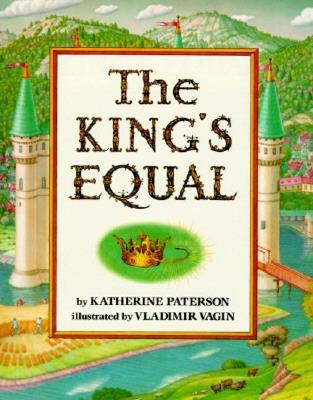
The King's Equal by Katherine Paterson is one of the first "magic books" that I shared with groups of children. I read it aloud to campers at bedtime during one of my three summers as a camp counselor...it was the perfect length to read a chapter each night. Written like a fairy tale, this story is a perfect length for chunk summarizing, or summarizing bits of a story at a time. Try writing a summary of each chapter with students. Then, at the end of the book, look at the chunk summaries all together. Do they represent the entire book? Would it be better to rewrite a summary of the text as a whole? These questions help readers to think deeply about how a story unfolds, and how to represent these plot complications in a summary. (I wrote an entire set of activities for this book--you can find it here.)

You can find more activities for summarizing stories in this unit, Summarizing Stories, from TeachersPayTeachers. For more on summarizing, check out my book, Summarizing, Paraphrasing, and Retelling.

What books do you like to use to teach summarizing stories?

Thursday, July 10, 2014

Summarizing Stories

Summarizing a narrative seems like it should be easy. After all, stories are told in chronological order. We experience life in chronological order. Stories have a clear beginning, middle, and end.

However, anyone who has ever read student summaries of stories knows that this is not always an easy skill. Sometimes a student summary reveals that a student is reading with shallow comprehension, not attending to place names or character names. Sometimes a student summary shows that a student did not understand how the pieces of a story fit together. And sometimes a summary reveals that a student is struggling with deciding which information is important and which details are not important.

As I work with students to summarize stories, I keep these ideas in mind:


Here are some fun classroom activities that you can use to teach students how to summarize stories.

Retold in 60 Seconds: Can you retell a story in 2 minutes? 60 seconds? 40 seconds? This activity is fun for everyone and really helps readers to consider which events and details can be left out, and which ones must be included.

Solving the Retelling Problem, Part 1: Some of my favorite resources for getting kids started with retelling.

Solving the Retelling Problem, Part 2: Struggling readers need lots of support as they manipulate figures to retell a story. This anecdote explains how I coached a reader through this.

Collapsing Lists of Events: When student summaries are too wordy, they often benefit from learning how to collapse lists of events.

Summarizing Stories: This unit has resources for teaching students how to summarize dialogue, collapse lists of events, and summarize parts of stories.


Monday, July 7, 2014

Formative Feedback for Student Summaries

Yesterday I wrote about teaching paraphrasing. Readers need to be able to paraphrase, and to have fun with putting ideas into new words.

Summarizing is a next step. A summary is a shortened version of a text, and follows some formal rules. This blog post includes some activities for scaffolding summarizing, including summary frames, group summaries, and summary selection activities. (You can find other activities in my book, Summarizing, Paraphrasing, and Retelling.)

How often should students write summaries? In my classroom, they become fairly routine assignments, with students summarizing texts every two weeks or so.

But I don't grade them all! In fact, I don't recommend any formal assessments of student summaries until they have had at least 3 tries at writing informal summaries in the classroom. Not only will this keep you from having to write the same comments over and over, but it will give students a chance to work through the really hard task of summary writing in a supportive environment. (I do keep some of the first-try summaries so that students can reflect on their progress.)

But just because I'm not grading the summary doesn't mean that I don't give feedback. In fact, I "clipboard cruise" as students work on summaries, jotting down notes of what I notice and which students seem to be working well and which will need more help. And I talk with students about what I see. In the first few attempts, I listen more than I talk--"What did you notice as you wrote this? What was a challenge?" Then I start to offer comments. Here are some of my favorites:


I like to start with "What was hard for you?" to help me gain some insight into the reader's processes. If a student says, "Nothing" then I worry--every summary offers some challenges and I want readers to have control over what they are doing.  Sometimes readers talk about the structure of the text, or the difficulty of putting lots of information into a few sentences.

The "Find two sentences that are not needed" comment is one that I usually start to offer in the middle of the year. Many fourth graders fall in love with details! Suggesting that they choose a few sentences to eliminate can help them to think about what is really important. (Some students begin to predict what I will say--"You're going to tell me to take something out, I know it"--which really shows their metacognitive awareness. And my predictability.)

Having two students compare summaries makes the complete circle back to paraphrasing. After all, no two summaries are ever the same. Seeing how their classmates solved the problem of summarizing in different ways helps students to see the dazzling array of ways to express ideas.

Looking for short texts for summarizing? Multi-leveled texts and activities can be found in Paraphrasing and Summarizing Lessons. Also, summarizing activities are included in my text structure units, including Cause and Effect and Description.

Sunday, July 6, 2014

Teaching Paraphrasing

Waaayyy long ago when I taught seventh grade, I had a folder in my filing cabinet called "Paraphrasing". I had a few worksheets in the folder, things that I would use to try to teach paraphrasing, but my heart wasn't in it. I didn't really see the purpose.

Now, of course, I realize that teaching paraphrasing is at the heart of all learning. To paraphrase is to put someone else's ideas into your own words--which is what we do all the time when we are learning new ideas, seeing new images, gathering new experiences. When we teach students how to paraphrase, we teach them how to make information their own. Paraphrasing doesn't just live as a lesson or two in a research unit. Paraphrasing is in everything we do.

Teaching paraphrasing can be far more interesting than dusting off some worksheets! Here are some activities that help students recognize the importance of paraphrasing and learn how to do it.

Paraphrase across genres
Translating images to words (and vice versa) is a good way to help readers to think about how ideas are conveyed. For example, my youngest son and I had a great time at the National Gallery looking carefully at the images and paraphrasing what we saw. Turning a picture into a sentence encourages readers to consider words and explore relationships.

Explain the basics of paraphrasing
At the writing level, paraphrasing comes down to two processes: replacing words in the target sentence or text with synonyms, and/or changing the structure or order of ideas. (You can find more on this in my book, Summarizing, Paraphrasing, and Retelling.)

Paraphrasing skill, then, requires that students be able to replace words with synonyms. Students also need to be able to figure out how rework and rearrange sentences. This is tough! I've had students tell me, "That sentence cannot be rearranged"--when of course it can. Playing around with sentences and their arrangement can help students to improve with paraphrasing.

Show examples of paraphrasing
Showing students examples of two sentences that convey the same idea in different ways helps them to see how paraphrasing works. I like to use a card match activity in which each student has a sentence, and then they have to find the person who has the paraphrased version of their sentence. Partners then look at how the two sentences are similar and different. Which words can be replaced? Which words cannot be? For example, one student has the sentence Jane enjoys hiking through the forest on crisp autumn days while another student has the sentence During the fall, Jane likes hiking through the woods. Autumn can be replaced with fall, but the word Jane must stay as it is.

Help students to find examples of paraphrasing gone awry
We've all read examples of bad paraphrasing--a student who misinterpreted a word or misjudged an author's meaning. I like to show intentional cases of bad paraphrasing, especially examples with the copy-and-delete method. Can a reader just take out words here and there? How does the meaning change? This approach can be more fun than ordinary paraphrasing, especially if you create amusingly bad versions of your classroom rules.

Share lots of related texts
When students ride texts on similar topics, they naturally find and notice examples of paraphrasing. These natural examples help readers to build awareness of how ideas can be expressed in different ways. It can be helpful to make charts to show how important ideas are stated and restated in different ways. Intermediate students are often quick to notice how some beginner texts state ideas in simple terms, but lose some meaning in the process.

Paraphrasing and Summarizing Lessons: Available on TeachersPayTeachers


Notes
-Text structure assessments are now available on Frolyc. These assessments are designed to be easy to publish to student iPads. I'm looking forward to paperless assessments! You can find the Grade 3 assessment here and the teaching guide here.

Tuesday, October 9, 2012

Three ways to improve student summaries

Earlier this week I had the pleasure of pulling out my presentation suitcases and doing a presentation about summarizing. I've been presenting on this topic for about five years now, but each time is new and interesting. There are just so many nuances to teaching summarizing, so many things to consider as I try to find that right match between reader and task.

I decided to structure the presentation in a new way this time, looking at several ways that classroom teachers can easily build summarizing skills in students. Here are three that work well for me in my classroom.

Retelling
I love retelling as an instructional strategy for any grade level. For students who seem to be having trouble remembering information from a text, retelling with a partner can be a good place to begin. I especially like having students use pictures or props to retell a text.

Don't neglect retelling nonfiction. Here are some simple directions that I give to students as they retell nonfiction.


Written paraphrasing
Paraphrasing is simply restating an author's words in a new way. This can be a difficult task for students who lack a wide bank of vocabulary words. Working with shorter pieces of text helps to build these skills a little at a time.

I like to project a page or a paragraph from a text and have students paraphrase the events or the information. This is pretty quick, and it lets us talk about the challenges that the text poses. What lists do we need to collapse? How can we find other ways to arrange the sentences? Besides helping students to improve their summarizing skills, paraphrasing parts of texts will also help students to put together text evidence to support their answers to open-ended questions.

(More specifics can be found in my paraphrasing and summarizing unit or in the book Summarizing, Paraphrasing, and Retelling)

Scaffolded summaries
A scaffolded summary is like a writing frame. The teacher provides part of the writing, and the students provide the rest. Scaffolded summaries can offer more or less support, depending on student needs. Here is a highly supportive summary that I gave to students as a first step into summarizing. Notice that I combined the summarizing task with a vocabulary task, putting a word bank at the top of the page. (The text is from the fourth grade Fluency Formula book.)


With a highly supportive scaffolded summary, it's important to keep the task from becoming just a fill in the blanks activity. Doing a choral reading of the entire summary can help kids to hear the academic language. (In my classroom, kids like alternating reading with boys reading one sentence, and girls the next. They also enjoy "reading like spies"--reading aloud as if every sentence ends in a deep, dark secret.)

Another way to make this an engaging task is to show students a summary with wrong answers filled in. Why are they wrong? What details from the text can show this?

As students become more skilled in summarizing, the frame can offer less and less support. Here is a scaffolded summary frame for students to use as they summarize chronological order nonfiction text. Notice that this frame is not text-specific, but can be used with any text that goes along with this text structure. (This frame is included in my text structure unit on chronological order. Frames like this are included in all of the other text structure units as well.)

Teaching students to summarize is hard. The most important thing to keep in mind, however, is that summarizing must be revisited again and again. It can't be a single unit that you teach once and then put aside. Instead, students need to see summarizing activities with every text. Whether you are retelling, paraphrasing parts of text, or using a scaffolded summary, ongoing activities will help your students to be successful.


Monday, July 30, 2012

Summarizing and the Common Core: Grades 2-4

Summarizing is very important in the Common Core. What do students need to be able to do? How can we prepare them for these demands? It can be helpful to look at the requirements grade by grade.

Grade 2, RI 2: Identify the main topic of a multiparagraph text as well as the focus of specific paragraphs within the text.

Looking at topics is a very important first step to summarizing. I tell students that a topic can describe a text in one or two words. Often, kids will overgeneralize with topics. For example, consider this book about tigers. Try showing students a page from the text without the heading. What is the topic? Many of them will go right back to the topic of the entire book--tigers. But each page in this book has a more specific topic. Can kids find this more specific topic? An easy way to have kids work with this is to cover up the headings with sticky notes and have kids try to write their own headings for each page. (By the way, my own almost-second grader loves the National Geographic kids book--I think we own just about every single one! They are well-written, widely available, and inexpensive.)

Grade 3, RI 2: Determine the main idea of a text, recount the key details and explain how they support the main idea.

Hmm..."recount the key details" sounds a great deal like retelling, doesn't it? As students progress to longer informational texts in third grade, it is important that they continue to practice retelling so that they can work on remembering important information from a text. This activity helps students to practice retelling.

I wrote this Finding Topics and Main Ideas presentation several years ago. This presentation is an easy way to help students find those main ideas and key details in text.

Explaining how details support a main idea can be trickier for third grade students, especially those who are not yet thinking abstractly. After all, the whole idea of details "supporting" a main idea is figurative. Working with opinion paragraphs (especially paragraphs that they find disagreeable!) can help them to understand how this process works. For more ideas, you can look at Main Ideas and Details in Nonfiction Text, which includes paragraphs for practice, a center activity, and a PowerPoint that clearly explains how details can support a main idea.

In third grade, students should also be expected to choose the best summary from several choices. This is a fairly easy activity to add to regular instruction. Watching which summary students choose can help you to learn about their reading processes.

Grade 4: Determine the main idea of a text and explain how it is supported by key details; summarize the text.

At fourth grade, formal summarizing begins. One mistake that I have made in the past is acting as if summarizing is difficult or unpleasant. ("Oh, we'll skip writing a summary this time--you've worked so hard today!") Summarizing needs to become a routine, something that students are used to doing frequently.

This lesson can help students learn the basics.

But just talking about the rules isn't enough to help students write successful summaries. They also need more experiences with choosing the best summary, critiquing summaries, and deciding which details need to go into a summary. For texts and activities to help students become more successful, you can look at Paraphrasing and Summarizing Lessons for Nonfiction Reading.

Next time, I'll write about increasing summarizing difficulty in grades 5-7. :)