Showing posts with label reading. Show all posts

Monday, September 5, 2022

Quick Reading Assessments


The start of the new school year is almost upon us! My classroom exists in a perpetual state of chaos and disorder!

While it's hard to leave those lazy mornings and sunny afternoons behind, it is exciting to think about preparing for my new group of students. Once I clear a space in my new (smallish) room and figure out my schedule, these are the go-to assessments that I will pull.

Summarizing Narratives

   Learning about how our students process and summarize narratives is a good first step. A student's summary yields a wealth of knowledge about how they approach reading stories, how they understand story structure, and whether they are reading at the local level (looking at individual sentences) or at a global level (thinking of the text as a whole). 

    The problem with student summaries is that they take a long time for students to write, and they take a long time for teachers to read! I've streamlined the process by creating a checklist with key events and ideas from the text. This checklist makes assessing summaries much easier...and makes it possible to share the task with a co-teacher or an instructional assistant. This year, I'm planning to use these tasks for progress monitoring with my enrichment students.

QRI

    I love using the QRI as a quick assessment! The flexibility of using narrative or expository text really adds to the picture of what a reader can do. If you're not familiar with the Qualitative Reading Inventory, the book is a series of short texts and questions for readers of different levels. First, use the word list to get an idea of how students read words out of context. Then, select a text for the student to read, doing a running record as you go, and then ask the student 6-8 questions about what they read. The questions are split into inferential and explicit questions, which adds another layer of nuance into the interpretation of results.

    Now...the manual has lots of directions for getting even more specific with your scoring, but I can do a quick version of the assessment in about 15 minutes. My trick is to split up the word reading and passage reading over multiple days. I have students read aloud from the word list on one day, then score and pull passages for the next day. This helps me to keep my file crate of materials in order! For many students, I skip the retelling portion (after all, I'm scoring summaries!) and set them up for look-backs from the start. Looking back to the text is a skill that I want to encourage, after all!

    The best part of the QRI is how knowledgeable you can sound when talking with other teachers and parents. "This student reads really well with words out of context, and shows a wide range of word-solving skills. When they're reading the text, however, they have trouble with word-solving," or "Wow! This reader does wonderfully with narrative passages that have familiar content. When faced with an unfamiliar topic, though, they have great difficulty, even when new concepts are explained in the text." This is actionable information obtained in a quick, positive session.


Wednesday, April 6, 2016

Getting Started with Graphic Novels in the Classroom

Three years ago I had only the most rudimentary of graphic novel collections in my classroom. Now, I have enough so that 50% of my class is reading graphic novels at any one time.

Building this collection has been fun, especially because my own kids love graphic novels. Our weekend routines now include visiting new comic book stores, where my husband and youngest son look for the comics they follow, my older son browses the tabletop games, and I scan the graphic novels.

I spend a lot of my own money. Thanks for your TeachersPayTeachers purchases, everyone--they help to support my classroom graphic novel collection! But I wouldn't buy the books if I didn't see how much these books are appreciated by my students and how graphic novels lead to increased interest in reading. Now that I'm teaching sixth grade, I'm very much aware of how my students are at the edge of a reading cliff. Some of them are going to get to a point at which they don't read for pleasure anymore.

Every day, we start class with ten minutes of silent reading time. I've spent this time talking with kids, watching them choose books, and sometimes tearing out my hair when they don't return books. If you're looking to build a collection for your classroom, here are some great books to try.

For kids who don't know if they'll like graphic novels

Rapunzel's Revenge was one of the first graphic novels that I ever truly read, and it remains a great choice for middle grade readers. It's one that gets equal attention from boys and girls. The steampunk style is very appealing, as is a Rapunzel who can use her long braids as lassos.

The story structure and layout is also very forgiving for readers who aren't as familiar with graphic novel format, making this and its sequel, Calamity Jack, great books to recommend to kids who are ready to try graphic novels, but aren't sure what to think. (Shannon and Dean Hale, illustrated by Nathan Hale)

For kids who love fantasy and adventure


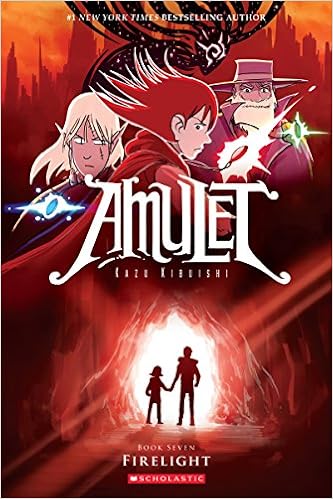
I bought the first five books of  Kazu Kibuishi's Amulet series from a Scholastic book order, sight unseen, for my younger son's birthday. Best $35 I ever spent! These books have been well-loved, passed around, and yes, replaced a few times! Books 6 and 7 came out to much excitement, and I know that readers are already looking forward to Book 8.

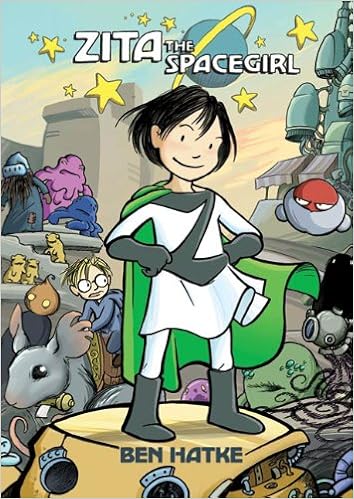
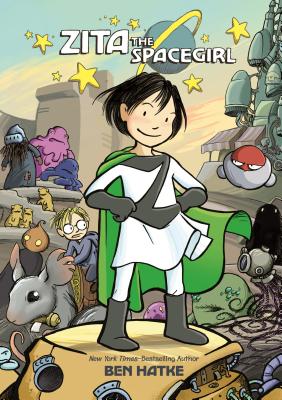
When I show readers who have loved Amulet the Zita the Spacegirl series, I
get one of two reactions. Some kids take the book right away, drawn in by the bright artwork. Others tilt their heads to the side and give the book a funny look, as if unsure. It has a girl on the cover! "There are also giant robots and spaceships," I say, and usually this is enough to draw the kids in. This series was a great fit for fourth grade but a tad on the young side for sixth.

The next installment in the Cleopatra in Space series is being eagerly awaited by many of my students. (Isn't it awesome that there are so many graphic novels with such great female characters?) Readers who have enjoyed Amulet will snap this one right up. Interestingly enough, I don't think this has ever been turned down when I have suggested it--which is pretty amazing, as I face rejection an awful lot.

For kids who like dark stories

In sixth grade, just as in fourth, there are kids who want to read darker stories. These kids want books that probe the shadows and send a delicious shiver down their spines. Neil Gaiman's The Graveyard Book has been adapted into an amazing two-volume graphic novel, and wow does it deliver!

This set of graphic novels includes artwork from a number of illustrators, which can be jarring to readers at first. I am also sure to talk kids through the shocking events of the first chapter before handing over the book. If I still taught fourth grade, I'm not sure that I would have this book out--kids in my area seem to skew a bit young when it comes to these books and in my classroom I err on the side of caution. However, for kids who are used to graphic novels, this is intensely satisfying and has led some students to attempt the full novel.

For kids who loved Smile and Sisters


Wow, these book by Raina Telgemaier were the most popular in the library last year! It seems as if every student has read these books. This provides me with a perfect opportunity to follow up with other graphic novels about growing up.

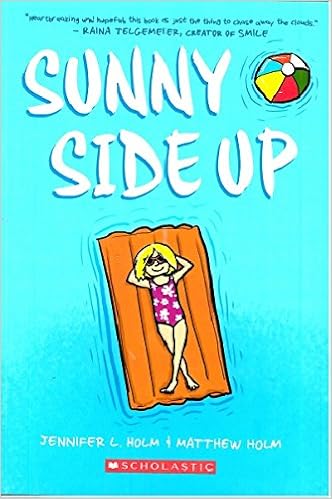
Sunny Side Up by Jennifer Holm is another fun memoir for students. It has the bonus of introducing some key comic book details, too! This one gets mixed reactions from boys--some just don't think they can deal with carrying around the bright blue cover--but every student who has read it has enjoyed it.

And my favorite part of Sunny Side Up is that it leads readers toward Jennifer Holm's novels. Both Turtle in Paradise and Penny from Heaven are on the reserved list right now, which is a success to me.

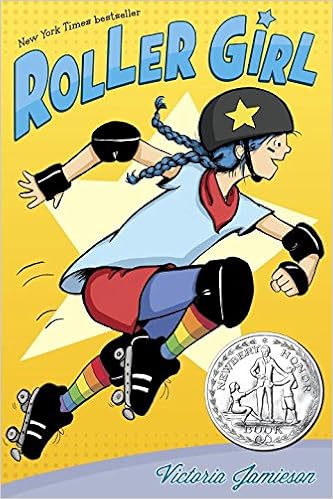
Roller Girl by Victoria Jamieson is another popular memoir, as is El Deafo by Cece Bell. I've had to buy multiple copies of each to keep up with demand!


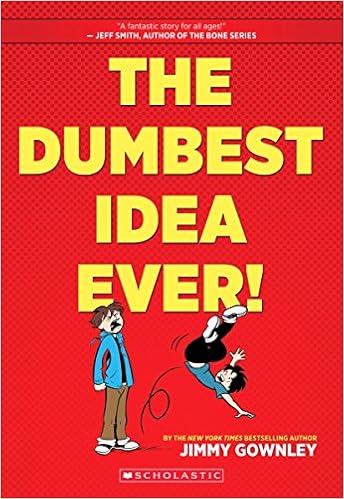
Another great memoir is The Dumbest Idea Ever by Jimmy Gownley. My students have a lot in character with the main character--we all live in (sometimes dreary) Pennsylvania towns, and comic book stores are few and far between. Interestingly, this book seems to take kids a little bit longer to read.

For kids who like nonfiction

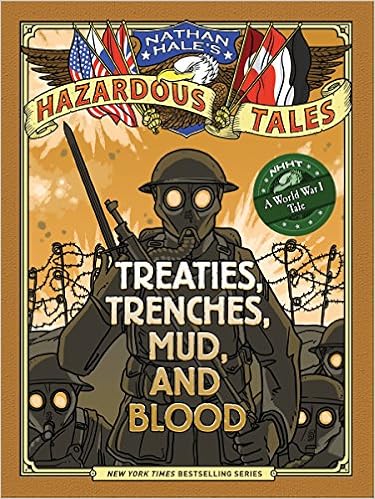
There are lots of new graphic novel format nonfiction books coming out, and I can't wait to collect more. This year, I've focused on collecting Nathan Hale's Hazardous Tales. For some reason comic book stores don't carry these, but they are widely available at bookstores and through book orders.

These are so much fun to read! My high schooler even picks them up, and
really enjoyed Treaties, Trenches, Mud, and Blood. The idea is that Nathan Hale (the spy, not the author) did not die during the Revolutionary War. Instead, he tells the executioner stories of history. You really just have to read it--there is a magical talking history book too!

Others in the series include Big Bad Ironclad and The Underground Abductor (sadly now missing from my classroom--sigh.) I just haven't been able to bring myself to buy Donner Dinner Party yet. Maybe next year.

For kids who love adventure


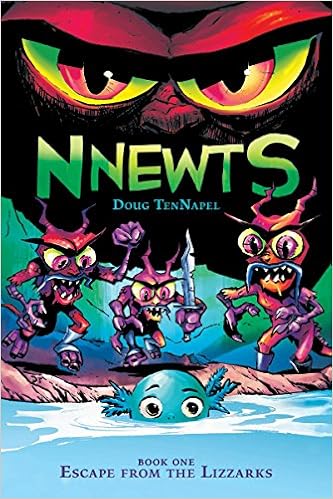
My youngest son found the Nnewts series by Doug TenNapel and was instantly hooked. This series has been popular with students who love animals--in some cases, it has been the first graphic novel that students have attempted. My students are most frustrated by the fact that #3 has not been released yet. They seem to think that authors should sit at the table and draw, draw, draw to get the books
finished!

This is just the tip of the iceberg of the books that readers have been enjoying this year. What graphic novels have your students enjoyed?


Monday, February 16, 2015

Questions Lead to Inferences

  Helping readers to make inferences in nonfiction can be tough. For narrative texts, inferences about character emotions and traits are easy to see. In expository texts, however, the inferences often operate under the surface. Skilled readers may not realize they are making inferences, while less skilled readers may not even realize that an inference is called for.
   To help readers make inferences, I have found that questions are essential. Helping readers to ask questions of a text "wakes up" the inferring process. 
    No questions = no inferences. 


Facts-Question-Response Chart

   I love to use the Facts-Questions-Response chart from the Comprehension Toolkit. This chart has it all! Readers have to:

-Find and paraphrase details for the Facts column
-Ask questions of the text for the Questions column
-Note their own thinking for the Response column
-Best of all, slow down as they read!

    For me, teaching the FQR chart really helps me to see what readers are thinking. I have adapted this chart a bit in recent years. Numbering paragraphs helps us to navigate through the text and share our thinking easily. I also encourage students to put lines under their responses to keep thoughts from each paragraph organized.
    The FQR chart is especially beneficial if you have a large class. Teaching 30 readers at once is challenging. When we work on the FQR chart, I can quickly "clipboard cruise" to note who is doing well and who needs some more support. For example, the student who has filled up the entire "Facts" column but has no questions or responses will need some coaching, as will the student who falls back on a question formula.


From Questions to Inferences

    How does this lead to inferring? After reading a paragraph, we talk about the students' questions and how they can be answered with an inference. In the "Welcome to Antarctica" text, students read that the airport in Antarctica is only open from October to May. This made them wonder--why? Using background information from the "Happy Australia Day" article that they read, students inferred that Antarctica's seasons must follow the same pattern as Australia's--and that the months from October to May are the warmer months. 
    Not all inferences are as ambitious as this. One student read the sentence, "The Southern Ocean is rough and choppy, and many people get seasick." This student asked the question Why do people get seasick?
    I could tell that this reader hadn't connected information from the first part of the sentence with information from the second part. With some coaching, he was able to make this inference and write it in the Response column.


The Text

    I like to use texts that present new information to students for this activity. Last week, I used "Welcome to Antarctica", which is a text that I wrote as part of our Antarctica unit. You can find the text below.
    Helping readers to make inferences in nonfiction can be a challenge. Starting out with questions makes the challenge easier!


Sunday, August 10, 2014

Back to School Books

This year, I have resolved to step away from the fancy border. Instead of buying beautiful classroom supplies or trying to make everything match, I'm buying more books...

...and not just any books. I live in an area with few bookstores, so my book purchases tend to focus on the ones that kids can't pick up at a big box store. I'm also trying to enlarge my graphic novel collection. So here are the books that I've bought in the last two weeks, or am planning to buy!

Fairy Tale Comics


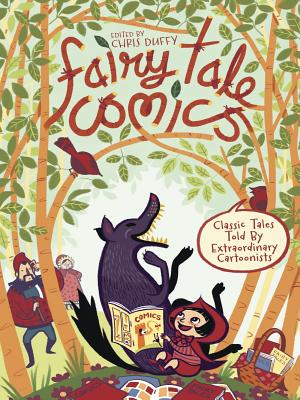
I read a local library copy of this last year, so I was thrilled to find a copy of it in a comics bookstore at the beach. I just love to buy books in the real world, and a comics bookstore that has a selection of children's graphic novels is about the best thing ever.

I think that this book will take the title of the First Read-Aloud of the Year. Projected on the whiteboard, it will be the perfect tool for showing students how to interact with a graphic novel. Plus the short story format will be perfect for short reading sessions throughout the day...I think I'll call on kids to choose which story to read next from the Table of Contents.

Ubiquitous and Dark Emperor by Joyce Sidman

I discovered these at a local store called Ollie's. Of course after my husband and I went out to dinner for our anniversary I wanted to go and browse for books. Now Ollie's may not look like a place to discover books (it is a store of overstocks), but they have a surprisingly nice selection.

These books include beautiful poems alongside illustrations and informational text. They will be perfect additions to my poetry collections. I think that I'll make a poster of "Night-Spider's Advice" from Dark Emperor because the poem is such a neat example of how a reader can extract double meanings from a poem.  But I also plan to read the poems aloud in the first weeks of school...again, letting kids choose which poems to hear.

Amulet #6 by Kazu Kibuishi

Last year we bought the Amulet series for my youngest son for his birthday. As you may remember, he went through a period as an acquisitional reader, when he just wanted to collect books but didn't really read them. Well, luckily the Bad Kitty series changed that, and he started to take off as a reader. I found Amulet as a next step for him.

The Amulet books were too good to keep at home, and while the kids know that most of their books usually end up in a classroom, I just couldn't appropriate a birthday present! Deep in the bowels of the Scholastic book clubs I found the whole set for bonus points, and they were worth every single one. I don't think I've ever had a series of books that found such a diverse group of readers. In fact, one of the most constantly asked questions was, "Who has Amulet #___?" (Runners-up were "Where is the tape?" and "Has anyone seen my coffee?")

"I'll see you on August 26," one of the most devoted Amulet fans said last year. "We'll be in school then, right? I'll come to your classroom so I can borrow the new book."

Hmm, I think I'd better get two copies of this one.

Zita the Spacegirl, Legends of Zita the Spacegirl, Return of Zita the Spacegirl by Ben Hatke

Like Amulet, Zita the Spacegirl has found a wide audience. I had it all year round and it was in pretty much constant demand. It has appeal for both girls and boys, which I really like. For some reason I didn't order the second and third in the series last year.

Over the summer I ordered the third (by mistake, instead of the second!) and took it on vacation. I thought that my youngest son had already read the first--but he hadn't! He went on and read the third, but hasn't really forgiven me for the mistake. Oh well.

I'm hoping to redeem myself by buying the second in the Zita series as well as Ben Hatke's new book, Julia's House for Lost Creatures. (You can see some gorgeous artwork from the book in this post at Seven Impossible Things Before Breakfast.)

In the long run, these books will be much better purchases than any kind of fancy border or cool organizational tool. What books are on your list for the start of the year?


Thursday, August 7, 2014

Considering Reading Homework

I've always had mixed feelings about homework, but over the last few years I've gotten into a workable groove. In fact, reading homework has solved some thorny problems in my classroom.

For several years, I didn't give any reading homework at all. But parents actually asked me for something more. "I can say to go and read as much as I like, but when you give homework, he takes it seriously," a parent told me. I heard the same kinds of comments over the next few years--that many students liked a homework routine, and enjoyed doing something that connected home and school. As my own children started school, I started to see value in a meaningful, well-planned homework routine.

So I created a weekly homework assignment for students. I thought, "What do I want this to be?" and made a set of materials that combine fluency, comprehension, and vocabulary with engaging reading selections. At first I scrounged in best reading-teacher fashion to find texts from a variety of sources. This works in the short-term, but it was hard to find enough texts to be a long-term solution. So I commissioned myself to write my own. (The author side of me: "What? Four texts per month for nine months? That is 36 texts!" The teacher side of me: "Yup. Get writing.")

As I created the homework assignments, these were my guiding questions.

Does the homework provide some element of choice?
I love having choices! On my homework assignment, I make a table of nine options for independent reading each week. Kids could just read in their independent reading book each night, but there are also possibilities for writing, reading picture books aloud, or researching topics. (Kids especially love the "Follow directions to make something" option--some hit the recipe books and spend time cooking in the kitchen!)

Is there flexibility for varied schedules?
I strongly believe that fourth graders shouldn't have more than 1 hour of homework per night (if that). I structure the reading assignment so that kids can do it over several nights. I find a Monday-Monday routine to be very family-friendly.

Can students do the assignment with a minimum of support?
Several years ago I received an email from a parent of a student several states away. This child had homework that was so taxing that the parent was emailing an unknown teacher (me) for help! I certainly don't want to put anyone in this situation, so I try to make the assignments straightforward. While individual questions may be difficult for students, I make it clear that it's no big deal--just do your best! Of course I never grade homework. 

Can I provide effective support for students in the classroom?
While many of the parents of students are wonderfully supportive, there are some students who get little home support. If this homework is worth doing, then I need to make sure that everyone does it--even those students who don't get homework done at home. I use arrival time, dismissal time, and other odd moments in the day to help students who have trouble completing assignments. Sometimes it's as simple as asking a sixth grade tutor to come and help a student each afternoon. For other students, I make sure that I listen in and offer support.

When an extra adult has time to volunteer in the classroom, helping students with the weekly packet is a perfect activity. It requires very little explanation from me and the kids are thrilled to get some more individual attention.

Often, working on reading homework is offered as a choice during quiet moments or when other activities are finished. Some students take advantage of this and choose to work on the homework with other students in the room, turning it into a social reading activity--which is great! I do have some students who like to do the work at home--"My mom does it with at night" or "I think my dad will like this text, so I'm going to read it to him."

Is this homework part of classroom instruction?
I think every teacher has assigned homework that then gets put aside, never to see the light of day. But this should be a rare occurrence! I've decided to dedicate Mondays to working with the homework texts, both in discussing last week's work and introducing a new passage.

This is a big time commitment, but I feel that it is worthwhile. Remember how I said that the homework solves a problem? In my case, the problem is the expository/narrative/drama/poetry problem. We might be studying narratives for two months, but I still want students to be exposed to other kinds of text. With the weekly passages, we can take little side trips to other kinds of text even while in the middle of a bigger unit. Kids especially enjoy the procedural passages...the "Fairy Bread" passage was listed as one of the highlights that students remembered at the end of the year.

I'm amazed at how often connections come up between homework passages and what we happen to be studying in class each week. At first I thought, "Oh! Lucky coincidence!", but now I know that there are connections everywhere. My weekly packets include five vocabulary words, many from my master word list. These words really pop up all around us!

A thoughtful plan
Whatever you decide to do with homework, it's important to consider your school and your community. What can you handle? What can your students handle? By thinking about these questions, and the questions above, you can create a homework routine that works well for everyone.

The packets
Several users are saying that they use them for small group instruction instead of homework--a great idea! Writing 36 unique texts that didn't all sound the same was quite a challenge, but was very rewarding throughout the year.

September Reading Homework
My favorite part of this packet is the procedural text--caramel apple floats are totally delicious! Also included is a folktale, an informational text, and a persuasive text. These are so helpful for introducing different kinds of text early in the year.

October Reading Homework
In October, I added the weekly open-ended responses to our routine. This was so important! This month's texts include an informational text about pumpkins, a narrative, an interview with a woolly bear caterpillar, and a text explaining idioms, adages, and puns. Can you guess which one the students liked best?

November Reading Homework
November includes an informational text about Veterans Day, two fables, and a text about Pilgrims. The fables were fun to read and discuss with students.

December Reading Homework
In December, I added "Focus on Complex Text"--an additional lesson to go along with each passage. Students were fascinated by the text about Pearl Harbor, and also liked the script.

January Reading Homework
This packet includes a poem, a procedural text about fairy bread, and two informational passages. Of course the fairy bread was the biggest hit from this month!

February Reading Homework
"Can we learn more about Greek myths?" was the question in my classroom, so I wrote "Theseus and the Minotaur" for them. (Wow, that is a tough myth to tell in one page and keep appropriate for elementary students!)

March Reading Homework
By March I had spring on the mind! The two frog poems in this packet were perfect to introduce our spring peeper investigation. Students also enjoyed debating the merits of Daylight Savings Time and learning about the vernal equinox.

April Reading Homework
At some point I learned that many of my students were not familiar with great blue herons, which are common in our area. I used the interview format to write about great blue herons for this month's texts. Also included is an informational text, a poem, and an introduction to persuasive text.

May Reading Homework
"We want more food texts!" the students said, so I wrote "Some More S'mores, Please!" and then we made the indoor s'mores in the classroom. How awesome! Later, while we read "Androcles and the Lion", we acted it out in class. Again, and again, and again, with different students taking different roles.

Paperless homework?
Several of these assignments are available on Frolyc as well! Keep checking as I'll be adding more over the next few weeks. If students have iPads at home, they can read the texts and do some of the activities on the iPad. Of course, these texts would also work for in-class instruction with school iPads.

-Adages, Idioms, and Puns (November)
-Daylight Savings Time (March)
-Happy Australia Day! (January)
-Remember Pearl Harbor (December) Note: This includes some more challenging questions than the paper homework activity, so it is listed as a grade 6. I have so much trouble pinning things down to a grade level because it really depends on the level of support that readers will get and the background knowledge they have!


Sunday, July 6, 2014

Teaching Paraphrasing

Waaayyy long ago when I taught seventh grade, I had a folder in my filing cabinet called "Paraphrasing". I had a few worksheets in the folder, things that I would use to try to teach paraphrasing, but my heart wasn't in it. I didn't really see the purpose.

Now, of course, I realize that teaching paraphrasing is at the heart of all learning. To paraphrase is to put someone else's ideas into your own words--which is what we do all the time when we are learning new ideas, seeing new images, gathering new experiences. When we teach students how to paraphrase, we teach them how to make information their own. Paraphrasing doesn't just live as a lesson or two in a research unit. Paraphrasing is in everything we do.

Teaching paraphrasing can be far more interesting than dusting off some worksheets! Here are some activities that help students recognize the importance of paraphrasing and learn how to do it.

Paraphrase across genres
Translating images to words (and vice versa) is a good way to help readers to think about how ideas are conveyed. For example, my youngest son and I had a great time at the National Gallery looking carefully at the images and paraphrasing what we saw. Turning a picture into a sentence encourages readers to consider words and explore relationships.

Explain the basics of paraphrasing
At the writing level, paraphrasing comes down to two processes: replacing words in the target sentence or text with synonyms, and/or changing the structure or order of ideas. (You can find more on this in my book, Summarizing, Paraphrasing, and Retelling.)

Paraphrasing skill, then, requires that students be able to replace words with synonyms. Students also need to be able to figure out how rework and rearrange sentences. This is tough! I've had students tell me, "That sentence cannot be rearranged"--when of course it can. Playing around with sentences and their arrangement can help students to improve with paraphrasing.

Show examples of paraphrasing
Showing students examples of two sentences that convey the same idea in different ways helps them to see how paraphrasing works. I like to use a card match activity in which each student has a sentence, and then they have to find the person who has the paraphrased version of their sentence. Partners then look at how the two sentences are similar and different. Which words can be replaced? Which words cannot be? For example, one student has the sentence Jane enjoys hiking through the forest on crisp autumn days while another student has the sentence During the fall, Jane likes hiking through the woods. Autumn can be replaced with fall, but the word Jane must stay as it is.

Help students to find examples of paraphrasing gone awry
We've all read examples of bad paraphrasing--a student who misinterpreted a word or misjudged an author's meaning. I like to show intentional cases of bad paraphrasing, especially examples with the copy-and-delete method. Can a reader just take out words here and there? How does the meaning change? This approach can be more fun than ordinary paraphrasing, especially if you create amusingly bad versions of your classroom rules.

Share lots of related texts
When students ride texts on similar topics, they naturally find and notice examples of paraphrasing. These natural examples help readers to build awareness of how ideas can be expressed in different ways. It can be helpful to make charts to show how important ideas are stated and restated in different ways. Intermediate students are often quick to notice how some beginner texts state ideas in simple terms, but lose some meaning in the process.

Paraphrasing and Summarizing Lessons: Available on TeachersPayTeachers


Notes
-Text structure assessments are now available on Frolyc. These assessments are designed to be easy to publish to student iPads. I'm looking forward to paperless assessments! You can find the Grade 3 assessment here and the teaching guide here.

Saturday, March 1, 2014

Studying Antarctica--A Great Topic for Inquiry

Several years ago, I started using Antarctica as a topic for our initial nonfiction unit. Why? I'm not really sure. I was probably influenced by the lovely Antarctica map included in Toolkit Texts, and also by Graham Nuthall's analysis of how students remembered information about Antarctica. But it has had a snowball effect. Over the years I've gathered more and more information about Antarctica, put together more resources for students, and watched as they learned about topics, main ideas, and details in the context of learning about Antarctica.

Now that I am in the middle of it, I'm convinced that this is a wonderful topic for a shared inquiry project in the classroom.

1. Most students don't already know much about Antarctica
Most teachers don't either! And that's what makes it an interesting topic for children and adults. It is so neat to start out with the basics of what most people know (penguins live there) and expand from there. I started reading aloud to students before the unit even began, whetting their appetites to learn more. This has given students the chance to see how their brains make new connections. This also makes it easier for students to become more metacognitive as they learn how and when they learned new information. ("There are 33 penguins in the world, but not all of them live in Australia. It's in that penguin book on the shelf.")

2. There are interesting topics for learners of all abilities
What's the standard research topic for elementary school? Animals. And a study of Antarctica can lead to the study of many fascinating animals, like chinstrap penguins, orcas, and leopard seals. For some of my students, another animal research project gives them the chance to consolidate what they have previously learned and become more confident with their research and writing skills.

But there are other topics that students can choose to pursue, like icebergs, the United States research stations, explorers of the past, jobs that people can have, and different research projects. These different topics offer a huge range of difficulty, making it easy for me to provide resources appropriate for different levels.

3. The story is constantly changing
To me, this is the most interesting part of studying Antarctica. There are research projects going on right now. Many of these scientists post updates on blogs, post videos, and share their information frequently. Students can find up to date information and see the power of science in action. Plus, the topic keeps me learning and guessing--I like to see the updates of what's happening this austral summer!

4. Antarctica provides many opportunities for digital and multimedia reading
There are plenty of online reading selections and digital resources for learning about Antarctica, making it an easy topic to use to broaden students' use of digital resources. The NSF funded projects are all clearly identified, making it easy to find out which resources are credible and reliable. And it gives me the chance to show students how to learn from videos and connect videos to texts. This is definitely helping me to weave RI 4.7 into my daily instruction. ("After we watch this video, create a sentence to explain one idea that you saw in both the video and the text.")

Resources
Beyond Penguins and Polar Bears: This site is called "an online magazine" and it includes printable and electronic books about different topics related to the poles.

Weddell Seal Science: Detailed information about an ongoing seal research study. Check out their YouTube channel for beautiful videos.

United States Antarctic Program: Educational resources from the USAP.

MVFram: This boat takes tourists on trips to Antarctica. Sometimes we stop by the blog to peek at the pictures and see what the expeditions are doing now.

PolarTREC: Tons of resources available here.

Educational Resources from IceCube: I haven't had much success in trying to explain neutrinos to fourth graders, but they are still intrigued by what goes on at IceCube.

My list of links for students: I provide students with a list of links related to various topics they may study.

My YouTube playlist: We watch various videos at the beginning or end of class. Most of them are quite short, and used to highlight a particular aspect of a text or get kids thinking of new questions to consider.

Notes
-I do have some articles about Antarctica included in Description Texts, Compare and Contrast Texts, and Main Ideas and Details. Several other articles that I've written are not currently available in any text sets. If you are interested, write to me at elkissn@yahoo.com.
-March Reading packets are available as well--and I finished them before the end of February. It was shocking. My students loved the frog poems!


Tuesday, June 11, 2013

Acquisitional Readers

Like I said yesterday, the end of the school year has allowed me to return to the life of a fairly normal person. But traces of the chaos of May remain--the piles of laundry, the unanswered emails, the children left to their own devices.

Ah, the children left to their own devices. This school year I haven't intervened much in my younger son's reading life. His reading assignment every night was blissfully easy--read anything you like for 20 minutes--but after Christmas he went to reading on the Kindle. It wasn't until Saturday at the library that I noticed that he had somehow transformed into what I call an "acquisitional reader".

What is an acquisitional reader? Here are some characteristics:

7-12 years old
I've noticed these kinds of readers in every grade that I have taught--fourth, sixth, and seventh.

Love a series or a kind of book
Acquisitional readers all share a love for a particular series or genre. For some kids it is a series of books (The Warrior series for my young one), while for others it is a kind of book, like books about wolves or airplanes.

Seek out information about a series beyond the actual books
Acquisitional readers are often very impressive in their knowledge about the series or books. Aidan knows everything about the Warriors books, the result of Internet searches and browsing online. Acquisitional readers can talk very knowledgeably about their favorite books.

Value acquiring the books over reading the books
And this is the heart of the problem.

This one characteristic is what unites every acquisitional reader that I have ever known. Acquisitional readers are quite different from reluctant readers because acquisitional readers love books. They love the idea of reading. They stand in the library and chat about their books. In fact, they love books so much that many people never even realize what's happening. (Like, uh, a mother who has been sucked into the thrall of too many May activities.)

Development
How do acquisitional readers develop? I've noticed that they are often kids from families that value reading, or kids who just love school. The brain work of really deep reading is invisible to most kids. What do these kids see an older sibling or a parent doing? They see the role model:

-getting books
-talking about books
-seeking new information about books.

Put all of this together--minus the invisible brain work of engaging with books--and you have the acquisitional reader.

Moving forward
In the library on Saturday, I realized that my youngest son is an acquisitional reader. He loves the Warriors series and knows a great deal about it. He has started many of the books. He knows all about the authors and why they chose the name Erin Hunter. But he hasn't really finished any of the books at all.

The good thing about acquisitional readers is that they already love books. They already love reading. They just need to be nudged into that deep invisible brain work. From my experience, it sometimes takes a clean break away from the series or kind of book that they like so much. They already have such a rich knowledge of that series that they don't even realize that they are missing anything.

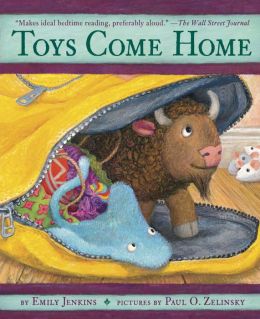
For Aidan, choosing another book proved a challenge. He and I have been reading the Tollins books together over the last few months, so I knew that he loves word play and wry humor. I brought a few books to our library table for him to try. Toys Come Home proved to be the winner. (Yay! I love these books.)  Although I had read aloud Toys Go Out to him three years ago, he didn't remember it, which meant that he was experiencing StingRay and the Girl for the first time.

We're reading chapters together and then talking about them in detail, which I hope will help him to get to that feeling of being "way down deep" in a book. Most importantly, I want him to realize the dual pleasures of reading and enjoying what's on the page he's on right now and putting that together with the bigger story of the book as a whole.

Why worry?
In some ways, acquisitional readers are not doing that badly. They do find pleasure in reading, even if they don't finish books, and they are able to have lively and animated conversations about books. Many adults wouldn't even notice that they aren't finishing.

But they are missing out on the best part of reading. This is why for Aidan, and for my students, acquisitional reading must always be a stopping point, never the end destination.

Questions
-At the end of the school year, what did you notice had been neglected for the last few weeks?
-Have you noticed any acquisitional readers? What advice do you have for helping them?

Monday, May 17, 2010

Fiction Genres

It might seem strange to be teaching about genre at the end of the year. After all, shouldn't that be a topic for September? In September, though, it's hard enough to get fourth graders to tell the difference between narrative and expository text. Adding all of the fiction genres would be just too much.

Now it's quite a different story! As we talk about the fiction genres, the students leaf back through their reading lists, looking for examples of the genres from their reading. They have become talkative and animated, ready to debate the distinctions between genres. (Where does A Series of Unfortunate Events fit? Even though Percy solves a mystery in The Lightning Thief, why is this not really an example of the mystery genre?) Several kids really perked up at the mention of hybrid genres. Many were eager to share their love for science fiction. It really shows how far these students have come!

I made a Powerpoint to introduce the different genres. We did it over several days, talking about examples and sharing stories along the way. (They loved acting out trickster stories when we got to folktales!)

Here is a link to the Powerpoint over at Slideshare.

Saturday, April 24, 2010

Making inferences: Old documents


One of my favorite kinds of stories is the story told through letters or documents. In these stories, a reader needs to piece together the details from the letters to figure out how the story is unfolding. These kinds of stories are great for students who are learning about making inferences, as they will be able to practice reading beyond the text to determine what is happening.

Next week, my students will read several stories told through letters. As I've taught these stories before, though, I have found that students have trouble putting them together. I decided to introduce the idea by showing students some letters and having them try to figure out what is going on.

But where to get the letters? As I was thinking about this, I realized that I happened to have just the thing. Several years ago a friend of my father-in-law's gave him a stack of old papers from an auction. We spent an afternoon looking through them, doing just what I want my students to do--figuring out who was writing, why they were writing, and who they were writing to. Why should I scrounge for new letters? These would be perfect.

Just as I hoped, students were fascinated by the documents. (One was a mortgage note dated 1811--wow!) Before I handed them out, we talked about how to care for them and what questions we could ask of them. As students worked on the documents in pairs, they answered two main questions

-What questions can we ask of these documents? (Who wrote them, when they were written, who they were being written to, where they were written, why they were written...)

-What inferences can we make?

Here were some things that we noticed:
-It was difficult to read the cursive of long ago! Some of the documents had the f/s switch, which made it even harder. I reminded students of the cloze passages that we had done several weeks before.
-Students were quick to jump to conclusions, often from a lack of background knowledge. "I think this is about a crime, because it has pounds of silver on it," one boy said. After I explained that this was the currency used in 1811, they examined the document again. When it was time to share with the class, they showed a place where careful sums had been worked out in pencil. "This isn't about a crime, but about how much the one guy owes," the student said. "Here it shows the subtraction problem that he did to find out how much more he had to pay."
-Students made many inferences that related to their background knowledge. "It says here that he needs to pay $30. Back then, that must have seemed like $100!" one student said. The idea that things were cheaper long ago was well-known to students, and they looked for details that connected to this.
-Students weren't satisfied with sticking with one document. They were fascinated by what other people were finding and wanted to roam around looking at more!

If you're interested in working with letter-stories or documents (and you don't have a father-in-law with mounds of old documents), don't worry--there are lots of books and resources available. Here's a quick list:

Dear Mrs. Larue: Letters from Obedience School: This book is amusing because what the author of the letters is saying is quite different from what is really happening.

The Gardener: These Depression-era letters tell the story of a girl who goes to live with her uncle in the city.

The Journey: Also by Sarah Stewart, this story is told through letters from an Amish girl who visits Chicago.

Letters to Mrs. Roosevelt: This is a great collection of letters written to Eleanor Roosevelt during the Great Depression.

Early America: This site, while it does include advertisements, also has many links to online newspaper articles, documents, and other interesting tidbits.

Friday, January 22, 2010

Do we have to read the whole thing?

We've been talking about text features in my classroom--what they are, how to use them, and why they are important. But I knew that I needed to address how we read nonfiction after a quick conversation with a student. He was returning a book about muscles.

"Did you like it?" I asked, my standard question as kids plunder the shelves for new books.

"Yeah," he said. "It showed me how muscles work, and that was what I wanted to know." He was quiet for a second, and then added, almost apologetically, "But I didn't read the whole thing. I just looked at this page, and read the caption, and that was what would help me with the project I'm doing." He looked at me as if he was worried that I might make him take back the book.

"But that's what we do in nonfiction," I told him. "You don't have to read every page. You find what you want, and read that."

"Oh," he said, as if I'd said something new and interesting.

Had I? As I thought about the conversation, I decided that I needed to address this issue. Of course this is dangerous! State testing is coming up in April. Do I want my students to think that they don't need to read everything on the test? Do I want them to skip through?

On the other hand, what will help them out in real life? An unreasonable expectation that they read every page of every book, or an understanding of how to use text features to find what they want? These kids are smart--they'll figure out sooner or later that they don't have to read every word of every text to figure out the answers. If I insist that they do so, it will cast everything that I've told them into doubt.

I decided to bring this issue out into the open and trust in the students. First, we had a silent debate. I put a queen puppet under the document camera (super cool!) and told the students: "The Queen wants to learn about the parts of a barge. She has found this book, A Guide to Boats of the Eastern Coast. Does she need to read the whole thing?" In a silent debate, students write their reasons on one sheet of paper that they pass back and forth. I assigned students to either "yes" or "no". They were upset that they couldn't choose, but I told them, "It's important to think about both sides of an issue!"

As I expected, the debate was lively. Students on the "yes" side said that information about barges might be scattered throughout the book. Students on the "no" side said that she could use the Table of Contents and index to find what she needed. After the debate, we talked about their thinking. Both sides had valid arguments. "Are you ready for the real answer?" I told students. "Do you want to know whether the queen really has to read the whole book?"

"Yess!!!!"

"Well...." I drew it out. "It depends."

What a cheat of an answer! But it's the truth. Whether or not you have to read the whole text depends on many factors--like your purpose for reading, your background knowledge of the topic, even the amount of time that you have. A reader needs to be flexible and ready to make an informed decision.

Over the next few days, I gave them the chance to try it out. In the computer lab, they tried several sessions on Study Island. This was great because they could see immediately if they'd gotten the question correct or not. They found that there were some kinds of questions that they could answer without reading the whole text (headings questions, especially) and other questions that they needed to read the whole text to answer.

On the next day, students had the book "Amazing Crickets" and had to answer a set of questions from it. The book was an easy read, filled with every text feature imaginable, and so many kids had no problem at all navigating through it to find the answers. "But I wanted to read the whole thing, so I did it anyway," one kid admitted. (This is probably why these are above grade-level readers!)

The next day, we looked at a piece about the Columbian Exposition. After we looked at the headings, the students' eyes grew wide. This was a very different kind of text. Could they just answer the questions? We read over them and found that there were two (a vocabulary question, and a text features question) that could be read without an understanding of the text. But a question like "Which is an effect of the Columbian Exposition?" was a different story!

"Um, yeah, I think I'm going to have to read this whole thing," one student said. And he'd been the most vocal proponent for skipping the text earlier in the week.

So far, my gamble looks like it is paying off. Kids are thinking about their purposes, and making intelligent decisions about when to read the whole text, and when to just jump in and find the answers that they seek.

And the student who started it all--the student who had read parts of the muscle book--had the very best reason of all on the silent debate. "The Queen doesn't have to read it all, because Mrs. Kissner says we don't have to read it all. Beat that!"

Tuesday, January 5, 2010

Paraphrasing

It's hard to do, it's hard to teach. But paraphrasing is so important for our young readers. When students can put ideas into their own words, they can take notes, effectively answer questions, and summarize.

Today we embarked on a study of paraphrasing, preparation for future summarizing. And it was a tough go. Paraphrasing seems concrete, but is really a very abstract concept. Think about it--when we paraphrase, we take ideas and put them into our own words. So ideas exist outside of words.

This is pretty abstract for fourth graders. (Just today, one of them asked me if The Sorcerer's Apprentice was a true story. Sigh.) They equate words with ideas--the words that are used to explain an idea ARE that idea.

The challenge for teachers, then, is to help students recognize that ideas can exist without words. So I went back to visualizing. As we read original sentences, I encouraged students to visualize what the sentence was saying. Then, I had them keep the visual image, and try to write a new sentence to describe it.

Results were mixed. For some students, this strategy worked brilliantly, and they wrote really decent paraphrased versions of the sentence. But other students struggled with the need to come up with synonyms, or the need to rearrange the order of ideas. By the end of the class, everyone at least knew that paraphrasing is putting ideas into your own words...which was a start. Tomorrow, I want to try again, with more concrete, easily visualized sentences. The next step, then, is to take paraphrasing into authentic texts.

Here's a link to a Powerpoint that I made to use with students. Lots of snow pictures from Caledonia State Park!

Friday, October 2, 2009

Tic Tac Toe and Strategies

This year, I'm really working on helping students to understand some of the key words behind our reading content. I've already talked about giving students a firm knowledge of the words feature and structure. As I started working with guided reading groups, I decided it was time to help students understand the word strategy.

How could I do this? Typically, my brain raced through lots of impractical and crazy ideas (a large scale game of Capture the Flag, for example) before I thought of a simple solution: Tic Tac Toe.

To get us ready for the discussion, students had to find a partner and sit at desks somewhere in the room. Then, we looked at the definition for strategy--"a plan for achieving a goal". We started out by talking with partners about our strategies in soccer. In soccer, the goal is--well, the goal, which made it very literal and concrete. After we made a list of soccer strategies, we talked about the goal in tic tac toe. What were we trying to accomplish? Of course, getting three in a row. Then, I chose a few students to go against me in a game of tic tac toe on the overhead, talking about our how we could both use a strategy.

After I played a few games, students worked with their partners to try out some strategies for tic tac toe. They needed the instant gratification that comes from applying a strategy and seeing it succeed. And it worked! They had quite a few strategies to share--use the middle, distract your opponent, set it up so that you had two opportunities to win--and were able to see pretty quickly the benefit of choosing a strategy.

I was amazed at how quickly the lesson on reading strategies went after this experience. What is our goal for reading? It's not to get three in a row (the kids all giggled at this), but to understand the text. What are some strategies that we can use? Suddenly, there were quite a few suggestions.

The next day, I had to leave school early to take my two sons to get their flu shots. I left behind a sorting activity that had students match reading strategies to their definitions. When I returned, I found (happily) that pairs of students working together could generate the different reading strategies and explain what they meant. Not bad for a 20 minute activity with a substitute! The richness of their understanding of the word strategy gave them an instant framework for the reading strategies.

Of course, there is much work to be done. We need to look at how to use strategies, when to change strategies, and how to see if our strategy use is working. For now, though, I'm pleased that the students have a better understanding of the word strategy than ever before.

And I have some killer new tic tac toe moves!

Tuesday, September 29, 2009

A Quiet Evening...

It was time for bed last night, and I was reading Aidan a story. Aidan is four, and he is acquiring a taste for longer, more detailed books. But he brought me I Love You, Little One, and said, "I thought this one was babyish, but,"--he shrugged--"I guess I like it."

So I read it aloud. If you haven't read this one, it's perfect for late night snuggling. He picked up the pattern after a few pages, and read the "Mama, do you love me?" bit on each page.

After the book was finished, I set it aside and turned off the light. He pulled the covers up to his chin and said, "Mama, I will ask the question, and you say the words."

What a magical moment. The crickets were chirping outside, we were cozy in bed, and we had just shared a great book. He said, "Mama, do you love me?" and I answered, "I love you, little one. I love you as the moon loves you, shining bright and round in the sky. I love you as the moon loves you, forever and ever and always."

He sighed in what I thought was contentment. Now we'd drift to sleep, lulled by the spell of the book.

Then he spoke again. "Mama, what if no one in the world had any noses?"

Thursday, July 16, 2009

Retelling or Summarizing?

In a recent workshop, several teachers shared with me that their administration discouraged them from using retelling in the classroom. Apparently, they were told that by the intermediate grades of 4-6, they should be focusing on summarizing, and should not use retelling at all.

I think this is misguided. Telling teachers to avoid retelling keeps them from a wonderful strategy that helps students to understand text, make connections, and build background knowledge. I think that retelling is a suitable activity for all classrooms, from kindergarten and up. Here’s why.

Retelling is authentic
Summarizing gets all the press as being a great thinking strategy. But having kids write formal summaries for every text is overkill (and just plain mean!) In real life, readers are far more likely to retell a text than to write a summary to share. Providing students with opportunities to retell every text, and write formal summaries of SOME texts, is more realistic.

Retelling builds multiple representations of text
Graham Nuthall, a researcher from New Zealand, performed extensive studies of how kids learn in a classroom. He found that information that is represented in multiple ways—visual, auditory, and so forth—is far more likely to be remembered. (Elementary School Journal, v99 n4 p303-41 Mar 1999)


When students retell, they are using many representations. They are talking, they are listening, they are moving little figures around to show the action, they are pointing to pictures. These representations will help them to remember not only the information and details from the text, but also the key points that a retelling should include.

Retelling builds connections
Retelling helps students to make inferences and build connections. If you doubt this, pay attention to your own processes as you retell a story or a nonfiction article. Retelling brings the ideas from the text into the working memory, where they can be linked to old information to form inferences. When students retell together, they can pool their schema and learn from one another.

Retelling helps students to see what’s important
As students work on summarizing, they struggle with figuring out which ideas are important. Their summaries often go on and on, even getting to be as long as the original text. (And they look so proud when they show these super-long summaries to you!) It’s easy to help kids figure out what’s really important with speed retellings. Can you retell the story in 2 minutes? One minute? Which ideas should you leave out? Which do you have to include?

Retelling is fun!
I hate a silent classroom. There is something about it that just makes me edgy. So I like the productive hum of retelling. Kids like it, too.

So, just because your students are past the primary stage is no reason to give up retelling. Try it out in your classroom!

Friday, May 15, 2009

Dealing with the Misfires

I've worked with my students to put sticky notes to record their ideas as they read, and we've made all kinds of charts to collect our thinking and map our ideas.

"love that dog" is a writing journal written by a student named Jack. He responds to various poems that his teacher is teaching in class, which leads to neat instruction, as the students and I can share the poem, react, and then see how Jack reacts. Well, we were reading "Stopping by Woods on a Snowy Evening" when one of my students raised her hand. "I have a connection!" she said. "The kid's name is Jack, and this poem is written by Robert Frost, and when you put Jack and Frost together, you have Jack Frost!"

Sigh. When I work with my students to move beyond word calling and into connecting with text, I hear a lot of these kinds of comments, questions and connections and ideas that a more skilled reader would repress. In the same lesson, one of my students shared a question: "Why is the horse wearing bells?" Keep in mind that these are not coerced responses, written because I forced students to fill lines on a paper. These are their real, honest contributions to the conversation.

What’s a teacher to do? On the one hand, these kinds of connections can pull a reader away from the text. On the other hand, this student was really trying to make a connection. What I did for my student was to honor her thought--"Wow, you're really pulling on some background knowledge to make a connection"--and try to move her to different thinking--"But do you think that that's important for understanding the text? Let's read on and see." After a careful reading of the poem, she said that the Jack Frost comment didn’t really relate. But I made sure that she was the one to make that decision.

I used to get very frustrated and feel that these comments reflected badly on me and my teaching. But now I realize: They're thinking! They're coming to the party! They're trying it out! What more can I ask? These misfires are a natural part of the process for students who have looked upon reading as just saying the words. Now they're trying a new process, and it's a lot to coordinate all at once.

As students move from my lesson and into their independent books (ahh...peace and quiet!), I have the same issues. Sara's working on "Wanderer". As I talk with her about it, I notice that she has missed some of the big ideas. The book's a stretch for her, and I'm glad that she's giving it a try. And she's understanding some things, like the different voices of the two narrators and their reactions to the journey. Her experience with this book, even though she doesn't have full and complete comprehension, will inform her reading for future books, and she'll get there. She’s developing a taste for the stories that yield their secrets slowly. To force her to move to easier books just because she hasn’t coordinated the process yet would be a step in the wrong direction.

So, when students toss out those crazy responses, think about where they might be coming from. Is the students honestly trying to attach meaning to the words in the text? If so, don't be discouraged. Help the student to discover for herself whether the thought she shared will help her to understand the text.