Showing posts with label problem solution. Show all posts

Sunday, May 10, 2015

Sea Turtles and Expository Text: A Peek Inside

I love writing short expository texts, and I love sharing the texts that I create with other teachers. 

But I can't deny that there is always an uneasy tension between my inner writer and my inner teacher as I start a new project. The inner teacher says, "Wouldn't it be cool to have a set of texts with x, y, and z?" The inner writer groans--"You want what? Do you realize how hard that will be to write?"

So there is a sense of compromise between teacher and writer. I have seen enough hideously contrived texts to know that I shouldn't keep going if something isn't working. Teacher and writer must negotiate to come up with a workable compromise. (And all of this is going on in my head!)


Lights Out: Problem/Solution


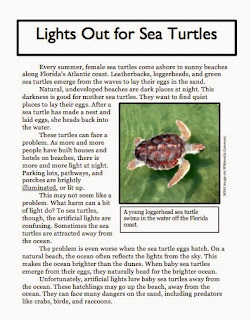
This spring, I started to write a series of texts about sea turtles. The project began with a problem and solution text about the importance of turning out lights during nesting season. I find problem and solution to be one of my favorite text structures, probably because it is inherently optimistic. I also love the symmetry of problem and solution. It's fun to write.

I generally prefer to do all of the writing first before I mess around with formatting. Adding the formatting gives me another chance to reread every bit of text. I often read everything aloud to my family as well--my ten year old is a great listener and offers useful criticism. 

After the text has been written, read, and reread, the teacher side takes over and works on questions and activities. Waiting several weeks between text and questions helps me to look at the piece as a teacher instead of as the writer. This year, I've been experimenting with adding synthesis tasks to reading sets. These are very similar to the performance assessments that we used in the late-90s, but with a Common Core twist. Yes, they tap some of the skills that will be needed for high stakes testing, but they are also activities that are real and relevant for students.


Compare and Contrast

After I finished the problem and solution texts, I moved on to the bigger challenge--two compare and contrast texts, each one about two different sea turtles. 

These texts were hard to write. The writer in me balked at writing them, but the teacher stood firm--these are necessary. Compare and contrast is one of the hardest text structures to use. There are two topics, and the writer must work hard to balance them and make clear transitions back and forth. All too often, compare and contrast ends up sounding choppy and awkward. And conclusions? Natural, fresh conclusions to compare and contrast texts are especially difficult.

Of course, this is the lesson that the teacher-me wanted! I saw the need for two texts, both compare and contrast, but using different styles of organization. Compare and contrast texts can be alternating or clustered. Before students look for these structures in the real world, it's helpful for them to see study texts that present each. Texts on similar topics will help them to focus on the structure of the text instead of the content.

The first text, "Loggerheads and Green Sea Turtles" is written in the alternating style. This took a great deal of research and many hours of time. I found conflicting information from various credible sources, and delved deep into Google Books and other sources to find the best information possible. From a writer's point of view, I did create a comparison chart to gather my details. (I hate Venn diagrams for writing.) 

The second, "Leatherbacks and Kemp's Ridley Sea Turtles", was a little easier. I used the clustered style, which deals with each topic in turn. Writing these two texts really helped me to see the strong similarities between description text structure and compare and contrast. After all, clustered compare and contrast could be looked upon as double description. 

The close reading activity that accompanies these texts is the one that my teacher self envisioned at the start of the project--using colored pencils to underline sentences referring to either kind of turtle. As I made the answer key, it clearly showed the difference between alternating compare and contrast and clustered compare and contrast. Victory!

The final activity of the unit challenges students to create their own compare and contrast text, using whichever style they would like. A chart of information is provided to make the task more of a writing task instead of a research task. 

Thank you!

Combining teaching and writing is a challenge. I'm so grateful to everyone who has purchased my texts on TeachersPayTeachers and offered such positive feedback. Thank you! 

You can find the texts and activities here:
Sea Turtles Expository Text


Saturday, January 25, 2014

Thursday, October 24, 2013

Understanding Text Structure

Back in 2008, as I was doing presentations about summarizing, I was surprised that teachers wanted more about text structures--more examples, more resources, more teaching tools.

I created a PowerPoint to share some short paragraphs. This PowerPoint has been around for what seems like an eternity online, with 85,000 downloads on TpT and just about as many views on Slideshare. (I did take it down from Slideshare over the summer when I found it reposted all over the place, so it's starting fresh with the views.)

When I looked through it again a few months ago I thought...well, it was definitely due for an update. So I have refreshed it with new photos and some new paragraphs while still keeping many of the examples and review slides. Here it is:


You'll notice that I finally gave in with the text structure of "Description". Originally, I had called this "Statement and Support" or "Main Idea". However, the term description has come into more frequent use, and I decided to go with it. (I guess I really gave in to this two summers ago when I created the sets of Description texts.)

I put this back on Slideshare because I think it would be a great resource for a flipped classroom, or to embed on a classroom website. Do let me know if you are planning to use it in an interesting or exciting way!

News
-November homework will be coming soon!
-I used the story "Pumpkin Seeds" from the October Reading Homework this week. We had a great time acting out the story and finding the theme.
-I've updated the author links on my classroom blog ...kids said they had the best reading class ever when they visited the Jack Stalwart site, the Babymouse site, and the Skeleton Creek site! You'll find the author links over on the right side, under the popular posts.

Saturday, December 17, 2011

Problem and Solution Text Structure Lesson

This week, we've been looking at how ecosystems change. Some of these changes are natural, while others happen because of humans. We talked about how these changes to the ecosystem can impact the animals that live there.

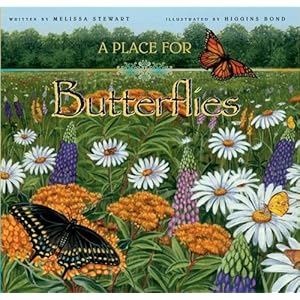
Melissa Stewart's book A Place for Butterflies was a perfect addition to this lesson--and a great way to share the problem/solution text structure. On each page, this book explains a problem that butterflies face, and then shows a way that people have helped to solve this problem.


Modeling
We started by reviewing how ecosystems can change. I showed students the book, and explained that the author explains problems and solutions in the ecosystem.

Then students made their own problem and solution charts. I modeled on the chart paper, and then students created their own by folding a sheet of notebook paper.

I read aloud the first pages and explained how to find the problem and solution. We worked with the main text at first, skipping over the insets for the time being. While there aren't any traditional problem and solution cue words, the text follows a pattern. The problem is presented on the left hand page, with the solution on the right.

As I shared the first few pages, I also showed students that there are more butterflies and caterpillars of each species hidden throughout the illustrations. I have a very artistic class this year, and they loved this little touch.

Group Work
We purchased 7 books over the summer, so students could work in groups of 3-4 to read the rest of the book. Because it's available in paperback, this is a very affordable addition to our science library.

Students quickly scattered throughout the room to work in their small groups. They continued reading and finding problems and solutions. Although this text is listed as an easier book, with some recommending it for K-3, my fourth graders found it the perfect challenge.


As they worked, I went around the room and listened to them. Many groups had problems with the idea that letting natural wildfires burn could be helpful for butterflies! We had talked about natural and human-caused forest fires. Living where we do, though, they had no experience with beneficial forest fires.

Some groups also didn't know what "cattle" were. I coached them to use the supportive illustrations to figure it out.

I chose one group to sit next to the easel to continue the chart that I had started. Of course, this was a highly coveted position!

Differentiation
My students work at vastly different speeds. This book was perfect for us. After they finished the main text, groups could go back and read the insets or find the butterflies and caterpillars hidden on each page. Many chose to go back to the natural wildfires page, because it was so puzzling for them. (I'll have to find more resources for this, since they find it so interesting.)

Discussion and Debriefing
These questions helped to frame our discussion after reading. You'll notice that they are a mix of reading questions and science questions.

-Why was the text structure of problem and solution a good fit for this book?
-Which set of problems and solutions surprised you? Which confirmed what you have learned before?
-How did the illustrations add to the text?
-Which of the solutions have we tried? Which could we try in our area?


Thursday, August 18, 2011

Problem and Solution: Honeybees

If you're looking for some problem and solution texts, here is a link to a short article that explains problems with honeybees and possible solutions:

Natives in the Garden

Thursday, July 14, 2011

Problem and Solution Text Structure

One of the problems with teaching text structure is finding the right texts. As I think about what books or articles to use with my students, I'm always thinking about levels, topics, and structure.  Which do I consider first? What's most important?

When I'm teaching text structure, of course, the structure is most important. For problem and solution, I like to use texts that are very explicit, using the words "problem" and "solution", as well as texts that are more subtle. Real world problem and solution texts often do not use these clear transition words, and I like to show students how this works.

Once I have the structure,  I have topic and level to worry about. I work in a pretty broad range of levels. After all, background knowledge has a huge impact on expository text comprehension. If I can give my readers rich background knowledge and strong pre-reading activities, they have a better chance of being able to understand the texts that I find. I like to use a pretty comfortable and easy text for whole-group reading, and then some more challenging texts for small groups.

What about topic? I hate it when we are all reading about different topics in guided reading. This just feels so fragmented! But sometimes it just can't be helped--after all, I don't have a staff of writers on demand. (Wouldn't that be wonderful?)  To help us make connections throughout the year, I try to find texts with topics that relate to science or social studies units for our grade level.

Here is a collection of texts for teaching problem and solution text structure. The cost is $3.00, and it includes 7 different texts. Five texts have before, during, and after activities, with a range of reading levels from 3-6. (Do take these reading levels with a grain of salt. When I write texts, I run them through multiple readability formulas, and then correlate those results with what I see from my students and comments from other teachers. The readability formulas vary widely, often across 2 grade levels!)

A mayfly nymph
Some of the texts may look familiar to those of you who have my former pack of Text Structure Resources--the James River Ferry, Rain Gardens, and Salamander Crossing. But each has new activities and graphic organizers to accompany them.

My very favorite text is about stream study with the biotic index--it was interesting to write about how the biotic index really does solve a scientific problem. And I got to use the cool mayfly picture that I took during stream study last week!

Looking for other books? Here are some links to problem-solution texts:

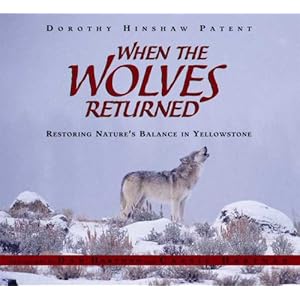
When the Wolves Returned

A Place for Butterflies

Text Structure Picture Books

Friday, December 3, 2010

Problem/Solution Text Structure: When the Wolves Returned

While it's been tough to find good books that sustain the compare and contrast text structure, I've found some great problem and solution books. One that is easily available is the title When the Wolves Returned.


Why do I like this book? Like many recent nonfiction books, it's written on two levels. Simple text is included in white boxes, while the author goes into more detail in a longer paragraph. This two level readability makes it a good fit for most classrooms.

I also like the way that the author interweaves causal relationships within the problem/solution structure. This is the way that text usually works. Problems don't just appear overnight; they have causes. The relationship between the causes and effects--and how they fit with the problem and solution--are very clear in this book.

The first half of the book explains how wolves were eliminated from Yellowstone, and the effects of this elimination. This is the problem. Then, in the second half of the book, the author describes how bringing back the wolves has been a solution to the problem. Of course, to show how the return of the wolves is a solution, the author needs to explain the effects of the wolves' return.

I can see this book working well as an introduction to the text structure of problem and solution. Even better, the endpages show an interconnected web of animal photos, with a caption inviting the reader to recall the effects that the wolves' return has had on each species. Pretty neat!

Wednesday, October 13, 2010

Text Structure: Problem and Solution

The text structure of problem and solution explains a problem to a reader, and then offers one or more solutions. Sometimes, the text examines a problem that has already been solved. More often, the author invites the reader to contribute to the solution.

Problem and solution text is often difficult for students to recognize. Writers don't always use the exact words "problem" and "solution". Instead, I tell students to look for words like these:
-unfortunately
-however
-developed (often used in the sense of a problem developing over time)
-efforts
-fortunately
-solve (many students don't recognize that solve and solution are related)
-results

Over the last few years, I've realized that I need to teach students to be critical of problem and solution texts. Often, persuasive essays use this structure. A reader needs to think, "Do I believe that this is a problem? Do I believe that these steps will be the best solution?"

Complicating issues is the fact that problem and solution text is often combined with cause and effect. How are these text structures different? If there is no solution, then the text structure is cause and effect. If there is a solution, then it is problem and solution.

Looking for problem/solution pieces? I've written multiple texts for Problem and Solution Texts.

Many picture books show elements of this text structure, especially books with environmental themes. Melissa Stewart has written several books showing problem and solution. A Place for Butterflies is one of my favorites, as well as A Place for Birds. What makes these so nice is that they have simple text, but very detailed pictures.