In a previous post, I wrote about how students often find it helpful to collect details about a setting in a setting graphic organizer. An organizer that cues students to consider details of time as well as place helps them to come to a more sophisticated understanding of setting.
Sometimes, though, students have trouble figuring out the time in which the story takes place. It took me a few years to realize that these students don't have a strong internal model for a timeline!
For these students, the graphic organizer below is helpful:
Download a copy here: https://www.slideshare.net/elkissn/time-and-place-setting
The idea of a "fairy tale time" or something off the timeline helps students to realize that some stories don't take place on our regular timeline.
In addition, a classroom timeline really helps students to place historical fiction stories. I adapted this one from TpT to hang up in my classroom, making sure to add events for stories that we would be reading over the school year--for example, adding the Goryeo Dynasty in Korea to go along with A Single Shard, and the year that "Ozymandias" was written to go along with our study of sonnets.
Helping students to conceptualize setting as place and time really adds to our classroom conversations!
Showing posts with label setting. Show all posts
Monday, July 16, 2018
Thursday, July 5, 2018
Setting Graphic Organizer
As a reader, I love texts with rich, detailed settings. Talking about setting with readers leads to great conversations as we talk about:
-How does the setting contribute to the plot?
-Could this story have happened in a different setting?
-How do the characters interact with the setting?
-What is the mood created with the words describing the setting?
-How does the setting change over the course of the story?
-(For historical fiction) What details about the time period can you learn?
With older readers, it's hard at first to help them understand that setting includes both the time and place of the text. Students want to just name the first location mentioned in the story and be content with that as the setting. But often, it's more helpful to name a generalized location.
I like to use this setting graphic organizer to help students notice and collect setting details. It scaffolds students to think about both the time and the place, and helps students to think about how the details connect to the setting as a whole. It's marvelously adaptable because we can put in the time and the place first, and then look for details to support them. We can also find details first, and then use those details to infer the broader setting. (I wrote more extensively about making inferences about setting in The Forest AND the Trees)
-How does the setting contribute to the plot?
-Could this story have happened in a different setting?
-How do the characters interact with the setting?
-What is the mood created with the words describing the setting?
-How does the setting change over the course of the story?
-(For historical fiction) What details about the time period can you learn?
With older readers, it's hard at first to help them understand that setting includes both the time and place of the text. Students want to just name the first location mentioned in the story and be content with that as the setting. But often, it's more helpful to name a generalized location.
I like to use this setting graphic organizer to help students notice and collect setting details. It scaffolds students to think about both the time and the place, and helps students to think about how the details connect to the setting as a whole. It's marvelously adaptable because we can put in the time and the place first, and then look for details to support them. We can also find details first, and then use those details to infer the broader setting. (I wrote more extensively about making inferences about setting in The Forest AND the Trees)
Time and place setting from Emily Kissner
For classroom-ready activities dealing with story elements like setting, you might like:
Wednesday, October 22, 2014
Looking Closely at Setting
This week, we have been looking closely at setting. In fourth grade, the big task of understanding setting means moving beyond stories with simple, one-note settings and into stories that have richer and deeper settings. Students must also be able to find details from a story that support a setting.
I use this graphic organizer to help students think about the time in which a story takes place:
Yesterday, this led to some interesting discussions. I asked a student to come to the front and be the teacher, explaining the purpose of the graphic organizer and what we had learned from it several weeks ago. She did an amazing job! Then, the other students were tasked with asking her follow-up questions to enrich the discussion:
-"Why is there an arrow at the end?"
-"What does fairy tale time mean?"
-"Couldn't a fairy tale story happen in the present?" (Ooh, great question!)
Then, we used the graphic organizer to help us find the time period of the story we had just read, "Last Day for School". (This story can be found in Character Traits and Emotions.) The date, 1951, is provided in the text. Past or present? Students talked in pairs about how this is kind of the present, because it isn't that long ago, but still the past.

The next step was to find sentences to support the setting. Quoting accurately from a text is an important standard for fourth graders, and it's hard for them to do early in the year. Sometimes a square of brightly colored paper and a fine-point marker helps the process along. After we identified the setting, we worked to find sentences from the text to support the time period setting. Of course there was the one sentence that stated the year, but were there others?
Students had to comb carefully through the text--just the kind of careful, thoughtful reading that I am trying to cultivate.
Finally, just a quick word about the inspiration for the story! Around here, the last one-room schoolhouses were still open into the beginning of the 1950s. I've talked to quite a few people who went to one-room schoolhouses, and their feelings about the end of the era ranged from Claire's to her brothers'.
Schoolhouses dot the landscape, from nicely decorated houses to abandoned hulks. Each year I stop by this crumbling place, conveniently situated along the route to Penn State from my house. I always think about the teachers and the students who went here and the lessons that were taught. Of course the modern schools of today are much, much better...but in my heart I think I feel a bit like Claire, sad to leave her old school behind.
I use this graphic organizer to help students think about the time in which a story takes place:
-"Why is there an arrow at the end?"
-"What does fairy tale time mean?"
-"Couldn't a fairy tale story happen in the present?" (Ooh, great question!)
Then, we used the graphic organizer to help us find the time period of the story we had just read, "Last Day for School". (This story can be found in Character Traits and Emotions.) The date, 1951, is provided in the text. Past or present? Students talked in pairs about how this is kind of the present, because it isn't that long ago, but still the past.

The next step was to find sentences to support the setting. Quoting accurately from a text is an important standard for fourth graders, and it's hard for them to do early in the year. Sometimes a square of brightly colored paper and a fine-point marker helps the process along. After we identified the setting, we worked to find sentences from the text to support the time period setting. Of course there was the one sentence that stated the year, but were there others?
Students had to comb carefully through the text--just the kind of careful, thoughtful reading that I am trying to cultivate.
Finally, just a quick word about the inspiration for the story! Around here, the last one-room schoolhouses were still open into the beginning of the 1950s. I've talked to quite a few people who went to one-room schoolhouses, and their feelings about the end of the era ranged from Claire's to her brothers'.Schoolhouses dot the landscape, from nicely decorated houses to abandoned hulks. Each year I stop by this crumbling place, conveniently situated along the route to Penn State from my house. I always think about the teachers and the students who went here and the lessons that were taught. Of course the modern schools of today are much, much better...but in my heart I think I feel a bit like Claire, sad to leave her old school behind.
Tuesday, November 12, 2013
Analyzing Story Elements
Analyzing stories is a tough task for fourth grader. First they have to read and understand the whole of the story. Then they have to analyze the elements of the story, often making inferences about characters, setting, and theme. Finally they have to put this analysis back into the context of the story as a whole.
Over the past few weeks we've been working hard to analyze stories. With different groups of readers, this takes on different aspects. In one group we worked on literature circles with picture books. Here are the pages that I put together for students. Notice that it is a highly structured literature circle, which is very much what fourth graders need at this time of year.
Picture book literature circles from Emily Kissner
Our books included my time-honored favorites from other blog posts: Weslandia, The Memory Coat, City Green, My Rotten Red-Headed Older Brother, and Dragonfly's Tale.
I love having students ask each other to share text evidence. When we did discussion groups, it was wonderful to see students holding the books open, lifting them up, and referring to specific page numbers. After their discussions, students worked to complete the open-ended response to write about the theme of the story.
With a different group of students, we analyzed setting during guided reading. This graphic organizer helped students to collect details about the time and place of the story.
I like how this graphic organizer can be used in two ways. When a setting is known, students can extend their knowledge of the time period and location by using this graphic organizer. When the setting is not known, students can gather details about the setting, and use those details to infer the time and place. (You can read this blog post from two years ago for more on how to infer a setting.) The details on this graphic organizer helped students to think about how a different setting would change the events of the story.
Analyzing story elements is an endeavor that takes students deeper into a story, helping them to think about deeper meanings. A strong foundation in this kind of thinking will also yield great results when students begin to compare stories in the weeks ahead.
Our books included my time-honored favorites from other blog posts: Weslandia, The Memory Coat, City Green, My Rotten Red-Headed Older Brother, and Dragonfly's Tale.
I love having students ask each other to share text evidence. When we did discussion groups, it was wonderful to see students holding the books open, lifting them up, and referring to specific page numbers. After their discussions, students worked to complete the open-ended response to write about the theme of the story.
With a different group of students, we analyzed setting during guided reading. This graphic organizer helped students to collect details about the time and place of the story.
I like how this graphic organizer can be used in two ways. When a setting is known, students can extend their knowledge of the time period and location by using this graphic organizer. When the setting is not known, students can gather details about the setting, and use those details to infer the time and place. (You can read this blog post from two years ago for more on how to infer a setting.) The details on this graphic organizer helped students to think about how a different setting would change the events of the story.
Analyzing story elements is an endeavor that takes students deeper into a story, helping them to think about deeper meanings. A strong foundation in this kind of thinking will also yield great results when students begin to compare stories in the weeks ahead.
Tuesday, November 8, 2011
Understanding Setting
As fourth grade readers encounter more challenging texts, they need to pay close attention to setting details. Sometimes, these details will help them to discover the setting, as I wrote about last time. But setting details will also help readers to build background knowledge about places and time periods.
This only works if kids are consciously collecting these details, though. Readers who are reading sentence by sentence often just think about the setting in small terms (the bedroom, the playground, the house) instead of taking a broader view. They often don't catch the setting details that build a bigger picture. Over the long run, think about how this impacts their schema and their comprehension!
I created this graphic organizer to help kids think about setting and time details. (Well, okay, I sketched it out, and my husband did the formatting!) On one side, students collect details about the time period in which the story is based. On the other side, students collect details about the place. This helps them to pay attention to the details in both the text and the pictures to help them learn more about the time and place.
What books work well with this? I started with The Librarian of Basra, available on Tumblebooks. (If your school library doesn't have access, try large public libraries.) We read the book together twice. On the second viewing, we started to add setting details. I told them that the book takes place in 2003, as discussed in this newspaper article. Then we mined the text and the pictures for all of the details we could find about the setting. It led to some interesting discussions--one student said that the houses looked like houses in Mexico; a student who has been to Mexico disagreed. We talked about the palm trees in the pictures, and what they meant; we talked about how the story is deeply connected to the setting.
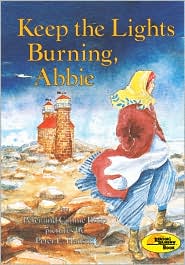
For guided reading, I wanted my group to work with an easy text, so that they would be able to put all of their energy into locating setting details. Keep the Lights Burning, Abbie was my choice--admittedly because there are many copies of it in the bookroom. It turned out to be a good choice for this group. Just like in The Librarian of Basra, the setting contributes to the conflict. It was a quick read, but one that led to interesting discussions. (Just for fun, I also showed them parts of the Reading Rainbow. It's old, but such a great way to build background knowledge!)
Helping students to go beyond just place-based thinking about setting is an important step. But I can't just relax and work setting...because plot is on the horizon. And understanding plot brings a new set of challenges!
This only works if kids are consciously collecting these details, though. Readers who are reading sentence by sentence often just think about the setting in small terms (the bedroom, the playground, the house) instead of taking a broader view. They often don't catch the setting details that build a bigger picture. Over the long run, think about how this impacts their schema and their comprehension!
I created this graphic organizer to help kids think about setting and time details. (Well, okay, I sketched it out, and my husband did the formatting!) On one side, students collect details about the time period in which the story is based. On the other side, students collect details about the place. This helps them to pay attention to the details in both the text and the pictures to help them learn more about the time and place.
What books work well with this? I started with The Librarian of Basra, available on Tumblebooks. (If your school library doesn't have access, try large public libraries.) We read the book together twice. On the second viewing, we started to add setting details. I told them that the book takes place in 2003, as discussed in this newspaper article. Then we mined the text and the pictures for all of the details we could find about the setting. It led to some interesting discussions--one student said that the houses looked like houses in Mexico; a student who has been to Mexico disagreed. We talked about the palm trees in the pictures, and what they meant; we talked about how the story is deeply connected to the setting.
For guided reading, I wanted my group to work with an easy text, so that they would be able to put all of their energy into locating setting details. Keep the Lights Burning, Abbie was my choice--admittedly because there are many copies of it in the bookroom. It turned out to be a good choice for this group. Just like in The Librarian of Basra, the setting contributes to the conflict. It was a quick read, but one that led to interesting discussions. (Just for fun, I also showed them parts of the Reading Rainbow. It's old, but such a great way to build background knowledge!)
Helping students to go beyond just place-based thinking about setting is an important step. But I can't just relax and work setting...because plot is on the horizon. And understanding plot brings a new set of challenges!
Tuesday, November 1, 2011
Making inferences: Setting
Well, we're finally moving on to story elements! This year, I'm trying to work on two thorny setting issues--the issue of multiple locations in one story and the issue of understanding time as a component of setting.
Problem 1: Multiple locations
In the primary grades, setting is often described as one location--the barnyard or the house or the playground. As students get older, though, they often have to describe more complex settings. A story might start in one location, and then move. The reader needs to collapse this list of different places into one overall setting.
Today, I started by practicing collapsing lists with my students. We started with easy ones: mango, pineapple, orange, apple (fruit); basketball, softball, golf, tennis (sports); table, chair, lamp, sofa (furniture). Then we looked at how this could work with setting: hallway, cafeteria, library, classroom (school).
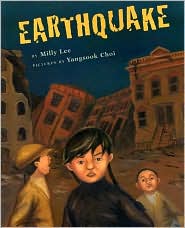
To show students how this works with a text, we read the book Earthquake by Milly Lee. I love this book because it tells the story of the San Francisco earthquake in a very simple, powerful way. And "San Francisco" never appears in the main text!
We made a list of the locations shown on different pages: the family's living room, their apartment, the street, Chinatown, Golden Gate Park. Then, we tried to collapse the list. This required them to pull on their background knowledge. (We had read a play about the San Francisco earthquake the week before.) Some groups pulled on this experience, while others used their knowledge of the Golden Gate Bridge. The important thing, however, was that they were able to collapse the list of small locations into one main setting.
I love how simple this lesson was, and yet how important. It brings together the idea of collapsing lists with making inferences with story elements. Wonderful!
Problem 2: Setting as time
Well, the setting is the time AND place of the story. But many readers are a little too literal with their statement of time. Instead of "1906" as the time for Earthquake, a reader might write, "in the night and the next morning." This is a big problem, because a reader who is thinking of time on such a micro-level may not notice important dates and might fail to add big ideas to their schema.
I decided to make a graphic organizer to show a timeline. When I handed it out to students, I didn't explain anything--I just said, "What do you notice?" Working with their partners, they found all of the important elements: that it shows how time goes in one direction, that there are little pictures to show past, present, and future, that it includes words to help you find the time of a text.
What about fairy tales? It's so hard to show how they fit in. I decided to show how they are off the timeline. Fairy tales and fantasy take place in another time, often with elements of the past mixed in.
After we read Earthquake, we talked about how the setting is not just the location, but also the time. Students easily found that it took place in the past--once again, by drawing on their background knowledge.
I love it when things come together in one lesson. And a great book makes it happen even more easily!
Problem 1: Multiple locations
In the primary grades, setting is often described as one location--the barnyard or the house or the playground. As students get older, though, they often have to describe more complex settings. A story might start in one location, and then move. The reader needs to collapse this list of different places into one overall setting.
Today, I started by practicing collapsing lists with my students. We started with easy ones: mango, pineapple, orange, apple (fruit); basketball, softball, golf, tennis (sports); table, chair, lamp, sofa (furniture). Then we looked at how this could work with setting: hallway, cafeteria, library, classroom (school).
To show students how this works with a text, we read the book Earthquake by Milly Lee. I love this book because it tells the story of the San Francisco earthquake in a very simple, powerful way. And "San Francisco" never appears in the main text!
We made a list of the locations shown on different pages: the family's living room, their apartment, the street, Chinatown, Golden Gate Park. Then, we tried to collapse the list. This required them to pull on their background knowledge. (We had read a play about the San Francisco earthquake the week before.) Some groups pulled on this experience, while others used their knowledge of the Golden Gate Bridge. The important thing, however, was that they were able to collapse the list of small locations into one main setting.
I love how simple this lesson was, and yet how important. It brings together the idea of collapsing lists with making inferences with story elements. Wonderful!
Problem 2: Setting as time
Well, the setting is the time AND place of the story. But many readers are a little too literal with their statement of time. Instead of "1906" as the time for Earthquake, a reader might write, "in the night and the next morning." This is a big problem, because a reader who is thinking of time on such a micro-level may not notice important dates and might fail to add big ideas to their schema.
I decided to make a graphic organizer to show a timeline. When I handed it out to students, I didn't explain anything--I just said, "What do you notice?" Working with their partners, they found all of the important elements: that it shows how time goes in one direction, that there are little pictures to show past, present, and future, that it includes words to help you find the time of a text.
What about fairy tales? It's so hard to show how they fit in. I decided to show how they are off the timeline. Fairy tales and fantasy take place in another time, often with elements of the past mixed in.
After we read Earthquake, we talked about how the setting is not just the location, but also the time. Students easily found that it took place in the past--once again, by drawing on their background knowledge.
I love it when things come together in one lesson. And a great book makes it happen even more easily!
Subscribe to:
Posts (Atom)