Showing posts with label assessment. Show all posts

Saturday, September 13, 2014

Book Review: Developing Literacy in the Primary Classroom

I really enjoy reading educational research articles. The authors are pleasantly careful and measured in their descriptions of studies and conclusions. Instead of making huge claims and offering easy solutions, real educational research articles are like quiet coffee-time conversations. Authors work hard not to overstep and over-generalize. As a reader, I'm left with plenty of ideas to consider and think about as I watch the learners in my classroom.

In the course of this reading, I've found many new concepts and ways of thinking about reading, like the Simple View of reading, Four Resources Model, and task feedback. These different concepts have changed how I teach.

This is why I'm so delighted to have been given a copy of Developing Literacy in the Primary Classroom by Gary Woolley. Dr. Woolley's articles have been a deep influence on my teaching, especially as I teach students how to visualizing and self-monitor. Now, he has put together an easy-to-read yet comprehensive resource for teaching reading in elementary schools. All kinds of new and interesting models are discussed, with digital resources embedded within chapters and given a chapter of their own as well.

As Dr. Woolley works in Australia, this book offers American readers a refreshing change from constant talk of the Common Core. But strong literacy instruction is good practice no matter what you call it or what standards you apply to it. Reading and writing combine a number of different processes, and awareness of those processes helps teachers to design the best classroom environment and learning experiences.

This book is useful for any elementary teacher looking to expand their reading and literacy horizons. Short chapters and lots of headings make it easy to pick up and read in short segments. It would also be an excellent introduction to literacy instruction for college students, especially with the end of chapter questions and activities. (Plus there is a bit from my blog included--how exciting!)


Tuesday, August 26, 2014

Reading Assessments for the Start of the Year

     Another school year has begun! At the start of the year I am always eager to find out as much about my new readers as I can. I know that I need to hit the ground running if I want to move my readers and help them grow. At the same time, I don't want to burden kids with too many assessments. My goal is to keep things light and fun.

The Read-Aloud Test
    This is as easy as it gets. Read aloud an an interesting text with very few pictures. Watch how kids react.
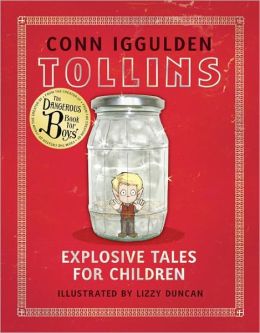
    It's that simple! Well--not really. The book selection is the key part. With one group of readers I'm reading aloud Tollins: Explosive Tales for Children. If you have never met the Tollins, this book is well worth it. It has a very dry, British feel to the humor and is wonderful for helping me gauge the reactions of my readers. Which kids are laughing? Which are staring at the wall? Which readers look shocked at the treatment of fairies?
    In my other class I am reading aloud Toys Go Out. I've written about this book before, and I still love starting with it. This book is excellent for helping students to understand how readers build mental models. (It's funny, too.)

"What was the last book that you read that you liked?"
    I ask this question as I am trying to match books to readers in the first few days of reading class. Sometimes kids speak confidently about books and series. Sometimes they will describe a book that will help me to choose the next book to give them. And sometimes they will look at the floor and mumble a bit. Each of these is an important thing for me to know about a reader! By watching how readers interact with books, I can get a good sense in the first few days of which readers will need more targeted help.

Visualizing Assessment
    Fourth graders are good at using picture clues. So good, in fact, that I really need to pull away picture clues early on to see what they can do with simple text. A visualizing assessment is a wonderful tool for this.
    I tell readers: "I really want to know what is going on in your head as you read. Because I can't see inside, I'd like to you to do your best to draw a picture of what you visualize as you read. It doesn't have to be perfect, and I'm not looking at your artwork, so feel free to add labels if you want to."


 Another visualizing assessment in my book The Forest and the Trees: Helping Readers Identify Details in Texts and Tests. I've found that it's helpful to have several different versions to use throughout the year.

QRI Word Reading
    I learn so much about readers when I administer the QRI (Qualitative Reading Inventory). In the first few frantic days of school, I don't really have time to sit down and give a QRI my full attention. But I can give the first part of the assessment--the word reading part! This gives me some very early information that I can use to help students with book selection, and helps me to pull the right selections to use with students.
    I never do the QRI with all students. However, it's very helpful for students who seem to be struggling or seem to reading well above grade level. I love to sit down and really listen to these students read.

These quick assessments help me to find out some basic information about the readers in my room, early in the school year. They help to get me through the first few weeks of slow going as we look at routines and procedures. These assessments are a nice balance to my other main job of the first few weeks--getting books to readers! What assessments do you like to use early in the school year?


Friday, February 7, 2014

Literacy Centers as Pre-Assessment

"Mrs. Kissner, I know the pattern! We have a two-hour delay, and then we have off. We have a two-hour delay, and then off."

And this student was right--that has been the pattern this week! I haven't been able to accomplish much teaching because of the weather. Yesterday, during what should have been my fluency intervention, I was digging a drainage canal in front of my house:

It was like building the biggest sand castle moat ever, and it was hugely satisfying to see the water start to run down to the storm drain instead of pooling in front of my driveway. I have always loved standing in slush and yesterday's slush was about the best ever.

All of these odd days left today's reading class as a finish-up and catch-up day. Some students were still working on their poetry assessment and others were completing their Comparing Poems projects. I needed something for the students who were finished with everything. I didn't want to have them work on their other ongoing projects, as the noise level would quickly escalate.

So I decided to pull down my nonfiction literacy center activities and use them as pre-assessment instead of independent practice. I created these over several years, and slowly added sets to my box. There are two versions of a paragraph match in which students match paragraphs to text structures. A retelling center directs students to read a short text about an animal life cycle and then retell the text with pictures; a main idea center has students arrange sentences from paragraphs in an order that makes sense.

Here's what I found: Using the center activities to find out what my students already know was incredibly effective. The informal nature of the activities made students much more willing to talk to me about their thinking than they would have been if they had been taking a traditional pretest. "What does this word mean?" one student asked, pointing to chronological. "Are these paragraphs or poems?" asked an ELL student. "I don't think I've learned about text structure before," said another. I love to overhear these questions--they mean that the kids are actively thinking about what they are reading and are searching for meaning.

Using the centers before instruction increased the overall level of engagement. Although I expected the activities to only take about 20 minutes, students kept coming back for more. "I want to try the water park one!" or, passing an envelope from one to another, "You'll love this one!" Best of all, I now know what kinds of knowledge students are bringing with them to the nonfiction unit that we will start tomorrow.

Or maybe not tomorrow. After all, there is a pattern.


Wednesday, December 4, 2013

Learning Notes: Stories in a Sea of Data

This week, as I was cutting down the remains of last summer's garden, I thought about how lucky it is that my classroom and my garden work as opposites. In June, as I am feeling the deep sadness of a vanished learning community, my garden eagerly clamors for attention.  In November, just when the summer garden is completely gone, my classroom "garden" of learners and excitement is entering full bloom.

And what a bloom it is! I have a class of students with lots of enthusiasm and ideas, and they have brought many interesting ideas. Clubs have been all the rage this year--kids love making sign-up sheets (of course, everyone who wants to join must be included), having club meetings at recess, assigning club homework, and then complaining when club members don't attend meetings. It seems that the process of making the sign-up sheet and making announcements to the class is the most exciting part of this. On the other side of the room, a group of students is making a play. Another student has taken on the task of writing the morning message each day, and another is writing a story. There are smaller moments, too--the girl who is making a PowerPoint about Greek mythology, the student who created a cupcake analogy to describe summarizing, the boy who is writing his own story for us to act out during reading class.

So the question arises of how to capture all of this activity. Even though I have 100+ data points on our standards-based report card, I cannot imagine turning any of these rich experiences into a number or a letter. They are more than that.

I found a way to capture the learning as I was browsing the Graham Nuthall Classroom Trust to see if there were any new newsletters. I've been fascinated by the work of Graham Nuthall ever since I worked on the Forest and the Trees book. In one of the newsletters, I read about the idea of Learning Stories. In early childhood settings, learning stories are used to describe and interpret the learning of young children. I was intrigued by these stories and wondered--how could I do this at my level?

Fortunately, I skipped around to another blog that answered my question. Learning Notes are a way to capture those wonderful classroom moments! I patterned mine directly off the example on the Blog of Proximal Development by Konrad Glogowski: three columns labeled Describe/Interpret/Next Steps. (Feeling in a decidedly un-technological mood, I handwrote mine and added some doodles before copying.)

I quickly made a binder to collect the Learning Notes. Then, I started looking around for what to write about. It didn't take long!

These are some of the quick little notes that I've written over the last two weeks. Will every student get a learning note? Not at first; I'm averaging only one per day. But I hope that these notes will help to create a culture of learning in my classroom. I'm still thinking about whether I want to display them (with student permission, of course) or keep them in a binder. In a time of year when I often start to despair a bit about the upcoming state testing, these learning notes help me to focus on the small moments that really matter. By the end of the year, my copy of the Learning Notes will be a wonderful memento of our classroom garden.

News
I finished December Homework! These were so much fun to write. I'm working to get the texts up over on Frolyc as well. Then, they would be available digitally for students with iPads with the free Activity Spot app. Write to let me know if you'd be interested in this!

I am deep in the Personal Narratives unit right now. Today we worked on adding paragraphs to a personal narrative--such an important topic for fourth grade writers!