Wednesday, July 28, 2021
Reading Survey for Students
Thursday, June 17, 2021
Looking Back: Classroom Libraries and COVID
This year has been tough! My school was face-to-face with the entire class for almost the entire year. Last year, I wrote about plans for a classroom library in the face of a pandemic. Now, I'm at the happy point of looking back on the year and thinking about lessons learned.
Taking Books from Room to Room
Because I moved about this year, I couldn't have a typical classroom library. Instead, I had to take a bin of books with me from room to room. (By the end of the year, I was carting a tall table and an overhead cart with handouts and books!)
I expected this to be harder than it was. My start of year book survey helped me to do first day book assignments. Then, I could pick out follow-up books to put into my book bin to cart from place to place. I did make many trips back and forth to my classroom to get books that I'd forgotten; luckily I had a co-teacher for two classes and a lunch break in the middle of the other.
I had some tried and true books that went with me and were in almost constant circulation! Because of this year's overall atmosphere, I found that kids gravitated toward quick and fun graphic novels. These were the all-time favorites from the year.
Teacher Sign-Out Book
In the past, students have been responsible for signing out books. This year, I needed to keep the sign-out book myself. Returned books went into a quarantine bin, while I checked books in and out with a sign in book.
And this worked out wonderfully! In fact, I think that I will clear the first 10 minutes of every class this year to do this again. I kept better track of books than ever before. Previously I had thought that I absolutely could not handle writing down student book checkouts, but I learned otherwise. It worked out well and helped me to have short conversations with readers every day.
No Browsing
At the start of the year, I worried about the lack of browsing in my classroom library. However, this turned out to be less of an issue than I thought. Between the book survey and my traveling book bin, I managed to get kids set up with the next book they'd like pretty easily. Each morning, I would sort the quarantined books that were ready to be returned, check my notes for what to take the next day, and get my book bin set up.
In fact, I noticed that no browsing meant that more time was spent reading. Students became more skilled at asking me for the kinds of books they'd like ("Mrs. Kissner, I want something that's sad and long") and I got better at making recommendations. I did sometimes give students three books that I'd selected for them to look through. They could choose one and return the rest to the quarantine bin.
I don't think that I will disallow browsing for the future, but I think that I will limit it. I always have a core group of students who like to avoid reading, and too much freedom to browse gives them time to do this. Finding a balance between browsing and teacher recommendation is my task for next year!
Outdoor Reading Time
This isn't something new for the pandemic...but wow, does some outdoor reading time brighten everyone's mood! In the first few weeks of school, I had students bring along a beach towel to sit on outdoors. Our bright and sunny courtyard was the perfect place for fresh air, reading time, and much-needed social distancing.In my end-of-year survey for students, independent reading time rated highly as one of the favorite activities for students. In fact, several students suggested that I give more time next year! This just goes to show that independent reading is important no matter what.
Lessons for Next Year
What will next year bring? I can't even begin to guess. But I have learned some new tricks for my classroom library and figured out how to make daily reading time work in a wide range of situations.
Sunday, June 1, 2014
Promote summer reading with a book swap
-Kids bring in books that they have already read. They bring them to the designated place and receive a ticket for each book.
-On the day of the book swap, teachers and students spread out the books on tables. This could be done lovingly and with great care (if you have extra time in the last week of school--ha ha!) or hastily (my preferred method).
-Kids with tickets come and get first pick of "new" books to read for the summer.
-Everyone else can come and pick out a book.
Now, it might sound as if only the kids who donate books get to pick new ones. But it never works out that way. We always have such an abundance of donated books that every kid gets to choose at least one. Usually we end up giving away tons of extras!
Why does this happen? There are always parents who take advantage of the book swap to do some spring cleaning, donating 20+ books. The kids with this many tickets freely give away tickets to friends. Teachers (including me!) also take advantage of the chance to clear the bookshelves a bit. I make sure that any tickets I get find their way into the hands of students. Even with this giving away of tickets we always end up with extra books. It is a great and wonderful mystery of life.
One parent note home and repeated announcements are usually enough to ensure participation. In fact, I've been surprised at how many students join in. Every student in my school received two free books from RIF (Reading Is Fundamental) this year, and many of these books are brought in. It's neat to see how RIF books can bring reading to multiple kids.
A book swap is a free way to promote summer reading, and it is a nice activity to get kids reading in the last week of school. Have you tried a book swap? Share any tips or stories that you have!
Tweet
Wednesday, June 26, 2013
iPads in the Classroom: Planning for Next Year!
Over the spring I have had the chance to try out an app called Activity Spot. This app allows me to author my own texts, questions, and activities, and then publish them to the iPad. It's ready for wider testing right now. If you download the app from the iTunes store, you'll have access to just a few texts that I have written. In a few months, teachers will be able to author their own texts. (You can read more about Activity Spot at the Frolyc website, or download it here.)
My youngest son has been fascinated by the entire process. He has read each piece and given me lots of constructive criticism. ("Leopard seals was your best yet!" he told me...wow, that is high praise from an 8-year-old.)
Watching him interact with the device has helped me to do some thinking about what I want for my classroom next year. It's fascinating to watch him take the learning to different places--spread out on the couch, in the yard, in the car--and do activities at all times of day.
Accountable independent reading
Right now I only have one iPad. But my students still loved using it during independent reading. For my struggling readers, the questions at the end of the texts in Activity Spot helped them to see how they had understood the texts. Instead of being frustrating or boring, the questions were somehow motivating. The kids proudly brought me their scores or showed me how they had improved from before.
I can't wait to have more iPads to use during independent reading times. They'll be the perfect tool for the "reading vacation" that kids like to take between books. (A reading vacation is something that I let readers do when they have just finished a book or a series and they are not quite ready to commit to something new...a day or two of reading picture books or using the iPad can be very refreshing!)
Building background knowledge
Filling in the background knowledge gaps can be a daunting task for teachers. But the right content can help students to learn new concepts quickly. The iPad is the perfect tool to help students learn about scientific or historical concepts. A quick YouTube playlist can help students to learn about topics of interest. (For example, many of my students had never heard of tide pools. While it's not a topic that we cover, several kids were interested, so I made up a playlist to use next year.) Down times like bus time and indoor recess can become great learning opportunities.
How are you planning to use iPads or tablets in your classroom next year?
Other news
-Spelling is now on Google Drive! Email me at elkissn@yahoo.com with your Gmail address and I'll add you to the list to view the folder. You can read more about the spelling program we made here. If you have used the Master Word List, please comment or write to let me know!
-Several people have written have written to ask about the Reading Intervention that I made last summer. It is available in four parts: Part 1, Part 2, Part 3, Part 4. It includes texts, PowerPoints, and activities to build academic vocabulary and text structure awareness.
-If you're looking for an easy introduction to text structure, you might like Introduction to Text Structure. It includes texts on the chinstrap penguin and the peregrine falcon, showing how text structures can be used to communicate different information about the same topics.
-I'd love to hear what you think about Activity Spot!
Tuesday, June 11, 2013
Acquisitional Readers
Ah, the children left to their own devices. This school year I haven't intervened much in my younger son's reading life. His reading assignment every night was blissfully easy--read anything you like for 20 minutes--but after Christmas he went to reading on the Kindle. It wasn't until Saturday at the library that I noticed that he had somehow transformed into what I call an "acquisitional reader".
What is an acquisitional reader? Here are some characteristics:
7-12 years old
I've noticed these kinds of readers in every grade that I have taught--fourth, sixth, and seventh.
Love a series or a kind of book
Acquisitional readers all share a love for a particular series or genre. For some kids it is a series of books (The Warrior series for my young one), while for others it is a kind of book, like books about wolves or airplanes.
Seek out information about a series beyond the actual books
Acquisitional readers are often very impressive in their knowledge about the series or books. Aidan knows everything about the Warriors books, the result of Internet searches and browsing online. Acquisitional readers can talk very knowledgeably about their favorite books.
Value acquiring the books over reading the books
And this is the heart of the problem.
This one characteristic is what unites every acquisitional reader that I have ever known. Acquisitional readers are quite different from reluctant readers because acquisitional readers love books. They love the idea of reading. They stand in the library and chat about their books. In fact, they love books so much that many people never even realize what's happening. (Like, uh, a mother who has been sucked into the thrall of too many May activities.)
Development
How do acquisitional readers develop? I've noticed that they are often kids from families that value reading, or kids who just love school. The brain work of really deep reading is invisible to most kids. What do these kids see an older sibling or a parent doing? They see the role model:
-getting books
-talking about books
-seeking new information about books.
Put all of this together--minus the invisible brain work of engaging with books--and you have the acquisitional reader.
Moving forward
In the library on Saturday, I realized that my youngest son is an acquisitional reader. He loves the Warriors series and knows a great deal about it. He has started many of the books. He knows all about the authors and why they chose the name Erin Hunter. But he hasn't really finished any of the books at all.
The good thing about acquisitional readers is that they already love books. They already love reading. They just need to be nudged into that deep invisible brain work. From my experience, it sometimes takes a clean break away from the series or kind of book that they like so much. They already have such a rich knowledge of that series that they don't even realize that they are missing anything.
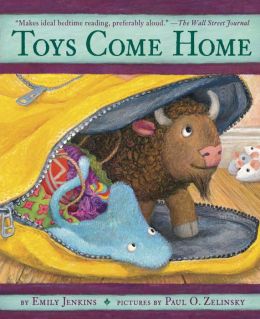
For Aidan, choosing another book proved a challenge. He and I have been reading the Tollins books together over the last few months, so I knew that he loves word play and wry humor. I brought a few books to our library table for him to try. Toys Come Home proved to be the winner. (Yay! I love these books.) Although I had read aloud Toys Go Out to him three years ago, he didn't remember it, which meant that he was experiencing StingRay and the Girl for the first time.
We're reading chapters together and then talking about them in detail, which I hope will help him to get to that feeling of being "way down deep" in a book. Most importantly, I want him to realize the dual pleasures of reading and enjoying what's on the page he's on right now and putting that together with the bigger story of the book as a whole.
Why worry?
In some ways, acquisitional readers are not doing that badly. They do find pleasure in reading, even if they don't finish books, and they are able to have lively and animated conversations about books. Many adults wouldn't even notice that they aren't finishing.
But they are missing out on the best part of reading. This is why for Aidan, and for my students, acquisitional reading must always be a stopping point, never the end destination.
Questions
-At the end of the school year, what did you notice had been neglected for the last few weeks?
-Have you noticed any acquisitional readers? What advice do you have for helping them?
Saturday, September 8, 2012
Getting started with independent reading
Of course, on Wednesday night, I decided that I was hot and sweaty already--might as well go pick raspberries and flowers! The end result was a gorgeous bouquet, four pints of fresh berries to give to colleagues, and two big containers of jam.
In school this week I've worked hard to get kids working on independent reading, just like I do every fall. I'm glad that I wrote these lesson plans several years ago--I still print them and follow them each year! The start of the school year is overwhelming enough without starting from scratch.
The path to independent reading starts with read alouds. During read aloud, I can model the kinds of thinking that I'm expecting of students during independent reading. Over the course of this week, students slowly took over the task of thinking about our shared texts.
Tuesday: Students shared their thinking with a partner. I generalized the kind of thinking from what they shared ("You shared a question. Questioning is a kind of thinking that readers do.") and made a chart.
Wednesday: Students wrote their thinking on two sticky notes when I stopped at two points in the text. They shared their thinking with a partner, and we tried to categorize their thinking. ("When you make a guess about how a character is feeling, that's a kind of thinking called inferring.")
Thursday: Students wrote their thinking on two sticky notes about our read aloud, and then two sticky notes from independent reading. They tried to categorize their thinking and wrote symbols like question marks, exclamation points, or stars to represent different kinds of thinking.
Friday: Students graduated to putting their thinking on a chart that they will use over the next few weeks.
But what books do I choose to start the year? I like to change things up. One thing that I wanted to do this year was give kids a taste of books that are not easy, and that do not yield their secrets quickly. But this is not always successful when kids are hot and sweaty. So I had to be very careful in my book picks, probably more careful than those lucky teachers in chilly buildings.
Instructions by Neil Gaiman turned out to be a good choice. I spent most of last summer devouring Neil Gaiman's books for adults, so when I ran into this in a beachside bookstore I knew I had to have it. It's interesting enough to keep kids entranced, and short enough to read in just a few moments. But it leaves a reader with more questions than answers. In case you haven't read it, the book is a poetic set of instructions for a quest, shown acted out by a fox. It looks like a fairy tale, reads like procedural text, and leaves you thinking.
Previously by Allan Ahlberg turned out to be loved by some, hated by others. Perfect for teaching about reading ratings! (Hm, can you tell that I read a lot of British fantasy over the summer? Like dark chocolate, it's left a taste in my mouth.) This story upends fairy tales by telling what happened--well, previously. Never before have I thought that the Jack who fought the giant was the same Jack that fell down the hill! The students liked the illustrations, especially the endpiece that shows the characters as babies.
My computer has broken recently. I knew it was going to happen, so luckily I made backups of everything. In going through my files, I found old, old files and felt a bit of nostalgia for things that I haven't done in a long time. This led me to choose Heckedy Peg, a used bookstore find, as a read aloud. I first met this book when I was teaching a 4 year-old preschool class long ago. The center director was a fabulous teacher who sometimes read this book to the students before naptime while I cleaned up from lunch and set out cots. While some might not want to share a book with a scary witch in it with young children, this director knew that kids need fairy tales and an element of danger. Besides, Heckedy Peg stars a wonderful mother who bravely and cleverly gets her children back. It was a big naptime hit.
Would fourth graders enjoy this as much as preschoolers? Absolutely! They all wanted to read it again during independent reading time. One boy asked to take it home for the weekend to read to his mother. From a teaching standpoint, I love how an event in the beginning of the book (what the children want their mother to bring home from the market) leads to the resolution of the conflict at the end of the book. Many traditional fairy tales just don't hang together this well.
I have written about Crab Moon before. I love the paintings in this book. For teaching about narrative and informational text, this book is a must. It has information in it, but is still definitely a narrative. This leads to a great discussion with students about the differences between narrative and informational text.
Crab Moon also helped me to learn some important information about my readers. After the main character, Daniel, helps a horseshoe crab, he grins. I asked the students, "How do you think Daniel feels on this page?" They shared their thinking with partners, and then several shared with the whole class. The consensus was that Daniel felt "happy" (proud did not make an appearance). Despite repeatedly asking, "What in the text might makes you think this?" and rereading the last paragraph on the page, I couldn't get any student to refer to the fact that Daniel grins to support their inferences. (And I feel that I can only go so far with leading questions. If the skill isn't there, it's not there, and dragging it out of kids isn't going to solve anything.) So I know that my work is cut out for me as far as supporting inferences with evidence from text. I'll start with this in small group reading sessions next week, using texts that support text-based inferences.
After we read the book together, I shared my own pictures of horseshoe crabs. These led to more talking and questioning and led several students to choose the informational books about horseshoe crabs that just happened to be prominently displayed. This is the beginning of matching details from different texts, which in turn is the beginning of becoming an expert...so big things were happening.
So it's been a productive week. In between reading times we have done tons of screening assessments. While these numbers are useful, I really think that the time we share in read aloud tells me just as much about what this year's classes will be like. I'm looking forward to getting to know all of the readers even better!
Tuesday, March 13, 2012
Favorite Books Right Now
Everything I get for my classroom library is either purchased with bonus points or on my own. For this reason, I'm very choosy--I only buy what I really like! Or, usually, what my sons really like. My oldest is a voracious reader, and many of the books in my classroom were originally bought for him.
Bad Kitty
Bad Kitty is definitely a hit! Kids love the mix of comics and text. I like that the author, Nick Bruel, weaves in real information about cats. My only complaint is that my copies are never on the shelf! I had to buy a whole new set at the book fair so that I could take two home to share with my cat-obsessed son.
Kitty is very expressive, which makes this a nice book to look at character emotions. The books also encourage readers to look at all of the elements on the page--often, the really funny bits are in side notes, the glossary, or the illustrations. These additions make reading all of the text rewarding for young readers. And yet, with the sly humor and the mischief of Kitty, they can't help but feel that they are getting away with something.
Bone
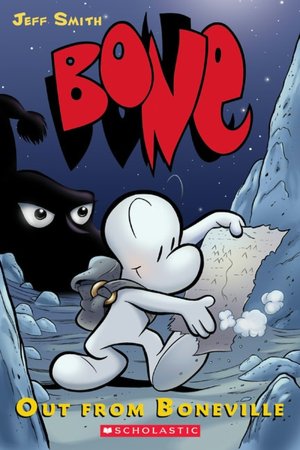
I've had several volumes of this graphic novel series for the last few years, but none of my students ever showed much interest in it. Well, things have changed! Several boys have passing these books around, keeping track of which teacher has which volumes and which are available in the library. I have to admit that I haven't gotten much further in my appreciation of graphic novels than Rapunzel's Revenge, so I haven't really read much of these. Any suggestions for what I should have kids look for?
Tuesdays at the Castle
The girls who attacked the Dragon Slippers series at the beginning of the year quickly read this newer book by Jessica Day George. I loved the way that the castle changes and moves. It's a nice bridge kind of fantasy book. There is peril and danger, but it is not quite so dramatic as some of the more complex fantasy series.
Speaking of fantasy series...
Kids are still reading The Lightning Thief! I wondered if this series would continue to attract readers even after the Last Olympian. But there is just something about these books! While none of my students have stuck with any of the Harry Potter books for more than a few chapters, I have two students right now who are on the second and fourth books respectively.
Note to all teachers who are stuck with state testing: Never, never tell students that they can read a Rick Riordan book "when they are done with the test". I made the mistake of doing this when The Sea of Monsters came out many years ago, and I'm convinced the kid rushed through the test just to get to my copy of the glossy hardback book. I can't blame him--I would have done the same thing! And doesn't it really show good reading instruction, that a student would rather read a real book than spend hours looking over a test? However, with the tests mattering so much these days, I think I might just hide The Last Olympian until all of the bubbles have been neatly filled in. No sense in tempting fate.
Diary of a Worm, Diary of a Spider, Diary of a Fly
I wrote about these at the beginning of the year. I have some chalk trays that I use for book displays. Because we're heading into testing, I set these books out again as light reading. I was a little curious to see how my newly mature fourth graders would react. Would they pretend that they weren't even there, like when I set up my beautiful display of habitat books? (Yawn!) Or would they swoop in and take them with such ferocity that I would need to appoint someone to make sure that they were all returned by the end of class, as when I put up the Mo Willems display? The real truth is somewhere in the middle. There is a core group of kids who are still drawn to these books. They still pass them around to read and re-read. And it's not just the struggling readers, either. I really want to figure out why the kids like these so much, so that I can find others along the same lines!
Random House Book of Poetry for Children
I got my first copy of this book when I was in third grade. Now, I'm thrilled that it has a measure of status in my classroom! Over the last few years, I've worked hard to collect enough poetry books so that I could have every kid in the class reading a poetry book at the same time. The used book store at the library and the nearby discount bookstore have helped me immensely in this quest.
One day, as we were studying poetry, I handed out the books. Well, word got around that the Random House book was the book to get. Now I have kids ask for it whenever we have some free time. If you were looking to add one book to your library this spring, this is the one to add!
What's not popular
I don't have any kids reading Andrew Clements this year, which is surprising. When we start literature circles in a few weeks, I'm going to introduce Frindle to try to build some interest for this favorite author. As I mentioned before, Harry Potter is not very popular, nor is Margaret Peterson Haddix. I've decided to do The Magic Thief as a read aloud for my reading class to build their stamina and interest in longer, more complex books. While I do have some kids who are happily still reading The Magic Treehouse books, A-Z Mysteries is not popular this year.
It's always interesting to take stock and see what this year's kids have liked! Every group is so very different, and every group teaches me more about watching kids and suggesting books.
Saturday, February 25, 2012
Narrow Reading to Widen Comprehension
Well--maybe not. In the last few years, I've come to appreciate the value of "narrow reading." (This article by Stephen Krashen is an excellent introduction to the term.) While narrow reading is often suggested for ELL students, I think it has great value for emergent and striving readers as well.
What is narrow reading? Consider the case of my youngest son. This year, every single book he has checked out from the library has been an animal nonfiction book. Every single one. As he has become a more confident first grade reader, he has found words and ideas that appear in every book--animal, baby, habitat, predator, prey. These words that show up again and again have become his cornerstones for decoding other unfamiliar words. His narrow reading is not at all limiting to him. In fact, it's empowering.
A student in my reading class has done something very similar. This year, he has read my entire collection of Horrible Harry books. "Harry's not quite so horrible in this book," he told me one day. He knows the characters and the settings of the books quite well, allowing him to allocate more mental resources to track the plot. (He tried a Secrets of Droon book today--I hope he likes it!) Another student, an ELL reader, has been working on The Spiderwick Chronicles since October. Yet another student has taken the fourth grade equivalent of Aidan's track, reading every animal book that I have in my classroom.
Narrow reading has a role in instruction, too. As I've been wrapping up text structure, we've been reading a series of related texts about vernal pools. These texts have different text structures, but show similar main ideas and vocabulary. This is so helpful for struggling readers, especially in the area of making inferences. Many students have trouble with making inferences because of a lack of background knowledge. When we read related texts, these students get the background knowledge they need about the topic.
As we were doing a repeated choral reading of "Salamander Crossing", I decided to ask an inference question based on the morning's science lesson.
"Do you think that mole salamanders are nocturnal, or diurnal?" I asked.
Because the text mentions mole salamanders migrating at night, the students were able to answer this fairly easily. But one student said thoughtfully, "Why are they nocturnal, I wonder?"
Another student--one who often struggles with answering multiple choice questions--blurted, "Because of moist." When we looked at him, he added, "You know, they have to stay moist. They're salamanders."
Those of you who work with struggling readers know that this is what we live for. Unprompted question, unprompted response, unprompted support for that response--these are the actions of real readers. In this case, our narrow reading gave these students the mental space to try out these more sophisticated reading strategies.
But now, as the ice melts and I start to think about going to look for salamander eggs in the vernal pools, our focus changes--from text structure to a return to fiction. Over the next few weeks, as state tests tromp through our days, we'll take a closer look at making inferences in fiction.
Friday, September 23, 2011
Independent Reading Triage
Quiet readers
In every class, there are some students who just seem to love reading. They have their books every day, sit quietly, and never misbehave during independent reading time. So, what's the problem? There are some of these readers who are not building a cohesive mental model of the text. That is, they read a page, and may understand some parts, but they are not really understanding the narrative from beginning to end. A book like Dragon Slippers is one that these readers are often drawn toward. There are entertaining bits on each page...but a struggling reader might not be able to put these entertaining bits together into a whole story.
These readers do not announce themselves. In fact, they are sometimes hard to spot. After all, they love books! But I need to find them and work with them. In order to do this, I try to check in with 3-4 of the quiet readers each day. These are brief, chatty talks in which we talk about the book. Over the course of several days, I can usually figure out if the readers are building a big picture of the book, or just going image to image. Then, on the next library day, I try to make sure that we browse together to find a book that has a nice, easy to understand storyline. Kids who are drawn to complex fantasy books that they can't yet totally understand will often enjoy reading The Secrets of Droon or The Spiderwick Chronicles. Both of these have a single storyline that readers can easily comprehend.
Information book readers
I have several students who lug around books filled with information. I've talked with them, and I'm satisfied that they are doing a decent job of understanding one paragraph at a time. But I want to get them to be able to find success in a chapter book. As fourth graders, they need to be able to follow a story over multiple pages.
These readers often need a lot of support. Today, I sat down and read the first chapter of a Horrible Harry book with a student who said that he didn't like chapter books. I read a paragraph, he read a paragraph. Then we talked about what happened. I glanced ahead a few pages and gave him a goal for reading. "In the next part of the chapter, you're going to learn about stub people. I want you to find out who the stub people are." Because he's not quite at the stage of finding a whole story interesting, I had to give him a tangible goal to get him through the next two pages.
While he read, I did two quick check-ins, and then came back. "Who are the stub people?" I asked. We talked about it. It was the end of reading time then, and time to get on with the lesson, so I told him, "Let's keep that book in a safe place. Next time, we'll read together again." Keeping these kids engaged in a book requires a lot of close interaction. They're used to a new topic on every page, and the slowly unfolding nature of a narrative seems dull to them at first.
I like the Horrible Harry series a great deal for these students, because it is so funny and easy to understand. Dan Gutman's My Weird School series also works well for these reluctant readers.
"Flitters"
Flit, flit, flit. Every time I turn my head, it seems that these readers are up. "I finished this book," or, "I didn't like it," or "It was boring."
These readers require a different approach. Unlike the information book readers, they haven't yet shown much engagement in any text. So I like to use picture books to help them. Last time, I wrote about how much my students enjoyed the Diary of a Worm books. But I have to be careful with the picture books. On the one hand, picture books are great, with their interesting plots and lush artwork. On the other hand, I want kids to choose picture books, not just read them because they don't know how to read other books.
So I push kids toward deeper picture books, like fairy tale retellings and historical fiction. I happened to pick up Anansi's Party Time on sale last year, and it's been making the rounds in my classroom this fall. This is a fairly easy text, but as a trickster tale it can become a good background knowledge book for kids. Later in the year, when we talk about genre, I can pull this off the shelf and kids can say, "I've read that!"
I also like to keep a good selection of books that are similar in topic or plot. For example, I've acquired three different versions of The Twelve Dancing Princesses. Reluctant readers often like to read each version and then talk to me about which they liked best and why.
Independent reading time is always a challenge. But I love being able to use this 15 minutes every day to help students discover the world of books. By thinking carefully about my readers, I can make sure that this time is used well.
Saturday, September 17, 2011
Independent Reading: From Chaos to Contentment
It can also be a time to drive a teacher crazy. :)
I've learned that I need to embrace the chaos in the first few weeks, and to work tirelessly to get everything settled. Here is how the first three weeks usually end up.
Week 1: Any book will do
At the start, as I'm watching kids, I let them choose any books from the shelves. I have a good collection of the fun pop-up books, including Pirateology and Egyptology, that even reluctant readers like to peruse. I also have almanacs, guides to superhero toys like Bionicle, and world record books. While kids select these books, I watch their choices and take note of what they like to read. I also spend this time at the bookshelves trying to match kids to books.
Week 2: Let's be more selective
In the second week, I start to encourage kids to move away from the glitzy fun books and into books that have more substance. The pop-up books get put aside for use during homeroom and bus time. Books like Diary of a Worm are immeasurably helpful during this time. Diary of a Worm is very appealing to reluctant fourth grade readers, yet still has a connected storyline. Diary of a Fly and Diary of a Spider are also very popular.
I like to gather books that I think will be good matches to the class and put them in a crate at the front of the room. This helps to spread out the browsers, as well as steer kids toward good books. I also keep small boxes of the books that are popular with beginning of the year fourth graders, like Magic Treehouse, Horrible Harry, and A-Z Mysteries.
This is the time to tread very lightly, however. There are some kids who feel that they cannot read, and will do anything to keep this a secret--from me and from the rest of the class. These kids are often flitting back and forth to the basket where I keep my high-interest books. Sometimes they just pick up a book and look at the pictures. These kids need more support to make independent reading beneficial.
Week 3: Formal recordkeeping begins!
By Week 3, the classroom has settled enough so that I no longer have to be on my feet during the entire independent reading time. I use this time to start writing down what I notice and spending longer periods of time per kid. I have a page for each student in a binder, and I write down very quick notes about what I see and what we talk about.
My interactions are different for different students. With one student, I spent about 5 minutes partner reading Tornado Alert. He had been trying to read the more difficult Lightning by Seymour Simon. I steered him toward Tornado Alert, and we read together, sharing our thoughts aloud on each page and talking about the storm of the previous evening. (I am such a huge fan of Franklyn M. Branley's writing--he makes even difficult science ideas easy to understand. His books are easy to find at used book sales and make great additions to the classroom library.)
On the other side of the room, I listened to a student read parts of Fudge-A-Mania aloud, taking a quick Running Record on the page that I have for her in my binder and talking with her about what was happening. Next to her, I helped another student find a book similar to Owen and Mzee, as we talked about why she liked animal nonfiction so much.
In this week I noticed that there were several students who were still flitting from book to book. I decided to address this during guided reading time. With my group of 10 kids (I know--10 is a huge guided reading group! Don't get me started), I started reading Moongobble and Me, a very engaging, supportive chapter book. I like this book because it has a page with pictures of every character, but still gives a bit of challenge. Working together, I'm trying to show students how a chapter book unfolds slowly, and how a reader needs to put the pieces together throughout the text to make meaning from the book.
On Friday, we talked about multiple referents. I realized that the students didn't realize that the old man, the magician, and Moongobble were all the same person. We talked about how we could figure this out and why it's important to know this. By working on these topics in guided reading, I'm giving readers what they need to make better choices in independent reading time. (There's a chapter about multiple referents in The Forest and the Trees if you'd like more information.)
Week 4:????
Next week is our fourth week. I'm hoping that it will bring even more contentment to our independent reading time. I'm going to try to move the Diary of a Worm contingent to some longer, more connected texts, as well as check in with some of the students who have been reading their own books from the start. One thing that I've learned is that every group of students is different, and every year unfolds in a different way. But I do know that sticking with time for independent reading yields great rewards.
Tuesday, August 31, 2010
Reading Folders
Yesterday, we made a chart to show all of the different kinds of thinking that readers can do as they read. (This is based on the "Reading Is Thinking" chart in Guiding Readers and Writers by Fountas and Pinnell.) Each student received a sticky note, and wrote one kind of thinking that they do while they read. Some students had some great ideas, like "making pictures in my mind", while others drew a blank. Still others knew important words, like "schema", but weren't sure of how to put this as a kind of thinking. Students shared their sticky notes and grouped similar ones together.
After we talked about all of the different kinds of thinking that they can do while they read, I introduced the simple chart we'll use to keep track of our thinking. Then, I showed them how they can do this. Finally, they returned to their own books to try writing down at least one example of how they think while they read.
In past years, I've been very encouraging on the first day, accepting almost every approximation. Today, though, I was a little choosier. One student wrote, "I am wondering what will happen next."
Ah, the stand-by reading response! This fuzzy response plagues me every year. Not today, I decided! But it takes some work to help a reader figure out how to make this more specific.
I said, "Let's try to make this a little more specific. Why are you wondering what happens next?"
The student rattled off a pretty detailed explanation of the events of the page, so I knew he was following the story. (He was reading the second book of The Sisters Grimm--his third grade teacher had read the first book the previous year.) I said, "You just told me that Jack and Sabrina are fighting. Can you put that into a specific question about what will happen next?"
He thought for a few moments, then said, "Well, Sabrina has a sword, and I wonder if she's going to use it in the fight."
Much more specific thinking! I said, "Think about how much more detail you added! This really shows your thinking as a reader."
As I start routines, I am always thinking, "What will this look like months down the road?" It's important to make sure that students aim for specific thinking, each and every day.
Of course, today wasn't all about the winning. As the temperature climbed, I asked one reader to tell me what he was thinking. He looked at me, sighed, and said, "I was thinking about if you would let me go stand in front of the fan."
Teaching reading in August is always an adventure!
Tuesday, August 24, 2010
Organizing the Library
One thing that is always a problem early in the school year is that fourth graders often pick out the second, third, or fourth book in a series, instead of the first.
In series for young readers, this isn't such a problem. I know this from vast experience of reading the Magic Treehouse books aloud to my youngest son! But books meant for older readers are often more complex, with each book building on the last. A reader who jumps into a series with the third book will get confused. (This isn't to say that it's impossible--I've done it, and I know lots of other readers who have. But it requires a different kind of reading, a knowledge of the genre and how series books work that's often beyond the scope of fourth grader.)
When students pick a book that is later in the series, I often have to tell them that this isn't such a great idea, and we go to find the first book. Invariably we find that the first book in the series is already in someone else's hands, which leads to disappointment. Take the Dragon Slippers series by Jessica Day George. The second book, Dragon Flight, looks beautiful and inviting. But it will be hard to understand without reading Dragon Slippers. And the kind of reader who doesn't know enough about series books to realize that it's best to start with the first is the kind of reader who just can't jump into the middle of a series.
I've solved this problem by pulling the later books of some more sophisticated series and keeping them on a special shelf behind my desk. Kids have to ask for these books. When I see that a student has been carrying around Dragon Slippers, for example, I know that she is going to be ready for Dragon Flight soon. My library shelves are less cluttered, and I don't have the problem of readers trying to read books that just aren't quite right for them.
In short: Put out the first books in the series, but keep the later ones out of general circulation. They'll be easy to find when you see that a reader is ready for them, and kids won't pick them up by accident.
Monday, May 10, 2010
At the end of a series
They are readers who have finished a series, and they have proliferated in my classroom lately. I've had about seven students finish The Lightning Thief series, and another handful finish Margaret Peterson Haddix's Shadow Children series. Three others have finished the set of three Jessica Day George books. And now...I have a roomful of moody readers.
It's not that I don't have other books. But these students just don't seem to want them. They have entered a serious reading funk.
At first I was frustrated. These are capable readers. They're at the top of their game! The world is theirs! Why are they so mopey?
But, as I was looking over their reading folders and reading their self-assessments, I realized what was going on. I've had the experience of ending a series many times. I always do feel a sense of wistfulness and nostalgia, a sadness that no new books will come from this particular universe. The difference is that I know that there are other books right around the corner. Many of my fourth graders are experiencing this feeling for the first time.
So, how to deal with this? I can't have them sighing and looking out the window every day. But different readers have different coping strategies.
Regression: A few students have gone back to the old familiar standbys. Okay, it galls me a bit to see a student who has just finished the Harry Potter series and the Lightning Thief series to read the My Weird School books by Dan Gutman.
But it serves a purpose. After reading some books with very dark themes, it's natural for readers to want to go back to safe, funny reads. One student even read picture books exclusively for two weeks! I watched her carefully, but I held off on insisting that she make a different choice. I decided that she knew enough about her reading life to make good choices for herself. After two weeks, she settled into a new historical fiction book. It seemed as if she needed to go back to simpler reading for a time.
Nonfiction shift: Two students have immersed themselves in nonfiction. Reading several books on the same topics has brought these readers back to the real world, and helped them to regain enthusiasm for reading. Field guides are special favorites. Because they lend themselves so much to browsing, they are a good diversion for students who have spent weeks in close reading.
A new series: This is dangerous territory. It's so tempting to offer a reader who has finished one series a brand new one to start. But a reader can quickly be turned off by this approach. Often, the first book in a series is the clunkiest and the hardest to love. A reader who has just finished a really great series will often put aside a decent book just because it's heavy on the exposition. (After I finished The Lord of the Rings, it was months before I settled on another series!)
But I have had some success with this approach. Instead of suggesting just one book, I'll offer several different books. This helps to give the reader a sense of choice. The Edge Chronicles, A Series of Unfortunate Events, and the Gordon Korman Kidnapped series have all been picked in this way.
Finishing a complex, deep series is a huge accomplishment for a fourth grader. A reader who has accomplished this milestone may have trouble settling back into the mundane world of other books. When I realized this, I learned that I could help my readers to figure out their next steps. (And, hopefully, cut back on the melancholy!)
Saturday, February 20, 2010
Reigniting the Fire: Maintaining Independent Reading
When we returned from the holiday break, my reading time had stabilized into a calm, focused period with kids engaged in great books. A month later, this same calm time had become fragmented. Kids were returning to their "flitting" habits, randomly grabbing picture books off the shelves or lingering for long periods by the bookshelves. The series books which had been so hotly contested were just languishing on the shelves. Kids weren't updating their book lists or consulting their Someday Lists.
I had a part in this as well. I had drifted into spending the reading time taking care of urgent classroom tasks, dealing with issues from lunch and recess, working with students to get organized, and managing homework problems. Pressured by upcoming state tests, I was also putting the squeeze on independent reading time, shaving off time at the beginning and end.
Clearly, I needed to make some changes! I took a two-prong approach--working with individual students, and meeting with the class as a whole.
Class meeting: We met at the carpet with our reading logs. I asked students, "What do you notice as you look at the books that you have read this year? What do you like? What do you want to change?" The students spent a few minutes talking about this with their partners, and then we shared. I was gratified to see that they noticed the same problems that I did. One girl said, "I've been choosing the easy books. I want to try something harder again."
A boy said, "I haven't been writing down the books that I read, and now I forget them. I wish that I had kept a list." (I give students a reading log because many enjoy capturing their progress...I don't force them to keep it or give them a grade on it.)
When we looked at our Someday Lists, real enthusiasm emerged. "I've read three books from my list!" a girl said. "Can I borrow a pencil? I want to add the rest of the Among the Hidden series to my Someday List," a boy said...and this was a boy who had finished few books throughout the year.
Then, I shared a few books with them. I had chosen a few that were a new level of challenge--an Annie Oakley biography, The Teacher's Funeral, and Time for Andrew. Instead of reading the back or the first few pages, I chose an exciting bit from each one to share. For the Annie Oakley biography, this was the account of how Annie shot her first squirrel. (Hunting is a favorite pasttime of some of my students, and I knew they would appreciate this part!) They were riveted. When I held up the book--a book that had been on the shelves all year, with no readers--ten hands shot up in the air. I gave it to one boy, and told the rest to put it on their Someday Lists.
The whole meeting took about fifteen minutes. Students went away from our conversation with clear goals for themselves as readers, and a renewed interest in reading. I thought to myself, "Fifteen minutes! That's all it took to get us back on track." Even with trying to fit everything in before the tests, I can spare fifteen minutes each week to keep things going strong.
Next time, I'll write about the other part of my independent reading maintenance program: The Let's Get Real Conference.
Wednesday, August 12, 2009
Which Tooth Are You? and Other Quizzes...
These kinds of quizzes are fun for adults and kids alike. How come? I think it's because everyone wants to reveal a hidden part of themselves. The quizzes cast a light onto those parts of our personality that we can't quite glimpse, living as we do inside ourselves. Whether the quiz is something as solid as the Myers-Briggs or as frivolous as "Which Star Wars Character Are You?", participants want to find out if their hunches about who they are and what they're like withstand deeper probing. (Funniest quiz: One friend of mine took the "Which Tooth Are You?" quiz.)
These quizzes are contagious, and with good reason. So then the question becomes--how can I use this in my classroom? In "The Forest and the Trees", I wrote a quiz to help young readers figure out what kind of reader they are. Simply put, efferent readers like to read to gather facts and information, while aesthetic readers read for the experience of being deep in a book. The quiz helps students to think about their preferences and understand what they like and why. Efferent readers prefer nonfiction books, books they can sink their teeth into; they can get frustrated with books that are all about feelings. And aesthetic readers (like me!) will focus so much on the inner lives of the characters and their feelings that sometimes they will lose track of plot details.
After taking the quiz, one sixth grader exclaimed, "It's like they know everything about me!" I think this quiz will be a good choice for early October, once students are comfortable with independent reading routines. As a teacher, I look forward to seeing what the quizzes show, because it will help me to guide the students toward books they will enjoy. I can also help students understand how they can overcome their particular inclinations--for example, aesthetic readers like me will have to work a little harder to get the facts from a passage.
What other quizzes have you found to use with students? Have you noticed how much they love to take these little tests?
P.S. For those who know me: My Myers-Briggs is Introverted-Intuitive-Feeling-Perceiving. In the "Which Anne of Green Gables Character Are You?" quiz, I cheated so that I could come out as Anne. And, in "Which Kind of Dancer Are You?", I was a ballerina. Big surprise.