Showing posts with label vocabulary. Show all posts

Wednesday, July 17, 2024

Language Comprehension Skills: Bump Out Puzzles for Vocabulary Enrichment

All students need experiences with categorizing. In the classroom, this can look like sorting spelling words, organizing class materials, and grouping like things together. 

As an enrichment teacher, I love categorizing activities as ways to help students think more deeply about how different objects, words, and concepts relate. One of my favorite activities for this is a tried and true technique called "bump out".

The concept is easy. Present students with a list of four words, three of which go together. Students have to figure out which word doesn't belong and then "bump" it to the next box, making a new set of four words.

For example, in the set

chair

pencil

marker

eraser

the word "chair" is bumped out, because it is not a school supply like the others. 

While the concept is simple, putting together the activities can be tricky. I used to try to make one for each science unit, struggling to make the word boxes behave in Microsoft Word until I gave up and started hand drawing my sets. I still have some (bad) scans of these early bump out activities that I made!

This year, I started making new sets of bump out puzzles for my first and second grade enrichment students. Instead of hand drawing, though, I used Google Slides to get the text boxes right! Students enjoyed the challenge, and I enjoyed the rich discussions that followed as we talked about why some words didn't belong. On each puzzle, I include some that are very easy and others that require a little bit more background knowledge.  

If you'd like to pick up a set for your classroom, you can find the finished set here: Vocabulary Enrichment Bump Out Puzzles.

Wednesday, July 20, 2022

Reading Intervention for Fluency, Academic Vocabulary, and Nonfiction Text Structure

      This product has been a labor of love. Back in 2010, I wanted to put together a research-based set of activities for classroom teachers working with intermediate level readers. I wanted materials that would focus on academic vocabulary and nonfiction text structure, with lessons that were easy enough to add to an already full schedule and materials that were ready to be copied. Most importantly, I wanted to create something that would be inexpensive for classroom teachers. After months of work, I created this:

Reading Intervention for Fluency, Academic Vocabulary, and Nonfiction Text Structure.

     I worked this summer to freshen up the materials to make them even easier for classroom teachers, adding answer keys, PDFs, and better formatting. More than ten years after I wrote it, I'm still proud of the features!

The texts

    In this set, the texts are science-based, with topics ranging from poison ivy to bluebirds to caverns. I worked with topics that are adjacent to key science topics, often inspired by my visits to area museums, science centers, and parks. 

Academic Vocabulary

     Academic vocabulary is essential for unlocking the meanings and nuances of nonfiction texts. In certain reading series, I've noticed that the vocabulary words are jammed into texts, resulting in some odd usages and questionable sentences. Instead of doing this, I wrote the texts, and then searched them for academic words from Averil Coxhead's Academic Word List and other academic word list sources. 

     Engaging students in learning academic vocabulary is important. In my experience, building playful experiences in which students use the words to answer questions works well! I created a PowerPoint presentation for each text in which the words are introduced. These presentations include photos and questions to help students interact with the words, see them repeatedly in print, and use them in sentences. 

Fluency

     Is fluency broken? I kind of think so. I'm not sure that it has the prediction power that it once held. (Read more here.) Nevertheless, I still value time spent in helping students to read aloud with accuracy and expression. Each text in this intervention set includes a phrase-cued text for students to read and a fluency progress monitoring page.

     I love phrase-cued texts because they help students to see how sentences can be chunked for easier reading. Phrase-cued texts also support students in understanding sentence chunks for my favorite grammar activity, sentence unscrambling

     Fluency readings are a great way to talk one-on-one with a student and get a better idea of how they are word-solving. When I do fluency readings with students, I emphasize that the timing is just one part of the reading, and that I also want to hear what they can do with expression and word-solving. At the end of the reading, I give the student a compliment ("I notice that you took the time to figure out the word vanished.") and choose a quick teaching point to discuss with the student. Sometimes we look at the pronunciation of a word, and sometimes we focus on expression within a sentence. The next time that I work with the student, we review what we talked about previously.

    I created fluency passages for each of the texts in this intervention. Fluency passages are also a great way to involve parent volunteers or instructional assistants in your reading intervention. Most adults enjoy the opportunity to work individually with students.

Nonfiction text structure

     Many readers in grades 4-6 are still reading at the "local level"--that is, they're focusing on individual words and sentences within a passage without building a model of the passage as a whole. Understanding text structure and using graphic organizers to represent details can help students to move beyond the local level and develop a global model of the text.

     Each text in this series includes a graphic organizer to represent the big ideas and important details in the text. Students can then use these graphic organizers to help them write a summary of the passage as a whole.

Multiple choice questions

      While these were not part of the original program, I decided to add them as I was using the program with my own students. Each passage has 4-5 questions, along with an open-ended response prompt. 


Working on this intervention has been a bit of a passion project for me, and it's been gratifying to see so many positive reviews. Here's to another 10 years of academic vocabulary, fluency, and text structure!


Monday, July 27, 2015

Differentiated Spelling Program: Looking Back

Several years ago, I became disenchanted with the spelling program that I was using. I've been teaching for a long time, and I've used many different spelling programs. And I've hated them all.

A normal person would have said, "Well, this program isn't perfect, but it's what I have. I guess I'll deal with it."

I'm not a normal person. So I embarked on a three-year journey to reinvent spelling in my classroom. Along the way, I learned that the most commonly taught roots are not the ones that appear most frequently; that language is a devious, tricky pathway; and that I will always end up hating a spelling program. And that's okay.

Step One: Identify Words to Teach

One of my biggest issues with the spelling program that I had used in the past is the words. They seemed randomly chosen to fit a pattern. What if I could work in the opposite way--select high-utility words, filter them according to their attributes, and then plug them into spelling lists?

I started typing in words! My first source, of course, was the Academic Word List by Averil Coxhead. I added words 200-500 from the Fry List, the Nifty Thrifty Fifty, words from the Common Core, and words from a Reading Teacher article about character traits.

But just typing the words was too easy. I wanted data! I added columns to the spreadsheet with information about the words--number of syllables, phonograms, root or base, prefix or suffix, mythology link, and use in idioms. It was the work of many winter evenings.

When I was finished, I had an Excel spreadsheet that I thought was amazing. Not many others have thought so. But I didn't care much about how others reacted--my list was a stepping stone, a means to an end. Here it is if you are interested. (To use the filtering capability, you will need to download it.)

The Master Word List

Step Two: Plan Out Units

The next step was to plan out units. Because this was going to be a fourth grade program, I had to involve the others that I work with in this process. We combined our new PA Core Standards with concepts from the Literacy Continuum to do this.

Our units leaned more toward vocabulary and patterns of meaning instead of patterns of spelling. In looking at the core standards, there are so many things related to roots, prefixes, and suffixes that students need. Would I like to do more of the spelling-based patterns? Absolutely! But time is precious, and finite, and I needed to choose. In the long run, I do think that time spent working with prefixes is going to have a stronger impact than time spent working with ei/ie patterns.

Because we work in the real world, we limited our units to 12-15. We were planning to teach spelling on alternating days for 30 minutes at a time. A program that can be completed in one year is better than one that claims to do all things for all students, but can never be finished.

After Year 2 we rearranged some lists, realizing that putting prefixes and suffixes before word roots is better for students who don't have much experience with semantic analysis.

Step Three: Assign Words to Lists

This was my Frankenstein moment--"It's alive!" This was the time to use the filtering capabilities of the Master List to select spelling words. And...it worked! Even better, every list includes high-quality words that students WILL encounter again and again. With each list kids came to me with words that they found in their independent reading books, in their science books, and other academic tasks.

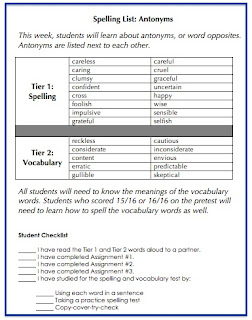
Our lists are tiered lists. On Day 1, students take a pretest with Tier 1 words. Students who reach a certain score work from the Tier 2 list for spelling throughout the week.

Step Four: Create Meaningful Activities

I undertook this step on my own, creating list-specific homework tasks for each list. These tasks are also heavily vocabulary based, with some handwriting included. Of course, I never grade homework, and if you use my materials, please make sure that you don't grade homework either!

 There is also a list-specific spelling test for each list, including both spelling and vocabulary questions.

Everything is included in this folder on Google Drive. You may feel free to use these materials, but obviously do not sell them or distribute them in any other way. Make sure that you are viewing the folder in ABC order so that the files show in the correct order.

Spelling Folder

Step Five: Implement and Reflect

Like every spelling program, this has parts that I love, and parts that I hate. I really enjoy exploring the meanings of words with students each week. Students especially enjoy the drawing tasks, and their creativity shines as they create new and interesting ways to depict the words.

The pretest always invites interesting conversations, as some students try to cheat and correctly spell the words. Why do this on a test that isn't graded? What are they trying to prove? Being open and honest with these discussions gives everyone insight into our classroom routines.

I also like that this program is fairly easy for parents to understand and assist with. Definitions for all words are included in my Quizlet links (you can find them all by clicking on my username here).

Step Six: When all is perfect, change grade levels
Because what's more fun than starting from scratch?

**You may feel free to use and share the Master Word List and the spelling materials here. Please know that these are shared folders and others have added materials! If you find any mistakes, let me know so that I can fix them.

If you especially like them, please consider a visit to my store for other classroom materials.

Friday, January 30, 2015

Goldilocks Speed Drills

When I work with readers who are having trouble with word recognition and fluency, I like to preview words with a speed drill before they read a text. (This article from ldonline is a nice introduction to speed drills. ) 

To make a speed drill, I simply take a selection of words from a text and put them into a table. "But which words do you choose?" some teachers ask. My choices are partly intuitive, but I do use a rough formula:

  • Words that need to be pronounced correctly
  • Visually similar words
  • Words with inflected endings
  • Words which carry significant meaning in the text
  • Words that are easy to say, but harder to define


Here is a speed drill that I made for a set of texts about landforms of the Northeast. I included the names of the states because, if nothing else, I want kids to be able to pronounce Connecticut!


The second speed drill, which I made for "Groundhog Day" by Lillian Moore, includes some words that are not in the original text. The group that I was working with was having trouble with visually similar words, and I wanted them to practice reading words with different endings.


Goldilocks Reading

Just reading the speed drill can be kind of monotonous. Luckily, my husband (who teaches third grade) taught me Goldilocks Readings. 

First read: Too slow
Second read: Too fast
Third read: Just right

It is so much fun, and so helpful for intermediate readers. Of course, during our slow reading of the words, I exaggerate the syllabication and the emphasis. It only takes one read-through for kids to pick up on this process and they enjoy slowing down their reading as well. 

After the Speed Drill

On some speed drills, I add questions to encourage students to make predictions. On others, I include questions about word awareness and vocabulary use (find the compound words, look for synonyms, etc.) But the speed drill doesn't become a long vocabulary task. Instead, we keep the focus on read the words with accuracy and getting ready for the real reading task--because that is where we are always, always going!


Saturday, January 24, 2015

Context Clues and the Magic of the Comma

A few weeks ago, as I was reading aloud to students, I stumbled upon a kind of context clues that young readers often miss. Appositive context clues are very common in expository texts for young readers, and they are often misunderstood.

The sentence was constructed like this:


A skilled reader has no trouble matching the word phytoplankton with its definition. After all, the two ideas are right next to each other in the the sentence!

But what about less skilled readers? I know from watching my students try to copy text quotes that they often overlook pieces of punctuation. In fact, I learned that many of my students are reading the sentence as this:


Without the first comma, the meaning of the context clue is completely lost. Actually, it's worse than lost--by logical reasoning phytoplankton couldn't be tiny ocean plants. On a test question, students would confidently choose anything but "tiny ocean plants" as the meaning of phytoplankton, because by their reading the sentence clearly states that phytoplankton is something different from tiny ocean plants.

Once I realized that my students didn't know the meaning of the first comma, I knew what to do next. I had to show them lots and lots of examples of appositive context clues! I also had to make sure that they were carefully reading and attending to punctuation.


After just a few examples taken from our read alouds and written on the board, students were able to answer questions related to the context clues with confidence. They noticed the commas setting off the appositives as the important signposts that they are!

Wednesday, November 26, 2014

Keeping Up with a Vocabulary Routine

    I've wrestled with this question for many years. Many of my students come to fourth grade with huge word deficits and large gaps in speaking and writing vocabulary. Others come with an eagerness to learn new words and build upon what they have picked up from their reading. I need a vocabulary routine that helps students to be excited about new words...a routine that is manageable and practical...a routine that has lots of room for new additions and learning.
     Faced with the need to do something to build vocabulary, I decided to focus upon five words each week. Before I could choose these words, however, I needed to learn a great deal about which words would be most useful to teach. I made a spreadsheet of Averil Coxhead's Academic Word List, and then added words from the Common Core, the Nifty Thrifty Fifty, and a few other sources. I gathered information about the words, including roots and idioms, and eventually came up with this master list:


  As I created reading homework passages, I chose a mixture of words that were important to each text and words from the Master Word List. Each week, we learn five new words. The vocabulary instruction is not lifeless and dictionary-based; instead, I give kids the definitions and we use the words in sentences. Sometimes the prompts are silly ("Could a cat devise a system of writing?") and sometimes serious ("How can we honor veterans?") 

Word Rings
    Last year I wrote about putting words on word rings for students to study. Each word is put on the ring, with the definition on the back. Students read their words with instructional assistants, parent volunteers, and me. When a student can correctly read the word and explain its meaning, I use a fancy hole punch to punch the card. After three punches, students can remove the word. 
    Lots of good things are going on here! Kids are practicing decoding with multi-syllabic words. Kids are talking about words and their meanings, and get to have time with caring adults. For me, the routine is super-simple to explain to anyone who comes into my classroom to help--the aide who has 10 minutes free due to a schedule change, the parent who can come in one morning, the substitute teacher who has a free period.
    This year we've made some innovations. The wonderful ESL teacher who is co-teaching with me put our word lists on Quizlet and showed me how to print flashcards directly from there--how simple! The instructional assistant who manages all of the cards has even figured out how to engineer the paper so that the cards can be made with the fewest cuts possible. When kids get five cards removed, they earn a coupon for our classroom economy. 

Drawings
     Because many of my students are strongly visual thinkers, I've started adding drawings to our routine. We have lots of tracing paper in the storage closet (why? Not sure), and kids have found it calmly peaceful and engaging to trace the pictures as we talk about the words. In the weeks to come, students will take over the drawing part of the routine.

Finding Words in New Texts
    During our independent reading time, kids are always showing me how they have found vocabulary words in their books. This gives us a great opportunity to talk about the word in context as we look at the sentence containing the word and talk about what it means. Kids copy the sentences onto notecards for us to display in the classroom. (The Amulet books by Kazu Kibuishi are especially rich in academic vocabulary.)

   Is this the best vocabulary routine ever? I don't think such a thing exists. Each new teaching book tries to tell readers that this new thing is the ultimate in teaching. However, I think that good teaching resides in the place where practicality, big dreams, and pedagogy meet. Hopefully you can carve out your own functional and delightful routine for teaching vocabulary!


Sunday, September 7, 2014

Tried and True: Literacy Activities I Love

What a week! After a relatively cool summer, Pennsylvania enjoyed (?) some hot and humid temperatures this week. I used old-fashioned heat management strategies like closing my blinds at 10 and starting fans early in the morning to pull in cool air. These strategies kept the temperature in my room to a manageable 86 degrees. The kids were amazing about it and never complained.

One of the nicest parts of my week was going back to some tried and true activities that should be part of every literacy teacher's repertoire of techniques. Even in the heat, these activities were engaging and fun for everyone involved.

Making Big Words

I first saw the Making Big Words activity back when I was doing my first round of graduate classes, and I started using it in middle school immediately. It is one of those rare activities that fits every ability level.

Kids get a strip of letter tiles arranged with vowels first in alphabetical order. This week's letters were:

e e i o o c h m n n p r s

The teacher gives clues about words that can be made with those letters, and kids arrange the letters to make the words. At the end, the students try to build the big word that can be formed with all of the letters. Can you figure out this week's big word?*

What I love is that it gives me instant information about how kids approach words and word-making. Every student in fourth grade used the same set of letter tiles this week, but as they were divided into our intervention groups we could see how each group dealt with the challenges. For example, students in the ESL group struggled with changing shop to shoe because of the odd spelling pattern in shoe. In my grade level group, I saw many different spellings of poison--poisen, posion--which shows me that unaccented final syllables are a topic to explore.

It is a fabulous activity to get to know a new group of students and get real-time information on how they are processing and working with words.

You can read my ancient review of Making More Big Words at Amazon--a relic from before I started blogging!

Retelling with Figures

When students have trouble comprehending a text, retelling with figures is my go-to plan. The idea grew from my days as a preschool teacher, when I used felt figures to tell stories. (Remember feltboards? Does anyone use them anymore?) With older students, having figures to retell the events in a story helps them to attach meaning to the events. Students have a visual cue for retelling and have fun manipulating the figures.
This picture from last year shows students using retelling figures
to retell key ideas from an expository text. 

This week, students in one of my reading classes read "Clever Coyote" and then retold the story using four pictures: a coyote, a mouse, a rock, and a rattlesnake. Watching them retell in pairs helped me to see how they were comprehending the events of the story. This story worked especially well because the plot hinges on the locations of the characters.

You can read more about retelling with figures at this blog post. I have some sets of retelling figures and stories available in Analyzing Story Elements (Gwen and the Witch) and Summarizing Stories (The Magic Key).

Settling into our literacy routines has become so meaningful and enriching. Even though I have done these activities many time before, I always love seeing how new students engage with them. What are your tried and true activities that you return to, year after year?

*comprehension

Saturday, November 23, 2013

Managing a Vocabulary Routine

"Mrs. Kissner! Mrs. Kissner! Can I read my words to you?"

This has become a common question in my classroom during arrival time, dismissal time, and any spare moment that might arise. It is an interesting side effect of a vocabulary routine that I started this year.

Thinking about Vocabulary
In the past few years, I have come to see vocabulary as a huge issue in my classroom. Fourth grade readers are moving into more complex, difficult text. Many of the new words that they encounter are not typically heard in everyday speech. Unfortunately, wide reading alone is not enough to help students build their word knowledge.  (This pdf from Scholastic is a great source of background information for teaching vocabulary.) More instruction is needed. But what could I do to incorporate this instruction in a meaningful way?

Five Words
When creating new content for the classroom, it's often easiest to work in steps. I knew that a comprehensive vocabulary program was my eventual goal. But this is a huge thing to accomplish. What little steps could I implement right now, each week, to get on my way?

Last year, I experimented with vocabulary lists for texts that we shared in the classroom. As I built my reading homework packets, I pulled five words out from each text. Some of these words matched the master list of academic words that I had compiled two years ago. Others were words that I knew to be common in fourth grade texts.

I created vocabulary activities for these words, using a variety of drawing tasks, discrimination tasks, and word consciousness tasks. Each week, students have a short quiz on the words--matching and filling in sentences. The quizzes are fairly simple so that, with some effort, all students can experience success. (I also needed to make the quizzes easy enough to grade so that I can quickly return them to students.)

Word Rings

This year, I added a new component to the weekly homework/quiz routine. After some paper engineering help from my ninth grade son, I created easy double-sided flashcards. I attach these flashcards to rings so that students have an easy to keep set of words. Many students are still working on decoding multi-syllabic words, so these flashcards are helpful for them to practice pronouncing the words. With the definitions on the back, the flashcards also help students to learn the meanings.

But independent practice wasn't enough. So, with a fancy paper punch from the craft store, I added another step (borrowed from sight word work!): When students can read the word correctly and explain what it means, they get a punch on the card. When they have three punches, the card can be removed from the ring.

Lots of interaction
There are many benefits to this routine--both expected and unexpected. One expected benefit is that it is easy to explain to instructional assistants, substitutes, and volunteers. I keep a clipboard with a list of student names and anyone who reads words with kids can mark the date next to the student's name. Even our sixth grade tutors help out. When students are working independently or have completed a task, they can also come and read words with me. Each individual kid usually reads words with an adult once every week or so.

An unexpected benefit is that this becomes such a verbal, conversational interaction. Fourth graders love individual attention and sharing stories. Talking about these words has become a way to frame our conversations and make sure that everyone gets some personal interaction. I hadn't really considered this at the beginning--but hearing the interesting conversations that go on has convinced me that this is worthwhile. Kids and adults are talking, and they're using rich vocabulary words as the basis for the conversation.

Of course, there are some issues to consider. Some kids love the routine and will go through their words at lightning pace. The opposite is also true. I put each week's words on a different color so that they are easy to differentiate. This week, I did remove some of the early October words from the rings of kids who have been absent. Having more than 20 words on the ring at a time makes the process a little unwieldy.

I always try to work ahead and have the next week's words copied. For example, right now in my classroom I am adding the words for the week of 12/3 to their word rings. Kids then have the opportunity to see and experience words out of context before they read them in the context of the homework text.

Moving forward
My next step is to try to come up with a cumulative assessment. Right now we are working with one set of words at a time. In the future, it will be nice to have long term assessments to capture ongoing growth. Some kids don't finally learn all of the words for a week until several weeks after the whole group quiz. Anecdotally, kids are bringing me their independent reading books to show me vocabulary words that they have found.


Finding words
If you're interested in trying this, I do have vocabulary words and flashcards with my most recent reading homework sets:
September
October
November

I am working on a December set, and I'll add flashcards to the previous homework sets. Eventually I'll have the whole year.

...and this is the important bit: When starting something new for the classroom, work on just one step at a time. If I had set out to do the homework texts, word cards, and quizzes from the beginning I would have become quickly overwhelmed. By working on it in little steps, I've come to a workable, sustainable routine.

Reading words with kids is now something that I do about 3-5 times each day...and it is delightful!


Sunday, July 14, 2013

Creating Vocabulary PowerPoints

In some circles, PowerPoints are rather--well, old-fashioned. With ever-expanding technology choices, who uses slideshows anymore? I felt a twinge of embarrassment as people at a recent meeting exchanged glances when I admitted to making vocabulary PowerPoint presentations. I think that people have the perception that teachers make PowerPoints and then just read them aloud to students.

But then I decided that there is nothing at all embarrassing about it! PowerPoint is the perfect tool to use to help kids learn new vocabulary words. With just a few simple slides I can project definitions, examples, and engage kids in using these words. It is not a lecture at all as kids are actively engaged on every slide. Even better, we can go back to the presentation again and again to review the words and think about them in new ways.

Here is how I go about making presentations to go along with texts. If you are getting started with this, try making just a few your first year, going along with high-quality texts that you know you will be reading and rereading several times. Each year you can add a few more.

1. Select your words
Hm, this is easier said than done, isn't it? I like to use words from the Academic Word List, and I choose about 3-5 per text. You can also write to me and I'll send you an Excel spreadsheet that has the AWL words, Common Core words, and other important words, all filtered according to important characteristics, roots, and so forth. This list is a little easier to use because the words are in alphabetical order.

2. Definition slides

I make about 4-5 slides per word. On the first slide, I introduce the word with a kid-friendly definition. I make this definition based on dictionary results and how the word is used in the text. In the case of characteristic, I used the words "feature" and "trait", words that students have already learned.

I add a pretty visual to go along with the definition--sometimes a picture that goes along with the word, sometimes a picture that goes along with a future activity. I have a huge library of photos that I've taken on my rambles around Pennsylvania, and kids are always interested in hearing about my photos. When I can't find the photo I want from my own library, I visit Wikimedia Commons.

3. Link pictures with words
I have learned so much about integrating visual and verbal strategies from the work of Gary Woolley.  For these slideshows, I like to give kids an instant connection between photo and word. This is especially important for academic words, as they often have abstract meanings. If I can give kids something concrete to think about as they apply the word meaning, I can help them to remember the word for the future.

A word of caution here. As you call on students to share their answers (and these lessons are usually informal, friendly conversations), make sure that they are using the word in their response. Consider this conversation:

Teacher: What are some characteristics of the butterfly?
Student: Eyespots!
Teacher: That's right! An eyespot is a characteristic of the butterfly.

Who practiced the word? That's right--the teacher. It is so easy to fall into this pattern. It takes some practice and time to get to this kind of conversation:

Teacher: What are some characteristics of the butterfly?
Student 1: Eyespots!
Teacher: Can you put that into a sentence using the word characteristics?
Student 1: Eyespots are characteristics of the butterfly.
Student 2: Some characteristics of the butterfly are wings and antennas.

Often this will take prompting and framing. However, it's so worth the effort to get kids using the words! Having kids put their responses on whiteboards is also helpful. I try to have as many kids say the word as possible, whether it is by sharing with a partner or getting up and doing a word "meet and greet".

4. Apply the words to students' lives
This works better with some words than others. The point here is to help students use the word in a way that applies to their own lives or experiences. Many students will need help with framing sentences for their responses--"My physical characteristics include..."

A new photo isn't necessary here, but my kids love fun visuals and I like to give them lots to look at. The key is to keep the pace quick and upbeat so that this will be something that you come back to.

5. Think about how the word might be used in the text

The text that goes along with this presentation is about the red-tailed hawk. Notice that the word predator is also in the slide. This word has a much more concrete meaning, and some kids in the class already know it. Instead of giving up valuable real estate to this word, I integrated it into this slide. Connecting the word characteristic with predator helps students to get ready for how both words are used in the text.

When we return to this presentation after reading the text, I encourage students to use their "soft eyes" to scan for the word characteristic in the text. We read the sentence aloud together. Then we talk about how their early sentences compare to their new knowledge.

And that's it! I like to do this with about 5 words per text. We use the presentation before and after reading. It is so gratifying to hear how their examples and sentences quickly improve in quality the second time around. Like all instructional techniques, PowerPoint does have the potential for misuse--if I just read aloud the definitions, kids would quickly be bored. But a slide presentation with lots of conversation and interaction can be a powerful way to help kids connect visual and verbal information.

This year, I'm going to add a vocabulary notebook for students to use to keep track of words that they are learning and reading about. I'm not sure what I want this to look like--are there any formats that have worked well for you?

This presentation is included in Reading Intervention for Academic Vocabulary and Fluency.

Thursday, December 13, 2012

Going back, back, back to the text

This year, I'm really focusing on helping my readers to return to the text to find answers. Intermediate readers often have a once and done philosophy--"I've read it, I'm done, let's move on." But returning to the text is often essential for deeper reading and thinking tasks.

How does this skill develop? Like summarizing, it's not something that we can just tell students to do. There are two main ways to help students learn to return to the text. The first way is to help them navigate through a text, so that they realize they can find answers efficiently. The second way is to give readers meaningful literal tasks that require them to return to the text.

Navigating a text
This is the first page from a collection of
Problem and Solution texts.
As soon as we start with nonfiction, I coach students to find their way through a text. At first, this is very directed. "Put your fingers on the second heading," I'll say, or "Use your pencil point to touch the third paragraph under the first heading. What word do you see?" It's easy for me to see who is using the headings and who is not.

After a first silent read of a text, I also like to have readers partner-read a text by sentence. Many struggling readers do not notice sentence and paragraph boundaries. When they read sentence-by-sentence, these boundaries matter! "Hey, it's my turn!" a partner will say indignantly.

What if you only have texts that don't have headings? Use different texts for instruction. For example, many popular Seymour Simon books have neither headings nor page numbers nor captions. These are fine to have in my classroom library, but not very useful for instruction. It takes a long time just to get everyone (literally) on the same page.

Finding words in a text
Readers often scan for specific words in a text. Simple vocabulary activities can be engaging and help students to become better at finding specific words. In the activity above, readers had to make predictions for how a word might be used in the text "Research Stations of Antarctica". Notice that I gave them the definitions.

Before they read, students had to make a prediction for how the words would be used. "Dormitories" was a word that they had learned in a previous text, so many predicted that the text would show that researchers or scientists sleep in dormitories in Antarctica. "Souvenirs" was a new word. Many students predicted that students would take rocks or ice back to their homes as souvenirs of Antarctica.

After reading, students went back to the text to find how the words were actually used. (I gave students the choice of whether to do this as they did their initial read, or whether they wanted to just read first and then look for the words; most students chose the latter.) Some of the words were in bold print, while others were not. It was fascinating to listen to them talking with each other about how to find the words! In some cases, they needed to read the sentence containing the word and the previous sentence to figure out how the word was used.

This activity is good for intermediate readers because there is a clear goal, and because they can judge their success (Did I find the word or not?) fairly easily. This provides a foundation of searching skills for students to use as they encounter more difficult tasks in text.

Other updates
Introduction to Text Structure: I've posted a new collection of text structure texts. This includes five texts about chinstrap penguins, five texts about peregrine falcons, and two assessments. My "Text Structure for Young Readers" PowerPoint is also included, along with a study guide that includes all of the texts in the PowerPoint.

Writing a Summary of Nonfiction: This PowerPoint is available free once more. (It is also included in Paraphrasing and Summarizing Lessons.) I took it down a few months ago in frustration at how my free things have been showing up re-posted under other people's names on docstoc and authorstream. However, I've gotten a few emails inquiring about it, so I'll give it another try. Case in point: My entire Understanding Text Structure PowerPoint is on Prezi, with new graphics, under someone else's name. Sigh.

Spelling: New spelling units are done. If I've been sending them to you, drop me a line at elkissn@yahoo.com and I'll send them your way.


Thursday, August 23, 2012

Word Roots Powerpoint

What a busy two weeks! I've been working to get my classroom ready, learn new curriculum, and get my house in order for the start of school. Here are some progress reports:

Spelling Lists
Earlier this summer, I wrote that I had finished a master word list. This list of over 1000 words includes words from the Academic Word List, the Fry list, and the Common Core, organized with data such as syllables, syllable types, word roots, idioms, and multiple meanings. I've been using this list for various purposes throughout the summer--generating spelling lists, looking for important vocabulary words, and finding word roots. If you'd like a copy, please let me know.

The next step was to create a body of spelling words. My hope in making the word list was that we would be able to create a seamless spelling and vocabulary program, a program based not on the random words that fit a pattern, but on meaningful words that share similar characteristics. So far, I'm three lists into creating the rest of the program. (It's a time-consuming process--words, homework assignments, assessments, lesson plans.) If you wrote to me earlier and would like some of these lists, please write again. :) 

Word Roots Powerpoint
The third spelling list is focused on word roots. I want to teach these early so that we can continue looking at patterns of meaning throughout the year. To help kids understand what word roots are, I created a simple Powerpoint presentation. It will be free on TeachersPayTeachers until August 30.

Character Traits Powerpoint
I also want to start looking at character traits very early in the school year. I made this presentation to show students what character traits are and how we can find them through exposition, dialogue, and actions. I wanted to make sure that the presentation includes differentiated practice--there are some questions that all kids will be able to answer, and others that offer more of a challenge. Again, this will be free until August 30.


Friday, July 6, 2012

Reading Intervention for Academic Vocabulary and Fluency

This year, our school went to an intervention block. Our fourth grade block was right after lunch. It was wonderful to have time to address issues with fluency and word work. But what would we teach?

At the end of the year, I had an interesting group of readers. Looking at our fluency data, we pulled together a group that was on the brink of reaching benchmark for the end of the year. I knew that I wanted to create something to help these readers become more automatic with reading.

Kids loved reading about poison ivy!
On the other hand, however, I didn't want to give any of these fourth graders the impression that reading is just a speed race. I needed to create something that carefully balanced working toward speed and accuracy with a focus on reading for meaning.

 Over the next few weeks, I wrote a series of short, nonfiction texts. All of these texts related to science and nature. (Not surprising!) For each text, I created a short PowerPoint to highlight and teach the academic vocabulary words. I also created a before reading activity and a graphic organizer to help students pay attention to the structural aspects of each text. All together, I created six texts, which allowed for six weeks of instruction.


I tried to make these texts as "natural" as possible, letting the topic and the vocabulary dictate the article. Therefore, the texts vary from fourth to sixth grade level with different readability formulas. For intermediate readers, this is just what happens with real world texts. They need to be able to move within a band of complexity throughout the school day.

If you teach fourth grade, this would be an excellent supplement for at and above grade level readers--perfect for enrichment during an intervention period.  Fifth grade readers who are slightly below grade level would benefit from this, as would ELLs in grades 5 and above. Struggling readers in grades 6 and up would find this beneficial as well.

To screen students and monitor progress, it's best to use a commercial program. But you can also use the short versions of the texts included within the unit to monitor progress across repeated readings of one text.

I loved teaching this, so I worked to put it together as a product on TeachersPayTeachers. I happily put together the 40 files and compressed the folder...only to find that it was a whopping 114 MB! I didn't want to cut out any of the gorgeous images from the PowerPoints, so I split it in four.

You can find all four parts over on TeachersPayTeachers. They will be free until July 15, after which I will change the pricing.  Please download and review! And do drop a comment or follow the blog.


Wednesday, June 13, 2012

Teaching Academic Vocabulary

In my last post, I wrote about the master word list that I recently finished. It's been great to hear from everyone and send the word lists out!

For my own purposes, it has been useful to have an alphabetized and searchable list of frequently used academic words. In an intervention group, I've been experimenting with making Powerpoints to teach academic words. I like to think of Powerpoints as an expandable memory port for myself. I can come up with kid-friendly definitions, pictures, and questions ahead of time. Then, during the hectic 25 minutes of the intervention time, we can all focus on the words together. I get extra mileage out of the Powerpoints by working through them three times with the students.

This sequence worked especially well with my students:
1. Explain the word and its use beyond the context of the text. Have students use the word in sentences that they tell to one another.
2. Have students find the word in the text and read the sentence with the word.
3. Have students use the word to explain the text, going beyond what is "right there" in the text.

Consider this sentence from an article that I wrote about one of the first authors of wildflower field guides:

The only way to identify your flower, then, would be to consult a flower book.

When I introduced this word, we talked about how students can consult resources in and out of the classroom. Students talked with their partners to answer these questions. What resource would you consult to find the spelling of a word? Have you ever consulted the phone book? This moves quickly, with all of the students sharing with their partners at once.

One key is to accept only sentences in which students use the target word. And they are remarkably resistant to do so! "I looked in the phone book to find the number of a pizza place," one girl said. Notice how she was using the meaning of the word, but had replaced it with synonyms. I always counter back--"Can you say that again, using our word?" As a last resort, I'll restate what the student said--"You said that you consulted the phone book to find the number of a pizza place. Can you say the whole thing for me?"

After we've talked about the words in a real-life context, we go into the text to find the word and discuss its use. Visualizing is helpful here. Many academic words are somewhat abstract and difficult to visualize. So what would consulting a flower book look like? While it's obvious to the adult reader, it's a thinking task for kids.

Finally, we use the target words to extend the meaning of the text. Kids with reading problems often have trouble paraphrasing ideas. Teaching them how to use these academic words to paraphrase and extend helps them to "unfreeze" ideas and put them into their own words. In the case of consult, this word can be used to sum up the entire point of the article: "People used to have to consult difficult flower books, but now they can use field guides to identify flowers." Now, my students didn't just come up with this sentence on their own. Instead, I said, "Can you explain the main problem in the article, using the word consult?" Again, everyone does this, and everyone shares with partners.

Did it work? Well, I started to hear some of the words creeping into their talk. Sometimes it was tongue-in-cheek, like when one kid said to his partner, "Wait, wait, wait! I need to consult with Mrs. Kissner about something." But sometimes the use was for academic purposes, such as when a student used the word complex, from a previous article, to make a prediction for the next one.

I'm working on putting the articles and the Powerpoints together into a teacher-friendly (and research-based, and inexpensive) intervention.   For now, I'm still sending copies of the Excel master word list. Feel free to write if you'd like one!

Friday, June 8, 2012

Creating a Spelling Program


We're making a new spelling program! With the Common Core coming into effect, our team realized that we have to do more with spelling and vocabulary.  Even our strong readers and spellers need to extend their academic vocabulary knowledge. (I could go into detail about why we feel that we need to abandon our current program, but the less said, the better!)

So where to begin? We looked at some of the commercial programs, but none of them had what we wanted. I developed the half-crazy idea to make our own. It's not so crazy, I guess--I've made a spelling program before. This time, though, I wanted to make something that had a firm foundation.

Scope and sequence
Our first step was to figure out what we wanted to teach over the course of the year. We used multiple sources to build this. Our first stop was the Fountas and Pinnell Continuum of Literacy Learning. We looked at what was listed for our grade level and matched it to what we were currently teaching. Then,  we put these skills up against the Common Core. We thought about how many lists each topic requires, and how many lists we can comfortably teach in one school year. We put it all together on Excel and created a rough outline. The Excel filter feature allowed us to rearrange topics until we had an order that we all could agree to.

Master list of words
This has been my winter/spring/early summer project. My husband estimates that it has taken 100 hours. (I just know it has been at least 5 seasons of Dr. Who.)

I wanted to create a searchable, useful list of words. First, I entered words into an Excel spreadsheet from several different sources:

-The Academic Word List by Averil Coxhead

-Words 200-500 from the Fry List (K-2 uses the first 200 words)

-The Nifty Thrifty Fifty by Patricia Cunningham

-Words from the Common Core, especially words like analyze and explain that would be likely to turn up in question stems

-Character Traits words (from a list included in this article by Patrick Manyak)

Once they were all entered, I created multiple columns to use to filter them. This was the time consuming part! As you can see from the screenshot, there are several ways to generate lists. You can sort the words by syllable or by root. If you are looking for compound words, you can filter a list of compound words only. You can also filter by phonogram, multiple meaning words, or digraphs.

I have spent many, many hours looking up word roots and considering phonograms! To save space on the spreadsheet, I combined some categories, such as myth link/diphthong.

Did the list work? I felt like Dr. Frankenstein on Thursday when we sat down to try to generate some lists. I was thrilled when we were able to make it work! We now have the words for about 15 of our spelling lists chosen. Of course, fourth grade will not do all 1800 words on the master list. But other grade levels will be able to use the same master list to help them select the words that fit the concepts they have chosen to teach.

We are using a tiered list system, just like the Differentiated Spelling Program that I already made. The tiered lists are a great way to meet the needs of different kids while still having coherent instruction. For example, when we do Greek and Latin roots, everyone will study Greek and Latin roots. The struggling spellers will focus on words with simple spelling patterns, like graph and erupt, while the stronger spellers will have more challenging words. Each week, students will take a pretest to determine which tier they will be studying.

But the best part about it is that the words will all be important, useful words that are likely to come up in their reading. When we teach silent letter combinations, for examples, we'll include insight from the Academic Word List, as well as thought and though from the Fry List.

I'm still working some bugs out of the Master Word List and double-checking for internal consistency (quite a task with 1,806 words). If you'd like a copy, write me an email at elkissn@yahoo.com. Let me know what you plan to do with it (non-commercial and non-profit uses only, please!). And maybe you could leave a comment or follow the blog?

Tuesday, January 31, 2012

Suffixes and Inferences

What on earth do they have in common? That was a question that I was hoping to answer. As I wrote last time, I'm working with an enrichment group for word study. Right now we're polishing up all of our skills to prepare for state testing. I need to review suffixes, but I also want to make the connection to meaning.

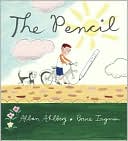
Today I continued to read meta-fiction books. I shared one of my favorites--The Pencil, by Allan Ahlberg. Because I was working with suffixes, we made a list of the words with suffixes throughout the book. (I'd checked for these beforehand!) There were several -ly words, as well as some -ful words. After a quick discussion of the deeper questions of the book (Was the eraser bad, or just acting according to its nature? Why did everything want a name? Where did the illustrator hide a picture of the author?), we looked into the words with suffixes.

And this is where I have trouble with a lot of word work. So many of the worksheets and activities for using prefixes and suffixes are dead end activities. We look at the words, and take them apart, but never really use these words to their fullest potential. So I wondered--why are suffixes important to the reader? What can we learn from suffixes?

Quite a lot, actually. I decided to focus first on the suffix -ly, mostly because it was well-represented in The Pencil (and also because I love to play the game In the Manner of the Adverb). In fiction, -ly adverbs are often very helpful for readers as they make inferences about a character's feelings in a certain situation. Learning to tune into these words as a source of information can be helpful for readers as they tackle more complex fiction. Think about this example: The one word awkwardly conveys a wealth of information about the character's feelings. A reader who doesn't attend to this word may miss the opportunity to make these inferences.

So I made some short little scenarios with -ly words, which we'll talk about and act out.  Just as more practice, I added another simple page. Hopefully it will be word work time well-spent! 


Saturday, December 10, 2011

Before, During, and After Reading: Before

Over the past few years, I've come to a comfortable pattern for planning reading experiences. The pattern is simple--before, during, and after. When I have all of this planned and worked out, my task as a teacher is so much easier. Here is how I frame texts to share with my students.

Before Reading
This is a harder list of words from "The Adventures of Isabel"
What will students do before they read the text? I like to make a table with key words from the text. This makes a quick and easy speed drill that we can read together before students encounter the words in the text. I like to read the words aloud to students, and then have them say the word back to me. I change my voice for each word and make it really dramatic, so kids find this enjoyable. As we come back to the text over multiple days, we return to the speed drill each day. (Cute story: We were working on The Adventures of Isabel on Friday. I accidentally called a student by the wrong name, and he looked at me and said,  jokingly, "I am really cross with you."

I also use this opportunity to talk with kids about the words. This isn't a full-blown vocabulary lesson, but a quick discussion of the words. Sometimes we act them out; sometimes I draw a picture; sometimes I show kids how a derived word relates to a base word. In the case of the word cross, I drew their attention to the fact that it is a multiple meaning word.

I've learned that it's best to limit these words to 15-20. I look for words that are important to the content of the text, as well as words that may be difficult for students. Sometimes, these difficult words are short, like "scarce"; sometimes, they are longer words that are related to words they already know, like "professionally".

After we look at vocabulary, I ask kids to use the words to make a prediction. This may take different forms. In fiction, I often have kids sort words according to story elements--which words will relate to the characters? The setting? The conflict? In nonfiction, we often write 3 prediction sentences, with at least one of the practiced words in each one. Sometimes we ask questions--for example, in a recent text, kids were intrigued to find out how the word "powerful" would relate to a text about Antarctica. And sometimes we draw pictures, doing a sketch-to-stretch kind of activity.

The goal in all of these activities is to equip kids with as much as possible before they enter the text. When I have it all planned and copied for kids, we can all immerse ourselves in our preparations for reading. I project it on the board, kids can make notes and predictions on their own copies, and we work together to get ready to read.

Free texts and activities
Adventures of Isabel: Activities to go along with the classic poem. It's a challenge for kids, but they absolutely love it, and it's a perfect choice for repeated readings. You can find the poem online.

Animal Adaptations: Science text and activities suitable for grades 4-5.

Decomposers Article and Activity: I loved reading this with kids. It worked so well to change their ideas of what decomposers are. This text includes an anticipation guide, another of my favorite before-reading activities. Good for grades 3-5.

The Acorn Mystery: I wrote this based on a real experience! It shows how these ideas can be used with fiction stories for younger readers. Good for grades 2-3.

Retelling Nonfiction: This includes a text about how painted turtles survive the winter, with directions for retelling nonfiction.


Tuesday, October 11, 2011

More on Multiple Meaning Words

As I was planning for this week, I realized that I need to change my approach with multiple meaning words. In the past, I've looked at teaching multiple meaning words as teaching kids how to use the context of a text to figure out which meaning of a word is being used. In this way of teaching, I've assumed that the kids know the multiple meanings--what I'm teaching them is how to tell them apart.

With this year's students, however, I need to do more. These students really need work on understanding the different meanings of words. Just matching definitions to sentences isn't enough. I need to build their vocabularies by adding new words. To this end, I created this graphic organizer:

The idea is that I'll take a multiple meaning word that has an easy-to-visualize core meaning--for an easy example, run. The core meaning of run is to move quickly over the ground. Students will write this meaning and illustrate it. Then, I'll introduce 3 other meanings: run as in to compete in an election, run as in to flow over the ground, and run as in the name for a stream. Students will write sentences to show these different meanings.

My plan is to teach a new word each week. Words that I plan to use in the future include many words that cross our content areas:
-space
-line
-environment
-revolution
-source
-contract

If you're planning to try this with your students, make sure that you choose multiple meaning words that come from a common source. For example, the meanings of revolution are all related. However, the meanings of wind/wind are not. If you use an online dictionary, you can find the etymology to see if the different meanings come from the same source.

We'll see how it works! I'm looking forward to helping students to see how different meanings of words can be related.

Sunday, October 9, 2011

Thoughts on Multiple Meaning Words

I've been working on multiple meaning words with my students. For struggling readers, multiple meaning words can be very difficult. I wish that I could just buy a book or show a Powerpoint and have it all make sense. (I have bought the book, and I have shown the Powerpoint.)

But confusions remain. I've realized that this is because understanding multiple meaning words goes deeper than just matching definitions. In fact, I'm beginning to realize that this problem with multiple meaning words is linked to why my readers are struggling in the first place.

What are multiple meaning words?
Multiple meaning words look the same, but have different meanings. Sometimes this occurs when 2 words enter the language from different paths. For example, the bat used in baseball comes from the Middle English bateren, which meant to hit. The word for the flying mammal bat, however, came from Scandinavia. These two words look the same, but have completely different meanings. Knowing one won't help you figure out the other.

Polysemous words, on the other hand, share a common core meaning. Take the word spring. Its core sense is an old, old word meaning "to leap". The other meanings of spring all relate to this core meaning--the season spring, the water spring, even the coiled piece of metal. Knowing one helps you to know them all.

Visualizing and multiple meaning words
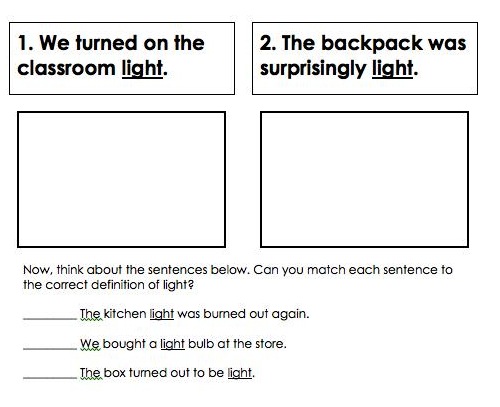
When I ask students to do common tasks with multiple meaning words--match the way that a word is used in one sentence to another sentence, for example--they often resort to guessing. What's going on? For one thing, these activities often happen outside of a connected text. Readers who are used to sucking up information from pictures or previous pages have little to pull from. So these activities bring out a very real problem that these readers have with creating visual images.

When I changed my instruction to have students draw a picture of each sentence before they tried to do the matching task, I saw a huge improvement. The simple step of adding boxes spurred readers to visualize, which helped them to see how the words showed different meanings. Readers who are spontaneously visualizing probably don't need this step. However, this experience showed me that my readers are not spontaneously visualizing--definitely a useful piece of information! The problems with multiple meaning words only served to highlight a deeper reading issue.

Teaching Core Meanings
An interesting journal article by Marjolijn Verspoor and Wander Lowie found that L2 learners do better when they are taught the core meanings of words. One of the examples in the article is the word nugget. The core meaning is the kind of nugget as in a gold nugget. An understanding of this meaning helps a reader to understand the figurative uses of nugget as in a chicken nugget or a nugget of information.

Since I have many ELL students in my reading class, I found this very interesting. Now, I try to help students see how the core sense of a word relates to the other uses. How do the different meanings of wild relate? What about the multiple meanings of shop? Often, these students have trouble with the uses of a word that are within one part of speech, such as the meanings of bold.


It's a process! Hopefully, helping readers to visualize sentences and build their awareness of core senses of words will help them to better understand multiple meaning words.

Here's a funny story about Aidan and multiple meaning words.