A few weeks ago, I got the chance to record a podcast for Choice Literacy. How exciting! It's out as a sneak peek today:
Summarizing Podcast
I also compiled several different resources onto this blog post from earlier in the month.
How coincidental that today I was plugging away at teaching nonfiction summarizing with my reading class. Earlier this week, we practiced using the article "How Do We See in the Dark?" and sorting ideas as more important or less important. Then, students worked to write a summary of the text, using the important ideas as a guide. (Write to me if you'd like a copy of this text and I'll send it your way.) It worked well and helped the students to write decent summaries of that text. When we were talking about how to figure out which ideas were important, one kid blurted out, "Just look at the headings!" Perfect!
Soon, I'll be assessing their summarizing skills. Next year, I'll make sure that I don't leave this assessment until the very end of the year! Here is a blog post that I wrote a few years ago on creating summarizing assessments. For formative assessments, it makes a lot of sense to use a summary rubric.
However, for a final look at summarizing skill, especially for younger students, using a checklist approach makes for quick and easy scoring. Simply make a list of the important ideas from the text. (This is fun to do with colleagues!) Then, check off the ideas that students include in their summaries. Set a score for what you are looking for--4/8 important ideas? 6/8? Again, it's useful to do this with colleagues.
Hopefully things will go well for my readers. It's hard to think about ending the year--I'll miss this group! Sadly, the year always ends in such a blur of assessments and scores that I don't always have a chance to sit back and appreciate the progress that we've made.

Thursday, May 24, 2012

Sunday, May 20, 2012
A Million Speadsheets
I haven't been able to post much lately...I am consumed with end of year spreadsheets! One file for class lists for our outgoing fourth graders, another for our incoming fourth graders, reading data, oral reading fluency scores, field trip groups, science, social studies, and math grades.
In my spare time I am relaxing by making a vocabulary list in which I have collected words from the Academic Word List, the Common Core, the Fry List, and a few other sources. I am cataloging these words by phonograms, spelling patterns, multiple meanings, word roots, and so forth...hopefully I will end up with a list of 1,500+ words that will be the basis for really good spelling/vocabulary lists for my students. I've finished the bulk of the words and am now working on the variants and making everything consistent through the list.
So, if you don't hear from me again by July, it means that the spreadsheets will have won and I will have either a) given up technology and gone to live in the woods, or b) been sucked permanently into the computer.
In my spare time I am relaxing by making a vocabulary list in which I have collected words from the Academic Word List, the Common Core, the Fry List, and a few other sources. I am cataloging these words by phonograms, spelling patterns, multiple meanings, word roots, and so forth...hopefully I will end up with a list of 1,500+ words that will be the basis for really good spelling/vocabulary lists for my students. I've finished the bulk of the words and am now working on the variants and making everything consistent through the list.
So, if you don't hear from me again by July, it means that the spreadsheets will have won and I will have either a) given up technology and gone to live in the woods, or b) been sucked permanently into the computer.
Sunday, May 6, 2012
Resources for Teaching Summarizing
It's been six years since Summarizing, Paraphrasing, and Retelling was published. I'd like to say that the story ended happily ever after with everyone summarizing perfectly every year.
But that's not the way things work with real children, is it? (And wouldn't it be boring if things worked out that way? I don't think I could possibly teach the same thing year after year.) In the six years since Summarizing, Paraphrasing, and Retelling, I've created new lessons and new tools for teaching summarizing...and I've put many of them online to share.
Summarizing Rubric
The rubric below is a six-point rubric that I created this year. My goal was to create something that would reflect the transformational nature of skilled summarizing.
Summarizing Lesson
One time effective way to help students write a summary is to model the process of distinguishing between important ideas and less important ideas. This model lesson and text guides you through the process of doing this with students.
Summarizing Powerpoint
This presentation explains the process of writing a summary for students.
But that's not the way things work with real children, is it? (And wouldn't it be boring if things worked out that way? I don't think I could possibly teach the same thing year after year.) In the six years since Summarizing, Paraphrasing, and Retelling, I've created new lessons and new tools for teaching summarizing...and I've put many of them online to share.
Summarizing Rubric
The rubric below is a six-point rubric that I created this year. My goal was to create something that would reflect the transformational nature of skilled summarizing.
Summarizing Lesson
One time effective way to help students write a summary is to model the process of distinguishing between important ideas and less important ideas. This model lesson and text guides you through the process of doing this with students.
Summarizing Powerpoint
This presentation explains the process of writing a summary for students.
Writing a summary of nonfiction
View more PowerPoint from Emily Kissner
Paraphrasing and Summarizing Lessons for Nonfiction Reading
I love to write classroom-ready activities and texts. (I've spent way too many planning periods frantically searching through old workbooks and magazines and any other sources trying to find suitable text--eventually, I realized it was easier to just write it myself!) This unit plan includes four texts at different levels, another text for sorting more important/less important ideas, choosing the best summary activities, and paraphrasing help. ($3)
Paraphrasing and Summarizing Lessons for Nonfiction Reading
I love to write classroom-ready activities and texts. (I've spent way too many planning periods frantically searching through old workbooks and magazines and any other sources trying to find suitable text--eventually, I realized it was easier to just write it myself!) This unit plan includes four texts at different levels, another text for sorting more important/less important ideas, choosing the best summary activities, and paraphrasing help. ($3)
Tuesday, April 24, 2012
Collapsing Lists of Events
Right now, we're working on writing summaries of stories. And it's a difficult task! Every year, I find myself starting at the beginning once again, helping young readers to find their way through text. Summarizing brings together so many different skills.
One skill that readers need for effective narrative summarizing is the ability to collapse lists. Collapsing a list is simply renaming a list of specific ideas with a general term. For some items, this is fairly easy--the list of cherries, pineapples, and strawberries can be collapsed to fruit.
In other lists, however, it's a little harder. This task is made even more difficult for struggling readers who may not always understand each component of the list, either due to decoding problems or a lack of background knowledge. The list of Little Round Top, Devils Den, and the Peach Orchard is easy to collapse for Civil War buffs or residents of Gettysburg--these are sites on the battlefield. But someone without this background knowledge would not be able to collapse this list.
In narratives, readers often find themselves collapsing lists of events. I decided to target this when I saw that my students were writing long, rambling summaries. Students and I did a choral reading of the paragraph below:

We hadn't gotten to the fourth sentence before a student called out, "Pizza!" We looked at which clues had helped them to figure out that the text was referring to making a pizza. Then, students worked to write a sentence to collapse the list. In this case, their sentence was also a summary of the paragraph.
You would think it would be very easy, but many of my students struggle with vocabulary tasks. For ELL students, choosing an appropriate verb is often the hardest part of this. Some of them even had trouble identifying the name of the character, Art. We talked about what they were imagining and what problems they were having. Then, we modeled a good summary of the paragraph.
 The second text was also interesting to read. Many of the students know someone named Ethan. I said, "You might picture the Ethan that you know as you read this. But be sure to use the details in the text to build your picture of Ethan--not just what you think you already know." This time, I read each sentence, and the students read it after me. (I use every chance to model good phrasing and expression!)
"A baby!" one of the students exclaimed. Then we went through and underlined all of the details that helped us to figure this out--the high chair, the tears, the sippy cup. I drew a quick picture of a sippy cup on the board for those students who didn't know what one is, along with clarifying how "'nana" would be spelled if the author were referring to a grandmother.
How would you collapse this list of events? For most adults, the word just trips off the tongue--a tantrum! After a few minutes, one student in my group offered this word, which turned out to be new to about half of the group. These sentences came much more easily, especially once students had this perfect word that encapsulated the entire list of events.
Our next step, of course, is to try this with longer texts. Tomorrow, students will have fun little scripts with dialogue. They will collapse the conversation, trying to capture what information the characters exchanged by writing one sentence. It should be fun--especially the conversation with the cat who drives a car. (Let me know if you'd like a copy of the scripts--I'll post them once I've tried them out with students!)
One skill that readers need for effective narrative summarizing is the ability to collapse lists. Collapsing a list is simply renaming a list of specific ideas with a general term. For some items, this is fairly easy--the list of cherries, pineapples, and strawberries can be collapsed to fruit.
In other lists, however, it's a little harder. This task is made even more difficult for struggling readers who may not always understand each component of the list, either due to decoding problems or a lack of background knowledge. The list of Little Round Top, Devils Den, and the Peach Orchard is easy to collapse for Civil War buffs or residents of Gettysburg--these are sites on the battlefield. But someone without this background knowledge would not be able to collapse this list.
In narratives, readers often find themselves collapsing lists of events. I decided to target this when I saw that my students were writing long, rambling summaries. Students and I did a choral reading of the paragraph below:

We hadn't gotten to the fourth sentence before a student called out, "Pizza!" We looked at which clues had helped them to figure out that the text was referring to making a pizza. Then, students worked to write a sentence to collapse the list. In this case, their sentence was also a summary of the paragraph.
You would think it would be very easy, but many of my students struggle with vocabulary tasks. For ELL students, choosing an appropriate verb is often the hardest part of this. Some of them even had trouble identifying the name of the character, Art. We talked about what they were imagining and what problems they were having. Then, we modeled a good summary of the paragraph.

"A baby!" one of the students exclaimed. Then we went through and underlined all of the details that helped us to figure this out--the high chair, the tears, the sippy cup. I drew a quick picture of a sippy cup on the board for those students who didn't know what one is, along with clarifying how "'nana" would be spelled if the author were referring to a grandmother.
How would you collapse this list of events? For most adults, the word just trips off the tongue--a tantrum! After a few minutes, one student in my group offered this word, which turned out to be new to about half of the group. These sentences came much more easily, especially once students had this perfect word that encapsulated the entire list of events.
Our next step, of course, is to try this with longer texts. Tomorrow, students will have fun little scripts with dialogue. They will collapse the conversation, trying to capture what information the characters exchanged by writing one sentence. It should be fun--especially the conversation with the cat who drives a car. (Let me know if you'd like a copy of the scripts--I'll post them once I've tried them out with students!)
Wednesday, April 18, 2012
Creatures in the Classroom!
My classroom was very busy today with many visitors--none of them human!
As I was doing attendance this morning, I realized that the robins are building a nest outside my window. This is my first year in the room and I have to admit that I was reluctant to move...but now that I know that there are robins, I'm thrilled to be here. Hopefully they won't be too disturbed by our classroom activity and they will continue to build. It would be the perfect opportunity for students to learn about the growth of baby birds! (And I happened to read a great blog post about this yesterday...)

Then, as students began to arrive, one student brought me a butter container with holes in the top. Veteran teacher know what this means--butter containers seem to be the creature transport containers of choice! What was inside? A beautiful Polyphemus moth. Of course, this changed our Morning Meeting a bit, as we looked at information about the Polyphemus moth and followed the excellent links from this great website. Kids were fascinated to learn that the adult Polyphemus moth has no mouthparts! We learned that our moth is a male, because it has such long, feathery antennae.

To make room for the moth, I had to juggle around some other creatures, including our tadpoles. Notice how they still have their external gills. Safe in their plastic container, they got to spend the day on the table, very convenient for viewing and enjoying. Students drew pictures of them throughout the day and made a gallery of beautiful artwork on the closet door.

At the end of the day, we were going to set the moth free. In the transfer process, it escaped. Should have seen that one coming! But I must say that the classroom is much improved by the flapping of a huge moth. The kids took it very calmly, even though it was during our chaotic afternoon dismissal time. Luckily, it landed on my fluency data binder, where I was able to capture it once again in the butter container.

What a day! Springtime in fourth grade is always adventurous. Oh, and somewhere in the middle of all of this we took a science test, learned about the landforms of the Midwest, practiced spelling words, wrote summaries, and took a simulated trip to Mexico City to learn about elapsed time.
As I was doing attendance this morning, I realized that the robins are building a nest outside my window. This is my first year in the room and I have to admit that I was reluctant to move...but now that I know that there are robins, I'm thrilled to be here. Hopefully they won't be too disturbed by our classroom activity and they will continue to build. It would be the perfect opportunity for students to learn about the growth of baby birds! (And I happened to read a great blog post about this yesterday...)

Then, as students began to arrive, one student brought me a butter container with holes in the top. Veteran teacher know what this means--butter containers seem to be the creature transport containers of choice! What was inside? A beautiful Polyphemus moth. Of course, this changed our Morning Meeting a bit, as we looked at information about the Polyphemus moth and followed the excellent links from this great website. Kids were fascinated to learn that the adult Polyphemus moth has no mouthparts! We learned that our moth is a male, because it has such long, feathery antennae.

To make room for the moth, I had to juggle around some other creatures, including our tadpoles. Notice how they still have their external gills. Safe in their plastic container, they got to spend the day on the table, very convenient for viewing and enjoying. Students drew pictures of them throughout the day and made a gallery of beautiful artwork on the closet door.

At the end of the day, we were going to set the moth free. In the transfer process, it escaped. Should have seen that one coming! But I must say that the classroom is much improved by the flapping of a huge moth. The kids took it very calmly, even though it was during our chaotic afternoon dismissal time. Luckily, it landed on my fluency data binder, where I was able to capture it once again in the butter container.

What a day! Springtime in fourth grade is always adventurous. Oh, and somewhere in the middle of all of this we took a science test, learned about the landforms of the Midwest, practiced spelling words, wrote summaries, and took a simulated trip to Mexico City to learn about elapsed time.
Tuesday, April 17, 2012
Personal Narratives and Emotions
It's wonderful to work with such fabulous new teachers! Last week, as we were talking about getting started with personal narratives, Ashley and Melinda suggested that we start with the emotions chart that we've been using in reading.
This makes perfect sense--after all, a personal narrative should be based on strong emotions. And students were already working on using emotion words to explain how characters feel at different parts in a story. So putting together the chart and the personal narratives helps to bridge the reading and the writing quite nicely.
I made this page to help students think about how events in their lives and the emotions that they felt. (If you have plenty of time, you could also have students create a Life Map--always a fun activity! But I'm really feeling the pressure of having only 35 days of instruction left.)
It turned out to be fun and quick way to get kids brainstorming ideas for their personal narratives. After they filled out the chart, they moved around the room to interview each other and share their stories. This helped them to quickly figure out which stories they liked best.
This makes perfect sense--after all, a personal narrative should be based on strong emotions. And students were already working on using emotion words to explain how characters feel at different parts in a story. So putting together the chart and the personal narratives helps to bridge the reading and the writing quite nicely.
I made this page to help students think about how events in their lives and the emotions that they felt. (If you have plenty of time, you could also have students create a Life Map--always a fun activity! But I'm really feeling the pressure of having only 35 days of instruction left.)
It turned out to be fun and quick way to get kids brainstorming ideas for their personal narratives. After they filled out the chart, they moved around the room to interview each other and share their stories. This helped them to quickly figure out which stories they liked best.
Thursday, April 12, 2012
Scaffolding the Inference Process
Last time, I wrote about modeling the use of a chart for tracking inferences. This week, students were in charge, working in pairs or triads to read a book and create the inference chart. It has worked fairly well. Here are some things to keep in mind if you are trying to help struggling readers make and record their inferences.
Selecting texts
I chose texts that were quite easy for students. With this lesson, I wanted them to concentrate on making inferences, not struggle with decoding. At the same time, the texts need to have some meat to them.
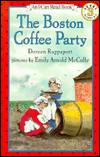
The Boston Coffee Party
 A fabulous bookroom find! I like this one because it's an easy read, but has some lasting questions to think about. The illustrations are informative and engaging.
Sam the Minuteman
Another good find with a Revolutionary War theme.
My Rotten Red-Headed Older Brother
Some students had already read this earlier this year, but there is value in going back to a book, especially for the purpose of making and tracking inferences. It's been a favorite of the groups who have been reading it.
A Chair for My Mother
This book is good for some students. The flashback in the book makes the narrative a little more complex, even though the text is quite simple.

Charlie Anderson
This cute book has a surprising ending. Great for the animal loving kids!
Scaffolding for Making Inferences
But even with good modeling and great texts, some kids really struggle. This is the hardest part of making inferences--getting kids to animate the process. In fourth grade and beyond, there are some kids who are happy to read the words aloud and not go any further.
To help the kids realize that they need to make inferences, I put Post-Its at different spots in the books. (This actually isn't as time-consuming as it sounds. I quickly did this while the students were doing independent reading, putting questions in only one book per group.) For some groups, I wrote a specific question (How do you think the character feels? What trait could describe___?); for others, I just put a note that said, "Make an inference here."
Tools for Students
I love, love, love giving kids lists of related words. This emotion chart is another good scaffolding tool for students. They really do refer to it as they read, looking for the words that capture their inference. It's always encouraging to hear kids talking about whether a character would feel "depressed" or "grief-stricken" in a given situation, referring to the text to support their ideas. A character traits chart is also helpful. These tools give them more support in making inferences.
Listen in, but don't help too much
If I have chosen appropriate books and built the proper scaffolding, I shouldn't have to help groups of readers too much. Instead, I go around and listen to the conversations that kids are having. I want these readers to grow and become independent--I need to step away and let them do this on their own. (For me, this is probably the hardest part!)
As I listened to kids, I did hear a few weird inferences. This doesn't concern me as much as it once did. I think it's part of the practice process, reflecting a bit of risk-taking for the reader. When kids read together, they'll often talk each other out of these weird inferences.
Why the inference chart again?
Part of my goal is to help students realize how often they are making inferences...and be able to identify both the text clues and their own background knowledge they are using. The chart is a great low-risk tool to help them do this.
Selecting texts
I chose texts that were quite easy for students. With this lesson, I wanted them to concentrate on making inferences, not struggle with decoding. At the same time, the texts need to have some meat to them.
The Boston Coffee Party
Sam the Minuteman
Another good find with a Revolutionary War theme.
My Rotten Red-Headed Older Brother
Some students had already read this earlier this year, but there is value in going back to a book, especially for the purpose of making and tracking inferences. It's been a favorite of the groups who have been reading it.
A Chair for My Mother
This book is good for some students. The flashback in the book makes the narrative a little more complex, even though the text is quite simple.
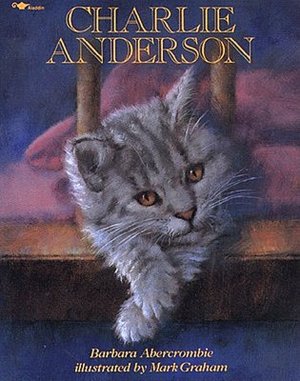
Charlie Anderson
This cute book has a surprising ending. Great for the animal loving kids!
Scaffolding for Making Inferences
But even with good modeling and great texts, some kids really struggle. This is the hardest part of making inferences--getting kids to animate the process. In fourth grade and beyond, there are some kids who are happy to read the words aloud and not go any further.
To help the kids realize that they need to make inferences, I put Post-Its at different spots in the books. (This actually isn't as time-consuming as it sounds. I quickly did this while the students were doing independent reading, putting questions in only one book per group.) For some groups, I wrote a specific question (How do you think the character feels? What trait could describe___?); for others, I just put a note that said, "Make an inference here."
Tools for Students
I love, love, love giving kids lists of related words. This emotion chart is another good scaffolding tool for students. They really do refer to it as they read, looking for the words that capture their inference. It's always encouraging to hear kids talking about whether a character would feel "depressed" or "grief-stricken" in a given situation, referring to the text to support their ideas. A character traits chart is also helpful. These tools give them more support in making inferences.
Listen in, but don't help too much
If I have chosen appropriate books and built the proper scaffolding, I shouldn't have to help groups of readers too much. Instead, I go around and listen to the conversations that kids are having. I want these readers to grow and become independent--I need to step away and let them do this on their own. (For me, this is probably the hardest part!)
As I listened to kids, I did hear a few weird inferences. This doesn't concern me as much as it once did. I think it's part of the practice process, reflecting a bit of risk-taking for the reader. When kids read together, they'll often talk each other out of these weird inferences.
Why the inference chart again?
Part of my goal is to help students realize how often they are making inferences...and be able to identify both the text clues and their own background knowledge they are using. The chart is a great low-risk tool to help them do this.
Subscribe to:
Posts (Atom)