Saturday, November 8, 2014

Teaching Point of View: Beyond Identification

Over the past two weeks, I have been working with point of view in my classroom. What an interesting endeavor it has been! I have found myself looking at stories, my instruction, and my classroom in new ways as I have thought about the standards and how to help my students understand point of view.

The standards
In the Common Core standards for fourth grade, students need to "compare and contrast the point of view from which different stories are narrated, including the difference between first and third person narrators." This standard is pretty comprehensive! Not only do my students need to be able to identify first and third person narrators, but they also need to explain how narration techniques impact a story.
This is a pretty tall order for students who are still having trouble separating content from structure.

Identification
Of course, the first part (and the easy part!) is to teach students how to identify different points of view. I first wrote about this two years ago, in "Teaching Point of View".  This year, I made a PowerPoint presentation to introduce the topic for students:


Side note: I know that everyone in the technology world hates PowerPoint. But I love using this medium to highlight different aspects of text. Putting large text on the screen for everyone to see and talk about gets students engaged. Adding interesting pictures makes the conversations even better!

Simple introductions
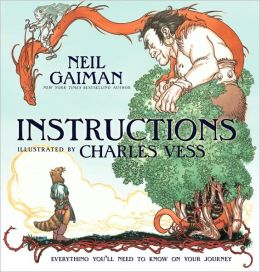
I have some go-to books for introducing point of view. Bigmama's and Shortcut, both by Donald Crews, are two of my favorites. These include the first-person pronoun "we", which is important for students to see, and are quick reads. I also read Instructions by Neil Gaiman, which is told in second person. For each story, we talked about the point of view and how we could figure it out from the pronouns used in the book.

Looking back at familiar stories
After students could identify first and third person with reasonable accuracy, I had to move students to the next level--being able to really consider how the use of different narration styles impacts a story.

To do this, we looked back at the stories that we had already read through the year. This year I have been having students keep each text we use in their reading binder. I love this technique because familiar texts are always at our fingertips, ready for discussion. Students formed self-selected discussion groups, each focusing on one story that we had already read. They had two questions to discuss:

-What is the point of view of the story?
-How does this point of view affect what we know about the characters and the events?
As students talked, I circulated to hear their conversations. These formative activities are vital for me as a teacher, because it helps me to see what knowledge is in the classroom. From this conversation, I was able to see that students could identify point of view, but didn't have much to say about how the point of view affects the reader's knowledge. My next steps were clear!

Shifting points of view
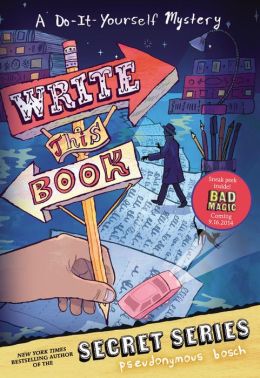
One way to help students have this conversation was through read-alouds. Write This Book by Pseudonymous Bosch sparked some interesting discussions regarding first and second person points of view.

I also shared a story written from multiple points of view. A retelling of Stone Soup, this story uses first person throughout, but switches between characters. (I hope to make this story available in the near future. In the meantime, please write to me if you would like a copy.) This style was a challenge for readers! They read it on their own for the first read, and then we assembled together to discuss it. I modeled how to use information in the text to draw the different narrators and characters, which would help us to track the story.

Drawing the narrators had the secondary benefit of helping students to discover that the characters are referred to by multiple names. "Oh, I thought that Louise was a totally different person!" one student exclaimed. I love it when students are able to verbalize their changing comprehension. (For more on multiple referents, you can check out The Forest AND the Trees: Helping Readers to Identify Details in Texts and Tests.)

Next Steps
As we looked at how the characters' thinking changed from the beginning of the story to the end of the story, I came to an interesting realization. In general, my students are having trouble with the role of character thoughts in first person text. They don't see that, in first person narration, a character's thoughts infuse the entire text. When tasked with looking for an example of a character's thinking, they were trying to find an explicit marker like "I thought". This realization is shaping my planning for next week. What can I expect from 9 and 10 year olds? How can I scaffold them to expand their understanding?

Books and More
Thinking about point of view has made me look at every book in a new way. I started a Point of View board on Pinterest to share different books and how they can be used to consider point of view.

Notes
-US Leveled Geography readings are coming! Last year, I wanted to add a social studies component to my fluency instruction. As a result, I wrote texts for each region, carefully leveled at fourth, third, and second grades. So far, I have the Northeast, Midwest, and South prepared. Check them out!
-I've updated formatting on Thanksgiving Reading Activities and Centers.
-January 2015: You can find "Stone Soup" in my new activity set, "Exploring Point of View".


Wednesday, October 22, 2014

Looking Closely at Setting

    This week, we have been looking closely at setting. In fourth grade, the big task of understanding setting means moving beyond stories with simple, one-note settings and into stories that have richer and deeper settings. Students must also be able to find details from a story that support a setting.

   I use this graphic organizer to help students think about the time in which a story takes place:


   Yesterday, this led to some interesting discussions. I asked a student to come to the front and be the teacher, explaining the purpose of the graphic organizer and what we had learned from it several weeks ago. She did an amazing job! Then, the other students were tasked with asking her follow-up questions to enrich the discussion:
-"Why is there an arrow at the end?"
-"What does fairy tale time mean?"
-"Couldn't a fairy tale story happen in the present?" (Ooh, great question!)

    Then, we used the graphic organizer to help us find the time period of the story we had just read, "Last Day for School". (This story can be found in Character Traits and Emotions.) The date, 1951, is provided in the text. Past or present? Students talked in pairs about how this is kind of the present, because it isn't that long ago, but still the past.

   The next step was to find sentences to support the setting. Quoting accurately from a text is an important standard for fourth graders, and it's hard for them to do early in the year. Sometimes a square of brightly colored paper and a fine-point marker helps the process along. After we identified the setting, we worked to find sentences from the text to support the time period setting. Of course there was the one sentence that stated the year, but were there others?

Students had to comb carefully through the text--just the kind of careful, thoughtful reading that I am trying to cultivate.

   Finally, just a quick word about the inspiration for the story! Around here, the last one-room schoolhouses were still open into the beginning of the 1950s. I've talked to quite a few people who went to one-room schoolhouses, and their feelings about the end of the era ranged from Claire's to her brothers'.

   Schoolhouses dot the landscape, from nicely decorated houses to abandoned hulks. Each year I stop by this crumbling place, conveniently situated along the route to Penn State from my house. I always think about the teachers and the students who went here and the lessons that were taught. Of course the modern schools of today are much, much better...but in my heart I think I feel a bit like Claire, sad to leave her old school behind.


Thursday, October 9, 2014

What is high-quality writing?

    In the first few weeks of fourth grade, I am all about words on the page. It's like coaxing squirrels out of hiding--the classroom needs to be a gentle place, a place of calmness and smiles and happy things.
   But it can't stay like this. As a writer myself, I know that smiles and rainbows can only go so far. Writers sometimes need more than a nudge to move them out of comfortable habits and ineffective strategies.
    It takes some time to move from the coaxing stage into the working stage. To test the waters, I ask students a simple question: What is high quality writing?
    This year, as they called out their responses, I wrote them (as quickly as I could!) in the magenta marker. The responses at the top are the earliest ones. The ones on the right were taken from the bulletin board about our reading class.
    What do you notice? It's easy to see that they are focusing on the external characteristics of writing--what a piece of writing looks like.
    I've noticed over the years that this is fairly common in fourth graders (and probably most students). When asked the question, "What makes high quality writing?", they respond with the most outwardly obvious characteristics of a piece of writing.

    It was hard, but I didn't comment on what they said. Instead, I showed students a piece of writing that looks polished, but is obviously flawed. I wrote this piece "live"--I told students I should charge for admission!--to demonstrate that not every piece with periods and sentences is high quality writing. Of course I added some humor to keep their attention.
    Hands went back up in the air as students considered why the monkey piece is not high quality. Their new comments are written in blue.
    You can see that these comments focus much more on content and organization. My students have all had high-quality writing instruction, but they needed to see a poor example in order to access what they've already learned.
     The "support claims" idea was based on a student discussion about the use of opinions in my piece. "You shouldn't use opinions," one student declared. Others disagreed. Eventually I did help them with the language of "support claims", mostly because the longer, more convoluted way they were saying it would have taken me a long time to write.
    What did I learn from this? My students are still developing ideas for what makes high quality writing. I have to be very, very careful in my comments and feedback to promote an emphasis on content and organization. My students really really want to please me...but I have to make sure that we are working toward high-quality writing, and not just a piece that will make the teacher happy.
    Our next step was to work on paragraphs from Daily Sentence Writing. When students finished, I sent them to the chart to see if they noticed characteristics of high-quality writing in their own pieces. At the end of the class, I asked, "What did you do today to create high-quality writing?"
   Over the next few weeks, my goal will be to help students develop their own rubrics, rubrics that will guide them as they assess their own writing and the writing of their peers.
    (And I really do like pie.)

In your classroom...
1. Ask students, "What makes high quality writing?" Record their ideas.
2. If students seem to focus on surface elements, show a piece that uses correct punctuation and spelling, but lacks organization and a coherent ideas. If you don't feel comfortable with live writing, it's perfectly fine to create this piece ahead of time. After students read this new piece of writing, ask them to generate some new thoughts about high quality writing. Record new ideas in a different color.
3. (It might happen...) Students may not be able to generate any criteria related to content, organization, or word choice. In this case, 6 Traits lessons with great mentor texts are called for! I like the lessons at Writing Fix for this.
4. Give students time to write. Anything! Remind students to refer to the chart for qualities of high quality writing.
5. Ask students, "What did you do today to create high quality writing?" Encourage students to look back to the chart to describe what they did. In fact, you may even be able to add some ideas based on student responses.
6. Keep the chart visible in the classroom and add to it.


Sunday, September 28, 2014

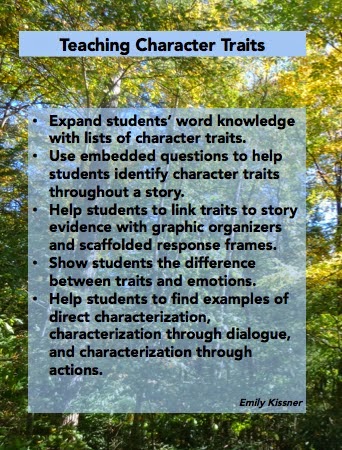
Teaching About Character Traits

Right now I am deep into character traits in my classroom. And it is so delightful! I just love talking to students about characters and how we know what they are like. Discussions of character actions and dialogue and the traits they reveal are so enriching for our class.

Each year I enter into these discussions in slightly different ways. However, some principles guide my lesson planning each year. Here is an overview of my thinking as I embark on a character traits unit.


Expand students' word knowledge with lists of character traits
Many of the words that we use to describe character traits are not common in everyday conversation. Rich, descriptive words like ruthless, impulsive, considerate, and stingy are new for many students. I like to use word lists that group words by common characteristics so that students can learn words efficiently. (A list of character traits is available in Character Traits and Emotions or here.)

Use embedded questions to help students identify character traits throughout a story
I love embedded questions! I remember days of standing by the copier, patiently cutting apart a story so that I could add questions throughout the text. Digital tools make the process much, much easier.

Embedded questions aren't about assessing students, but about guiding students toward making inferences. Transitional readers especially often think of reading a page of text as a monumental effort to be completed as quickly as possible. Embedding questions helps to break up the text and show readers what kinds of inferences they should make at which parts of the story. "Thomas and the Teapot", in Character Traits and Emotions, is an example of a text with embedded questions. However, you can use any text for this strategy.

Help students to link traits to story evidence with graphic organizers and scaffolded response frames
Support, support, support! This is my refrain as we talk about character traits. "What in the story makes you think that?" or "How did you come to think of this trait?"

Graphic organizers help students to collect character traits and text evidence as they go. Scaffolded response frames help students who are still learning the structure of formal academic responses. You can read more about response frames in this blog post.

Show students the difference between traits and emotions
Oh, I hate to see when well-intentioned people muddy the waters between traits and emotions! Traits usually don't change over the course of a story. When they do, the change is usually the main point of a story. Emotions, on the other hand, change frequently based on the events in the story.

Can students understand the difference? They most certainly can, and even readers who struggle can learn to distinguish between traits and emotions. (You can find lots more on character emotions in my book, The Forest AND the Trees, and in lots of other blog posts.)

Help students find examples of direct characterization, characterization through dialogue, and characterization through actions
This is where things get really interesting--as we move beyond just asking, "What are the character's traits?" and into "How does the author let us know about these traits?" For example, this week we started reading There's A Boy in the Girl's Bathroom as a read aloud. I love this book for characterization. In the first three chapters we find out a great deal about Bradley, from each one of these methods. (This book also does show us some examples of trait change, but it certainly doesn't happen in the first three chapters--Bradley's changes over time are part of the main storyline.)

Teaching character traits, just like teaching theme, helps students to see those parts of literature that make us more human. And the language of the traits becomes the language of our classroom. "That was foolhardy of the cricket, to try to escape," one student mused thoughtfully. I was watching the chaos of the escaped cricket (I finally had to stoop down and catch it myself, and I did teach for the next five minutes with a squirming cricket enclosed tightly in my hand) and I thought, "Wow! She used a character trait word!"

Other notes from the week
 -A slug escaped, and was nowhere to be found. How could a slug hide in the classroom? We are completely mystified. Just as a side note, the weight of the slug was 31 grams...we found this out shortly before he escaped.

-I am working on third grade homework sets. Their formatting is simpler than the 4/5 homework sets, and I'd love to have someone else look over them. There are currently 3 available with the fourth coming shortly.

-Character traits materials are available on Frolyc.com! If you have student iPads, these are a great way to build character trait knowledge.

-I'm adding some new materials to stories, but I probably won't have time to upload new sets this week. If you are teaching "Hans, the Princess, and the Golden Goose" from Teaching About Theme or "Painting Day" from Summarizing Stories, drop me a line at elkissn@yahoo.com and I'll send you some of the new materials.


Monday, September 22, 2014

Sticking with Independent Reading

Day 20 has come and gone! Independent reading has settled into a routine--kind of. Sadly, this is the time of year when many teachers abandon independent reading. The initial thrill of start-up has ended, and teachers are feeling pressure to move on to more academic pursuits. It can be easy to skip independent reading "just for today"--and then tomorrow, and the next day, and before you know it, kids just aren't bringing books to class anymore.

But this is the time of year to stick with independent reading!  These are some of the personalities that I have observed in my readers, and how I deal with them. There is very much a sense of Zen in working with readers. There are no hard and fast rules, until there are.

The Flitter
Oh, these are the kids that are giving me gray hair! One day I will get a kid set up with a supportive book talk. They will seem engaged with the text. The next day? No book. "I left it in my desk" or "I left it at home." Even worse, sometimes these readers will grab a new book off the shelf.

It's hard to keep from getting frustrated in these situations. However, these readers need an unfailingly positive atmosphere.  Something about "we read the same book each day, because it makes a complete story" just isn't sinking in. If I don't fix this in fourth grade, it may never get fixed!

A simple "Still-Reading" box is a great help. I have a box in the room for students to keep classroom books in. If kids have trouble bringing books back and forth to class, have them keep their books in the room. It's also important for me to keep track of the books that kids are reading so that they don't slip into flitting day after day. Finally, it is for these readers that I try to stick with read-aloud. Even if they never finish a whole book on their own, they will hear an entire book and get a sense of what a connected work is like.

The Narrow Reader
These are the readers who decide early in the year that they are going to stick with one kind of book. It might be a series, or it might be an author. In my experience, narrow readers are often boys, and they are often on the edge of struggle with grade level text. I've learned that this quirk of independent reading is often quite helpful, and should be allowed as much as possible. I've even gone out and purchased more books in the series for these kids!

The Acquisitional Reader
These readers don't begin to worry me until this time of the year. In the first few weeks of school, acquisitional readers look like they are doing all the right things--they bring books to class and they look like they are reading. Often the books these readers have are big and on or above grade level. But it's around this time that I start to realize that these readers aren't finishing the big beautiful books they are lugging around. They might switch between three books at a time, gaining only hazy representations of the plots.

I deal with each acquisitional reader a little differently. I certainly don't want to squash their enthusiasm! However, I do want these student to realize that they are missing--something. Sometimes I might read a chapter or two with these students, talking about what they are visualizing. Sometimes I will ask them to try out an easier, shorter book for a week or two. Listening to books on CD is often transformational for these acquisitional readers. (I speak from personal experience, as my younger son tends to acquisitional reading sometimes! We're listening to the Heroes of Olympus series in the car, a book that he would never attempt on his own but is enjoying listening to with the rest of us.)

"Nahhh...."
So I go to my cabinet of totally awesome books and offer three supportive book talks. I choose books that are tailored to what I know about the student's interests. They look at each book, make a face, and say, "Nahhh."

This is tough. It's hard to not feel a bit insulted after such rejection. In fact, lately I've been sending it back to these students. "Maybe the books that I have are not interesting for you, and that's fine. But you will now need to be responsible for your book selection, or you will need to read the next book that I choose for you."

And do you know what? Often these students do read the next book that I choose for them.

The Listener
I've had a few students in the last week who have delighted me in unexpected ways. Some of these readers have been very quiet students. I've gone to get them some book choices and they have piped up, "Can I have Amulet?" or "Can I have that book that you were telling someone about last week, where the parents disappeared and there was a castle?" I realized that some kids were listening in on all of the supportive book talks--and, even better, they were silently gathering recommendations.

The Trusting
By Day 20 I have earned some students' trust so completely that I think they would read anything I recommend. I take this trust very seriously and talk about next book selections honestly. "This is a stretch from what you've read before, but I think you might like it," or "This book just came in and I think you'd love it!" Sometimes all I have to do is stand by the cabinet with a book in my hand, no words needed, and 2-3 kids will come over to see what I have for them. These are the best moments.

Happy to read all day
And, of course, every class has the delightful group of students who would be happy to read all day. They choose their own books, carry them from place to place, and bury themselves in the story whenever they get a chance. My main task with these students is to stick with independent reading--and to structure a happy, productive time for everyone.


Friday, September 19, 2014

Supporting character traits

If it's September, I must be teaching about story elements. This week, we have been taking a careful look at character traits. I had to do some quick edits to the classroom version of my Character Traits Powerpoint to delete the pictures of my son--after all, I can't embarrass him by having him on the screen during a lesson!

Traits vs. Emotions
One of the big lessons of fourth grade is getting students to see the differences between traits and emotions. As I was planning for the week of teaching, I was disheartened to see how much misinformation is floating around regarding character traits. A YouTube video started with the example of happy as a character trait. A case could be made that a character who is always cheerful is happy. However, most students apply this word as a fleeting emotion. It muddies the waters to start with such an example! As I teach traits, I try to make sure that students see that character traits are generally stable and unchanging. While emotions come and go, traits usually stay the same. (In stories for children, exceptions to this are highly explicit in how the character's traits change, and make the change in trait a huge factor in the story.)

Finding Traits
I started talking about traits about a week before we really worked with them in details. During our read-aloud, we talked about the character traits that we could apply to the main characters in the books. (With one class, I'm reading Tollins: Explosive Tales for Children; with the other, I'm reading The Talented Clementine.)

During each reading session, a student sits in the "place of honor" beside the large picture of the character and records the character traits that we develop during the reading. As you can see, Sparkler is clever, brave, curious, and protective. These were traits that students already knew and suggested on their own.

Collecting Textual Evidence to Support Traits
After our preliminary readings to test the waters, I was ready to introduce character traits more formally. I used my (edited) version of the PowerPoint to introduce traits and supporting traits with examples. I gave students a list of character traits. Then, we read more about Sparkler in the Tollins book. I modeled how to use this simple chart to record examples of traits and actions.

Writing Justification
Notice how this has the start of textual support, but is missing a key element: the rule, or the justification. The rule goes beyond the textual support to show how the text detail supports the inference. In the case of Sparkler, we had this information:

-Sparkler copied down every word and picture from the human medical books
-This shows that he is persistent

In our justification, we have to show how the two pieces of information go together.
Rule or justification: Someone who is persistent works hard and doesn't give up. Copying the books was hard work for Sparkler, but he didn't give up.

I showed students the response frame that includes a place for the character trait, character actions or word, and justification. After I introduced the task, I differentiated by student choice. Students who were ready to work on their own could go work quietly wherever they wanted in the room, while students who still needed some help could stay at the front with me. This was a very productive time for students.

Looking Back, Looking Ahead
This process requires a level of thinking that is tough for fourth graders! However, breaking the process down into the three different tasks was very helpful. It was also helpful to begin this tough level of thinking with shared, engaging text. Students could move through working with evidence, trait, and justification. While I would love to say that everyone got it perfectly after just one attempt, anyone who has actually been in a classroom knows that it is a long process. But it is a fruitful one--teaching students how to justify their text evidence in this particular case is easily transferable to other situations.


Thursday, September 18, 2014

Conflict and Climax: Thinking about Story Elements

Right now I'm working with teaching about stories and story elements in my classroom. This instruction has shifted a great deal in the last few years. As we've moved to the Common Core, I've taken on many topics that are new to fourth grade (like point of view) and delved more deeply into existing topics, like plot and conflict.

Event Cards

Some activities and strategies remain helpful for fourth graders. For example, I have always liked having students arrange story events. I type the events in a table, cut them out, and ask students to work with partners to put the events in order.


This simple activity shows me so much about what students can do. Sometimes they struggle to put the events in order. I encourage them to look back to the text.

When students don't have trouble putting the events in order, I ask, "Which ones could we leave out?" This prepares students for summarizing, when they will need to select the most important events and leave out events that are not important.

New Applications

This year, I used the sorting activity to frame a discussion about the parts of the story. Students worked with partners to put the events from the story in order. Then, we quickly talked about the climax of the story. This was a new word for many students.

Many typical definitions for climax say that it is the most intense part of the story, or the part that has the most action. Definitions that show climax in terms of "excitement" often set kids up for frustration--after all, many stories do not have an exciting battle! Instead of defining climax in terms of excitement, I told students that the climax is the turning point--when the conflict begins to be resolved.

Believe it or not, this commercial from Chipotle is actually an excellent illustration of this. Notice how the climax is not a grand or exciting battle, but a change of heart:


 After we watched the commercial, we tried to examine where we saw the climax. Partners quickly realized that in order to describe the climax, they needed to have an understanding of the conflict. They tried to hash out whether the conflict was the farmer's use of the land ("Maybe he doesn't have enough food, now that it's winter?" one student guessed) or the farmer's feelings about what has happened.

On the second viewing, they were able to find the climax. One student put it succinctly: "The farmer is like, 'Oh, no, what have I done?'" Another student pointed out that the music reveals the climax: "They give it away! It's in the words of the song!"

Applying learning to text

Students then took their new understanding of climax back to their sorted story events. I asked, "Which event from the story is the climax? Why do you think this?" Students then discussed their ideas...and there was a wide variation of choices.

We were working with a retelling of a fairy tale, "The Miller's Boy". Some students chose events from the beginning of the story, which seemed quite off at first until I realized that they were drawn to what I'd call the initiating event--the event that introduces the conflict of the story. Once I suggested that they look closer to the end of the story, most groups were able to find and support an event that they called the climax. One group noticed that the author (me, but they didn't really know it) had added a secondary conflict related to the character of Tobias. Looking through this lens, the climax came at a slightly different point. I love it when an activity presents several equally plausible answers!

Listening to the conversations was fascinating. I realized that an understanding of plot structure depends on a clear understanding of the conflict of a story. Without knowing the protagonist's goal, readers can't pin events to an over-arching structure. I ended by asking, "What will you do differently when we read our next story? What will you look for? What will you consider?" Some students said they would look for the climax of the story. Others said they would look more carefully for the conflict.

I'm looking forward to our conversations about both.