Showing posts with label books. Show all posts

Thursday, June 17, 2021

Looking Back: Classroom Libraries and COVID


This year has been tough! My school was face-to-face with the entire class for almost the entire year. Last year, I wrote about plans for a classroom library in the face of a pandemic. Now, I'm at the happy point of looking back on the year and thinking about lessons learned.

Taking Books from Room to Room

   Because I moved about this year, I couldn't have a typical classroom library. Instead, I had to take a bin of books with me from room to room. (By the end of the year, I was carting a tall table and an overhead cart with handouts and books!) 

    I expected this to be harder than it was. My start of year book survey helped me to do first day book assignments. Then, I could pick out follow-up books to put into my book bin to cart from place to place. I did make many trips back and forth to my classroom to get books that I'd forgotten; luckily I had a co-teacher for two classes and a lunch break in the middle of the other.

   I had some tried and true books that went with me and were in almost constant circulation! Because of this year's overall atmosphere, I found that kids gravitated toward quick and fun graphic novels. These were the all-time favorites from the year.

Teacher Sign-Out Book

    In the past, students have been responsible for signing out books. This year, I needed to keep the sign-out book myself. Returned books went into a quarantine bin, while I checked books in and out with a sign in book.

   And this worked out wonderfully! In fact, I think that I will clear the first 10 minutes of every class this year to do this again. I kept better track of books than ever before. Previously I had thought that I absolutely could not handle writing down student book checkouts, but I learned otherwise. It worked out well and helped me to have short conversations with readers every day. 

No Browsing

   At the start of the year, I worried about the lack of browsing in my classroom library. However, this turned out to be less of an issue than I thought. Between the book survey and my traveling book bin, I managed to get kids set up with the next book they'd like pretty easily. Each morning, I would sort the quarantined books that were ready to be returned, check my notes for what to take the next day, and get my book bin set up.

   In fact, I noticed that no browsing meant that more time was spent reading. Students became more skilled at asking me for the kinds of books they'd like ("Mrs. Kissner, I want something that's sad and long") and I got better at making recommendations. I did sometimes give students three books that I'd selected for them to look through. They could choose one and return the rest to the quarantine bin.

   I don't think that I will disallow browsing for the future, but I think that I will limit it. I always have a core group of students who like to avoid reading, and too much freedom to browse gives them time to do this. Finding a balance between browsing and teacher recommendation is my task for next year!

Outdoor Reading Time

   This isn't something new for the pandemic...but wow, does some outdoor reading time brighten everyone's mood! In the first few weeks of school, I had students bring along a beach towel to sit on outdoors. Our bright and sunny courtyard was the perfect place for fresh air, reading time, and much-needed social distancing.

   In my end-of-year survey for students, independent reading time rated highly as one of the favorite activities for students. In fact, several students suggested that I give more time next year! This just goes to show that independent reading is important no matter what. 

Lessons for Next Year

   What will next year bring? I can't even begin to guess. But I have learned some new tricks for my classroom library and figured out how to make daily reading time work in a wide range of situations.

Sunday, April 14, 2019

ELA Test Prep: Picture Book Literature Circles

The week before state testing has a strange tension in the air. Students know that something different is coming, but aren't sure how to express their worry. Teachers fret by the copier, making packets of test prep and trying to figure out which standards haven't been covered.

This year I decided to take a different pathway. I knew that I wanted to review literary elements with students, especially theme. But what materials to use? On the one hand, I have years worth of state testing samplers. Some of them aren't terrible. On the other hand...I didn't become a teacher to use state testing samplers, if you know what I mean.

What about picture books? We have a lovely book room with lots of complex picture books. This book room has been rather quiet since our district adopted a reading series. I decided to gather some of my favorites and let the students pick which ones they'd like to read.

To add some accountability, I used a version of my literature circle materials for students to complete independently.

The results astonished me! Kids showed tremendous enthusiasm for their self-selected books. They sat and read together, working diligently on their packets and talking about their opinions. "Is there a way that we could figure out the specific year for the setting of The Memory Coat?" one group asked. In another group, the topic of whether Weslandia was a fantasy or realistic fiction led to a spirited discussion."Obviously it's fantasy, because he'd need a building permit for all of those structures. Especially in that neighborhood," said one civic-minded student.

Listening in on the students' conversations allowed me to provided just-in-time reteaching and reviewing. I was asked to explain again the difference between point of view in a narrative text and point of view in an expository text. "What's that word that starts with a c, that means how people feel about a word?" another student asked. (Connotation!) Another group had totally missed the details that lead to realizing that Nim and the War Effort takes place during World War 2, so I used the pictures and the text to demonstrate.

I also wanted to review the process of finding theme. This is so important for standardized testing, and so difficult for students to grasp. Students have used their Common Themes list all year long, but
I wanted them to revisit the different themes and practice supporting a theme with details from the text. So I showed them to how to make a Theme Graphic organizer, modeled writing a paragraph to express the theme of a story, and directed them to work with their groups to select a theme, find text evidence, and write a paragraph to support the theme.

It was amazing! The conversations were rich and complex, and students really went back to the text to find support. As a teacher, I could not have asked for anything more. We spent our last few days of instruction before tests doing real reading work that everyone loved.

As you think about last minute test preparation, consider using picture books! Not only will you find students engaged with rich stories, but you will also have the chance to hear student conversations and support students at the moment of need.


Saturday, March 16, 2019

Take your class to read outdoors


     Did anyone else have such a beautiful Friday as we did in Pennsylvania? By March standards, it was the perfect day: windswept blue skies, bright sun, and warm temperatures.
     After lunch, a student said, "Maybe we can go read outside after we finish our spelling test." I glanced at the clock and made a doubtful face. I hadn't planned reading outside, mostly because it had been five months since our last session and I didn't think we'd have time to run down the expectations again.
     Still, we finished our assessment quickly and the students looked at me with such hope in their eyes that I gave in. "We'll try some outdoor reading," I said. It was Friday, and I didn't really expect much reading to happen. However, with colder weather on the way, I thought giving kids more time outside was the nice thing to do.
     To my surprise, students remembered every detail of our September reading sessions. They pulled Popsicle sticks to assign the cushions, found my bag of blankets, and grabbed their books. When we got outside they chose spots without delay. Five minutes after making the decision to go outside, suddenly everyone was reading in the March sunshine. They had remembered everything!

Getting ready to read outdoors

     I admit that I have an exceptional location for outdoor reading. I mean, this view is amazing, right? (Don't be too jealous; we don't have air conditioning and I'm a good half hour from the nearest Target, so there are trade-offs.)
     I'm sad to admit that for the first ten years of teaching here, I didn't really think of reading as an outdoor activity. I took students outside for science walks, and perhaps we read once or twice a season as a special activity, but it wasn't part of my consistent instruction.
     Then I moved to the end of the hall. I had an entrance twenty feet from my door. Could we read outside more often? I started to dismiss the idea. Students wouldn't want to sit on the hard ground, they wouldn't stay focused, there would be too many complications. But the pull of the outdoors was strong enough to overcome these issues. So I did some prep work to get everything ready. Here's what to do!

Collect blankets and sheets: I pulled together a collection of old blankets and sheets from my house. You know, the character twin sheets that the kids don't want to use anymore, the blankets that just feel weird, the beach towels that are frayed on the edges. I was able to pretty quickly get about 12 together, enough for my entire class. Alternatively, you could ask students to bring in beach towels or see if any parents have some to donate.
Get some old patio cushions: I didn't plan for these, but someone was upgrading their patio furniture and offered me the old and faded cushions. They are perfect for outdoor reading!
Check school procedures: When I take students outside, I always email the school secretary first and take the walkie talkie from my hallway. Be sure to find out what your school's procedures are.
Check schedules and locations: The last thing you want is to have a PE class walking through your reading session. Think about the school sessions and find a location where you won't be disturbed. You'll also want to think about how big of an area you want to control. Spreading out the students can be great, but can also make it harder to see what students are doing.
Consider the sun: Depending on the time of day, bright sunlight can make reading uncomfortable. It helps to find a location that is part sun/part shade so that students can choose what is best for them.
Grass will be wet in the morning: If you want to read first thing in the morning, the grass will be wet and will soak through your blankets and sheets. Trust me. We know. You will want some flannel-backed vinyl tablecloths instead of blankets if you are reading first thing, OR you will want to be sure to read on blacktop. As you can tell from the pictures, my reading locations vary slightly depending on the time of day and outdoor conditions.

Setting up expectations

     I like to create a looks like/sounds like chart with students before our first outdoor reading session. We talk about how reading outdoors can be a fun and relaxing activity for us. But what would a class of engaged readers look like? What would it sound like? We talked about how there would be things outdoors that we may want to look at--an overhead vulture, for example--and how we could switch our attention back and forth between what interests us and our books.
     For the first few sessions, I had my co-teacher watch the class for a few minutes while I slipped outside to arrange the blankets. I set them a good distance apart so that students can spread out. After I do this a few times, students pick up on the expectations and can arrange everything on their own. (Funny story: When we went outside on Friday for the first time in months, students fished their favorite blankets and sheets out of my bag as if they were long lost friends!) The cushions are given out by picking Popsicle sticks.
     I also made sure to take some high-interest picture books outside for the first few sessions. In August and September, students are still settling into the reading routine, and one or two will inevitably finish their books during an outdoor reading session. Having some books on hand makes it easy to get those kids right back into a book.

Managing behavior

     I never have any behavior issues outdoors! It always goes perfectly!
     Hahahahahahahahahahaha. Working with sixth graders is never dull, that's for sure. Some issues are bound to occur! For this reason, I don't generally get a chance to read myself when we are outside. Instead, I circulate to check in on what students are doing.

Kids talking instead of reading: This is by far the most common issue. Sometimes the talking is related to the novelty of being outside. I've found that talking peaks around our third outdoor reading session. After I strategically separate certain groups for a session or two, students get the message that this is important reading time.
Bug freak-outs: Some students are more concerned about this than others. We talk about how to handle bugs and have a few volunteers who will handle spider removal if necessary. If there's a student who really really doesn't want to sit on the ground, talk with them to brainstorm a solution. One year I had a student who would carry a stool out with him. It worked!
Daydreaming: I'm not sure of how big of an issue this is. Sometimes students will be outside and will just look into the mountains or sky instead of reading. I keep an eye on this and alternate indoor with outdoor reading to make sure that some reading gets done. But then...with a view like ours, who can begrudge some moments to enjoy? 

Delighting in the teachable moment

     Spending time outside always brings unexpected delights, like the bald eagle flying overhead or the robber fly stopping by. In October, when the insects are sluggish and easy to catch, we usually bring a collection container with us when we read outside to catch our six-legged friends.
     I usually take two minutes before we go inside to share what's new and interesting that day.  If students don't know what's there, they won't miss it when it's gone. On Friday, the killdeers had returned, so we spent a few moments listening for them.


   Outdoor reading time is a way to combine two wonderful activities for students. It's surprisingly easy to manage, and students find it enjoyable. Give it a try!

Wednesday, April 6, 2016

Getting Started with Graphic Novels in the Classroom

Three years ago I had only the most rudimentary of graphic novel collections in my classroom. Now, I have enough so that 50% of my class is reading graphic novels at any one time.

Building this collection has been fun, especially because my own kids love graphic novels. Our weekend routines now include visiting new comic book stores, where my husband and youngest son look for the comics they follow, my older son browses the tabletop games, and I scan the graphic novels.

I spend a lot of my own money. Thanks for your TeachersPayTeachers purchases, everyone--they help to support my classroom graphic novel collection! But I wouldn't buy the books if I didn't see how much these books are appreciated by my students and how graphic novels lead to increased interest in reading. Now that I'm teaching sixth grade, I'm very much aware of how my students are at the edge of a reading cliff. Some of them are going to get to a point at which they don't read for pleasure anymore.

Every day, we start class with ten minutes of silent reading time. I've spent this time talking with kids, watching them choose books, and sometimes tearing out my hair when they don't return books. If you're looking to build a collection for your classroom, here are some great books to try.

For kids who don't know if they'll like graphic novels

Rapunzel's Revenge was one of the first graphic novels that I ever truly read, and it remains a great choice for middle grade readers. It's one that gets equal attention from boys and girls. The steampunk style is very appealing, as is a Rapunzel who can use her long braids as lassos.

The story structure and layout is also very forgiving for readers who aren't as familiar with graphic novel format, making this and its sequel, Calamity Jack, great books to recommend to kids who are ready to try graphic novels, but aren't sure what to think. (Shannon and Dean Hale, illustrated by Nathan Hale)

For kids who love fantasy and adventure


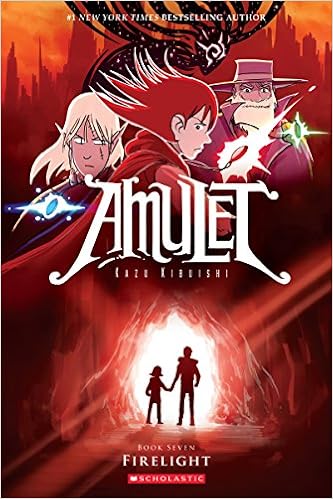
I bought the first five books of  Kazu Kibuishi's Amulet series from a Scholastic book order, sight unseen, for my younger son's birthday. Best $35 I ever spent! These books have been well-loved, passed around, and yes, replaced a few times! Books 6 and 7 came out to much excitement, and I know that readers are already looking forward to Book 8.

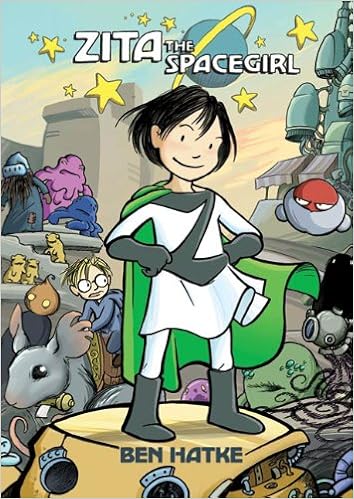
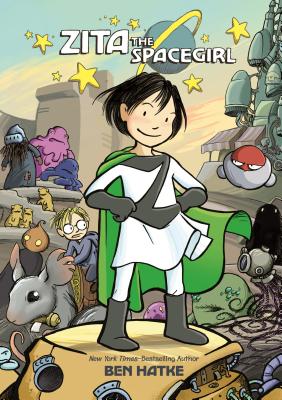
When I show readers who have loved Amulet the Zita the Spacegirl series, I
get one of two reactions. Some kids take the book right away, drawn in by the bright artwork. Others tilt their heads to the side and give the book a funny look, as if unsure. It has a girl on the cover! "There are also giant robots and spaceships," I say, and usually this is enough to draw the kids in. This series was a great fit for fourth grade but a tad on the young side for sixth.

The next installment in the Cleopatra in Space series is being eagerly awaited by many of my students. (Isn't it awesome that there are so many graphic novels with such great female characters?) Readers who have enjoyed Amulet will snap this one right up. Interestingly enough, I don't think this has ever been turned down when I have suggested it--which is pretty amazing, as I face rejection an awful lot.

For kids who like dark stories

In sixth grade, just as in fourth, there are kids who want to read darker stories. These kids want books that probe the shadows and send a delicious shiver down their spines. Neil Gaiman's The Graveyard Book has been adapted into an amazing two-volume graphic novel, and wow does it deliver!

This set of graphic novels includes artwork from a number of illustrators, which can be jarring to readers at first. I am also sure to talk kids through the shocking events of the first chapter before handing over the book. If I still taught fourth grade, I'm not sure that I would have this book out--kids in my area seem to skew a bit young when it comes to these books and in my classroom I err on the side of caution. However, for kids who are used to graphic novels, this is intensely satisfying and has led some students to attempt the full novel.

For kids who loved Smile and Sisters


Wow, these book by Raina Telgemaier were the most popular in the library last year! It seems as if every student has read these books. This provides me with a perfect opportunity to follow up with other graphic novels about growing up.

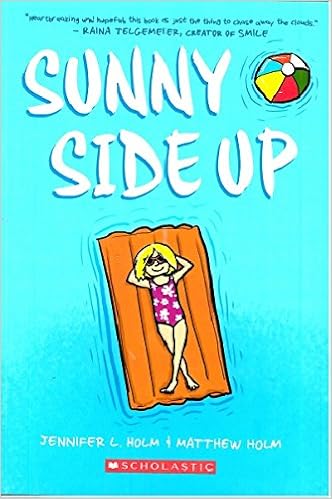
Sunny Side Up by Jennifer Holm is another fun memoir for students. It has the bonus of introducing some key comic book details, too! This one gets mixed reactions from boys--some just don't think they can deal with carrying around the bright blue cover--but every student who has read it has enjoyed it.

And my favorite part of Sunny Side Up is that it leads readers toward Jennifer Holm's novels. Both Turtle in Paradise and Penny from Heaven are on the reserved list right now, which is a success to me.

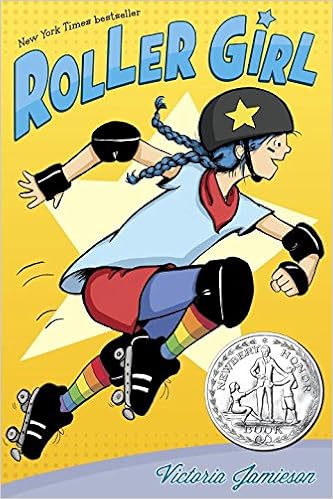
Roller Girl by Victoria Jamieson is another popular memoir, as is El Deafo by Cece Bell. I've had to buy multiple copies of each to keep up with demand!


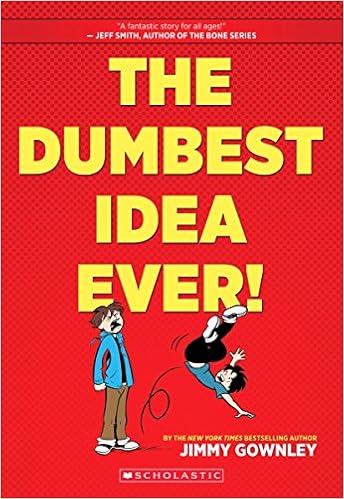
Another great memoir is The Dumbest Idea Ever by Jimmy Gownley. My students have a lot in character with the main character--we all live in (sometimes dreary) Pennsylvania towns, and comic book stores are few and far between. Interestingly, this book seems to take kids a little bit longer to read.

For kids who like nonfiction

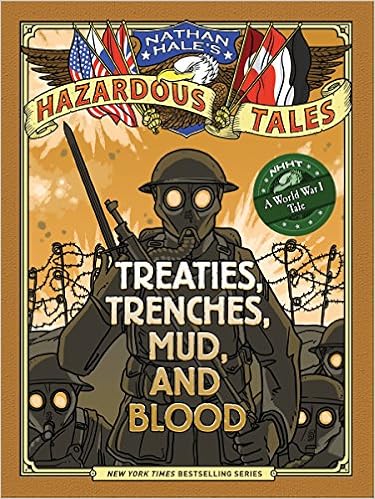
There are lots of new graphic novel format nonfiction books coming out, and I can't wait to collect more. This year, I've focused on collecting Nathan Hale's Hazardous Tales. For some reason comic book stores don't carry these, but they are widely available at bookstores and through book orders.

These are so much fun to read! My high schooler even picks them up, and
really enjoyed Treaties, Trenches, Mud, and Blood. The idea is that Nathan Hale (the spy, not the author) did not die during the Revolutionary War. Instead, he tells the executioner stories of history. You really just have to read it--there is a magical talking history book too!

Others in the series include Big Bad Ironclad and The Underground Abductor (sadly now missing from my classroom--sigh.) I just haven't been able to bring myself to buy Donner Dinner Party yet. Maybe next year.

For kids who love adventure


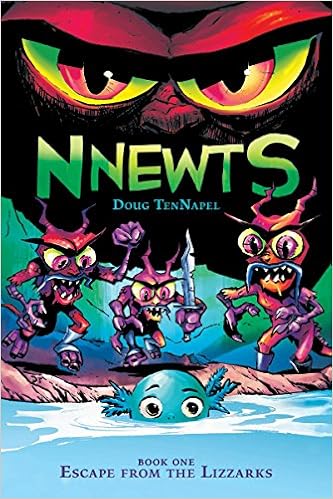
My youngest son found the Nnewts series by Doug TenNapel and was instantly hooked. This series has been popular with students who love animals--in some cases, it has been the first graphic novel that students have attempted. My students are most frustrated by the fact that #3 has not been released yet. They seem to think that authors should sit at the table and draw, draw, draw to get the books
finished!

This is just the tip of the iceberg of the books that readers have been enjoying this year. What graphic novels have your students enjoyed?


Saturday, September 13, 2014

Book Review: Developing Literacy in the Primary Classroom

I really enjoy reading educational research articles. The authors are pleasantly careful and measured in their descriptions of studies and conclusions. Instead of making huge claims and offering easy solutions, real educational research articles are like quiet coffee-time conversations. Authors work hard not to overstep and over-generalize. As a reader, I'm left with plenty of ideas to consider and think about as I watch the learners in my classroom.

In the course of this reading, I've found many new concepts and ways of thinking about reading, like the Simple View of reading, Four Resources Model, and task feedback. These different concepts have changed how I teach.

This is why I'm so delighted to have been given a copy of Developing Literacy in the Primary Classroom by Gary Woolley. Dr. Woolley's articles have been a deep influence on my teaching, especially as I teach students how to visualizing and self-monitor. Now, he has put together an easy-to-read yet comprehensive resource for teaching reading in elementary schools. All kinds of new and interesting models are discussed, with digital resources embedded within chapters and given a chapter of their own as well.

As Dr. Woolley works in Australia, this book offers American readers a refreshing change from constant talk of the Common Core. But strong literacy instruction is good practice no matter what you call it or what standards you apply to it. Reading and writing combine a number of different processes, and awareness of those processes helps teachers to design the best classroom environment and learning experiences.

This book is useful for any elementary teacher looking to expand their reading and literacy horizons. Short chapters and lots of headings make it easy to pick up and read in short segments. It would also be an excellent introduction to literacy instruction for college students, especially with the end of chapter questions and activities. (Plus there is a bit from my blog included--how exciting!)


Sunday, August 10, 2014

Back to School Books

This year, I have resolved to step away from the fancy border. Instead of buying beautiful classroom supplies or trying to make everything match, I'm buying more books...

...and not just any books. I live in an area with few bookstores, so my book purchases tend to focus on the ones that kids can't pick up at a big box store. I'm also trying to enlarge my graphic novel collection. So here are the books that I've bought in the last two weeks, or am planning to buy!

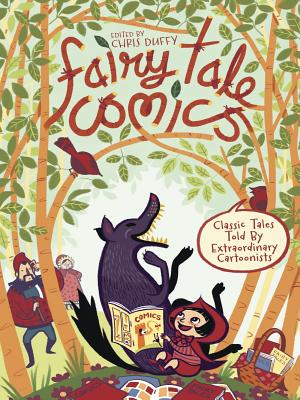
Fairy Tale Comics


I read a local library copy of this last year, so I was thrilled to find a copy of it in a comics bookstore at the beach. I just love to buy books in the real world, and a comics bookstore that has a selection of children's graphic novels is about the best thing ever.

I think that this book will take the title of the First Read-Aloud of the Year. Projected on the whiteboard, it will be the perfect tool for showing students how to interact with a graphic novel. Plus the short story format will be perfect for short reading sessions throughout the day...I think I'll call on kids to choose which story to read next from the Table of Contents.

Ubiquitous and Dark Emperor by Joyce Sidman

I discovered these at a local store called Ollie's. Of course after my husband and I went out to dinner for our anniversary I wanted to go and browse for books. Now Ollie's may not look like a place to discover books (it is a store of overstocks), but they have a surprisingly nice selection.

These books include beautiful poems alongside illustrations and informational text. They will be perfect additions to my poetry collections. I think that I'll make a poster of "Night-Spider's Advice" from Dark Emperor because the poem is such a neat example of how a reader can extract double meanings from a poem.  But I also plan to read the poems aloud in the first weeks of school...again, letting kids choose which poems to hear.

Amulet #6 by Kazu Kibuishi

Last year we bought the Amulet series for my youngest son for his birthday. As you may remember, he went through a period as an acquisitional reader, when he just wanted to collect books but didn't really read them. Well, luckily the Bad Kitty series changed that, and he started to take off as a reader. I found Amulet as a next step for him.

The Amulet books were too good to keep at home, and while the kids know that most of their books usually end up in a classroom, I just couldn't appropriate a birthday present! Deep in the bowels of the Scholastic book clubs I found the whole set for bonus points, and they were worth every single one. I don't think I've ever had a series of books that found such a diverse group of readers. In fact, one of the most constantly asked questions was, "Who has Amulet #___?" (Runners-up were "Where is the tape?" and "Has anyone seen my coffee?")

"I'll see you on August 26," one of the most devoted Amulet fans said last year. "We'll be in school then, right? I'll come to your classroom so I can borrow the new book."

Hmm, I think I'd better get two copies of this one.

Zita the Spacegirl, Legends of Zita the Spacegirl, Return of Zita the Spacegirl by Ben Hatke

Like Amulet, Zita the Spacegirl has found a wide audience. I had it all year round and it was in pretty much constant demand. It has appeal for both girls and boys, which I really like. For some reason I didn't order the second and third in the series last year.

Over the summer I ordered the third (by mistake, instead of the second!) and took it on vacation. I thought that my youngest son had already read the first--but he hadn't! He went on and read the third, but hasn't really forgiven me for the mistake. Oh well.

I'm hoping to redeem myself by buying the second in the Zita series as well as Ben Hatke's new book, Julia's House for Lost Creatures. (You can see some gorgeous artwork from the book in this post at Seven Impossible Things Before Breakfast.)

In the long run, these books will be much better purchases than any kind of fancy border or cool organizational tool. What books are on your list for the start of the year?


Sunday, August 23, 2009

Book Wizard

Scholastic has a new tool called the Teacher Book Wizard! From the preview, it look very promising. You can search by reading level, genre, and topic. In addition, there is a Book Alike feature to find similar books. What makes this so cool is that you can find similar books on the same grade level, above, or below, using a neat slider tool. (And the Book Wizard suggest books from multiple publishers, not just Scholastic!)

Once you've found books, you can add them to your own book list, and then email or print the list. It looks like it has great promise for helping parents choose books for students--simply put in books that students have enjoyed, and then print out a list of suggestions.

I gave it a whirl to see what it would give me. I like using "Fair Weather" by Richard Peck as a read aloud. It is a little harder than what my students can read on their own, and has delicious details about the late 1800s. One grade level easier than Fair Weather gave me 181 results. Some, like the American Girl book "Changes for Addy", are pretty obvious. But there were results that I would not have come up with on my own, like "Fire in the Hills" by Donna Jo Napoli. There are links that allow you to purchase the books that are offered by Scholastic, and it even tells which books are offered by the book clubs.

I've been frustrated with the weird results that I get with Amazon's search, so this looks like a good new tool to use. Now, if only I had money to actually spend on books...

Thursday, June 25, 2009

Our Favorite Read Alouds

Thanks to everyone who attended the workshops on June 24 and June 25! I appreciated all of your feedback and participation.

Here is the list of our favorite read alouds from June 24. If you know of someone who attended on June 24 but not June 25, send them the link to this page so that they can find our list.

  • Junie B. Jones (Barbara Parks)
  • Diary of A Spider (Doreen Cronin)
  • The Miraculous Journey of Edward Tulane (Kate DiCamillo)
  • The Tale of Despereaux (Kate DiCamillo)
  • The Legend of the Bluebonnet (Tomie de Paola)
  • Willy the Wimp (Anthony Browne)
  • Wolf's Chicken Stew (Keiko Kasza)
  • Very Last First Time (Jan Andrews)
  • The Cajun Night Before Christmas
  • Fly Away Home (Eve Bunting)
  • The Three Questions (Jon Muth)
  • Up North at the Cabin (Marsha Wilson Chall)
  • Little House in the Big Woods (Laura Ingalls Wilder)
  • Weslandia (Paul Fleischman)
  • Mufaro's Beautiful Daughter (John Steptoe)
  • The True Story of the Three Little Pigs (Jon Sciezka)
  • Tuck Everlasting (Natalie Babbit)
  • Almost Starring Skinnybones (Barbara Park)
  • From the Mixed-Up Files of Mrs. Basil E. Frankweiler (E.L. Konigbserg)

Wow! What a list! There are many there that I'm looking forward to checking out. I can't way to find a copy of Up North at the Cabin or Willy the Wimp. Both sound like they will be engaging to my students in the fall.

Have some more to add? It's easy! Just click on "Comments" and add your idea.