Back when I decided to start some discussion groups this week, I had grand plans for how I would model the groups. I wanted to get teachers together, three or four of us, and record us having a real conversation about a book that was familiar to the students.
Well...this didn't happen! (It was hard enough for me to coordinate my own movements this week, let alone rope three people into a crazy scheme.) When it came time to model discussion groups, I decided to let some stuffed bears do the talking. Using Weslandia, which had been a read aloud from earlier in the week, I moved the bears around and used different voices to show how a discussion group should go. We talked about interesting questions versus non-interesting questions, polite ways to speak to each other, and how to invite others to participate.
It worked wonderfully! The kids loved watching the bears (and helpfully reminded me which voice went with which.) Even more importantly, the bears gave me a chance to show students some common problems with discussion groups. After we worked with the bears, we wrote down some rules for our discussion groups. I was faithful to what they put forward as rules they wanted everyone to follow. Then, students returned to their seats to write down two questions to bring to their group meeting, I pulled Popsicle sticks to make the groups, and we jumped right in.
The groups did not go perfectly, but there were several interesting discussions. I heard good indicator comments--students said things like, "I never thought about it that way before." They all had questions to share, questions that went beyond the literal. It helped that we were reading The Magic Key, a story that I wrote. Students still had some questions about whether or not the key was magic and how the door opened.
After about eight minutes, I pulled students back together to talk about our experience. This is important in the early days of discussion groups--leave them wanting more. Students rated the experience on a scale of 0-5, with 5 being as much fun as a reading activity can be. Scores ranged from 3 to 5, and we talked about how the discussion groups are fun in a way that may be different from what they are used to.
The biggest surprise, though, came after we were finished. We had moved from the ten minutes of discussion groups and into some self-directed center time. Several girls asked me if they could borrow the bears. "We want to do another discussion group with them," they said. They pulled Don't Let the Pigeon Stay Up Late off the shelf, read it aloud to the bears, and then took turns using the bears to ask and answer questions. Fourth graders are just too cute!
Showing posts with label guided reading. Show all posts
Friday, October 29, 2010
Saturday, October 9, 2010
Reading Strategies: Questioning, Inferring, and Clarifying
This week, I worked with my students to review reading strategies. They had wonderful introductions to strategies in third grade, and really remember a great deal. I used the "Strategy Knowledge Rating" from my Reviewing Reading Strategies packet to get a snapshot of what students already know. Knowledge ratings for vocabulary can be tricky things--I've found that kids often tend to overestimate their abilities--but they are still an indicator of background knowledge.
I found that kids were very confident in their ability to predict, visualize, and activate schema, but were a little less sure of how to question, infer, and clarify. (I put the items on a chart and tabulated student responses so that we could see how everyone in the class responded.) My main goal in planning lessons for strategy use, then, was to show students how to integrate strategies, using several together to build meaning.
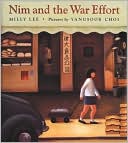
To model these reading strategies, and how they can all work together, I chose the book Nim and the War Effort. The muted, detailed illustrations grabbed my attention right away. But the setting and the plot made it perfect for these lessons. For my apple orchard rural kids, the Chinatown setting was new. Nim's family and culture were different than my students', but the main problem--Nim wants to collect the most newspapers to win a contest at school--was familiar. This combination of new and familiar is important for modeling strategy use. There needs to be something new to cause students to ask questions, but enough familiarity for students to be able to have some background knowledge to use for making inferences.
Day 1: We previewed the book. Students recognized that it was a narrative (hooray!) and asked questions about the pictures. We read the first few pages. After each page, I paused for students to share their questions with a partner, and then called on a few groups to share their questions for the chart.
Day 2: We continued reading, putting more questions on our chart. When we were able to answer a question, we recorded it on the chart. I led students from asking only literal questions to asking "big story questions."
Day 3: I introduced inferring. We practiced making inferences by looking at pictures from my iPhoto collection. The students know both of my sons, and so they enjoyed looking at some pictures of the boys in different seasons and making inferences about what they were doing.
Then, I told students that we can use the strategy of making inferences to answer some of our questions. We looked back at our two days of questions. Were there any that we could make an inference to answer? We read a few more pages, and then tried to answer some questions that were not stated directly in the text. I knew that we were having success when kids groaned when we finished!
Day 4: I introduced clarifying. We talked about how it's a way for us to think about the author's words and what they meant. Once again, I read a few pages, and we collected more questions and answers. By this point, the students were very invested in the story. At the pauses, kids were talkative and eager to share with their partner.
Day 5: We finished the story! What made this book perfect was the fact that the outcome of the contest was never stated directly--kids had to make an inference to figure out the ending. We talked about how, at the end of a book, we need to take some time to go back through our questions. Sometimes we'll need to make inferences to understand how it all ends.
After the whole group lesson, we practiced integrating the strategies in small groups during guided reading. I used books that were a little below the students' instructional levels:
City Green, by DyAnne Disalvo-Ryan: This book has wonderful picture support that leads students straight toward the important questions and key inferences. The name of the narrator is not revealed until page 13, making this a great book for modeling to figure out who the first person narrator might be.
Squanto's Journey, by Joseph Bruchac: I used this with a group of six boys. There were many opportunities for questioning and making inferences. The flashback structure made it a little more challenging.
Dragonfly's Tale, by Kristina Rodanas: This one was a little harder for the group. The pictures helped them to track with the story.
Train to Somewhere, by Eve Bunting: Another one with a first person narrator. Eve Bunting offers strong support for the less familiar topic. This group had some more trouble with using information from one part of the story to answer questions from an earlier part of the story.
I found that kids were very confident in their ability to predict, visualize, and activate schema, but were a little less sure of how to question, infer, and clarify. (I put the items on a chart and tabulated student responses so that we could see how everyone in the class responded.) My main goal in planning lessons for strategy use, then, was to show students how to integrate strategies, using several together to build meaning.
To model these reading strategies, and how they can all work together, I chose the book Nim and the War Effort. The muted, detailed illustrations grabbed my attention right away. But the setting and the plot made it perfect for these lessons. For my apple orchard rural kids, the Chinatown setting was new. Nim's family and culture were different than my students', but the main problem--Nim wants to collect the most newspapers to win a contest at school--was familiar. This combination of new and familiar is important for modeling strategy use. There needs to be something new to cause students to ask questions, but enough familiarity for students to be able to have some background knowledge to use for making inferences.
Day 1: We previewed the book. Students recognized that it was a narrative (hooray!) and asked questions about the pictures. We read the first few pages. After each page, I paused for students to share their questions with a partner, and then called on a few groups to share their questions for the chart.
Day 2: We continued reading, putting more questions on our chart. When we were able to answer a question, we recorded it on the chart. I led students from asking only literal questions to asking "big story questions."
Day 3: I introduced inferring. We practiced making inferences by looking at pictures from my iPhoto collection. The students know both of my sons, and so they enjoyed looking at some pictures of the boys in different seasons and making inferences about what they were doing.
Then, I told students that we can use the strategy of making inferences to answer some of our questions. We looked back at our two days of questions. Were there any that we could make an inference to answer? We read a few more pages, and then tried to answer some questions that were not stated directly in the text. I knew that we were having success when kids groaned when we finished!
Day 4: I introduced clarifying. We talked about how it's a way for us to think about the author's words and what they meant. Once again, I read a few pages, and we collected more questions and answers. By this point, the students were very invested in the story. At the pauses, kids were talkative and eager to share with their partner.
Day 5: We finished the story! What made this book perfect was the fact that the outcome of the contest was never stated directly--kids had to make an inference to figure out the ending. We talked about how, at the end of a book, we need to take some time to go back through our questions. Sometimes we'll need to make inferences to understand how it all ends.
After the whole group lesson, we practiced integrating the strategies in small groups during guided reading. I used books that were a little below the students' instructional levels:
City Green, by DyAnne Disalvo-Ryan: This book has wonderful picture support that leads students straight toward the important questions and key inferences. The name of the narrator is not revealed until page 13, making this a great book for modeling to figure out who the first person narrator might be.
Squanto's Journey, by Joseph Bruchac: I used this with a group of six boys. There were many opportunities for questioning and making inferences. The flashback structure made it a little more challenging.
Dragonfly's Tale, by Kristina Rodanas: This one was a little harder for the group. The pictures helped them to track with the story.
Train to Somewhere, by Eve Bunting: Another one with a first person narrator. Eve Bunting offers strong support for the less familiar topic. This group had some more trouble with using information from one part of the story to answer questions from an earlier part of the story.
Tuesday, October 5, 2010
Quiet Guided Reading Centers
I have 26 students for reading this year. They are a lively, enthusiastic bunch and immensely fun to teach.
But things have been getting a little loud. While I'm working with a guided reading group of 6-8 students, there are 18-20 other students in the room--pretty much an entire class! As a result, I've had to rethink some of my standard routines. If students are doing fluency, retelling, and word sorting, all at the same time, then we can barely hear ourselves think up at guided reading. But I don't want to just assign dull worksheets and assignments for students to complete on their own at their seats.
Here are some things that I've found are working well:
Computer: Luckily, I have three computers in my room, and I have put them all at the other side of the room from my guided reading area. The interactive tools at readwritethink.org have been a big hit. This week, students worked with a partner to write a diamante poem.
Assessment: This came from my husband, who teaches third grade. I had a short common assessment that I needed to give this week--why not do it during centers time? The students in the group sat in a quieter corner of the room and completed the task. I liked this arrangement much better than taking up some of my precious whole group instruction time for the task.
Retelling: I love the retelling center so much. This year, I've managed to pull together three of the Playmobil fairy tale sets. Students read picture books that go along with the characters, and then act out the story with the sets. When the other groups are quiet, the bit of noise that comes from these groups is manageable.
Any other ideas for quiet activities...that aren't dull seatwork?
But things have been getting a little loud. While I'm working with a guided reading group of 6-8 students, there are 18-20 other students in the room--pretty much an entire class! As a result, I've had to rethink some of my standard routines. If students are doing fluency, retelling, and word sorting, all at the same time, then we can barely hear ourselves think up at guided reading. But I don't want to just assign dull worksheets and assignments for students to complete on their own at their seats.
Here are some things that I've found are working well:
Computer: Luckily, I have three computers in my room, and I have put them all at the other side of the room from my guided reading area. The interactive tools at readwritethink.org have been a big hit. This week, students worked with a partner to write a diamante poem.
Assessment: This came from my husband, who teaches third grade. I had a short common assessment that I needed to give this week--why not do it during centers time? The students in the group sat in a quieter corner of the room and completed the task. I liked this arrangement much better than taking up some of my precious whole group instruction time for the task.
Retelling: I love the retelling center so much. This year, I've managed to pull together three of the Playmobil fairy tale sets. Students read picture books that go along with the characters, and then act out the story with the sets. When the other groups are quiet, the bit of noise that comes from these groups is manageable.
Any other ideas for quiet activities...that aren't dull seatwork?
Subscribe to:
Posts (Atom)