One more suffix post! Last week, we looked at how the suffix -ly could be used to make inferences. Interestingly, I learned that there were some words that my students just didn't know--for example, reluctantly. I really thought that there would be someone in the class who would be able to explain it, as I like student explanations for words over mine. But I finally gave in, using the sentence, "Mrs. Kissner reluctantly explained to the class that the word reluctantly means to do something without really wanting to." One of the students said, "Hey! That's one of those meta things--like the books we were reading." And yes, my sentence was self-referential, so it seems that something is sinking in. :)
Our next suffix is the suffix -ful. This suffix is not a difficult one for most students. As I teach it, I'm trying to make the connection to describing characters. Words with the suffix -ful are often used as we write to describe character traits--helpful, resourceful, cheerful, playful. I'll stretch readers with a few words that we don't generally use in daily conversation--insightful, spiteful, artful.
I'm enjoying having the time to focus on word work. But I can't ignore the slightly unraveled feeling that I'm starting to get as I think about the state testing--coming up in 21 instructional days. (Who's counting? I am...as I think about what I still need to work on with students!) More on this unraveled feeling--and what I'm doing about it--next week!
Showing posts with label suffixes. Show all posts
Sunday, February 5, 2012
Tuesday, January 31, 2012
Suffixes and Inferences
What on earth do they have in common? That was a question that I was hoping to answer. As I wrote last time, I'm working with an enrichment group for word study. Right now we're polishing up all of our skills to prepare for state testing. I need to review suffixes, but I also want to make the connection to meaning.
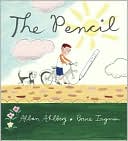
Today I continued to read meta-fiction books. I shared one of my favorites--The Pencil, by Allan Ahlberg. Because I was working with suffixes, we made a list of the words with suffixes throughout the book. (I'd checked for these beforehand!) There were several -ly words, as well as some -ful words. After a quick discussion of the deeper questions of the book (Was the eraser bad, or just acting according to its nature? Why did everything want a name? Where did the illustrator hide a picture of the author?), we looked into the words with suffixes.
And this is where I have trouble with a lot of word work. So many of the worksheets and activities for using prefixes and suffixes are dead end activities. We look at the words, and take them apart, but never really use these words to their fullest potential. So I wondered--why are suffixes important to the reader? What can we learn from suffixes?
Quite a lot, actually. I decided to focus first on the suffix -ly, mostly because it was well-represented in The Pencil (and also because I love to play the game In the Manner of the Adverb). In fiction, -ly adverbs are often very helpful for readers as they make inferences about a character's feelings in a certain situation. Learning to tune into these words as a source of information can be helpful for readers as they tackle more complex fiction. Think about this example: The one word awkwardly conveys a wealth of information about the character's feelings. A reader who doesn't attend to this word may miss the opportunity to make these inferences.
So I made some short little scenarios with -ly words, which we'll talk about and act out. Just as more practice, I added another simple page. Hopefully it will be word work time well-spent!
Today I continued to read meta-fiction books. I shared one of my favorites--The Pencil, by Allan Ahlberg. Because I was working with suffixes, we made a list of the words with suffixes throughout the book. (I'd checked for these beforehand!) There were several -ly words, as well as some -ful words. After a quick discussion of the deeper questions of the book (Was the eraser bad, or just acting according to its nature? Why did everything want a name? Where did the illustrator hide a picture of the author?), we looked into the words with suffixes.
And this is where I have trouble with a lot of word work. So many of the worksheets and activities for using prefixes and suffixes are dead end activities. We look at the words, and take them apart, but never really use these words to their fullest potential. So I wondered--why are suffixes important to the reader? What can we learn from suffixes?
Quite a lot, actually. I decided to focus first on the suffix -ly, mostly because it was well-represented in The Pencil (and also because I love to play the game In the Manner of the Adverb). In fiction, -ly adverbs are often very helpful for readers as they make inferences about a character's feelings in a certain situation. Learning to tune into these words as a source of information can be helpful for readers as they tackle more complex fiction. Think about this example: The one word awkwardly conveys a wealth of information about the character's feelings. A reader who doesn't attend to this word may miss the opportunity to make these inferences.
So I made some short little scenarios with -ly words, which we'll talk about and act out. Just as more practice, I added another simple page. Hopefully it will be word work time well-spent!
Subscribe to:
Posts (Atom)