Although they might seem quite different, teaching theme and teaching summarizing have some similarities. Both require teachers to help students see beyond the clutter of details to reach for the gist of the story. An understanding of theme enhances a student's summary of a story--and knowing how to summarize helps readers to infer themes. When planning for a school year, it almost becomes a chicken and egg problem--which should we teach first?
For me, the answer is neither. And both. (This is what makes me so frustrating to the people I work with!) Looking at summarizing narratives and theme as an ongoing exploration instead of a one-and-done unit leads to much deeper learning and far better discussions. These ideas are so intertwined that they cannot be reduced to step one, step two, step three teaching. Instead, they can become a shared foundation for a new community and classroom.
Just like teaching summarizing, teaching theme can be frustrating. Many young readers are very literal and confuse theme with plot. After all, many authors never state a theme directly. It can be confusing for young readers to "find" something that, from their perspective, isn't even there!
Theme bulletin board: I like to display common themes on a bulletin board that I keep up for most of the year. My formatted theme set is available free from Slideshare, or you can make a more beautiful version that fits in with your classroom decor. As we read different stories, we write titles on notecards and add them to our bulletin board. This helps students to see that stories with very different plots can share themes--an idea which will become important as we compare stories later.
Read aloud: Starting the year with many short read-alouds helps us to think about summarizing and theme at the same time. I don't map out my read-alouds weeks in advance--instead, I have a handy selection of my favorite books that I choose from each day. I just never know what will be happening in the classroom and which book will be the best match for our mood!
Theme reference page: Giving students a list of themes helps them to match themes to stories all year long. It is always wonderful to see students looking at their theme list on their own.
Stories with stated and unstated themes: It is so important for students to see examples of both. I like to suggest to students that they reread the last page or paragraph of a story to look for a stated theme--if the author included it, chances are it's somewhere at the end!
Theme Resources
Theme Unit: This includes three stories and activities to help students recognize and explain themes in stories. I don't usually write about the stories I've written because I'm secretly afraid that someone will tell me I shouldn't write stories anymore. Isn't that silly? One of the stories ("The Arguing Knights and the Hungry Dragon) is a version of a tale that I made up for my sons--here is the original bit from an old blog post. Another story is a retelling of a Grimm fairy tale, while the last, "Evening Adventure", was written after my students fell in love with metafiction.
Theme PowerPoint: This is a very simple introduction to theme.
Theme is a challenge for students, but delightful in the end. After all, theme is what literature is all about! Reading stories from different authors and different places that show the same aspects of human experiences makes us all more human. Sharing that experience with 25 other people is just magical.
Tweet
Showing posts with label summarizing stories. Show all posts
Tuesday, July 15, 2014
Saturday, July 12, 2014
Picture Books for Summarizing Stories
Picture books are a great way to help students summarize. After an engaging shared read, teachers and students together can work to summarize the story. This helps students to learn about how to find important events, which details to include (and which ones to skip!), and how to use academic language to write a skillful summary.
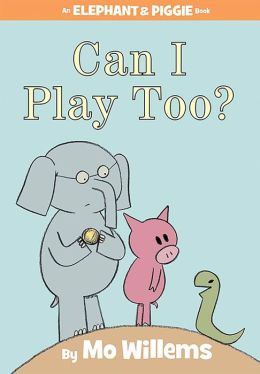
Can I Play Too? by Mo Willems is fun for readers of all ages. There is a problem presented in the story, an attempted solution that doesn't work at all (kids love this page), and a happy ending.
The combination of dialogue and pictures removes all temptation for kids to copy events from the text. Instead, they need to translate what happens on the page into new words. Perfect for summarizing!
With older students, this book is a great way to introduce theme and try to weave a theme into a summary. Would it be best to put the theme at the beginning? Or at the end?
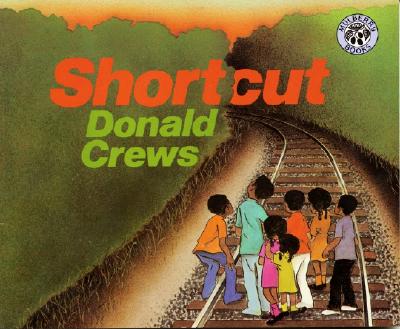
Shortcut by Donald Crews is one book that I would not be able to teach without. I use it for so many things--personal narratives, character emotions, point of view, and summarizing. Like Can I Play Too?, the pictures carry a great deal of weight in the story. This book really shows the flatness of a summary versus a narrative as a finished summary of this book includes the main events, but carries none of the suspense and excitement of the original. This is definitely a book that you will love to have on your bookshelf.
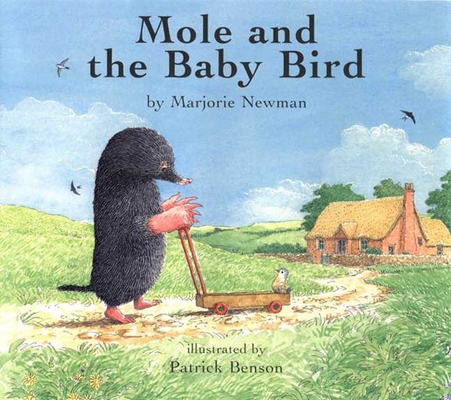
Mole and the Baby Bird by Marjorie Newman looks as if it is meant for a very young reader. However, many readers can identify with the main character's desire to keep a wild bird as a pet. This is a good book to read with students who are struggling with how to represent dialogue in a summary. How can we translate the character's words into sentences? This book is also helpful to use to review the difference between summarizing and retelling. Many students identify so closely with the events in the book that they want to include every detail in a summary. Which events can be deleted, and why?
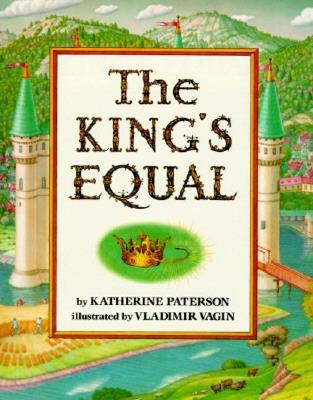
The King's Equal by Katherine Paterson is one of the first "magic books" that I shared with groups of children. I read it aloud to campers at bedtime during one of my three summers as a camp counselor...it was the perfect length to read a chapter each night. Written like a fairy tale, this story is a perfect length for chunk summarizing, or summarizing bits of a story at a time. Try writing a summary of each chapter with students. Then, at the end of the book, look at the chunk summaries all together. Do they represent the entire book? Would it be better to rewrite a summary of the text as a whole? These questions help readers to think deeply about how a story unfolds, and how to represent these plot complications in a summary. (I wrote an entire set of activities for this book--you can find it here.)
You can find more activities for summarizing stories in this unit, Summarizing Stories, from TeachersPayTeachers. For more on summarizing, check out my book, Summarizing, Paraphrasing, and Retelling.
What books do you like to use to teach summarizing stories?
Tweet
Can I Play Too? by Mo Willems is fun for readers of all ages. There is a problem presented in the story, an attempted solution that doesn't work at all (kids love this page), and a happy ending.
The combination of dialogue and pictures removes all temptation for kids to copy events from the text. Instead, they need to translate what happens on the page into new words. Perfect for summarizing!
With older students, this book is a great way to introduce theme and try to weave a theme into a summary. Would it be best to put the theme at the beginning? Or at the end?
Shortcut by Donald Crews is one book that I would not be able to teach without. I use it for so many things--personal narratives, character emotions, point of view, and summarizing. Like Can I Play Too?, the pictures carry a great deal of weight in the story. This book really shows the flatness of a summary versus a narrative as a finished summary of this book includes the main events, but carries none of the suspense and excitement of the original. This is definitely a book that you will love to have on your bookshelf.
Mole and the Baby Bird by Marjorie Newman looks as if it is meant for a very young reader. However, many readers can identify with the main character's desire to keep a wild bird as a pet. This is a good book to read with students who are struggling with how to represent dialogue in a summary. How can we translate the character's words into sentences? This book is also helpful to use to review the difference between summarizing and retelling. Many students identify so closely with the events in the book that they want to include every detail in a summary. Which events can be deleted, and why?The King's Equal by Katherine Paterson is one of the first "magic books" that I shared with groups of children. I read it aloud to campers at bedtime during one of my three summers as a camp counselor...it was the perfect length to read a chapter each night. Written like a fairy tale, this story is a perfect length for chunk summarizing, or summarizing bits of a story at a time. Try writing a summary of each chapter with students. Then, at the end of the book, look at the chunk summaries all together. Do they represent the entire book? Would it be better to rewrite a summary of the text as a whole? These questions help readers to think deeply about how a story unfolds, and how to represent these plot complications in a summary. (I wrote an entire set of activities for this book--you can find it here.)
You can find more activities for summarizing stories in this unit, Summarizing Stories, from TeachersPayTeachers. For more on summarizing, check out my book, Summarizing, Paraphrasing, and Retelling.
What books do you like to use to teach summarizing stories?
Tweet
Tuesday, March 20, 2012
Summarizing Fiction
As I look ahead at working with fiction inferences and narrative summarizing, I worked on a rubric that would reflect some of what I look for in summaries. Here it is! Let me know what you think...
Sunday, March 13, 2011
Summarizing Dialogue
As I wrote last week, we're in the final stretch of test prep, and so we are brushing up on story elements and fiction summarizing. The students did a nice job of summarizing the story "The Goose in the Blackberry Patch". However, they had some trouble with the story "The Mystery Eggs".
Why? The stories are both fairly short. On the surface, they seem to be somewhat similar. However, it didn't take me long to realize the problem--"The Mystery Eggs" contains much more dialogue.
And it is the dialogue that's so tricky for students to summarize. Many of my capable readers wanted so earnestly to provide a faithful accounting of the events that they tried to explain the characters' conversation. It sounded something like this--"Melanie said the eggs were bird eggs, and Clara said no they are not." Some of them ran out of room before they were able to explain all of the events and tell how the problem was solved.
What to do next? For testing, I am not too concerned...as long as students get the key events (and most did), they should be fine.
But I now have a wonderful direction for instruction once testing is over. We had already planned to begin literature circles. I'm going to continue to work on summarizing that tricky dialogue. I've created a list of words to use for summarizing dialogue, and some practice activities. As students read their literature circle novels, they'll try to find pages that are heavy in dialogue, and summarize those pages.
You can find the story "The Mystery Eggs" here, under the Grade 4 Reading Sampler for 2008-2009. It's a really fun one that kids always like, despite the fact that I use it for test prep.
Why? The stories are both fairly short. On the surface, they seem to be somewhat similar. However, it didn't take me long to realize the problem--"The Mystery Eggs" contains much more dialogue.
And it is the dialogue that's so tricky for students to summarize. Many of my capable readers wanted so earnestly to provide a faithful accounting of the events that they tried to explain the characters' conversation. It sounded something like this--"Melanie said the eggs were bird eggs, and Clara said no they are not." Some of them ran out of room before they were able to explain all of the events and tell how the problem was solved.
What to do next? For testing, I am not too concerned...as long as students get the key events (and most did), they should be fine.
But I now have a wonderful direction for instruction once testing is over. We had already planned to begin literature circles. I'm going to continue to work on summarizing that tricky dialogue. I've created a list of words to use for summarizing dialogue, and some practice activities. As students read their literature circle novels, they'll try to find pages that are heavy in dialogue, and summarize those pages.
You can find the story "The Mystery Eggs" here, under the Grade 4 Reading Sampler for 2008-2009. It's a really fun one that kids always like, despite the fact that I use it for test prep.
Subscribe to:
Posts (Atom)