Sunday, November 30, 2014

Centers, Play, and Fourth Grade

    This year I've been following some amazing kindergarten teachers on Twitter. I started out teaching in a preschool, so I have a deep appreciation for all things early childhood. But I have also felt that some element of play is missing in the middle grades.
    As I looked at what the kindergarten teachers were posting and saying, I wondered, "How can I adapt this for my older students?" They are so full of fun, enthusiasm, and questions. They deserve open-ended learning experiences and beautiful experiences just as much as younger students. As some forces are pushing me to make my classroom even more rigorous and demanding, I want to balance things by providing creativity and room for intellectual growth.

Getting Started: Limited Choice
    I decided to dedicate about 20 minutes each day to open-ended work. In the first few weeks of school, I spent great care in developing the culture of our centers and what would happen there. It was not without bumps. Many students associated open-ended free time with recess. I had to constantly remind them--"This is a learning time," and ask, "Are you taking advantage of the learning opportunities in this room?"
    As you can see from the centers list, I chose a wide range of activities that could happen in many different places in the room. Issues of access and squabbling caused us to make some tweaks to our routines, such as making daily schedules for Marbleworks and the computers.
    Early on, kids started asking to do things that weren't on our list. My natural inclination was to say, "Sure!" However, sometimes I have to go across my natural inclinations. (I am always tending toward chaos.) I said, "For now, please choose something that is on our list." Then, as months passed, I would update the list with their new suggestions.

Spreading Wings
    The centers became a great place to put materials after a unit. For example, after we studied volume, I put a wide range of tools by the sink. Sink play is virtually unheard of at my grade level. (If you are a grade 3-5 teacher and you let kids play in the sink, please send me pictures!) Kids took responsibility for any mess. And kids discovered so much about the different measuring tools--the
The Erector set was hugely popular in the
early weeks of school.
relationships between teaspoons and milliliters, the accuracy of their water bottles, the volume of a marble apple. Weeks after the measurement center waned in popularity I heard one student telling another, "Don't use the liter cube to measure--it's not accurate."
    By mid-October I felt comfortable enough with routines to loosen up in what students could do. The open-ended time became a time for freeform investigations and jobs. One student, seeing that our closet was a wreck each morning, wrote a contract to take care of the closet in return for a coupon (from our class economy) each day. He enlisted the help of another student and gave occasional reports to the class about how it
A student drawing from a Frolyc iPad
activity. 
was going and what they could do to make the closets better.
    Another student, seeing the neglected animal cards, created an identification game. From the corner I could hear kids calling--"Dragonfly! Otter!" as they raced each other to identify the animals. Students also work on open-ended, optional activities, such as their Bat Week posters, Frolyc, bird observations, reading, and computer games. Checking in on animal observation cams has also been a favorite activity of late.
    The time has also become an opportunity for students to work on their own science investigations. With the onset of cold weather, we've had several ice experiments. It's been fun to hear kids talk to each other about using the measurement tools from early in the year to create more sophisticated experiments.
The animals that students bring in
are great opportunities for open-
ended exploration.
    Our morning work has also tended to run into other parts of the day. When there are odd moments in the schedule or kids have finished one activity in a lesson it has become natural to just move into the open-ended activities of center time. One day, we moved from our centers time into indoor recess. There was no perceptible change in the quiet, busy hum of the room. I said, "It's recess," but nobody really changed what they were doing.
     In the weeks to come, I plan to add more opportunities for science experiments. Students have written and conducted their first simple experiments, and now are eager to try more with vinegar, baking soda, food coloring, and the like. Just like every new activity, I expect this to be hugely popular.

Kids weighed everything on the balance. Erasers,
pencils, paper clips, water bottles, and a mix
of all of the items together.
Questions and Wonderings
    I could easily write this blog post to make it sound as if this
routine in my classroom always works beautifully and is perfectly wonderful in every way. But I can't ignore the bumpy spots and the thorny questions.
    One day last week I counted 17 different activities going on over the course of the morning. They were all rich, meaningful activities, and I was fascinated at the range of curriculum areas and topics that they reflected.
    But are students switching too often? I have noticed several students engaging in at least four different activities in 20 minutes. I've intervened a few times, but I've also stood and watched, and wondered. Should I tell students to choose one activity and stick to it? Or should I just allow them to enjoy this time of complete choice?
    There are also some kids who sit back and opt out of the social aspect of this time. These students love to read and sit, completely absorbed in a book. My short-term attempts to pull them into the social whirl of activity are politely tolerated for a day, and then they go back to reading.
    A few students seem to just watch what the other kids do--I'll find them looking over the shoulder of someone playing a game or looking at our class blog. Again, these students politely take my suggestions, but do not engage themselves on their own.
     Should I be more insistent about pulling these students in? Or should I wait, hoping that the new activities I'm introducing on Tuesday will do the trick?
    For all of my out of class reflections, often my best decisions about open-ended time come about when I am in the moment--when five kids are calling me over to see something, a colleague has stopped by to ask a question, or someone brings in something unexpected and exciting to look at. These are the moments when I know that time for centers and play is worth pursuing for my fourth grade students.


Wednesday, November 26, 2014

Keeping Up with a Vocabulary Routine

    I've wrestled with this question for many years. Many of my students come to fourth grade with huge word deficits and large gaps in speaking and writing vocabulary. Others come with an eagerness to learn new words and build upon what they have picked up from their reading. I need a vocabulary routine that helps students to be excited about new words...a routine that is manageable and practical...a routine that has lots of room for new additions and learning.
     Faced with the need to do something to build vocabulary, I decided to focus upon five words each week. Before I could choose these words, however, I needed to learn a great deal about which words would be most useful to teach. I made a spreadsheet of Averil Coxhead's Academic Word List, and then added words from the Common Core, the Nifty Thrifty Fifty, and a few other sources. I gathered information about the words, including roots and idioms, and eventually came up with this master list:


  As I created reading homework passages, I chose a mixture of words that were important to each text and words from the Master Word List. Each week, we learn five new words. The vocabulary instruction is not lifeless and dictionary-based; instead, I give kids the definitions and we use the words in sentences. Sometimes the prompts are silly ("Could a cat devise a system of writing?") and sometimes serious ("How can we honor veterans?") 

Word Rings
    Last year I wrote about putting words on word rings for students to study. Each word is put on the ring, with the definition on the back. Students read their words with instructional assistants, parent volunteers, and me. When a student can correctly read the word and explain its meaning, I use a fancy hole punch to punch the card. After three punches, students can remove the word. 
    Lots of good things are going on here! Kids are practicing decoding with multi-syllabic words. Kids are talking about words and their meanings, and get to have time with caring adults. For me, the routine is super-simple to explain to anyone who comes into my classroom to help--the aide who has 10 minutes free due to a schedule change, the parent who can come in one morning, the substitute teacher who has a free period.
    This year we've made some innovations. The wonderful ESL teacher who is co-teaching with me put our word lists on Quizlet and showed me how to print flashcards directly from there--how simple! The instructional assistant who manages all of the cards has even figured out how to engineer the paper so that the cards can be made with the fewest cuts possible. When kids get five cards removed, they earn a coupon for our classroom economy. 

Drawings
     Because many of my students are strongly visual thinkers, I've started adding drawings to our routine. We have lots of tracing paper in the storage closet (why? Not sure), and kids have found it calmly peaceful and engaging to trace the pictures as we talk about the words. In the weeks to come, students will take over the drawing part of the routine.

Finding Words in New Texts
    During our independent reading time, kids are always showing me how they have found vocabulary words in their books. This gives us a great opportunity to talk about the word in context as we look at the sentence containing the word and talk about what it means. Kids copy the sentences onto notecards for us to display in the classroom. (The Amulet books by Kazu Kibuishi are especially rich in academic vocabulary.)

   Is this the best vocabulary routine ever? I don't think such a thing exists. Each new teaching book tries to tell readers that this new thing is the ultimate in teaching. However, I think that good teaching resides in the place where practicality, big dreams, and pedagogy meet. Hopefully you can carve out your own functional and delightful routine for teaching vocabulary!


Saturday, November 22, 2014

Close Reading for Understanding Dialogue

    Young readers have a great deal of trouble with dialogue. It seems as if the task of every autumn for me is to help readers learn how to recognize dialogue, figure out who is speaking in dialogue, and visualize conversations as they read.  And what an important task this is! Dialogue carries plot details and characterization. When students don't know who is speaking, or don't realize the importance of dialogue, they miss essential details of a story.
    For fourth graders, tracking a conversation in text without pictures requires careful attention to detail. After some initial instruction, I was curious to see what my students could do. I designed this assessment to peek in at their processes:


Dialogue Assessment from Emily Kissner

   As I looked at student responses, I noticed several patterns.

1. Every question correct. About a quarter of my students answered every question correctly. This doesn't mean that their instruction is done--in fact, it means that students are ready to really explore dialogue and learn how to wring more meaning from it.
2. Trouble with Line 4. Notice how the dialogue in Line 4 does not have a speaker tag. Readers have two ways to identify the speaker. They could look at the textual conventions of quotation marks and a new paragraph to know that someone new is talking. Alternatively, they could look at the context of the conversation to know that the miller wouldn't thank himself. Students who did not answer this question correctly often said "the miller" or even "sir".
3. Trouble with "You look tired". Teachers who know kids--really know kids--will not be surprised to hear that a decent number of students said "the miller" in response to this question. Skilled adult readers are shocked by this, as they clearly see that the miller has dropped out of the story by this point. However, readers who are having trouble managing characters in their heads will assign dialogue to anyone that seems convenient!

Next Steps
   I hate "going over" tests. This is probably a major character flaw. Instead of "going over" the answers, I made clean copies for all students who scored less than 4/5. Then I gathered the students in small groups to reteach. Together, we read the text and aloud and answered the questions again.
    I used sticky notes to symbolize each character, so that we could talk about who was in the story when. This helped students to see that Hans leaves the mill on Line 10, which makes the miller drop out of the story.
    The small group setting helped students to talk out their issues and their misconceptions. "Well, of course the miller wouldn't say thank you," one student said. "It would be kind of silly for him to thank himself for gold."
   "Oh, the rider is a different person!" another student exclaimed. "Well, that makes a lot more sense."
   I waited until after we had discussed the passage to hand out the scored assessments that students had already taken. Then we were able to talk about new understandings. What did students know now that they didn't know then? How were they thinking through the story events differently? How might this help them with their independent reading books?

Resources
    I eventually wrote three dialogue assessments, which I have added to Analyzing Story Elements. It took us a few tries to get it right! Even now there are still some students that are working on identifying narrators in first person stories. More lessons on identifying speaker in dialogue can be found in my book, The Forest AND the Trees.

New Texts

    Last year I wanted to combine social studies and fluency. I realized that my struggling readers needed much, much more exposure to the names of states! I wrote sets of leveled geography texts about different regions of the United States. I think that I can safely say it is one of the more difficult writing tasks that I have undertaken. You can find them here:
-US Geography Leveled Readings Northeast
-US Geography Leveled Reading South
-US Geography Leveled Readings Midwest
-US Geography Leveled Readings West
    Hawai'i and Alaska are both so big and interesting that they deserve their own texts, which aren't quite finished yet.

What's New on Frolyc
    I have lots of texts and activities for student iPads over at Frolyc. If you want to see new activities, subscribe to the What's New on Activity Spot Pinterest board. This month I have worked on Genres: Science Fiction and Fantasy, Autumn Poem, Anthony Wayne (a chronological order text) and more.


Saturday, November 8, 2014

Teaching Point of View: Beyond Identification

Over the past two weeks, I have been working with point of view in my classroom. What an interesting endeavor it has been! I have found myself looking at stories, my instruction, and my classroom in new ways as I have thought about the standards and how to help my students understand point of view.

The standards
In the Common Core standards for fourth grade, students need to "compare and contrast the point of view from which different stories are narrated, including the difference between first and third person narrators." This standard is pretty comprehensive! Not only do my students need to be able to identify first and third person narrators, but they also need to explain how narration techniques impact a story.
This is a pretty tall order for students who are still having trouble separating content from structure.

Identification
Of course, the first part (and the easy part!) is to teach students how to identify different points of view. I first wrote about this two years ago, in "Teaching Point of View".  This year, I made a PowerPoint presentation to introduce the topic for students:


Side note: I know that everyone in the technology world hates PowerPoint. But I love using this medium to highlight different aspects of text. Putting large text on the screen for everyone to see and talk about gets students engaged. Adding interesting pictures makes the conversations even better!

Simple introductions
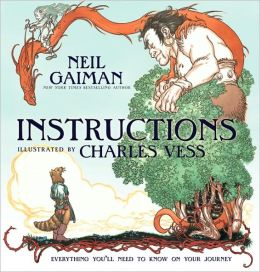
I have some go-to books for introducing point of view. Bigmama's and Shortcut, both by Donald Crews, are two of my favorites. These include the first-person pronoun "we", which is important for students to see, and are quick reads. I also read Instructions by Neil Gaiman, which is told in second person. For each story, we talked about the point of view and how we could figure it out from the pronouns used in the book.

Looking back at familiar stories
After students could identify first and third person with reasonable accuracy, I had to move students to the next level--being able to really consider how the use of different narration styles impacts a story.

To do this, we looked back at the stories that we had already read through the year. This year I have been having students keep each text we use in their reading binder. I love this technique because familiar texts are always at our fingertips, ready for discussion. Students formed self-selected discussion groups, each focusing on one story that we had already read. They had two questions to discuss:

-What is the point of view of the story?
-How does this point of view affect what we know about the characters and the events?

As students talked, I circulated to hear their conversations. These formative activities are vital for me as a teacher, because it helps me to see what knowledge is in the classroom. From this conversation, I was able to see that students could identify point of view, but didn't have much to say about how the point of view affects the reader's knowledge. My next steps were clear!

Shifting points of view
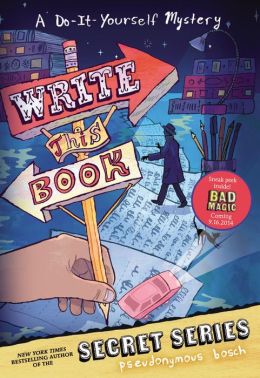
One way to help students have this conversation was through read-alouds. Write This Book by Pseudonymous Bosch sparked some interesting discussions regarding first and second person points of view.

I also shared a story written from multiple points of view. A retelling of Stone Soup, this story uses first person throughout, but switches between characters. (I hope to make this story available in the near future. In the meantime, please write to me if you would like a copy.) This style was a challenge for readers! They read it on their own for the first read, and then we assembled together to discuss it. I modeled how to use information in the text to draw the different narrators and characters, which would help us to track the story.

Drawing the narrators had the secondary benefit of helping students to discover that the characters are referred to by multiple names. "Oh, I thought that Louise was a totally different person!" one student exclaimed. I love it when students are able to verbalize their changing comprehension. (For more on multiple referents, you can check out The Forest AND the Trees: Helping Readers to Identify Details in Texts and Tests.)

Next Steps
As we looked at how the characters' thinking changed from the beginning of the story to the end of the story, I came to an interesting realization. In general, my students are having trouble with the role of character thoughts in first person text. They don't see that, in first person narration, a character's thoughts infuse the entire text. When tasked with looking for an example of a character's thinking, they were trying to find an explicit marker like "I thought". This realization is shaping my planning for next week. What can I expect from 9 and 10 year olds? How can I scaffold them to expand their understanding?

Books and More
Thinking about point of view has made me look at every book in a new way. I started a Point of View board on Pinterest to share different books and how they can be used to consider point of view.

Notes
-US Leveled Geography readings are coming! Last year, I wanted to add a social studies component to my fluency instruction. As a result, I wrote texts for each region, carefully leveled at fourth, third, and second grades. So far, I have the Northeast, Midwest, and South prepared. Check them out!
-I've updated formatting on Thanksgiving Reading Activities and Centers.
-January 2015: You can find "Stone Soup" in my new activity set, "Exploring Point of View".


Wednesday, October 22, 2014

Looking Closely at Setting

    This week, we have been looking closely at setting. In fourth grade, the big task of understanding setting means moving beyond stories with simple, one-note settings and into stories that have richer and deeper settings. Students must also be able to find details from a story that support a setting.

   I use this graphic organizer to help students think about the time in which a story takes place:


   Yesterday, this led to some interesting discussions. I asked a student to come to the front and be the teacher, explaining the purpose of the graphic organizer and what we had learned from it several weeks ago. She did an amazing job! Then, the other students were tasked with asking her follow-up questions to enrich the discussion:
-"Why is there an arrow at the end?"
-"What does fairy tale time mean?"
-"Couldn't a fairy tale story happen in the present?" (Ooh, great question!)

    Then, we used the graphic organizer to help us find the time period of the story we had just read, "Last Day for School". (This story can be found in Character Traits and Emotions.) The date, 1951, is provided in the text. Past or present? Students talked in pairs about how this is kind of the present, because it isn't that long ago, but still the past.

   The next step was to find sentences to support the setting. Quoting accurately from a text is an important standard for fourth graders, and it's hard for them to do early in the year. Sometimes a square of brightly colored paper and a fine-point marker helps the process along. After we identified the setting, we worked to find sentences from the text to support the time period setting. Of course there was the one sentence that stated the year, but were there others?

Students had to comb carefully through the text--just the kind of careful, thoughtful reading that I am trying to cultivate.

   Finally, just a quick word about the inspiration for the story! Around here, the last one-room schoolhouses were still open into the beginning of the 1950s. I've talked to quite a few people who went to one-room schoolhouses, and their feelings about the end of the era ranged from Claire's to her brothers'.

   Schoolhouses dot the landscape, from nicely decorated houses to abandoned hulks. Each year I stop by this crumbling place, conveniently situated along the route to Penn State from my house. I always think about the teachers and the students who went here and the lessons that were taught. Of course the modern schools of today are much, much better...but in my heart I think I feel a bit like Claire, sad to leave her old school behind.


Thursday, October 9, 2014

What is high-quality writing?

    In the first few weeks of fourth grade, I am all about words on the page. It's like coaxing squirrels out of hiding--the classroom needs to be a gentle place, a place of calmness and smiles and happy things.
   But it can't stay like this. As a writer myself, I know that smiles and rainbows can only go so far. Writers sometimes need more than a nudge to move them out of comfortable habits and ineffective strategies.
    It takes some time to move from the coaxing stage into the working stage. To test the waters, I ask students a simple question: What is high quality writing?
    This year, as they called out their responses, I wrote them (as quickly as I could!) in the magenta marker. The responses at the top are the earliest ones. The ones on the right were taken from the bulletin board about our reading class.
    What do you notice? It's easy to see that they are focusing on the external characteristics of writing--what a piece of writing looks like.
    I've noticed over the years that this is fairly common in fourth graders (and probably most students). When asked the question, "What makes high quality writing?", they respond with the most outwardly obvious characteristics of a piece of writing.

    It was hard, but I didn't comment on what they said. Instead, I showed students a piece of writing that looks polished, but is obviously flawed. I wrote this piece "live"--I told students I should charge for admission!--to demonstrate that not every piece with periods and sentences is high quality writing. Of course I added some humor to keep their attention.
    Hands went back up in the air as students considered why the monkey piece is not high quality. Their new comments are written in blue.
    You can see that these comments focus much more on content and organization. My students have all had high-quality writing instruction, but they needed to see a poor example in order to access what they've already learned.
     The "support claims" idea was based on a student discussion about the use of opinions in my piece. "You shouldn't use opinions," one student declared. Others disagreed. Eventually I did help them with the language of "support claims", mostly because the longer, more convoluted way they were saying it would have taken me a long time to write.
    What did I learn from this? My students are still developing ideas for what makes high quality writing. I have to be very, very careful in my comments and feedback to promote an emphasis on content and organization. My students really really want to please me...but I have to make sure that we are working toward high-quality writing, and not just a piece that will make the teacher happy.
    Our next step was to work on paragraphs from Daily Sentence Writing. When students finished, I sent them to the chart to see if they noticed characteristics of high-quality writing in their own pieces. At the end of the class, I asked, "What did you do today to create high-quality writing?"
   Over the next few weeks, my goal will be to help students develop their own rubrics, rubrics that will guide them as they assess their own writing and the writing of their peers.
    (And I really do like pie.)

In your classroom...
1. Ask students, "What makes high quality writing?" Record their ideas.
2. If students seem to focus on surface elements, show a piece that uses correct punctuation and spelling, but lacks organization and a coherent ideas. If you don't feel comfortable with live writing, it's perfectly fine to create this piece ahead of time. After students read this new piece of writing, ask them to generate some new thoughts about high quality writing. Record new ideas in a different color.
3. (It might happen...) Students may not be able to generate any criteria related to content, organization, or word choice. In this case, 6 Traits lessons with great mentor texts are called for! I like the lessons at Writing Fix for this.
4. Give students time to write. Anything! Remind students to refer to the chart for qualities of high quality writing.
5. Ask students, "What did you do today to create high quality writing?" Encourage students to look back to the chart to describe what they did. In fact, you may even be able to add some ideas based on student responses.
6. Keep the chart visible in the classroom and add to it.


Sunday, September 28, 2014

Teaching About Character Traits

Right now I am deep into character traits in my classroom. And it is so delightful! I just love talking to students about characters and how we know what they are like. Discussions of character actions and dialogue and the traits they reveal are so enriching for our class.

Each year I enter into these discussions in slightly different ways. However, some principles guide my lesson planning each year. Here is an overview of my thinking as I embark on a character traits unit.


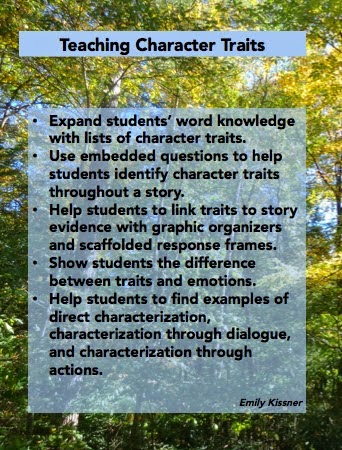
Expand students' word knowledge with lists of character traits
Many of the words that we use to describe character traits are not common in everyday conversation. Rich, descriptive words like ruthless, impulsive, considerate, and stingy are new for many students. I like to use word lists that group words by common characteristics so that students can learn words efficiently. (A list of character traits is available in Character Traits and Emotions or here.)

Use embedded questions to help students identify character traits throughout a story
I love embedded questions! I remember days of standing by the copier, patiently cutting apart a story so that I could add questions throughout the text. Digital tools make the process much, much easier.

Embedded questions aren't about assessing students, but about guiding students toward making inferences. Transitional readers especially often think of reading a page of text as a monumental effort to be completed as quickly as possible. Embedding questions helps to break up the text and show readers what kinds of inferences they should make at which parts of the story. "Thomas and the Teapot", in Character Traits and Emotions, is an example of a text with embedded questions. However, you can use any text for this strategy.

Help students to link traits to story evidence with graphic organizers and scaffolded response frames
Support, support, support! This is my refrain as we talk about character traits. "What in the story makes you think that?" or "How did you come to think of this trait?"

Graphic organizers help students to collect character traits and text evidence as they go. Scaffolded response frames help students who are still learning the structure of formal academic responses. You can read more about response frames in this blog post.

Show students the difference between traits and emotions
Oh, I hate to see when well-intentioned people muddy the waters between traits and emotions! Traits usually don't change over the course of a story. When they do, the change is usually the main point of a story. Emotions, on the other hand, change frequently based on the events in the story.

Can students understand the difference? They most certainly can, and even readers who struggle can learn to distinguish between traits and emotions. (You can find lots more on character emotions in my book, The Forest AND the Trees, and in lots of other blog posts.)

Help students find examples of direct characterization, characterization through dialogue, and characterization through actions
This is where things get really interesting--as we move beyond just asking, "What are the character's traits?" and into "How does the author let us know about these traits?" For example, this week we started reading There's A Boy in the Girl's Bathroom as a read aloud. I love this book for characterization. In the first three chapters we find out a great deal about Bradley, from each one of these methods. (This book also does show us some examples of trait change, but it certainly doesn't happen in the first three chapters--Bradley's changes over time are part of the main storyline.)

Teaching character traits, just like teaching theme, helps students to see those parts of literature that make us more human. And the language of the traits becomes the language of our classroom. "That was foolhardy of the cricket, to try to escape," one student mused thoughtfully. I was watching the chaos of the escaped cricket (I finally had to stoop down and catch it myself, and I did teach for the next five minutes with a squirming cricket enclosed tightly in my hand) and I thought, "Wow! She used a character trait word!"

Other notes from the week
 -A slug escaped, and was nowhere to be found. How could a slug hide in the classroom? We are completely mystified. Just as a side note, the weight of the slug was 31 grams...we found this out shortly before he escaped.

-I am working on third grade homework sets. Their formatting is simpler than the 4/5 homework sets, and I'd love to have someone else look over them. There are currently 3 available with the fourth coming shortly.

-Character traits materials are available on Frolyc.com! If you have student iPads, these are a great way to build character trait knowledge.

-I'm adding some new materials to stories, but I probably won't have time to upload new sets this week. If you are teaching "Hans, the Princess, and the Golden Goose" from Teaching About Theme or "Painting Day" from Summarizing Stories, drop me a line at elkissn@yahoo.com and I'll send you some of the new materials.