Last time, I wrote about how manipulatives can help readers who can decode words, but are having trouble with comprehension. Drawing can be another way to reach these readers and help them to build elaborate mental models.
For a long time, I felt that using drawing during reading class was--well, cheating. How can something that kids like so much be beneficial? I worried that kids would become so focused on creating pictures that they would not make much meaning from the text.
But drawing is a great strategy for all readers. When readers try to make a picture to represent the ideas in a text, they have to think about those ideas in a new way. Here are some ways to help students--and especially those with poor comprehension--build meaning.
Coach students as they draw
In a review of research on drawing as a learning technique, Peggy Van Meter and Joanna Garner found that strategies that include some instructional coaching are especially helpful. I like to do this with students as we read sections of text that are rich in setting details. Using the Promethean board or a piece of chart paper, I'll show students how I take details from the text and put them into my picture.
As I help students draw to represent ideas from the text, I try to highlight the relationships between items as well as key vocabulary.
Don't put down your own drawing ability!
Once, as I was drawing a sketch on the chalkboard, I offhandedly said to students, "I'm not a good artist." No sooner had the words come out of my mouth than I realized what a mistake they were. I wouldn't want kids to say, "I'm not a good reader," and then quit trying.
So I changed my words. I said, "Wait--that's not what I meant. This picture didn't come out very well. Let me look back at the text, think about the details, and try again."
Use content area texts
Content area texts can be a challenge to readers. Drawing can help them to understand how ideas fit together. When my students were reading about caves, they finished the reading by creating a picture and labeling the formations with vocabulary words from the text. This activity required the kids who had skipped quickly through the text to go back and reread the sentences that described the different formations. The task of drawing caused them to realize that their comprehension was not what it should have been!

Wednesday, May 18, 2011

Sunday, May 15, 2011
Help for Word Callers: Using Manipulatives
For me, some of the hardest readers to reach are those that seem to decode accurately and quickly, but have trouble with retelling or answering questions. Sometimes these readers are called "word callers". They have often done just fine with reading in the primary grades, when their ability to decode quickly and accurately puts them at the top of their class.
In fourth grade, however, things start to change. As text becomes more complex and readers need to make more inferences, these students start to feel a little lost. They might look around the room and see the other students quickly writing summaries, while they struggle to think of what to include. They might listen to a conversation about the theme of a story, but not understand how stories can show different themes. It's easy for these readers to become frustrated--reading used to be so easy, but now it's so hard.
As I wrote about in January, these readers may not be building elaborate mental models. A mental model is a reader's impression of a text and understanding of the main ideas. Dr. Gary Woolley's article, "Developing Reading Comprehension: Combining Visual and Verbal Processes" is an excellent introduction to helping students to build mental models.
One of the ideas mentioned in the article is the use of manipulatives for reading. While much of the research about this focuses on manipulatives for early readers, I've found this strategy to be useful in the intermediate classroom as well. When readers have to move around pictures and objects, they have to make more meaningful connections between ideas in the text. It's not enough to just read a sentence and blunder on to the next--the reader needs to stop, find the relevant pictures, and show how they carry out the actions in the text.
 Why is this strategy not used more often? I think it's a question of materials. Materials for retelling and acting out text with manipulatives are simply not widely available, especially at the intermediate level. (In some of the original research, they referred to using Playmobil toys, with texts written especially to fit the toys that they had. Playmobil did make some fairy tale sets, but they're becoming hard to find.)
I've tried to create some items for my classroom, using simple illustrations for the manipulatives. Once students are familiar with the process, they are eager to create their own retelling figures. This is a great activity, because it harnesses both drawing and manipulative use to enhance comprehension. While I started using this activity to help the word callers, I found that all of the readers in my room enjoy this.
If you haven't tried manipulatives with your readers, the end of the year is the perfect time to try it out. Kids find this strategy inherently motivating, while you can do some "kid-watching" to see how all of your readers--and especially those who show word-calling tendencies--react to this kind of activity. Here is a very simple text with pictures.
In fourth grade, however, things start to change. As text becomes more complex and readers need to make more inferences, these students start to feel a little lost. They might look around the room and see the other students quickly writing summaries, while they struggle to think of what to include. They might listen to a conversation about the theme of a story, but not understand how stories can show different themes. It's easy for these readers to become frustrated--reading used to be so easy, but now it's so hard.
As I wrote about in January, these readers may not be building elaborate mental models. A mental model is a reader's impression of a text and understanding of the main ideas. Dr. Gary Woolley's article, "Developing Reading Comprehension: Combining Visual and Verbal Processes" is an excellent introduction to helping students to build mental models.
One of the ideas mentioned in the article is the use of manipulatives for reading. While much of the research about this focuses on manipulatives for early readers, I've found this strategy to be useful in the intermediate classroom as well. When readers have to move around pictures and objects, they have to make more meaningful connections between ideas in the text. It's not enough to just read a sentence and blunder on to the next--the reader needs to stop, find the relevant pictures, and show how they carry out the actions in the text.

I've tried to create some items for my classroom, using simple illustrations for the manipulatives. Once students are familiar with the process, they are eager to create their own retelling figures. This is a great activity, because it harnesses both drawing and manipulative use to enhance comprehension. While I started using this activity to help the word callers, I found that all of the readers in my room enjoy this.
If you haven't tried manipulatives with your readers, the end of the year is the perfect time to try it out. Kids find this strategy inherently motivating, while you can do some "kid-watching" to see how all of your readers--and especially those who show word-calling tendencies--react to this kind of activity. Here is a very simple text with pictures.
Friday, May 13, 2011
Upcoming Workshop
I'll be presenting a full-day workshop called "Reading Refresher" on Friday, June 17. As I've been looking through the journals, there are so many interesting ideas that have a real value to our everyday classroom practice...yet these ideas often get overlooked in professional development. If you don't have time to read journal articles, but would like to get some fresh perspectives, this is for you! (And, as with all of my workshops, the emphasis is on practical classroom use.)
They day will include:
https://act48.iu12.org/login.asp
If you are not teaching in York or Adams County, but would like to attend, please contact me.
They day will include:
- Talking about those readers who puzzle us
- The "simple view" of reading, and how this relates to our teaching
- Helping students to use multiple strategies to build meaningful mental models
- Working with multiple literacies
- Making all of this work with the Common Core Standards...in a way that keeps our classrooms fun and engaging!
https://act48.iu12.org/login.asp
If you are not teaching in York or Adams County, but would like to attend, please contact me.
Tuesday, May 10, 2011
Literature Circles: Adding the Spark
As our literature circles have moved from fiction to nonfiction, some of the conversations have been getting--well, flat. This is to be expected with any classroom activity. When creative and imaginative activities become routine, they lose some of their effectiveness.
So it's up to me to try to recapture the excitement! I wasn't really thinking about this, though, as I was picking up my students from lunch today. But I soon got dragged into a heated discussion. "Mrs. Kissner, Mrs. Kissner!" two boys called. "Which one is stronger--a bull shark or a great white?"
This is not a question that I have considered often. So I absentmindedly answered, "Great white, I guess." This set off a new flurry of comments and whispering, all as we were walking down the hallway and back to the classroom.
The disagreement didn't end there. "The bull shark is the most dangerous, because it can go in shallow water and that's a bad place for a person to be when a shark is around," Wyatt said. More kids starting to chime in, from the boys who had originally started the conversation to the others who were clamoring to figure out what was going on. Claims were made, details offered, counterarguments shot back.
A thought was slowly forming. This was the kind of passion and spark that our literature circles were missing! Later, as we talked about the literature circles for the day, I brought up this conversation. "What made you so interested in talking about the two kinds of sharks?" We picked it apart--how all of them at the lunch table had some shared knowledge about sharks, but some different ideas. None of the boys had read which shark was most powerful or dangerous. Instead, they were making inferences and claims based on the details they knew.
"That's just the way it is with literature circles," I told the students. "You've all read the same book, but you have different ideas. This week, as you talk about the questions you've prepared, try to have an interesting disagreement! How are your ideas different? How can you support them?"
When I put it like this--that literature circles are supposed to be about some amount of disagreement--it added some new zip to their conversations. I saw more students going back and opening up their books, pointing to phrases and photographs, sharing their ideas.
But I still feel like I have some unfinished business. Because, while I was watching their literature circles and walking around, I felt an irresistible urge to go to my computer and do some research. And I couldn't get rid of the nagging question. Which is more powerful--a bull shark or a great white?
So it's up to me to try to recapture the excitement! I wasn't really thinking about this, though, as I was picking up my students from lunch today. But I soon got dragged into a heated discussion. "Mrs. Kissner, Mrs. Kissner!" two boys called. "Which one is stronger--a bull shark or a great white?"
This is not a question that I have considered often. So I absentmindedly answered, "Great white, I guess." This set off a new flurry of comments and whispering, all as we were walking down the hallway and back to the classroom.
The disagreement didn't end there. "The bull shark is the most dangerous, because it can go in shallow water and that's a bad place for a person to be when a shark is around," Wyatt said. More kids starting to chime in, from the boys who had originally started the conversation to the others who were clamoring to figure out what was going on. Claims were made, details offered, counterarguments shot back.
A thought was slowly forming. This was the kind of passion and spark that our literature circles were missing! Later, as we talked about the literature circles for the day, I brought up this conversation. "What made you so interested in talking about the two kinds of sharks?" We picked it apart--how all of them at the lunch table had some shared knowledge about sharks, but some different ideas. None of the boys had read which shark was most powerful or dangerous. Instead, they were making inferences and claims based on the details they knew.
"That's just the way it is with literature circles," I told the students. "You've all read the same book, but you have different ideas. This week, as you talk about the questions you've prepared, try to have an interesting disagreement! How are your ideas different? How can you support them?"
When I put it like this--that literature circles are supposed to be about some amount of disagreement--it added some new zip to their conversations. I saw more students going back and opening up their books, pointing to phrases and photographs, sharing their ideas.
But I still feel like I have some unfinished business. Because, while I was watching their literature circles and walking around, I felt an irresistible urge to go to my computer and do some research. And I couldn't get rid of the nagging question. Which is more powerful--a bull shark or a great white?
Wednesday, May 4, 2011
Comparing Texts
As the year draws to a close, I find myself teaching more and more about comparing texts. This is the perfect topic for the end of the year, as we have so much shared history and shared readings.
Why do we compare texts? Sometimes the process of comparing helps us to think more deeply about texts, finding details that we didn't know were there. And sometimes the process helps us to see how texts that seem quite different have many things in common, and how there are common themes and ideas that come up again and again in literature. For my fourth graders, just starting to think at a higher level, comparing texts is a great way to open up their thinking about the great world of literature.
Here are some things that I've learned can really help kids to compare texts effectively.
Share lots of high quality books: The books that I read over the last few weeks for inferring work perfectly for comparing. When kids have read a variety of books that share common themes, the task of comparing is easier--and lots more fun.
 Teach students to generate criteria: I started my lesson by showing kids a terribly written paragraph that compared two stories based on insignificant criteria--the number of words in the title, the number of letters in the character's names, etc. Students recognized right away that this paragraph was pretty silly! Then, I gave students cards with different criteria written on them. They sorted the cards based on "significant" or "not significant". For example, "genre" is significant, while "use of the letter r" is not. (Kids appreciated this one!) Some, like "animals in the text" could go either way--it depends on what is being compared.
We ended up sorting the cards three times over the next week, reviewing what made the different criteria significant or not. The students had so many experiences with looking at how texts can be compared that they easily came up with significant criteria on their own.
Make it a game! If you use a Texts We've Shared Wall, start off a conversation by asking kids to browse the wall and look for two texts that would be easy to compare. Why? Then, look for two texts that would be very hard to compare. Why are these two so different? Can anyone find any significant similarities? This task helps kids to think more flexibly about comparing texts, looking at it as a fun challenge instead of a chore.
Put transition words in front of students: Give students the words they need to write compare and contrast text. Words like on the other hand, however, both, also, similar, and different...these words make comparing and contrasting infinitely easier. A page with different compare and contrast transition words will help students to write better paragraphs.
Weave in the editing: This is the perfect time to address finer points of which titles get quotation marks and which get underlined. Because students will be going back and forth between talking about the different texts, they have a real reason to use this punctuation.
Comparing texts is a great end of year activity...and it can be lots of fun!
Why do we compare texts? Sometimes the process of comparing helps us to think more deeply about texts, finding details that we didn't know were there. And sometimes the process helps us to see how texts that seem quite different have many things in common, and how there are common themes and ideas that come up again and again in literature. For my fourth graders, just starting to think at a higher level, comparing texts is a great way to open up their thinking about the great world of literature.
Here are some things that I've learned can really help kids to compare texts effectively.
Share lots of high quality books: The books that I read over the last few weeks for inferring work perfectly for comparing. When kids have read a variety of books that share common themes, the task of comparing is easier--and lots more fun.

We ended up sorting the cards three times over the next week, reviewing what made the different criteria significant or not. The students had so many experiences with looking at how texts can be compared that they easily came up with significant criteria on their own.
Make it a game! If you use a Texts We've Shared Wall, start off a conversation by asking kids to browse the wall and look for two texts that would be easy to compare. Why? Then, look for two texts that would be very hard to compare. Why are these two so different? Can anyone find any significant similarities? This task helps kids to think more flexibly about comparing texts, looking at it as a fun challenge instead of a chore.
Put transition words in front of students: Give students the words they need to write compare and contrast text. Words like on the other hand, however, both, also, similar, and different...these words make comparing and contrasting infinitely easier. A page with different compare and contrast transition words will help students to write better paragraphs.
Weave in the editing: This is the perfect time to address finer points of which titles get quotation marks and which get underlined. Because students will be going back and forth between talking about the different texts, they have a real reason to use this punctuation.
Comparing texts is a great end of year activity...and it can be lots of fun!
Saturday, April 23, 2011
Books for Literature Circles
The right book can make all the difference for literature circles. I certainly can't go out and buy the latest and greatest titles all the time, but our bookroom has a nice selection of titles. Some are newer, some are older. Here are some that my students are enjoying.
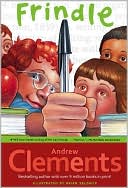
Frindle: A favorite of multiple groups! This book works well because it is engaging, and yet easy to read. Changing character emotions and attitudes are easy to see.
As groups have finished this, some have wanted to move on to other Andrew Clements books, like The School Story and The Report Card.
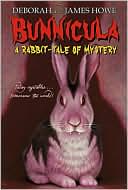 Bunnicula: This book has great word-of-mouth appeal among kids. As they have shared their activities or looked at displays, I've heard quite a few impromptu discussions. Do check in with groups as they are reading this, as the narration is a little tough for some readers.
Tales of a Fourth Grade Nothing: I remember reading this in my elementary school days! But the group that chose it is still enjoying it, and some have even picked up the sequel on their own. I think that Fudge is just such a funny character that kids can't help but be pulled into the story.
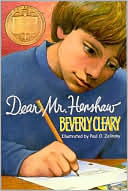 Dear Mr. Henshaw: There have been years in which I have been totally unable to get kids interested in this book. So I feel pretty pleased that a group has selected this one! I think that a very supportive introduction makes the difference. I showed students the first two letters, introduced them to the format of the book, and showed them where it changes to a journal format. This helped them to navigate the letter style of the book.
Because of Winn-Dixie: This book can be a good pick for boys and girls. It has a quieter pace, and students in this group had a little more trouble finding the main problem and the theme. But they enjoyed all of the doggy details, and their conversations were always lively.
...and I've put together a collection of the materials that I've been using with literature circles. You can check it out below, or download it here.
Frindle: A favorite of multiple groups! This book works well because it is engaging, and yet easy to read. Changing character emotions and attitudes are easy to see.
As groups have finished this, some have wanted to move on to other Andrew Clements books, like The School Story and The Report Card.
Tales of a Fourth Grade Nothing: I remember reading this in my elementary school days! But the group that chose it is still enjoying it, and some have even picked up the sequel on their own. I think that Fudge is just such a funny character that kids can't help but be pulled into the story.
Because of Winn-Dixie: This book can be a good pick for boys and girls. It has a quieter pace, and students in this group had a little more trouble finding the main problem and the theme. But they enjoyed all of the doggy details, and their conversations were always lively.
...and I've put together a collection of the materials that I've been using with literature circles. You can check it out below, or download it here.
Friday, April 22, 2011
Lessons from Literature Circles
As the year winds down to a close and state testing is complete, I like to pull kids into reading with literature circles. Here are some things that I keep in mind as I work with literature circles:
Start with a sociogram: Sociograms are fascinating instruments! Try asking your students, "If you could talk about books with someone in the class, who would it be? Write down 3 names." Then, collect their responses and put them on a map. Use arrows to represent student selections. It's easy to see which students are isolated, which cliques only work with each other, and which kids easily cross social boundaries. This information helps me to think about my groups in a way that goes beyond reading levels and interests. (Note: Be careful with your sociogram. It certainly wouldn't be something that you would want to share or leave lying about.)
Limited choice: I went to the bookroom and selected about 7 titles. On our selection day, students had about 2 minutes to look at each title, and then wrote down their top 3 choices on slips of paper. Then, I moved around the slips of paper to form groups. I used the sociogram to help me think about how to form groups.
Social conversation: On the first day that groups meet, encourage them to spend about 10 minutes talking about non-book topics. I write some topical questions on the board, from low-risk questions ("What's your favorite breakfast food?") to ones that require more sharing ("What would you like to change about yourself?") If students are going to have meaningful book discussions, they have to be comfortable with one another.
Generic questions: I've heard from some teachers who have tried to make questions for every book, every week. This makes me tired to think about! I use generic questions that fit for every book. (I'm working on posting a master list of questions that I've used...until then, write to me if you'd like a list.)
Independent practice: As I make my questions and plan my lessons, I think of the literature circle questions as the independent practice. So, I usually teach a concept with the whole group in the week before that appears on the literature circle questions. For changing character emotions, for example, I taught the character change map with Shortcut and our shared reading ("Juggling" by Donna Gamache), and then students answered questions about changing emotions and could make their character change maps for their literature circle books the next week.
It's a process: I don't expect brilliant discussions in the first week, or even the second week. As students meet, I walk around and take note of what they are doing--are they looking back to their books? Are they following up on questions and ideas? Are they listening to each other? Then I try to address those issues before the next meeting. I know that things are working when students start challenging each other. "But that happened at the beginning of the book!" one student told another. "What about in the part we read this week?"
Things get messy: As a fast reader, I always hated when teachers wouldn't let us read ahead. (I always did it anyway!) So I encourage students to read ahead if they like. We talk about "spoilers" and managing the conversation so that you don't reveal things that others don't yet know. Luckily, the kids who read ahead are also able to handle this more flexible thinking.
When students finish their books early, I try to pull them from their group and form a new group of fast finishers with a new book. It gets messy, but the kids are eager to read new books and talk with new people.
How long? Well, I was going to do only a 4-week session, but so many kids wanted to continue that I'm now about to start Week 6. Once the students understand the process, it can become a good background activity that coexists well with other classroom activities.
Disclaimer: If you're thinking, "This wouldn't work for my class," don't despair. I have to admit that I have about the best reading class ever right now. They are a dream class--hardworking, friendly, talkative, and kind to each other. I have had years in which literature circles did not go nearly as well.
Start with a sociogram: Sociograms are fascinating instruments! Try asking your students, "If you could talk about books with someone in the class, who would it be? Write down 3 names." Then, collect their responses and put them on a map. Use arrows to represent student selections. It's easy to see which students are isolated, which cliques only work with each other, and which kids easily cross social boundaries. This information helps me to think about my groups in a way that goes beyond reading levels and interests. (Note: Be careful with your sociogram. It certainly wouldn't be something that you would want to share or leave lying about.)
Limited choice: I went to the bookroom and selected about 7 titles. On our selection day, students had about 2 minutes to look at each title, and then wrote down their top 3 choices on slips of paper. Then, I moved around the slips of paper to form groups. I used the sociogram to help me think about how to form groups.
Social conversation: On the first day that groups meet, encourage them to spend about 10 minutes talking about non-book topics. I write some topical questions on the board, from low-risk questions ("What's your favorite breakfast food?") to ones that require more sharing ("What would you like to change about yourself?") If students are going to have meaningful book discussions, they have to be comfortable with one another.
Generic questions: I've heard from some teachers who have tried to make questions for every book, every week. This makes me tired to think about! I use generic questions that fit for every book. (I'm working on posting a master list of questions that I've used...until then, write to me if you'd like a list.)
Independent practice: As I make my questions and plan my lessons, I think of the literature circle questions as the independent practice. So, I usually teach a concept with the whole group in the week before that appears on the literature circle questions. For changing character emotions, for example, I taught the character change map with Shortcut and our shared reading ("Juggling" by Donna Gamache), and then students answered questions about changing emotions and could make their character change maps for their literature circle books the next week.
It's a process: I don't expect brilliant discussions in the first week, or even the second week. As students meet, I walk around and take note of what they are doing--are they looking back to their books? Are they following up on questions and ideas? Are they listening to each other? Then I try to address those issues before the next meeting. I know that things are working when students start challenging each other. "But that happened at the beginning of the book!" one student told another. "What about in the part we read this week?"
Things get messy: As a fast reader, I always hated when teachers wouldn't let us read ahead. (I always did it anyway!) So I encourage students to read ahead if they like. We talk about "spoilers" and managing the conversation so that you don't reveal things that others don't yet know. Luckily, the kids who read ahead are also able to handle this more flexible thinking.
When students finish their books early, I try to pull them from their group and form a new group of fast finishers with a new book. It gets messy, but the kids are eager to read new books and talk with new people.
How long? Well, I was going to do only a 4-week session, but so many kids wanted to continue that I'm now about to start Week 6. Once the students understand the process, it can become a good background activity that coexists well with other classroom activities.
Disclaimer: If you're thinking, "This wouldn't work for my class," don't despair. I have to admit that I have about the best reading class ever right now. They are a dream class--hardworking, friendly, talkative, and kind to each other. I have had years in which literature circles did not go nearly as well.
Subscribe to:
Posts (Atom)