No one has asked, "Hey Emily, what do you think about homework?" But I'm going to tell you what I think anyway. I've worked for eighteen years in three different grade levels across three different schools in different communities, so I've gained some insight into what works and what doesn't.
My views on homework have been deepened by the experiences of my own children. We've suffered through some poorly designed assignments and ill-conceived packets, but we've also enjoyed carefully crafted homework. (Thanks for the great reading packets and extensions, Nicole!)
First of all, I don't have much patience with the homework/no homework dichotomy. I think that it distracts attention away from the real issue--what do you want kids to do, and why? Teachers need to think of the "work" of school holistically, not just as home and school assignments.
Too often, teachers just assign homework because it is expected, or because they didn't get through everything during class time. Some teachers even seem to think that completion of a chapter means that every problem has been completed, regardless of whether a student masters the concept on page 2 or page 102.
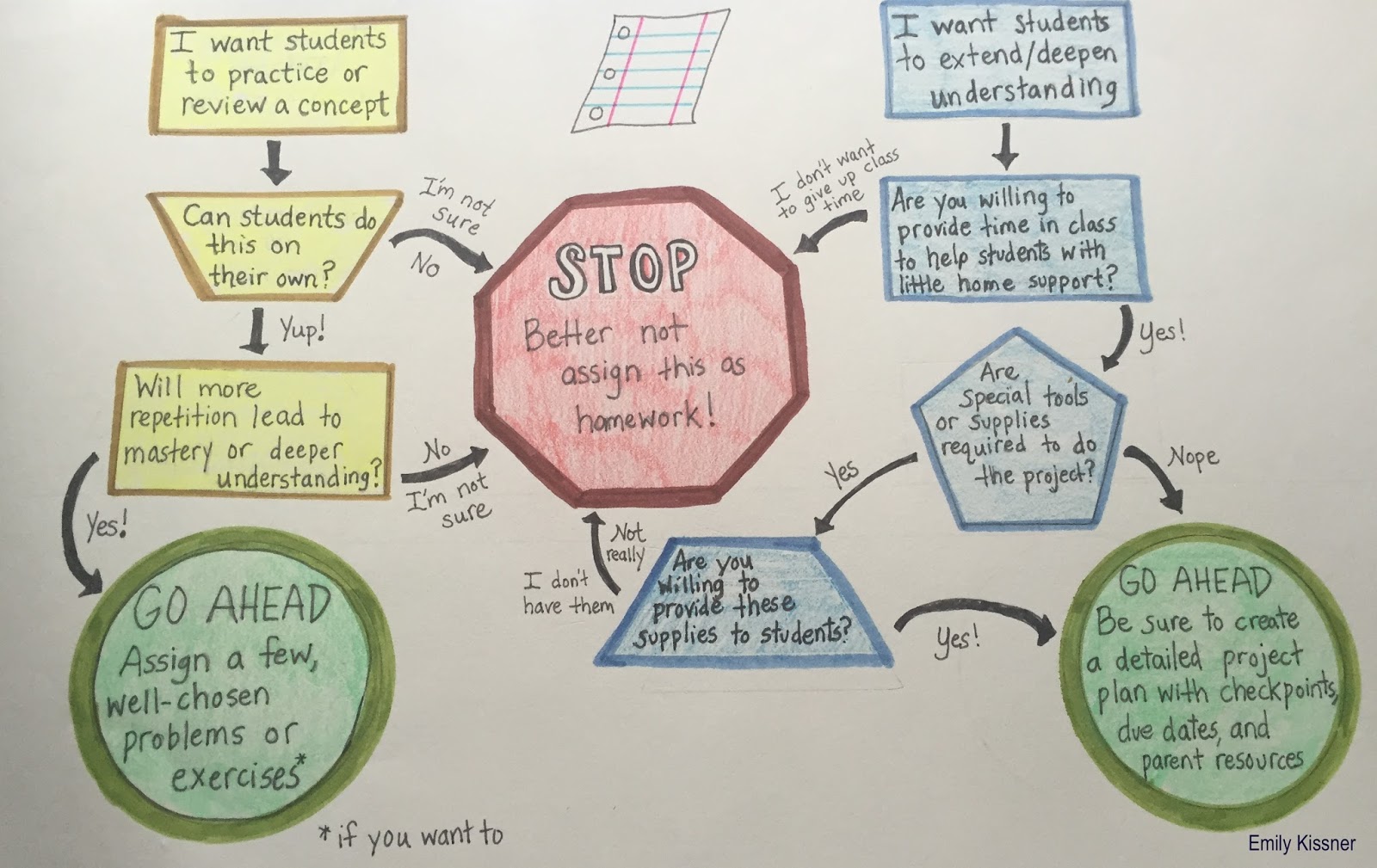
I sat down and made a flowchart to represent what I think about as I plan homework. Notice that I start with two different possible goals. Students can do homework to practice or review a concept, or to extend and deepen understanding. Each one of these goals brings up new questions to consider.
Sunday, December 27, 2015
Sunday, December 20, 2015
Books for Students
I just love to get new books for the classroom to share with students. This fall, I've worked to expand my collection of graphic novels and ratchet up the difficulty level of my library to engage sixth grade readers. My sons are both comic book fans, so I spend lots of time in comic book shops browsing for new books.
Here are some of my favorites:

Roller Girl by Victoria Jamieson
I don't always have the opportunity to read with students during independent reading time. Too often I'm working on attendance, finding my papers for the day, or helping students write summaries for our weekly narrative homework. However, last week I just had to sit and finish Roller Girl while my students were reading. It didn't disappoint! If your students have loved Smile and Sisters, this book will be a perfect addition to the shelves.
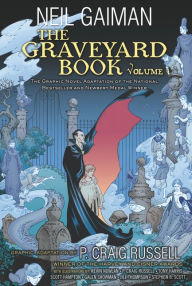
The Graveyard Book Graphic Novels
by Neil Gaiman and P. Craig Russell
Okay, this one isn't in the book orders. A student who has been devouring graphic novels asked for something "spooky" and "mysterious". I knew that The Graveyard Book would be just the thing, and luckily my fifth-grader son is awesome and sometimes shares books from his personal collection. Once I saw how much students liked this, I knew I had to get my own copies for the classroom.
At first, I thought that the value of graphic novel adaptations of novels was to make compelling stories accessible to students who may not have the skill or patience required to read the novel form. But now I see that, when done well, graphic novel adaptations can add a new layer of richness to an already rich text. Even a reader who has already read or plans to read the novel version can enjoy and learn from the graphic novel form.
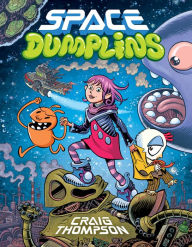
Space Dumplins by Craig Thompson
Whale diarrhea. In space. This is often enough to get readers to pick up Space Dumplins! I like it because it shows a different view of space life than many other books, and its bright, bold colors make it stand out from other graphic novels. Its a thicker book than many other graphic novels, which makes some readers nervous at first, but once they glance through the pages they see that they want to take on the challenge.
...and my students don't know it yet, but they are also getting copies of Hatchet as a gift before our holiday break! Here is a little poem that I wrote to accompany the gift:
As you get ready for the break (or maybe you are already on it, in which case I am a little jealous!), I hope that you take some time to read and relax as well. Have a wonderful holiday!
Here are some of my favorites:

Roller Girl by Victoria Jamieson
I don't always have the opportunity to read with students during independent reading time. Too often I'm working on attendance, finding my papers for the day, or helping students write summaries for our weekly narrative homework. However, last week I just had to sit and finish Roller Girl while my students were reading. It didn't disappoint! If your students have loved Smile and Sisters, this book will be a perfect addition to the shelves.
The Graveyard Book Graphic Novels
by Neil Gaiman and P. Craig Russell
Okay, this one isn't in the book orders. A student who has been devouring graphic novels asked for something "spooky" and "mysterious". I knew that The Graveyard Book would be just the thing, and luckily my fifth-grader son is awesome and sometimes shares books from his personal collection. Once I saw how much students liked this, I knew I had to get my own copies for the classroom.
At first, I thought that the value of graphic novel adaptations of novels was to make compelling stories accessible to students who may not have the skill or patience required to read the novel form. But now I see that, when done well, graphic novel adaptations can add a new layer of richness to an already rich text. Even a reader who has already read or plans to read the novel version can enjoy and learn from the graphic novel form.Space Dumplins by Craig Thompson
Whale diarrhea. In space. This is often enough to get readers to pick up Space Dumplins! I like it because it shows a different view of space life than many other books, and its bright, bold colors make it stand out from other graphic novels. Its a thicker book than many other graphic novels, which makes some readers nervous at first, but once they glance through the pages they see that they want to take on the challenge.
...and my students don't know it yet, but they are also getting copies of Hatchet as a gift before our holiday break! Here is a little poem that I wrote to accompany the gift:
As you get ready for the break (or maybe you are already on it, in which case I am a little jealous!), I hope that you take some time to read and relax as well. Have a wonderful holiday!
Saturday, December 5, 2015
Collecting and Analyzing Data in Science
1. Get some growing objects! Here's a set from Oriental Trading that is WAY cheaper than the set that I purchased at a craft store. I got four holiday-themed items (penguin, snowman, Santa, tree), one per group in my classroom.
2. Introduce the students to the activity. I worked with small groups of students as the rest of the class did some volume measurement practice with this activity from Kate's Classroom Cafe. We discussed the activity and made some initial measurements, recording the length and mass of each item at the start of our activity.
3. Submerge...
I love the Amazon Basics kitchen scale that I bought for the class this fall. The $12 price tag means I don't have to worry when kids take it to different places in the room or weigh sopping wet penguins on it.
5. Discuss the findings each day. I started the conversation with "What do you notice?" and encouraged the use of scientific vocabulary like increase, greater than, and less than. Kids noticed that the tree lagged behind the others in growth, while Santa stayed true to form (much to their amusement!) When students expressed doubt at the data, as with Santa's growth, I encouraged them to take the next step and do the measurements themselves.
6. Graph. This will be our big task next week. I'm going to have students figure out the intervals and build the graphs from scratch, which will take some time. However, it's definitely something that sixth graders should be able to do! (Plus they'll get to use the fancy markers, which they love.)
I've been excited to see this unfold in the classroom and watch as the students get better with measuring length and mass. It's added a fun dimension to the sometimes dry "Preparing for Science" unit.
News and Notes
As my own kids and I were talking about the gingerbread man during holiday decorating, I got an idea for a story. What were the ingredients that caused the gingerbread man to come to life? And could someone apply the scientific method to making their own living gingerbread? I took these ideas into a fantasy world that I've been playing around with and "Dancing Gingerbread" was born.
Wednesday, November 11, 2015
Classroom Committees
This year, with my move to sixth grade, I've been having so much fun with classroom committees! They are a great way to engage kids in managing important classroom routines and processes. With committees, students take charge of various parts of the classroom.
What are committees?
A committee is a group of students focused on doing a job in the classroom. At the start of the year, my classroom had five committees: Library, Art, Science, Birthday, and Pencil. The library committee worked to organize our classroom library and set up book displays, the art committee made classroom art displays and contests, the science committee organized and displayed science materials, the birthday committee made a class birthday display, and the pencil committee organized classroom pencils.In the second quarter, we changed committees, and I made a few changes. Students requested an organizing committee instead of a pencil committee, and the birthday committee had completed their task of creating a classroom birthday display. We added a wildlife committee instead, with the job of taking care of our fish tanks and filling the feeders.
It's neat to see how committees evolve and change. The library committee started the year with one process for signing out books, but refined the process over a course of weeks. The art committee ran an art contest in the first month of school, but has now changed their focus to work with maintaining and organizing art supplies.
When do committees meet?
We have regular committee meetings once each six-day cycle, on a day when I have my homeroom for an extended period of time due to the schedule. Students request committee meeting time! I also give committees new tasks when needed--for instance, today members of the science committee organized our graduated cylinders.What happens when committees don't do their jobs?
This is what happens in real life, isn't it? Committees have trouble functioning, some groups don't follow through, and kids have disagreements. We work through it all! Sometimes I make quick decisions and act as arbiter, but more often I just listen and ask questions. Often in the answering of questions kids start to see solutions on their own.Committees are a great way to engage students in the daily running of the classroom. How do they work in your classroom?
Tuesday, November 3, 2015
Compare and Contrast Writing
Teaching students how to effectively write to compare and contrast is so important for teachers of all grade levels. Comparing is important for test-taking, but it's important for life, too. Readers of wildlife blogs want to know how cottonmouths are different from copperheads, foodies want to know the difference between cassia cinnamon and ceylon cinnamon, and teachers want to know how different basal series stack up against each other.
Kids can get better at writing to compare and contrast very quickly, making it a great writing project for November and December. Here are some suggestions for getting started.
1. Start by comparing real objects
Even older kids need concrete experiences! By starting with real objects, kids of all ability levels can learn how to systematically compare. Because last week was Halloween week, we used Hershey Hugs and Hershey Kisses, but you could compare anything that kids find interesting.
As kids compare, focus on using language such as similarities and differences to move kids away from terms like sames and differents.
2. When you move to text, discuss: What to compare?
Begin this conversation by talking about how students compared the real objects based on their physical characteristics. What could we compare in text? Be aware that what kids say (and don't say) in this discussion will reveal the gaping holes in your reading instruction. And that's okay, because you want to know about those gaps, right?
Hopefully, students respond with these kinds of ideas: form (poem, narrative, article, etc), author's purpose, topic, central idea/theme, point of view, tone, word choice, and so forth. Students probably won't know the exact words for all of these, but will remember talking about them at some point in time.
The big goal here is to make the shift from the physical world to the abstract world of talking about texts. If you don't hear at least a few of these abstract concepts, you may want to hold off on comparing texts and deal with this issue.
3. Use a graphic organizer
I've used them all: Venn diagrams, double bubble maps, charts. The actual organizer is not as important as the thinking that kids put into it and the modeling that you show. Right now, we are using Thinking Maps again at my school (yay!), so I am working with those.
You will notice that my students have used lots of color in making graphic organizer. My students are very visual thinkers this year and LOVE using different kinds of markers as they work.
4. Show clustered and alternated styles of writing, but emphasize alternating
There are two distinct methods of compare and contrast: clustered, in which details about each item are clustered together, and alternating, in which the details alternate back and forth. I like to show students each version, but focus more on the alternating style. This is more difficult to write, but easier for the reader to understand. (You can find detailed examples in my Sea Turtles Expository Text Mini-Unit)
I wrote about two of my favorite restaurants for my example. I recommend that you write your own little paragraph example--kids love to find out details about their teachers! In my example, I underlined details about Chipotle yellow and details about Montezuma's blue. Details that refer to both are green. (I wish I'd come up with it, but it was a kid's idea...he liked it so much that he created a similar color scheme for making his own double bubble map.)
5. Work with topic and concluding sentences
Kids will look at the topic sentences that you model and alter them for their own writing. Variations of the topic sentence that I used in my Chipotle/Montezuma's paragraph has turned up again and again in student writing. Something about this sentence (even though I only showed it on one day of instruction) was compelling and memorable for students. This shows that they are still shaky on writing topic sentences for compare and contrast paragraphs.
I'm not surprised that kids are struggling with topic sentences for compare and contrast paragraphs. Many adults struggle with this, too. Are we just writing for the sake of comparing, or is there a point to this comparison? If the writer doesn't know, the reader won't, either!
In my Montezuma's/Chipotle paragraph, I created the idea of "choosing" between the two as a reason for the comparison. This can be effective and easy for kids to understand.
6. Give kids lists of transitions to use as they write
Without access to strong transitions, students will revert to a "also/but" pattern. Having a list of transitions available to students challenges them to try phrases like "however" and "on the other hand". Creating this list is a good activity to try with students.
Tuesday, October 27, 2015
Meaningful Multiple Choice
Answering multiple choice questions doesn't have to be drudgery! In fact, multiple choice questions can have a place in an engaging ELA classroom. Getting kids to talk more about multiple choice questions helps them to move beyond "right/wrong" thinking and into looking more deeply at the text.
Reflect on the process of answering. Which questions were hardest? Easiest?
This is a great place to begin. I like to have students put a star beside the one that they think would be hardest, and a circle by the one that they think is easiest. Now here's the interesting part: Why? Listening to students talk about their choices reveals so much about their thinking.
Working in groups to answer questions
This works best with the really tough multiple choice questions, and when students feel comfortable with each other. As my students did this last week, I enjoyed circulating to listen in on conversations. In one group I heard a student timidly offer a (correct) answer, only to be overruled by the group. I called the student aside about a seemingly unrelated issue--and then I said, "You were right for #1! Why didn't you stand up for your answer?" It was neat to watch how the student returned to the group and re-started the conversation!
Some kids hated the questions in the item sampler, and it was easy to see why. Listening to them grumble good-naturedly about the wording of the questions was kind of fun for me.
Have students write their own multiple choice questions to reflect deep thinking about the text
The second part of this is the most important, because it is what provokes discussion. What is "deep thinking"? And how can we craft questions to reflect it?
In last week's groups, this led to some conversations about "tricky" versus "deep". The students were reading a version of Stone Soup from the PSSA Sixth Grade ELA Sampler. The man in the story asked the woman for several different food items. A question that presents lists of these items and asks students to choose the correct list would be tricky...but would it be deep? For kids, this was a satisfying and purposeful conversation as they grappled with where such an answer would be found. (Interestingly, the argument centered on how a reader would have to scan the text to find the information in question.)
Thursday, October 22, 2015
Summarizing Nonfiction...Again and Again and Again
It's been nine years since I wrote a book about summarizing, and I keep feeling like I learn more and more. This year, as I've moved back into sixth grade, I decided to start the year with frequent summarizing tasks. I'm teaching summarizing, but I feel like I'm the one who is learning lessons!
This year's summaries are based on a set of four expository texts about water. Each text has a similar structure and text features. My goal was to build on repeated experiences and frequent feedback to level up my students' summarizing skills.
Here are some of the things that I have learned (and re-learned!) so far this year.
Provide limited space for the summary
Conscientious sixth graders want to do well! In many cases, this means that they write summaries that are almost as long as the original text. There are two different profiles for the writer of the long-winded summary. On the one hand, you'll see kids who are proficient readers and have a large working memory produce these summaries. They just have a big capacity for details, and they understand everything in the text. On the other hand, some kids who are struggling but conscientious will create these summaries. They're not sure of which details are most important, but they want to please the teacher and so they put them all in.
My problem when I get these summaries? I'm too soft-hearted! These kids have obviously worked hard, and at the start of the year it's tough for me to hand them back for the kids to redo.
When I provide limited space for the summary, though, I let the lines do the heavy lifting. "Make sure your summary fits in the space," I say, and when kids ask for extra paper, I give them a small sticky note.
How much space should you provide? A good rule of thumb is to think about how much room it would take to write a sentence for each paragraph, and then add 3 or 4 more. This gives kids with big handwriting enough room to write a good summary without going overboard.
Teach students to chunk the summary process
Some students look at the article and think, "I can never summarize that!" In many texts, though, kids can use the headings to guide them through. This is especially helpful for chunking a summarizing assignment for students with learning disabilities. "Don't worry about the whole thing today," I tell students. "Let's just do this first chunk."
This also helps students who tend to summarize in a knowledge-telling fashion. These students write everything they remember about the text, in the order in which they remember it. A summary written like this tends to sound like a list of random facts instead of an organized summary. By reminding students to go back to the text, you can give them an anchor for their thoughts.
Beware the "about" summary
Around about the third summary I start to see the topic-based summaries creeping in. Students are becoming more efficient with their summarizing and decide to take a shortcut.
These are actually signs of good progress. Usually, I end up writing about twenty times: "Don't say what the article was about--actually include the information!" Once kids see the difference, they realize that the 'about' summary is quite empty of actual facts.
Look for growth over the long haul
The development of summarizing skill is a long process. As readers grapple with more and more complex texts, they need to see how they can wrestle ideas to the page to write a summary. Students won't necessarily become strong summarizers after one lesson, or two, or even three. However, the good news is that repeated summarizing can build comprehension as well. I like to think of teaching summarizing as test-prep I can live with!
Labels:
close reading,
common core,
expository,
summarizing
Subscribe to:
Posts (Atom)