Showing posts with label writing. Show all posts

Tuesday, August 17, 2021

Sentence Unscrambling: A Tool for Differentiated Grammar Instruction


     It's always tough to know how to start the year with a new group of writers...and this year brings more challenges than most. I'm planning to dust off a tried-and-true instructional technique that yields big benefits to both reading and writing: sentence unscrambling.

     Sentence unscrambling is just one of the four basic sentence composing techniques suggested by Don and Jenny Killgallon, authors of multiple texts and exercise books for teachers. When I use the technique in my classroom, I go a step further and use sentence composition activities to build reading comprehension skills as well as handwriting fluency.

    The great part about sentence unscrambling is that it can be tucked into small bits of the day, and it reinforces everything you want students to be noticing and thinking about as they write. Here's how I built an activity for my students as part of our first unit, in which we explore texts related to oceans.

Find or write a suitable sentence

     When selecting a sentence, think about constructs that students may find intriguing, but challenging. Sentences with capitalized words, interesting word choice, and multiple clauses make for good sentences at the sixth grade level. 


Break up the sentence into meaningful chunks

     These chunks will be what students unscramble. Keeping some words together helps students to see how sentences fit together and will help them in their next sentence composing activity, sentence imitating. 

    So how does this sentence split apart? Deep stays on its own, as an adverb showing location. Under the Pacific Ocean stays together, as a prepositional phrase. The main verb, lives, will be all on its own. Finally, the mysterious giant squid is a group of words that should remain together, as mysterious, giant, and the all modify the noun squid.


Scramble the sentence for students to analyze

     I always keep the first letter of the sentence capitalized, because this is a great clue for students to use as they analyze what could be going on. Otherwise, I try to just do a random scramble.


Analyzing the sentence

    When I introduce the sentence to students, I model how to read the different chunks and think about how the sentence could fit together. My sentence uses some inverted word order, so it adds a bit of a challenge. I encourage students to use a numbering scheme to keep track of their thinking instead of rushing to recopy the sentence. "Hm, which sentence chunk could be first? Ah, here is the one with the capital letter. Which could be next?"


Recopying the sentence

     This becomes a handwriting activity when students have to recopy the sentence correctly. Believe me, there will be some big surprises as you see how kids struggle with this! I always use lines that have a midline so that students can space uppercase and lowercase letters appropriately, and so that I can see who has a good handle on capitalization and who does not.

Differentiating

     Sentence unscrambling has so many differentiation possibilities! Of course you can have variations in the kinds of sentences that you offer. For example, in the above sentence, you could have some with the inverted subject-verb and some without, just to prompt a discussion about what's going on and why. You could also have some students create the sentences and do the chunking. 

     For students with OT concerns, I provide them with larger lines for recopying the sentences. Some students may also need to have the sentences cut up for them so that they can put them together.

Daily Sentence Writing

     If you would like a set of created activities, try Daily Sentence Writing!


Wednesday, January 18, 2017

I'm teaching a sonnet next week...

   I'm teaching a sonnet next week, and I'm not sure how I feel about it.

   Growing up I read my mother's literature anthologies, the thick books of poems and stories for seventh and eighth graders, and I read some of her college textbooks too. These books came from a dank room we called the library, but was really an unfinished room in our basement; what we'd call a bonus room today. Even now when I think of certain poems and stories I remember the damp smell of books that spent many years there.

   I read my mother's anthologies, but I had the good sense to skip the sonnets. I read some of the narrative poems--I was a sucker for a good story, the more blood and sorrow the better, and I loved encountering Lord Randal again and again in different books. But I really loved the modern poems, stripped of all but the most important words, like the ones by Gwendolyn Brooks or found inside the gift of a watermelon pickle. Perhaps I was a lazy reader.

   Or perhaps I just had the good sense to skip sonnets. Rhyme I could deal with, but only in the hands of someone like Robert Frost, and a poem written just to meet a set pattern of rhymes seemed an absolute waste of time. Plus sonnets tended to have extra words like O and I really didn't like that. Sonnets, in my opinion, weren't long enough to tell a good story or short enough to really grab my attention and leave me breathless.

    On my second or third reread of A Wrinkle in Time I did notice what Mrs. Whatsit said about sonnets, and it made me reconsider a bit. Maybe sonnets were not such a lost cause after all.


  So I consented to read a few sonnets, and while I still didn't like the form I could at least like some of the sentiments, especially in "If Thou Must Love Me..." by Elizabeth Barrett Browning. But I still skipped the sonnets in most of the poetry books I read. I think that, besides the form, I also was just too young to appreciate the themes. After all, what 12-year-old is really looking back on lost loves as in "What lips my lips have kissed" by Edna St. Vincent Millay? 

   And this is what gives me such pause as I think about teaching sonnets next week. Sonnets pose both a structural and a thematic challenge to young readers. They come from another age, an age when poems followed rules and when every word, carefully chosen, conveys a meaning that may not be initially apparent. Teaching students about reading a sonnet should take time, time to look at what a sonnet is and what it is not, time for students to move through the stages of disliking sonnets and into enjoying them.

    According to my basal series lesson plan, I have 5 total days to teach lyric poetry, sonnets, personification. Well, four days actually, because the fifth day is supposed to be for assessment.

   Which brings me back to where I began: I'm teaching a sonnet next week, and I don't know how I feel about it.


Sunday, January 8, 2017

Managing the Writing Classroom

 
   Most of the popular teaching techniques for teaching of writing are predicated on delightful optimism and rose-colored glasses. Don't worry about teaching to the test! Help every child discover the writer within! Everyone can be a great writer! If you just work on finding the joy in writing, every child will spontaneously write meaningful essays with sophisticated transitions!
 
    Being the deeply pessimistic person that I am, I can't believe these truisms. I have trouble getting to the end of an article about the teaching of writing without becoming consumed by guilt and worry, toxic feelings that I'm not covering enough, that I'm not keeping on pace with grammar, and that my students will do horribly on the next round of standardized testing.

    BUT I do have an optimistic inner voice, buried very deep and speaking very quietly. If I stand still enough and listen carefully enough, this optimistic voice tells me that there are some parts of my writing classroom that work, even for someone as deeply flawed as me, and that may be of use to other writing teachers.

    I'm going to write them down very quickly before I convince myself otherwise.

Clipboard Cruise
    While students are writing, I like to walk around the room with a clipboard. I write down different kinds of notes. Sometimes, I'm doing a progress check to see where students are in the writing process. On other days, I'm looking for patterns of student weaknesses or errors.

     I should probably put these notes in an organized form, or keep them in color-coded binders. Usually they just accumulate on my clipboard for me to peruse and consider as we move on in the writing project. Sometimes I forget about them until months later and find them and feel badly about myself.

    But my voice of optimism says that maybe the important part is not what I do with the notes, but that I take them at all. Taking the notes means that I am noticing what is going with the writers in my room. They are important in the moment, and I use each day's notes to plan for the next day's instruction.
   
Slow Writing
    In the traditional model of teaching writing, forms of writing steadily come down a conveyor belt of curriculum. The dutiful teacher looks to see what is next on the conveyor belt and teaches it.

    In slow writing, I still have to look at the conveyor belt to see which forms must be taught. However, I structure the class to work on several forms at the same time. Right now, for example, my students are doing background research for an explanatory essay about biomes. This essay won't be written until January, but students started researching biomes after Thanksgiving.

     The idea is that good writing can only happen with a wealth of knowledge and expertise, and that students need time to research and think about a topic before they produce. This is a slow method of writing, but it can help students to understand what it is to be a writer.

    As students were researching biomes they were also writing a narrative and doing some summarizing. Writers like to have several projects at a time to work on, because then they can procrastinate productively!

Insistence
     I've worked with editors who have absolutely insisted that I make certain changes to my writing. As a teacher I do the same. There is a place for insistence, even nagging, in the writing classroom.

    For example, in our work with narratives, I had a student who didn't add any dialogue. This wasn't a stylistic choice, but a stubborn one. This student wanted to be done with the assignment and didn't want to add dialogue.

   I'm sorry, but no. I insisted. I made him un-submit his piece of writing to add dialogue.

   Twice.

   Reflective teachers of writing are sometimes hesitant to insist that students add or change things in their writing. "It's their writing--I don't want to interfere too much," is something that I probably said fifteen years ago.

   But nope. I need to find the right way to interfere. I don't want to be a hated editor, but I need to be a meddling teacher.

Looking Busy
     Any writing teacher will attest to the value of this! Sometimes during writing sessions I need to get out of the way to let kids write. However, students often want to talk with me or ask for help. I don't like to tell kids that I won't help them, so I get out work to do and sit at a student desk. For some reason, the fact that I look busy encourages students to go back into themselves and use their inner resources to solve a problem that they may have asked me about.

    You have to be cautious with this one, though. Look too busy and you'll find that there's a student on the other side of the room who has gone fifteen minutes without writing a word. I like to punctuate periods of "looking busy" with clipboard cruises to keep students guessing.
 
Closure
    I like to end writing sessions with two questions:

Can anyone tell us about a writing problem that they solved today?

Does anyone have a writing problem that they couldn't solve today?

    These questions never fail to lead to interesting discussions. As I hear students talk about how they solved writing problems, I can start to feel--maybe-- a bit less pessimistic.

Saturday, September 10, 2016

The Potato Chip Rubric: Teaching Students How to Understand Rubrics


     Well, I've started my 20th year of teaching! I'm eleven days into the school year, and I just love my class. Because I moved from fourth grade to sixth grade I've had these students before, and it's just wonderful to see how they have grown and matured. Plus they are SO MUCH FUN.

    Another side effect of my move to sixth grade is that I've been looking back at my files and resources, rediscovering lessons that I taught before. One of my old favorites is The Reviser's Toolbox by Barry Lane. In this book, Barry Lane suggests talking with students about "the horserace of criteria" and working with students to create their own rubrics for something real and tangible.

    This sounded like the perfect plan for this week! I've started the year with Flood Warning (free) from my Summary and Analysis series. These include short articles with summary prompts and analysis responses.


    As students prepared to discuss and turn in their first response, I wanted them to really understand the rubric that my co-teacher and I would be using. For many students, rubrics are rather opaque tools that just don't make much sense.

    Enter the Potato Chip rubric! On Day 1, we talked about how we could create a rubric for potato chips. Here were some highlights from our discussion:

-What would we include on a rubric for potato chips?
-What makes the ideal potato chip? How do you know that you are tasting a really excellent chip?
-What score points would we like to have? (This led to a conversation of 3-point versus 4-point rubrics.)
-What criteria do we use to score potato chips? (Interested discussions at tables resulted from this--students debated whether "flavor" and "taste" meant the same thing, whether a potato chip's size should be evaluated, and whether we should just look at plain potato chips or included flavored chips.)

   Then, I connected the potato chip rubrics to our summary rubric. What criteria do we use to score a summary? Why? Students scored their own summaries using the rubric. "I never knew what a rubric really meant before," one student confided. "This is so hard," another student said.


    Could we rate apple cider using the potato chip rubric? I asked, and of course the students laughed at the idea of crunchy apple cider. Just as you can't rate apple cider with a potato chip rubric, you can't rate an analysis with a summary rubric. We discussed the differences between the two rubrics and students scored themselves on this one as well.


    Okay, so I could have stopped there. But what would be the fun in that? The next day, my co-teacher and I both brought in some potato chips for students to taste. We had blind taste tests and students used their own rubrics to rate the chips! Kids had so much fun, and of course the teachers did too. Students noticed how a chip could get an excellent rating for texture but not for taste, and vice versa. We also learned that a blind taste test can lead to surprising results--all of us expected to dislike the Lay's Classic chips, but those turned out to be a favorite of many! This led to conversations about how teachers often score work without looking at which student wrote the paper.

    Teaching students for a second time means that I've been able to dive into curriculum more quickly this year than in other years. But lessons like The Potato Chip Rubric are still important for the start of the year. These kinds of activities give our class a shared foundation and help to demystify some of the tasks of teaching and learning.


Saturday, January 30, 2016

Argumentative Essay Readers Theatre


I love using readers theatre scripts to introduce key concepts. Kids find scripts engaging and interesting; the script format leads to high engagement; and kids have a real reason to pronounce and use key vocabulary.

Writing these scripts makes me feel like I'm a writer on a 50s-era variety show. What madcap situation should I use? How can I put characters in an interesting situation? I work under some serious constraints, too. I have to make sure that the roles are fairly even, or squabbling will ensue. I have to make sure that key vocabulary is repeated by more than one character. And whatever situation I develop must come to a conclusion in two or possibly three pages.

This week I wrote a new script about argumentative essays. Like most of the scripts that I write, this one was born from necessity--I wanted an engaging way to introduce the parts of an essay. My goal was for students to be able to annotate an argumentative essay and mark the parts. This got me thinking about what the parts of an essay would be like, personality-wise, which led to the script.

It's silly, it's ridiculous, but it got the job done. After reading the script students were able to go into an argumentative essay (I used these) and mark the parts. The script also led to some great questions, like these:

-Can the counterclaim come in the introductory paragraph? (Yes, definitely!)
-Do argumentative texts have more than one claim? (Indeed! Why did the script have only one Claim?)
-Why is Conclusion so sleepy? (Why, indeed?)

Bringing the parts of an essay to life can be fun. Try it out! The script is free and can be downloaded here.

Other Readers Theatre Scripts


Sunday, March 29, 2015

Teaching Students How to Write Conclusions

    Writing conclusions is tough for young writers. Actually--who am I kidding? I don't think anyone likes to write conclusions. This makes teaching conclusion-writing intimidating for many teachers. "I know they shouldn't just recopy their introduction, but what else can I tell them to do?" one teacher said to me.

   There are lots of ways to teach conclusion-writing! In fact, my favorite way is to invite Nicola Davies to do it for me.

   Well, of course I can't actually invite her. (Wouldn't that be amazing?) But having a huge collection of her books is the next-best thing. Davies has a gift for conclusion writing. Not only are her conclusions musical and just beautiful to read aloud, but they are simple enough to help young writers think, "I can do this!" 

Revisit Main Points

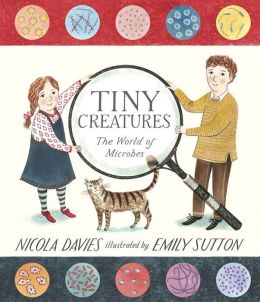
Over the winter I bought Tiny Creatures: The World of Microbes for science class. It is a beautiful read-aloud for teaching about microbes and their role in decomposition. However, I found double purpose for it by using the conclusion as an example of writing a conclusion by revisiting main points. 

The conclusion also engages the reader in thinking about what microbes are doing "right now"...which works well as a model for young writers.  The entire book is a quick read-aloud, perfect for a 15-minute conclusion mini-lesson.

End with the Title

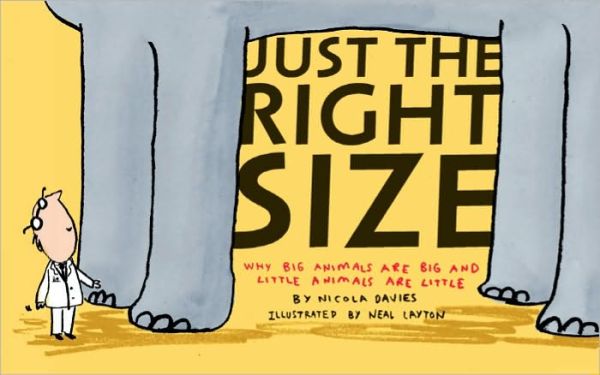
I love Just the Right Size. While I have successfully learned how to like spiders, the idea of giant spiders still makes me shudder. Thankfully, Just the Right Size explains why giant spiders can't exist. Whew! 

This book is a little more complex than Tiny Creatures, and is a longer read aloud. I used it with a fluency group before we read a series of math texts. We were talking about how authors signal big math concepts in math texts, and this book is a great example.

In this book, the conclusion also revisits main points from the text, but Davies structures it so that the conclusion ends with the title of the book. Young writers love this strategy. In the passage-based essays that students wrote this week, students had to explain how the text supported that wood frogs are "tiny forest survivors". Ending the essay with this same phrase was a natural kind of conclusion, and Just the Right Size models how this can be done.

Connect the Introduction to the Conclusion

I have to admit that this is my favorite technique for introductions and conclusions. When authors use this technique well, the entire piece of writing is neatly tied up and the conclusion feels wonderfully satisfying.

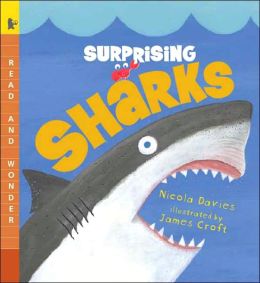
My guess is that Davies likes this technique, too! My two favorite examples of hers are Surprising Sharks and Big Blue Whale. 

In Surprising Sharks, Davies starts out by imagining a reader swimming in the deep blue sea, only to be frightened by hearing the word "Shark!" By the end, after explaining the amazing adaptations of sharks, their behavior, and the dangers they face due to humans, she turns this introduction completely around. It's clever, it's fun, and it totally supports her thesis...all things that we want to teach students how to do!

In conclusion...

Writing conclusions is tough for everyone. Giving young writers a formula keeps them from engaging with the challenge of writing conclusions. Instead, showing them how an author confronts the challenge, again and again, across different topics, can help them see a pathway toward writing a powerful conclusion. And it just might help the process of teaching conclusion-writing to be less intimidating for teachers.

Monday, January 12, 2015

Behind the Scenes: A Classroom Economy

I write a lot about individual lessons and activities, but sometimes I forget to talk about the deep routines in the classroom. One thing that I love is a classroom economy! It runs totally in the background of the classroom (well, usually) and solves many daily problems. Basically, kids earn tickets in various ways and then can use those tickets for different purposes.

How do kids get tickets?

The basic way to get tickets is to do a classroom job. For other ways, the answer differs as the year goes on. Early in the year I would give kids tickets if I accidentally called them by a sibling's name--much to the delight of my younger son! Sometimes I also give tickets for random tasks, like stapling book orders or cleaning up from a science experiment.

As the year has gone on,  students also get tickets when they remove 5 vocabulary cards (you can read about the vocabulary system here).  But most students earn tickets through contracts. How do they get the contract? Students see a problem in the classroom and write a contract to fix it. Right now students are passing out reading binders, doing the lunch count, taking care of the bird observations and bird feeder, erasing the whiteboard, and, yes, keeping track of all of the contracts!

Kids write the contracts themselves, which makes for interesting conversations and an authentic reason for writing. What do you intend to do? How often will you do it? Once their contract work is complete, they fill out an "invoice" that I sign.

How do kids use tickets?

So here are the things on our class poster:
-Switch seats for the day: 2
-Special chair: 3 (I have an old teacher's chair that they can borrow for the day)
-Stool: 2
-Stuffed animal for the day: 2
-Extra copy of a paper: 1
-Returning to class to get a forgotten item: 1
-First choice of recess equipment: 1
-Laptop use (kids have assigned days, so this is for extra): 3
-Popcorn Party for the class: 50 (kids can donate into an envelope)

I also auction things off once or twice a cycle. These things include donated little toys, books and bookmarks, school supplies, and other randomness. Such a great way to get those odds and ends into good hands!

What else happens?
A student wrote a contract for making the
morning message.


Well--it's different every year. It's always interesting to see how kids make the system theirs. I don't allow students to bring things from home to sell for tickets, although kids do try to do this every year. Sometimes kids start businesses. Right now, some students are making friendship bracelets and "selling" them during indoor recess. Another student is selling drawings. One student purchased the rights to a fancy set of fine line markers, and rents them during recess.

When students kept forgetting to move their lunch cards in the mornings, the student in charge of the closets proposed a win-win solution: If you don't move your lunch card by announcements, you have to donate to ticket to the Popcorn Party envelope.

During indoor recess, we found that we were going through construction paper at an alarming rate. A student came up with a tiered payment system. Now, using recycled classroom paper is free, while construction paper has a ticket cost.

The area by the door to my classroom is covered with student-created posters, advertising their various goods and services. Students are even considering marketing and how to connect with customers. After the Hour of Code, one student even offered computer programming lessons!

Potential problems

...are not actually a big deal. I say to students early on--this is supposed to be fun. And students really treat it as such. We talk about safe places to keep tickets and the need to be responsible. There are minor problems with dropping tickets here and there, but nothing major so far. And I've done versions of this for four years.

Some fun

All in all, our classroom economy is a great routine to have going on in the background. Lots of fun and room for discussion and growth!

News and notes
-I finally finished Exploring Point of View! This includes two original stories--one written in a shifting point of view, and the other written in first person point of view.


Thursday, October 9, 2014

What is high-quality writing?

    In the first few weeks of fourth grade, I am all about words on the page. It's like coaxing squirrels out of hiding--the classroom needs to be a gentle place, a place of calmness and smiles and happy things.
   But it can't stay like this. As a writer myself, I know that smiles and rainbows can only go so far. Writers sometimes need more than a nudge to move them out of comfortable habits and ineffective strategies.
    It takes some time to move from the coaxing stage into the working stage. To test the waters, I ask students a simple question: What is high quality writing?
    This year, as they called out their responses, I wrote them (as quickly as I could!) in the magenta marker. The responses at the top are the earliest ones. The ones on the right were taken from the bulletin board about our reading class.
    What do you notice? It's easy to see that they are focusing on the external characteristics of writing--what a piece of writing looks like.
    I've noticed over the years that this is fairly common in fourth graders (and probably most students). When asked the question, "What makes high quality writing?", they respond with the most outwardly obvious characteristics of a piece of writing.

    It was hard, but I didn't comment on what they said. Instead, I showed students a piece of writing that looks polished, but is obviously flawed. I wrote this piece "live"--I told students I should charge for admission!--to demonstrate that not every piece with periods and sentences is high quality writing. Of course I added some humor to keep their attention.
    Hands went back up in the air as students considered why the monkey piece is not high quality. Their new comments are written in blue.
    You can see that these comments focus much more on content and organization. My students have all had high-quality writing instruction, but they needed to see a poor example in order to access what they've already learned.
     The "support claims" idea was based on a student discussion about the use of opinions in my piece. "You shouldn't use opinions," one student declared. Others disagreed. Eventually I did help them with the language of "support claims", mostly because the longer, more convoluted way they were saying it would have taken me a long time to write.
    What did I learn from this? My students are still developing ideas for what makes high quality writing. I have to be very, very careful in my comments and feedback to promote an emphasis on content and organization. My students really really want to please me...but I have to make sure that we are working toward high-quality writing, and not just a piece that will make the teacher happy.
    Our next step was to work on paragraphs from Daily Sentence Writing. When students finished, I sent them to the chart to see if they noticed characteristics of high-quality writing in their own pieces. At the end of the class, I asked, "What did you do today to create high-quality writing?"
   Over the next few weeks, my goal will be to help students develop their own rubrics, rubrics that will guide them as they assess their own writing and the writing of their peers.
    (And I really do like pie.)

In your classroom...
1. Ask students, "What makes high quality writing?" Record their ideas.
2. If students seem to focus on surface elements, show a piece that uses correct punctuation and spelling, but lacks organization and a coherent ideas. If you don't feel comfortable with live writing, it's perfectly fine to create this piece ahead of time. After students read this new piece of writing, ask them to generate some new thoughts about high quality writing. Record new ideas in a different color.
3. (It might happen...) Students may not be able to generate any criteria related to content, organization, or word choice. In this case, 6 Traits lessons with great mentor texts are called for! I like the lessons at Writing Fix for this.
4. Give students time to write. Anything! Remind students to refer to the chart for qualities of high quality writing.
5. Ask students, "What did you do today to create high quality writing?" Encourage students to look back to the chart to describe what they did. In fact, you may even be able to add some ideas based on student responses.
6. Keep the chart visible in the classroom and add to it.


Monday, September 15, 2014

Science and Writing: A Natural Pair

Teaching science goes so well with teaching writing! Kids naturally enjoy learning about science. When they learn, they want to write...and they have to grapple with the best ways to express their ideas. Writing instruction blossoms from science activities.

But it's not always so simple, of course. It does take some planning, some preparation, and a big dash of serendipity to get the most out of the connections between science and writing.

Planning
We love visiting nearby parks and poking about
in streams together!

The planning may not always be what teachers typically think of as planning. It's not always writing essential questions in little boxes! Squeezing the most learning out of teachable moments requires a broad knowledge of both science and writing standards. In addition, I try to learn as much as I can about the background details of what I am teaching.

So I take every chance to learn about geology, animal adaptations, day/night, and seasonal changes...I know that I may have to draw on this knowledge to guide student investigations. Following scientists and museums on Twitter is an easy way to build my background knowledge. Luckily my kids like "adventuring" so we all learn together.

Informal activities
Science writing starts with the informal activities that I have in the classroom. Toads, crickets, and praying mantises are all highly motivating for students, and a great way to get kids writing. We draw pictures, add labels, and take notes.

In third and fourth grades, students have trouble generating data tables independently, so this is a task that I take on at first. I like to have a Bird Observation binder for students to record what we see at the window. When students take notes, other students sometimes ask questions: "What were they doing? How many did you see?" These are the kinds of questions that scientists as writers need to answer!


Trays set up for our litmus paper experiment.
Even a task as mundane as lunch count can be the beginning of science writing. I have a student keeping track of our menu items and # buying and packing each day. Today he came to show me an interesting anomaly in the data. Little does he know that this data will be used next week when we talk about drawing conclusions!


Formal activities
Scientists also need opportunities for formal writing. One thing that I have learned is that students thrive on real experiences and clear prompts. Last week, while learning about classification, students classified liquids as acids or not acids, using litmus paper as an indicator.

Because it is so early in the year, I offered students a writing prompt with a writing frame. In the prompt, students take on the role of science teacher and write to their principal regarding the importance of litmus paper. (Requesting supplies is a fairly common writing task for
scientists, of course!) The writing frame helps students to see the kind of formal writing and sentence structure used in this kind of science writing. Students also enjoyed signing their names as "Mr." or "Miss" at the end.

In future writing prompts, students will take on varying roles. We do these prompts about once a month, and they always relate directly to activities we have done in class. Engaging real life experiences enrich student writing. Students elaborate more and use richer vocabulary when they are writing about class experiences.

Advance planning, informal experiences, and formal writing opportunities help students to see the natural connections between science and writing.


News and Notes
-A new version of November Reading Homework is now available. Revised file numbers, minor formatting updates, and an end of month assessment are available.
-In my classroom this week, I'm using character traits materials from Character Traits and Emotions along with stories from Teaching About Theme.
-Check out the great tutorials on Frolyc! Frolyc is a way to publish activities to student iPads. Many of my texts are available. You can hear me explain how to build these activities on the YouTube playlist.

Friday, June 27, 2014

Synthesis and Writing from Sources, Part 2

Writing from sources doesn't happen overnight. Students need support, modeling, and scaffolding as they learn how to gather information, connect ideas, and synthesize new products.

In this second part of the presentation, several different low-stakes activities are suggested. Like lead-up games in physical education class, these activities help students to develop the underlying skills for strong synthesis. These activities also happen to be highly engaging for students, and they strengthen and develop critical thinking skills.


Writing from Sources, Part 2 from Emily Kissner

Which activities do you think would work in your classroom? What other activities have you tried to help students learn how to synthesize ideas?

Wednesday, June 18, 2014

Synthesis and Writing from Sources

On Tuesday I had the privilege of presenting a workshop about synthesis and writing from sources for my colleagues. We gathered around tiny kindergarten tables in the quiet school to share stories, information, and ideas. What fun!

I've been intrigued by the role of synthesis in student learning for a long time. How do we synthesize? How can we help students bridge ideas between topics and texts? Not only is synthesis required for writing from sources, but it is also the whole point of what we are doing in the classroom. Students will take the pieces of what we give them and what they gather to create something entirely new.

I decided to track down some of the key processes for synthesis. (Of course, gathering information, reading texts, and putting together the ideas into something new is synthesis. So meta!) Here is the first part of the presentation:


So, what do you think?

-Which of the skills of connecting, organizing, and selecting do you see as most difficult for your students?
-How does this help you to plan for successful writing from sources?

In the next part, I'll share some low-stakes classroom activities to build up these key skills. These engaging activities help to build a culture of synthesis in the classroom--and will make the task of writing from sources much more friendly for students.

Notes
-If you're looking for an easy-to-implement writing from sources task, try this Under the Sea nonfiction text set. A synthesis task is included. Introduction to Text Structure could also be used for writing from sources tasks.
-September Reading Homework is revised and ready for the new school year!
-Daily Sentence Writing 1 and Daily Sentence Writing 2 are both complete.


Monday, June 16, 2014

Writing from Sources

These are materials for the workshop presented on June 17, 2014. If you are interested in the folder of items on Google Drive, simply email me from your Gmail account.


Discussion of the Common Core Shift

Primary source sets from the Library of Congress

Kindergarten writing from sources: How do you say hello?

Animal video observation form


Animal cam links


Monday, May 19, 2014

Writing, Revision, and Peer Response

At the end of the year, fourth graders are confident writers who long for independence. They no longer come up to brainstorm every sentence with the teacher--instead, they want to sit down and get to work on a piece of writing.

My goal as a writing teacher early in the year is to provide as much support as possible in the early stages of writing. By May, I have pulled back on the level of support.

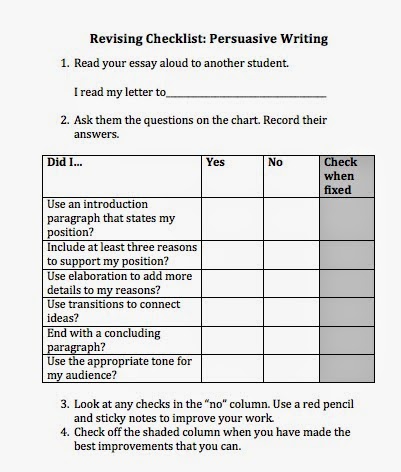
However, clear directions are essential to successful peer response. Last week, students worked with partners to revise their persuasive letters to third graders. I used a peer response frame that follows the pattern we've used all year.

The best part of May, however, is that students will check off "No" and have conversations with their partners. Several students discussed their conclusions: Are two sentences enough? They tried to bring the question to me to referee, but I sent it right back to them. What do you think? What is the job of a conclusion? How should a conclusion fit in with the rest of the piece?

Students have finally learned where to find all of the materials and move around the room to gather what they need. (We're running out of sticky notes and pencils, though!) They don't mind when I assign them partners and work readily with everyone.

And I watched this unfold last week with a bittersweet satisfaction. This little civilization that we've created together is coming to an end. Just as it comes into full flower, the last days of the school year loom over us like a shadow.

Oh, well. These final writing pieces, the artifacts of our classroom, are going to next year's students--a little piece of the civilization handed from one group to another.


Saturday, May 17, 2014

Formal Academic Writing + Student Creativity

The Common Core expectations are high for student writing. Students in third, fourth, and fifth grades are expected to write formal informational and persuasive pieces, using introduction and conclusion paragraphs. As a teacher, I appreciate the need to help students write longer and more complex pieces...but I also want to help them expand their creativity! To teach some of the basics of formal essays, I love to use the genre of expository fiction.

Expository Fiction
    Expository fiction is text written using expository text structures, but with fictional details. Your students are probably reading these books without even realizing it! Star Wars: Epic Battles is one common example--this book explains the epic battles from the Star Wars universe in an informational way. Fictional battles, expository structure. Many of the Pokemon handbooks are the same way, as are books like The Care and Feeding of Sprites.
   Expository fiction is fun. The details are interesting and imaginary, but the structure is real-world and businesslike. What better way to introduce the conventions of academic writing?

Design A Land


 I first started doing this project years and years ago, and I've refined it over time. The basics are simple: Students create their own imaginary country, and then write an essay to describe it.

   But this simple description can't capture what really happens during the experience. Students go deeper with their details, collaborating with each other to dream up new ideas. Students try out different genres, writing narratives to tell stories about their lands and travel brochures to invite tourists. Students learn new vocabulary words as they describe the features of their lands and how they came to be. It is the perfect extension of early childhood play into middle childhood academics.

    Even better, this project also helped to integrate some important skills and concepts into language arts. Middle level writers are still struggling with capitalization of place names (for example, Chocolate river is a common transcription) and this project lends itself to repeated practice with this skill. Students write the place name on their maps, on their outlines, and in their rough drafts...I remind them to capitalize both words over and over and they get instant feedback.

    This also helped students to become more interested in landforms. During the mapmaking process I walked around with copies of United States maps to demonstrate landforms. "What is a bay, really?" was a common question, and I showed bays on the map. I also spotted a major misconception about rivers--students thought that they went from ocean to ocean--and we were able to look at some maps and talk about how rivers flow.


Fashion-A-Fish
    This activity from Project WILD (you can find one version of the lesson plans here, although there are many others if you search) is another fun project for expository fiction. Students create their own fish by combining characteristics. Different characteristics are best suited for different habitats and habits, and students then dream up more details to describe their fish. When I did this project several years ago, students pretended that they were biologists who had discovered a new species of fish and wanted to share their discovery with the world.

The Writing Lessons
    Throughout the entire process, my lessons focused on aspects of expository writing, such as topic sentences, transitions, and introductions. Because students had a deep understanding of their topic (it was their own creation!), they had more processing power to focus on these aspects of writing. Of course, they were motivated to write a strong piece of writing. I told them, "You are the only expert on your land! If you don't write about this, no one will ever know these details."

    Expository fiction is a wonderful way to engage young writers in formal writing. They can experiment with the forms and conventions of this kind of writing in a fun and engaging way.

Design-A-Land: Introducing Formal Essay Writing with Creativity is available from TeachersPayTeachers. It includes lesson plans, troubleshooting guides, and handouts to help students write strong essays.


Friday, May 9, 2014

Writing Introductions: Persuasive Text

Now that we are well into the month of May, students are working on persuasive writing. My fourth graders are writing to third graders who are coming to our school next year. It's a great focus for us as students have an authentic audience and a real reason to write.

Today we worked on writing introductions. Fourth graders can learn some key ideas about introductions, and can use good models to write strong introductions of their own. This page outlines the first part of the lesson:


I don't assign this as a standard worksheet--instead, it is the student text for our lesson. Having everything written down in one place is necessary for me, as students are often in and out for various reasons. A shared student text with all of the key vocabulary means that I can easily ask an instructional assistant or another student to highlight the key points from the lesson with anyone who has been absent.

After students learned about the parts of an introduction, they started to write their own. We are writing letters to incoming fourth graders right now to persuade them that they will enjoy our school. (Kids are very excited to write for this audience about this timely topic!) Some students jumped right into the introduction, describing our playground, lunch, or intramurals in detail. Others had more difficulty.

I turned these struggles into our closure for the session. Students love bringing their writing up to the document camera to display to everyone. Today I asked, "Let's hear from those of you who struggled a bit as you worked."

I wasn't sure how many students would want to share their struggles, but about 10 raised their hands. One student said, "I had trouble with the concession bit, because I couldn't imagine what a tiny person would think." (Ah, looking back on the end of third grade with the lofty maturity of a fourth grader!) After students shared, they could call on other students to share comments or questions. A girl said, "I had trouble with the concession part too."

Another student volunteered to share his difficulty with writing a position statement, and another stood up to share her efforts to write an interesting hook. "I finally wrote something down, it's basic, but I think it will work," she said after she read her piece aloud.

It was a lovely writing session and a pleasant debriefing time, the kind of moment that exemplifies end-of-year fourth grade. And it was a little bittersweet for me because I know that our little classroom community is coming to an end...only 20 more days to have conversations like this.

Notes
-The entire persuasive writing unit can be found here.
-This Frolyc activity, ready to send to student iPads, helps students to analyze persuasive text.

Saturday, February 22, 2014

Three ways to move beyond "I'm going to tell you about..."

    When I taught seventh grade, I couldn't believe how many students used this phrase as a topic sentence. Was someone teaching this?

    Moving to fourth grade gave me a new perspective. As I worked with younger writers, I saw how "I'm going to tell you about..." develops, and why some teachers may let it slide now and then. Some young writers jump right into the details of a topic, without any introduction or preface.

   Writers with a stronger sense of audience awareness know that they have to do something to introduce the topic. "I'm going to tell you about" is then a logical way of beginning a paragraph. Like many young writers, this structure is terse and to the point. When it first appears in a student's writing, it represents a valid way to solve a problem. As a fourth grade teacher, I feel a grudging respect for what I despised so much in seventh grade.

  While I acknowledge the utility of "I'm going to tell you about," I know that I need to help students move forward. Here are three ways to help students move into more sophisticated expository writing.

1. Use writing frames
I love writing frames because they help students to see the language of academic writing. When students have to write to respond to reading, they often fall into an "I'm going to tell you about" pattern because they have trouble generating the abstract language they need. A writing frame can show students one way to enter a response.

Of course, the risk develops that students will see a writing frame as a simple "fill in the blanks" activity. When I introduced the frame to the right this past week, I had students read it aloud together, inserting the word "blank" at every blank. It was fun. Then we highlighted the topic sentence and talked about how it worked for the paragraph. (This activity is part of January homework and texts if you are interested.)

2. Write topic sentences together
  We are currently working on a month-long (decade-long? It sure feels like it with all of the snow days!) writing project. Students are designing their own island countries, and then writing an expository essay to describe it. So many different skills intersect in this project, from the art of creating the maps to the writing of the essay.

  Often, the writing of an essay becomes independent classwork or even (gasp!) homework. I never send writing home for homework. Sometimes students love to write and want to write at home, which is awesome. But the writing of topic sentences, especially for students in grades 4-7, is too important to send home. Students need lots of models and lots of support for this.

  I model the writing of a topic sentence with sample details. Here is one that we tried on Friday.

  I designed it so that the space for us to write our main idea is above the details. This matches the way that main ideas are usually at the beginnings of paragraphs.

  I read the details aloud to students, and then asked, "What do you think this says about the weather of Delphinium?" I asked students to work with partners to come up with one word to describe the weather--awesome, horrible, dreadful, bananas, delightful, and so forth.

  After this, I called on a few students to share. One said, "The country of Delphinium has interesting weather." This is a very basic topic sentence, but it is a step beyond "I'm going to tell you about.." The next student arranged ideas in a different order: "Delphinium's weather is pretty unusual." Having students come up with one word was very helpful.

  Some students have resisted this--"Isn't that an opinion? A teacher told me I shouldn't write opinions." I'm pretty sure that no teacher has ever said this. After all, writers take positions and then support those positions. A piece of writing that is only facts would be very dry indeed.

  ...And this process takes longer than you may ever dream possible. The more examples, the more opportunities to talk through details, the better. As we research Antarctica, students will use the same process to write about their research. Over time, the topic sentences break out of the "____ is interesting" mold and become more lively.

3. Showcase mentor texts
  Showcasing mentor texts also helps to speed up the process. Choosing texts, however, requires some care. Often the expository picture books that get published and publicized are the ones that mix up the traditional format. Where are the topic sentences? Where are the paragraphs? While these are great to read and share with students, some nice mid-level models are helpful too. The books of Franklyn M. Branley are excellent, as are articles from Ask and Muse.

   While sharing these texts, I like to talk about them in terms of problems and solutions. How did the author deal with the details? Where is the topic sentence in the paragraph? How does the author move from one paragraph to the next? After these discussions, students often start to experiment with their own topic sentences. By the end of fourth grade, a few of them are using pretty strong transitions between paragraphs, and using the topic sentence to move from one idea to the next.

Integrate all of these strategies
   All of these strategies can be used concurrently! Last week we created main ideas in the morning and wrote to a writing frame in the afternoon. Next week we'll look more at mentor texts while students will be creating their own main ideas. The more that students see and talk about main ideas and topic sentences, the more likely they will be to internalize this kind of structure and move beyond "I'm going to tell you about."

Notes
-If you're looking for more on main ideas, you may like this: Main Ideas and Details in Nonfiction Text.
-This slideshow about Topics and Main Ideas can help students to understand topics and main ideas in reading.

Sunday, January 5, 2014

Formal and Informal Language with Thank You Letters

The holidays are over! Of course, being in Pennsylvania, I had school on Thursday and then a snow day on Friday--not really the smoothest start to the new year. In January I am forever behind where I think I want to be.

But that single Thursday of instruction did let us finish up all of the personal narratives that students have been working on since October, so we can start fresh on Monday. After the holidays, I love taking a break from longer pieces of writing to write thank you letters. These little pieces of writing can provide so much mileage for instruction--formal and informal language, letter form, and addressing envelopes.

This year I've put together a little presentation with examples of formal and informal language. The text boxes don't work properly in the embed and I'm not particularly motivated to fix it right now, but you'll find it downloads just fine.


In our daily sentences, we'll be working on switching back and forth between formal and informal language--lots of fun for kids! Intermediate readers enjoy the humor of controlling their speech and tailoring it to the right situation.

One of my wonderful colleagues suggested adding one of the popular Sprint commercials to our first lesson. (Not all of them are school appropriate, so do be careful if you choose to use them.) The humor in this commercial actually comes from the mismatch between the formal attire of the actors and the informal language they are reading. As we watch it together, students will use whiteboards to record some of the examples of informal language used.


Our work with thank you letters will end with a chilly trip to the post office, which is right down the hill from the school. Each year that I've been doing this students have had less and less experience with actually mailing letters--hardly surprising, of course--and the process of putting the address on the front of the envelope. (Don't even get me started with the problems with placing the stamp!)

If you are writing thank you letters with students, be sure to send a note home to parents asking for stamp donations and the correctly written address of the person to whom students will be writing. I also get parent permission for students to use their home address for the return address. Most parents respond very favorably to this. Students who don't return to the parent letter write to someone at the primary school using our school's return address, which works out quite well.

This video helps students to understand the mail sorting process and appreciate the journey that their letters will undergo:


As I said, you can do a lot of teaching with a simple thank you letter! This quick little unit gets us refreshed and ready for the more rigorous essay writing that we will undertake at the end of the month.

Notes
January homework is ready! Four texts with comprehension questions, vocabulary activities, and open-ended responses. This month's texts are:
-Winter Is...a poem that I wrote when I was feeling rather annoyed with winter. My feelings haven't changed.
-Blizzard Warning!...an informational text about the Northeast blizzard of 1978.
-Happy Australia Day!...an informational text that compares and contrasts Australia Day (January 26) with Independence Day.
-Fairy Bread...a procedural text that tells how to make this Australian specialty. I read about fairy bread while researching Australia Day, found the incredibly simple recipe, and just had to share it. Here is a picture of the fairy bread that I made:


I wasn't sure if I liked it or not, but I had to keep trying it to check. Hmmm....

If you are interested in specific resources for thank you notes, you can find a mini-unit here.

Sunday, November 3, 2013

Writing Frames and Open-Ended Responses

Ah, the joys of open-ended responses. They can be frustrating to students and teachers alike. On the other hand, they can also be exciting and interesting, giving students a chance to show off a little bit of creative thinking. This year, I am working on helping students write the passage-based essays that will be on our new state tests as well as the shorter paragraph responses that are on our current tests. Testing aside, though, the writing of open-ended responses is important for its own sake. Being able to write about a text in an informed way is a necessary skill for a literate individual no matter what the testing environment.

Helping students to write these kinds of responses can be challenging. In fourth grade, students are expected to use formal academic vocabulary. For many of my students, this formal vocabulary is entirely foreign. Writing frames are a great way to build their skills with formal writing.

Introducing writing frames
Writing frames have a long history in teaching writing. (For more research, check out David Wray's list of articles. The one from 2000, "Developing non-fiction writing: beyond writing frames", explains some cautions to keep in mind when using writing frames.) The idea of a frame is simple--you give writers an outline for how to structure a piece of academic writing.

I like to start with frames for writing about our shared activities as a class. Here is a frame that I wrote for students after we attended a concert assembly. When students returned from the assembly, we discussed the frame. What do you notice? What do you think you should put into the blanks? Students then wrote their own paragraphs in their writing journals.

Early experiences with writing frames do go more smoothly when students are writing about experiences instead of texts. When the details are already in their minds, they do not have to juggle going back and forth between text and response.

I've found that writing my own context-sensitive frames works better than using pre-made frames. It's worth the effort to try to write the piece in my head and then figure out where to put the lines for student responses. Notice that my frame to the right uses a colon as punctuation. This is not something that most of my students use or even notice. I included it as an experiment to see which students could find it and how they would incorporate it into their own writing.  Many of my students had problems with the transitional phrase "in addition"--they simply did not know what it meant.

Of course, students had the choice of whether to use the frame or not. Many looked at the frame for some elements and included their own sentences as well. After we wrote the paragraphs, one student (chosen by the popsicle sticks of destiny) filled in the blanks on my frame, while another student looked up the musicians' website and added illustrations. The completed work can then be displayed.

Frames for text-based writing
The next step, of course, is to use frames for text-based writing. There are times when duplicated frames that students can write on directly are useful. I wrote this frame to go along with a story that students read. This prompt was rather difficult, as it asked students to complete two different tasks.

I like to include both easy blanks and more complex blanks in my frames. I do have some students who struggle with writing to the point of tears. The first sentence is such an easy task (just fill in the title of the story) that students can feel some success before diving into the more difficult thinking required by the prompt. When formatting frames, I always use double spacing and picture the handwriting of my student who writes the largest. There are still times when students want to write more than will fit in the blanks, but I show them how to mark with an asterisk * where they want to add more, and use another piece of paper to do so.

Much of the literature on frames advises teachers and students to use frames as rough drafts only and have students rewrite their responses. However, I am trying to do open-ended responses each week. Rewriting the entire response would take approximately 1.2 million years for some students, and I just don't have that kind of time. Instead, I settle for having students read the entire frame aloud to me.

Moving away from frames
Writing with frames goes so smoothly that it is tempting to have kids keep doing it. But of course it is our job to diminish the supports over time so that students write independently. A good first step to doing so is to offer a choice. Last week, students had the choice of using the frame or not in their response. (I did tell them that using the frame meant that they could not get the highest score on the rubric.)

Some students asked, "What if I look at the frame, and use some of it, but write it all myself?" Well, that's just wonderful! Of course that is fine! So I did see many hybrid responses. Interestingly, the readers who did not use the frame had serious trouble with crafting a topic sentence. This shows me that I need to spend time on this in the future. Students who used the frame had no trouble adding "cool" or "interesting" to finish out the topic sentence.

Another way to move students away from a frame is to project the writing frame on the board, but not give students a copy. Some students will look up at the board and use what is given, while others will not.

As the year goes on, I vary what is given to students on the frame. Sometimes it will just be a topic sentence and concluding sentence. Sometimes the frame will include the information and have students fill in the transitions. All of these variations help me to see what kinds of writing techniques are within the grasp of students and which are still developing.

Writing Frames...as a Genre?
I have a fabulous class this year with some very creative kids. Some have started a Skylanders Club in which they meet to discuss the game at recess. Well, one student asked if he could type up some homework for students in the club. I was amused to notice that his "homework" included a writing frame for other students to complete.

I love it when our classroom genres make it into student writing, because it shows that an essential shift has taken place. The writing frame represents an expert to novice genre. When a student takes it over, that student takes on the role of expert. (How did the kids in the club take the homework idea? Surprisingly well. In fact, they ask if they can do their club homework during quiet time or choice time in the day. It is fantastic.)

Resources
-The writing frames used above (and two others) are included in my October Homework Packets.
-Summary frames are included in selected activities in my text structure materials: Chronological Order, Description, Cause and Effect, Problem and Solution, and Compare and Contrast.