Showing posts with label inferences. Show all posts

Thursday, July 5, 2018

Setting Graphic Organizer

As a reader, I love texts with rich, detailed settings. Talking about setting with readers leads to great conversations as we talk about:

-How does the setting contribute to the plot?
-Could this story have happened in a different setting?
-How do the characters interact with the setting?
-What is the mood created with the words describing the setting?
-How does the setting change over the course of the story?
-(For historical fiction) What details about the time period can you learn?

With older readers, it's hard at first to help them understand that setting includes both the time and place of the text. Students want to just name the first location mentioned in the story and be content with that as the setting. But often, it's more helpful to name a generalized location.

I like to use this setting graphic organizer to help students notice and collect setting details. It scaffolds students to think about both the time and the place, and helps students to think about how the details connect to the setting as a whole. It's marvelously adaptable because we can put in the time and the place first, and then look for details to support them. We can also find details first, and then use those details to infer the broader setting. (I wrote more extensively about making inferences about setting in The Forest AND the Trees)


Time and place setting from Emily Kissner

For classroom-ready activities dealing with story elements like setting, you might like:


Friday, June 5, 2015

Making Inferences: Resources for Teaching

"What do you have for making inferences?"

When I read this question, coming just at the end of school, I knew that I needed to create a post to gather together all of the resources that I've made for teaching inferences. And there are quite a few! Over the years, I've found that teaching students how to make inferences is essential for building reading skills. It's fun, too!

I have another reason for wanting to look over my inference resources--I'm moving to sixth grade next year! I'm excited to move down the hallway and see some of my former students again. I'm also excited to look at the resources that I have and think about what I'd like to use with older students.

Making Inferences, Making Meaning Presentation (free)
This presentation is a great place to start. In the slides, I explain different kinds of inferences with examples and teaching tips.


Building Mental Models (free)
This printable is a great tool to use to see how students in grades 2-4 are doing with making inferences. Should Zomack put liquid on the box with the moving pictures? Watch kids carefully as they work on this with a partner--kids who laugh and say "No way!" are visualizing, while kids who struggle may need some more work on this skill.

Visualizing PowerPoint and Activities ($)
With students, I love to start teaching about inferring with visualizing. Think about it--writers never tell every single detail needed to imagine a place. Instead, they rely on the background knowledge of the reader to fill in some of the necessary information to make a visual image.

This resource pack includes teaching tools for teaching about visualizing, as well as stories and activities for independent practice.

Making Inferences with Transitional Readers ($)
This unit includes texts for readers in grades 2 and 3. The texts are easy to decode, but require some level of inferring to figure out what is going on. I've had really great experiences with teaching "The Magic School", a story with embedded questions. These questions help students to see where they should be making inferences.


Making Inferences: Antarctic History (free)
I created this resource to help my students as we learned about Antarctica. This text includes both text-based inferences (like pronoun/antecedent) and more complex reader-based inferences that depend on a reader's background knowledge.


Character Traits and Emotions: Making Inferences ($)
I've loved putting this resource together, and I love teaching it. Making inferences about character traits and emotions is an important skill, made even more so by the current emphasis on complex text and more sophisticated literature. In this resource, you'll find lots of teaching materials that you can use to help students realize that they can make these inferences "online"--while they're reading--and that their understanding of the text will be enriched by these inferences.


Figurative Language PowerPoint and Activities ($)
Interpreting figurative language requires some strong inference skills! This resource includes lots of practice to help readers understand how to interpret figurative language.

Text-Based Inferences and More ($)
This resource pack includes a set of texts which require readers to make specific text-based inferences, as well as some assessments and PowerPoints. Kids have really enjoyed the "Max Mission" spy texts. Similar formatting and storylines across four short texts help students to quickly transfer skills from one text to another.

Blog Posts

Here are some blog posts that I've written over the years.

Making Inferences in Nonfiction
Questions Lead to Inferences: I firmly believe this. If kids aren't making inferences, guiding them to asking questions of text is a great place to start.
Visualizing and the Common Core
Scaffolding the Inference Process: Lots of suggestions for picture books
Inferences with the Inference Chart
Suffixes and Inferences: Surprisingly, they can go together!


Saturday, April 11, 2015

Examining Character Motives

   Why do characters do what they do?
    This is a big question for intermediate readers. Sometimes, they don't even know the motives behind their own actions! (Dealing with an indoor recess squabble--"Why did you do that?" Student: "I don't know!) 
    Because our reading homework text this week focused on "Theseus and the Minotaur", I decided this was the perfect time to examine this question. After all, there are big questions of motive in "Theseus and the Minotaur"! 

Implied or Stated?

    A character's motive can be implied or stated--and it's important for readers to know the difference. I modeled reading to find the difference between implied motives and stated motives with our read-aloud, Fair Weather. I just love this book! It seems that no matter what I want to teach, I can find it in the books of Richard Peck.

This year I've been keeping a daily log of our reading with the Promethean board, which makes a handy flipchart and a great way for us to keep track of our thinking as we read. After we read the day's chapter, we talked about the actions of the characters. What were their motives--their reasons for doing what they did?

A quick chart showing action and motive can illustrate this. Intermediate readers sometimes try to write the same statement for both action and motive. This reveals a bit of where they are developmentally---they confuse action with reason behind the action. In the chart to the right, it took a bit of discussion before students stopped restating Granddad's action and started guessing at his motives.

We put question marks behind these motives to show that we were guessing at them. These motives are implied in the text, and as readers we had to make inferences to figure them out.  This contrasts with Mama's motives for sending Lottie and Rosie to Chicago--this motive is stated right there in the text, as she wants to "nip it in the bud" Lottie's romance with a neighboring farmhand.

In a novel, readers have to play a long inference game, and we might have to wait a few chapters before we see how our inferences pan out. That's why keeping track of our thinking all along is so important!

Independent Practice

Students then worked with the familiar story "Theseus and the Minotaur" to make some guesses about character motives. (The story and the page are available in February Reading Homework.) I like having a partially filled out chart to scaffold students for success. This activity led to rich discussions between partners. Why did Ariadne betray her father? Why did Theseus go to Athens as a volunteer? 

Most importantly, students had to go back to the text to find evidence to support their thinking about motives. A few groups had put their stories away and tried to complete the task without looking back to the text. I didn't intervene at first, hoping that they would get to a point at which they would realize independently that they had to use the text. Fortunately, they did! And it's so much better for students to come to this conclusion on their own than for it to just be something that I tell them.

I knew the lesson was successful when students started thinking beyond the text. "Why did King Minos build the labyrinth for the Minotaur, anyway?" one student asked. Their version of the myth did not go into detail about this. "And why did he leave Ariadne behind?" another asked. Hopefully once Percy Jackson's Greek Heroes comes out they will be able to find their own answers to these questions. 

The lesson had another layer of success--suddenly students wanted mythology books to read. Any lesson that leads to independent reading books flying off the shelves is brilliant in my book!

More on the reader-based inferences used to figure out character motives can be found in Chapter 6 of The Forest and the Trees.


Saturday, February 28, 2015

Making Inferences in Nonfiction

It sure has felt like Antarctica at school this week!
    As intermediate readers move into more complex, dense informational texts, they need to make more and more inferences. Talking about these inferences and the thinking behind them is essential.

    I created a new text with embedded questions to help readers get to this level of inferencing. Embedded questions are great for helping readers to notice key details in texts. The text is chunked so that it looks less intimidating, and readers know where they will find the clues they need to devise answers.

Visualizing
    Visualizing is a kind of inference! After all, authors never explain all of their details in a description. Authors depend on readers to fill in critical details from their own prior knowledge. In turn, those details help readers to fill in other gaps in a text.
    Consider the text at the right. How did people try to find a southern land mass? The word "sailors" is a key here. 

  1. Read the text aloud with students.
  2. Ask students, "Can you find the sentence that helps you to visualize how people tried to find a southern land mass?" Some will be able to; others may be confused by the mention of Greeks at the beginning of the passage.
  3. Demonstrate underlining the sentence. 
  4. Think aloud: If sailors tried to find Antarctica, what would they be using? Ships! Would they have modern ships? Why or why not? Students may recognize The Age of Exploration as a clue to the time period, or they may not. 
  5. What other details from the text could we add to our visualizations? Icebergs, sea ice
    This led to such interesting questions and comments from students. Some students didn't recognize that "southern land mass" refers to Antarctica. Others started wondering--why didn't the sailors steer around the icebergs? Why was the sea ice such a problem? I followed up with a video from my Antarctica playlist to answer their questions at the end of class.


Pronoun/Antecedent Inferences
    Pronoun/antecedent inferences are essential to understanding expository text. Often, students have trouble tracking these, especially when the pronoun is in a different sentence from the antecedent.
    In this example, we marked the text with arrows to show the relationship between the pronoun and the antecedent. This helped to prepare students for the inference question: What is the name of one of the three research stations? 
    If this seems remarkably easy, I assure you that it is not simple for many struggling readers, especially ELLs. We had to discuss whether the station would be "Nathaniel Station" or "Palmer Station", and why! 
 

    Making inferences helps readers to put the pieces of a text together. These kinds of inferences need to be explicitly taught and discussed. 
    To make your own embedded questions, take a look at some informational text that you are sharing with students. Cut it apart and add inference questions--visualizing, pronoun/antecedent, text-based inferences, and reader-based inferences. How do your readers respond? 


For more on kinds of inferences, you can see Chapter 4-7 of my book, The Forest AND the Trees: Helping Readers to Use Details in Texts and Tests.

Here is the Antarctica text that I used in my lesson:


Making inferences from Emily Kissner

Notes
Looking for more texts to compare? I just finished Spring Paired Passages, which includes texts about weather sayings and tulips. Great for test prep, but with interesting enrichment and extension possibilities as well!


Sunday, July 20, 2014

Start the School Year with a Focus on Dialogue

In our curriculum, we start the school year with stories and story elements. I love this beginning as it helps us to talk about big ideas like theme and summarizing. But I also realize that, to help students figure out these big ideas, sometimes we need to focus on smaller details.

One of these small details is dialogue. In a story, dialogue can serve many purposes. Sometimes dialogue shows us insight into a character's personality or motives. Dialogue can also move the story forward and reveal information. Skipping over dialogue would lead to a fractured reading experience.

And yet...many young readers have great trouble in figuring out who is speaking in dialogue! The tiny clues to skilled readers use to match speaker to speech are invisible to many young readers. They don't notice the paragraph breaks or the empty white space at the end of lines. They can't track split dialogue. When speaker tags are not included, they have trouble following the back-and-forth of a typical conversation.

Figuring out who is speaking is a kind of text-based inference. Readers need to combine the clues in the text with their background knowledge of how text works. And this is hard! Even readers who are on and above grade-level can struggle with dialogue. 


1. Find out what kids can do with reading dialogue
I like to sit with kids as they are reading. Sometimes I listen to students read, and sometimes we read aloud together. During these conversations, I ask, "Who is speaking?" or "How do you know who is talking at this point?" These conversations help me to figure out the sub-conscious rules that students are or are not using to figure out who is speaking.

2. Model understanding who is speaking by displaying read-aloud text
With a document projector or overhead projector, show students the text that you are reading aloud. I like to make little sticky note tags or even little sketches of the characters to display at the same time. Then, I go back and forth to show who is speaking at each point. It's fun to engage students in this as well.


3. Label dialogue in text
This requires some colored pencils. Give students a copy of a short piece of text, and talk explicitly about the rules of dialogue. What does it mean when a new paragraph begins? How can we tell that a person is still speaking? Underline dialogue by different characters in different colors. 

You can extend the conversation by talking about what the dialogue reveals. Does it show us what characters are like? Reveal details of the plot? An example of this activity is included in the Literature Circle Materials below.


In the past I saved some of these lessons for later in the year. This year, though, I think that I will face them early on. Understanding the little rules of print and the conventions that authors follow will only help us as we begin our exploration of stories and narratives.

Some other lessons for teaching about text-based inferences and understanding dialogue can be found in my book The Forest and The Trees.

Character Traits and Emotions: Making Inferences: This unit includes an activity in which students write dialogue to show character traits.

Text-Based Inferences and More: This pack includes more resources for teaching text-based inferences.


Tuesday, November 12, 2013

Analyzing Story Elements

Analyzing stories is a tough task for fourth grader. First they have to read and understand the whole of the story. Then they have to analyze the elements of the story, often making inferences about characters, setting, and theme. Finally they have to put this analysis back into the context of the story as a whole.

Over the past few weeks we've been working hard to analyze stories. With different groups of readers, this takes on different aspects. In one group we worked on literature circles with picture books. Here are the pages that I put together for students. Notice that it is a highly structured literature circle, which is very much what fourth graders need at this time of year.


Picture book literature circles from Emily Kissner

Our books included my time-honored favorites from other blog posts: Weslandia, The Memory Coat, City Green, My Rotten Red-Headed Older Brother, and Dragonfly's Tale.

I love having students ask each other to share text evidence. When we did discussion groups, it was wonderful to see students holding the books open, lifting them up, and referring to specific page numbers. After their discussions, students worked to complete the open-ended response to write about the theme of the story.

With a different group of students, we analyzed setting during guided reading. This graphic organizer helped students to collect details about the time and place of the story.


I like how this graphic organizer can be used in two ways. When a setting is known, students can extend their knowledge of the time period and location by using this graphic organizer. When the setting is not known, students can gather details about the setting, and use those details to infer the time and place. (You can read this blog post from two years ago for more on how to infer a setting.) The details on this graphic organizer helped students to think about how a different setting would change the events of the story.

Analyzing story elements is an endeavor that takes students deeper into a story, helping them to think about deeper meanings. A strong foundation in this kind of thinking will also yield great results when students begin to compare stories in the weeks ahead.


Thursday, August 23, 2012

Word Roots Powerpoint

What a busy two weeks! I've been working to get my classroom ready, learn new curriculum, and get my house in order for the start of school. Here are some progress reports:

Spelling Lists
Earlier this summer, I wrote that I had finished a master word list. This list of over 1000 words includes words from the Academic Word List, the Fry list, and the Common Core, organized with data such as syllables, syllable types, word roots, idioms, and multiple meanings. I've been using this list for various purposes throughout the summer--generating spelling lists, looking for important vocabulary words, and finding word roots. If you'd like a copy, please let me know.

The next step was to create a body of spelling words. My hope in making the word list was that we would be able to create a seamless spelling and vocabulary program, a program based not on the random words that fit a pattern, but on meaningful words that share similar characteristics. So far, I'm three lists into creating the rest of the program. (It's a time-consuming process--words, homework assignments, assessments, lesson plans.) If you wrote to me earlier and would like some of these lists, please write again. :) 

Word Roots Powerpoint
The third spelling list is focused on word roots. I want to teach these early so that we can continue looking at patterns of meaning throughout the year. To help kids understand what word roots are, I created a simple Powerpoint presentation. It will be free on TeachersPayTeachers until August 30.

Character Traits Powerpoint
I also want to start looking at character traits very early in the school year. I made this presentation to show students what character traits are and how we can find them through exposition, dialogue, and actions. I wanted to make sure that the presentation includes differentiated practice--there are some questions that all kids will be able to answer, and others that offer more of a challenge. Again, this will be free until August 30.


Thursday, April 12, 2012

Scaffolding the Inference Process

Last time, I wrote about modeling the use of a chart for tracking inferences. This week, students were in charge, working in pairs or triads to read a book and create the inference chart. It has worked fairly well. Here are some things to keep in mind if you are trying to help struggling readers make and record their inferences.

Selecting texts
I chose texts that were quite easy for students. With this lesson, I wanted them to concentrate on making inferences, not struggle with decoding. At the same time, the texts need to have some meat to them.

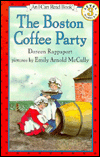
The Boston Coffee Party
A fabulous bookroom find! I like this one because it's an easy read, but has some lasting questions to think about. The illustrations are informative and engaging.

Sam the Minuteman 
Another good find with a Revolutionary War theme.

My Rotten Red-Headed Older Brother
Some students had already read this earlier this year, but there is value in going back to a book, especially for the purpose of making and tracking inferences. It's been a favorite of the groups who have been reading it.

A Chair for My Mother
This book is good for some students. The flashback in the book makes the narrative a little more complex, even though the text is quite simple.

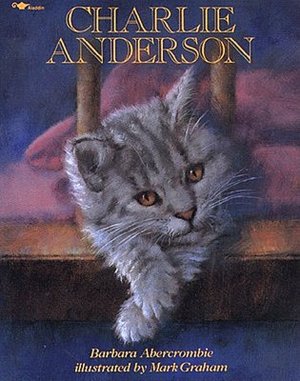
Charlie Anderson
This cute book has a surprising ending. Great for the animal loving kids!


Scaffolding for Making Inferences
But even with good modeling and great texts, some kids really struggle. This is the hardest part of making inferences--getting kids to animate the process. In fourth grade and beyond, there are some kids who are happy to read the words aloud and not go any further.

To help the kids realize that they need to make inferences, I put Post-Its at different spots in the books. (This actually isn't as time-consuming as it sounds. I quickly did this while the students were doing independent reading, putting questions in only one book per group.) For some groups, I wrote a specific question (How do you think the character feels? What trait could describe___?); for others, I just put a note that said, "Make an inference here."

Tools for Students
I love, love, love giving kids lists of related words. This emotion chart is another good scaffolding tool for students. They really do refer to it as they read, looking for the words that capture their inference. It's always encouraging to hear kids talking about whether a character would feel "depressed" or "grief-stricken" in a given situation, referring to the text to support their ideas. A character traits chart is also helpful. These tools give them more support in making inferences.


Listen in, but don't help too much
If I have chosen appropriate books and built the proper scaffolding, I shouldn't have to help groups of readers too much. Instead, I go around and listen to the conversations that kids are having. I want these readers to grow and become independent--I need to step away and let them do this on their own. (For me, this is probably the hardest part!)

As I listened to kids, I did hear a few weird inferences. This doesn't concern me as much as it once did. I think it's part of the practice process, reflecting a bit of risk-taking for the reader. When kids read together, they'll often talk each other out of these weird inferences.

Why the inference chart again?
Part of my goal is to help students realize how often they are making inferences...and be able to identify both the text clues and their own background knowledge they are using. The chart is a great low-risk tool to help them do this.

Monday, April 9, 2012

Inferences with the Inference Chart

As students work on making inferences, I like to show them how to use an inference chart to record their thinking. The chart I use is based on the one in the Comprehension Toolkit by Stephanie Harvey and Anne Goudvis, with a few minor changes. I put the "Inference" column on the left, with "Text Clues" and "Schema" heading the other two columns. I use the term schema because it's a word that is used in third grade, and is familiar to my students. This column could also be called "Personal Knowledge" or "Background Knowledge".

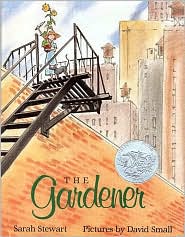
To model the chart, I have to choose the absolute best book to share with students. With some groups, I use the book The Gardener by Sarah Stewart. This book is loaded with opportunities to make inferences, from the pictures to the text.

But with some groups of readers The Gardener just doesn't work as well. For students with attentional difficulties, there are just too many places to make inferences in this book for it to be effective for whole-class modeling. When I model an inference chart, stopping to write too often can be disruptive to the flow of the story.

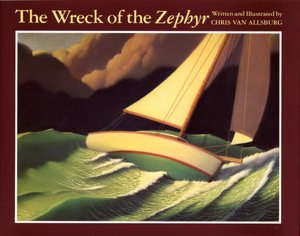
This year, I tried The Wreck of the Zephyr by Chris Van Allsburg as an alternative. It worked perfectly! We made about one inference per page. The story is rich, with opportunities for deeper thinking, but not so complex that it was difficult for students to understand.

I modeled the chart on the Promethean board instead of on a chart--it's easier for the students to make the transfer to what they will be doing. Here is what the chart looked like halfway through the story:

Kids often have trouble with the "Schema" column. They don't realize how they have to simply write down what they already know. As I model the chart, I try to show students how the Schema column simply comes from their own minds--for example, the things they know are true, or the explanations for character traits. 

Hopefully students will remember how this works after break! If not, well....luckily Chris van Allsburg has written many books, so I can try the whole thing again. :)


Wednesday, March 21, 2012

Fiction Inferences: Character Emotions

Our state testing has provided a nice way to transition from our study of text structure into fiction inferences. As I look ahead, I'm excited to be going back to learning about character emotions, delving into character traits, and trying out literature circles.

Springtime fourth graders are so different from autumn fourth graders, which makes the study of literature exciting. They are can find details in stories that they couldn't see before, grasp some deeper ideas, and make some new connections. It's a great time to be a fourth grade teacher.

Making inferences about emotions and traits
It's important for students to be able to see how they can make inferences about characters and traits. But many readers are limited by a meager vocabulary. When I give readers organized lists of words, they can see the shades of meaning and make stronger inferences. (And word lists are such an efficient way to help students learn many new words at once!)

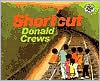
For example, I shared the word chart below with students as we read the book Shortcut by Donald Crews. We talked about how the children's initial worried feeling deepened to panic when they jumped off the tracks to avoid the oncoming freight train. When students work with these lists with their partners, their talk includes deeper, richer language: Are the characters anxious or relieved? Are they content or cheerful?


Other good books for looking at emotions:

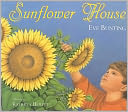
Sunflower House by Eve Bunting

My Rotten Red-Headed Older Brother by Patricia Polacco

I Will Surprise My Friend! by Mo Willems

Squanto's Journey by Joseph Bruchac


Saturday, February 25, 2012

Narrow Reading to Widen Comprehension

Variety, variety, variety. This is what we should be pushing students toward in independent reading--a broad range of genres and texts. Right?

Well--maybe not. In the last few years, I've come to appreciate the value of "narrow reading." (This article by Stephen Krashen is an excellent introduction to the term.) While narrow reading is often suggested for ELL students, I think it has great value for emergent and striving readers as well.

What is narrow reading? Consider the case of my youngest son. This year, every single book he has checked out from the library has been an animal nonfiction book. Every single one. As he has become a more confident first grade reader, he has found words and ideas that appear in every book--animal, baby, habitat, predator, prey. These words that show up again and again have become his cornerstones for decoding other unfamiliar words. His narrow reading is not at all limiting to him. In fact, it's empowering.

A student in my reading class has done something very similar. This year, he has read my entire collection of Horrible Harry books. "Harry's not quite so horrible in this book," he told me one day. He knows the characters and the settings of the books quite well, allowing him to allocate more mental resources to track the plot. (He tried a Secrets of Droon book today--I hope he likes it!) Another student, an ELL reader, has been working on The Spiderwick Chronicles since October. Yet another student has taken the fourth grade equivalent of Aidan's track, reading every animal book that I have in my classroom.

Narrow reading has a role in instruction, too. As I've been wrapping up text structure, we've been reading a series of related texts about vernal pools. These texts have different text structures, but show similar main ideas and vocabulary. This is so helpful for struggling readers, especially in the area of making inferences. Many students have trouble with making inferences because of a lack of background knowledge. When we read related texts, these students get the background knowledge they need about the topic.

 As we were doing a repeated choral reading of "Salamander Crossing", I decided to ask an inference question based on the morning's science lesson.

"Do you think that mole salamanders are nocturnal, or diurnal?" I asked.

Because the text mentions mole salamanders migrating at night, the students were able to answer this fairly easily. But one student said thoughtfully, "Why are they nocturnal, I wonder?"

Another student--one who often struggles with answering multiple choice questions--blurted, "Because of moist." When we looked at him, he added, "You know, they have to stay moist. They're salamanders."

Those of you who work with struggling readers know that this is what we live for. Unprompted question, unprompted response, unprompted support for that response--these are the actions of real readers. In this case, our narrow reading gave these students the mental space to try out these more sophisticated reading strategies.

But now, as the ice melts and I start to think about going to look for salamander eggs in the vernal pools, our focus changes--from text structure to a return to fiction. Over the next few weeks, as state tests tromp through our days, we'll take a closer look at making inferences in fiction.

Tuesday, November 1, 2011

Making inferences: Setting

Well, we're finally moving on to story elements! This year, I'm trying to work on two thorny setting issues--the issue of multiple locations in one story and the issue of understanding time as a component of setting.

Problem 1: Multiple locations
In the primary grades, setting is often described as one location--the barnyard or the house or the playground. As students get older, though, they often have to describe more complex settings. A story might start in one location, and then move. The reader needs to collapse this list of different places into one overall setting.

Today, I started by practicing collapsing lists with my students. We started with easy ones: mango, pineapple, orange, apple (fruit); basketball, softball, golf, tennis (sports); table, chair, lamp, sofa (furniture). Then we looked at how this could work with setting: hallway, cafeteria, library, classroom (school).

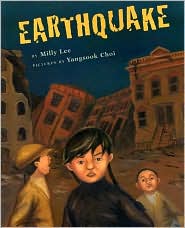
To show students how this works with a text, we read the book Earthquake by Milly Lee. I love this book because it tells the story of the San Francisco earthquake in a very simple, powerful way. And "San Francisco" never appears in the main text!

We made a list of the locations shown on different pages: the family's living room, their apartment, the street, Chinatown, Golden Gate Park. Then, we tried to collapse the list. This required them to pull on their background knowledge. (We had read a play about the San Francisco earthquake the week before.) Some groups pulled on this experience, while others used their knowledge of the Golden Gate Bridge. The important thing, however, was that they were able to collapse the list of small locations into one main setting.

I love how simple this lesson was, and yet how important. It brings together the idea of collapsing lists with making inferences with story elements. Wonderful!

Problem 2: Setting as time
Well, the setting is the time AND place of the story. But many readers are a little too literal with their statement of time. Instead of "1906" as the time for Earthquake, a reader might write, "in the night and the next morning." This is a big problem, because a reader who is thinking of time on such a micro-level may not notice important dates and might fail to add big ideas to their schema.

I decided to make a graphic organizer to show a timeline. When I handed it out to students, I didn't explain anything--I just said, "What do you notice?" Working with their partners, they found all of the important elements: that it shows how time goes in one direction, that there are little pictures to show past, present, and future, that it includes words to help you find the time of a text.

What about fairy tales? It's so hard to show how they fit in. I decided to show how they are off the timeline. Fairy tales and fantasy take place in another time, often with elements of the past mixed in.

After we read Earthquake, we talked about how the setting is not just the location, but also the time. Students easily found that it took place in the past--once again, by drawing on their background knowledge.

I love it when things come together in one lesson. And a great book makes it happen even more easily!

Monday, October 24, 2011

Plugging Away with Making Inferences!

Just like I wrote about last time, we're working on making inferences in reading class. It continues to be a challenge for my students, but they are so enthusiastic and upbeat that it is a joy to work with them.

I've expanded my search for interesting resources. This week, we sang along with the kids in this video:


To help students see how they make inferences all the time, I showed this commercial favorite. We talked about what was happening in the commercial. How could they tell? What clues could they use? This really got the boys in the class thinking and talking--they were so excited to share their background knowledge!


Other resources
I also realized that I have some items scattered all over the place. Here are some other resources that I've created that may be useful:

The Magic School (story, free)
This story presents embedded questions for students, so that they have to make inferences all through the story.
Using Schema to Make Inferences (Powerpoint, free)
I wrote this presentation to show students how important it is for them to activate their schema before they read, so that they can make inferences quickly and easily.
Character Traits and Emotions: Making Inferences (unit, $3.00)
This includes stories and activities to use to help students make inferences about character traits and emotions.
The Forest AND the Trees (book)
Doing the research for this book helped me to understand how important it is for students to pay attention to small details so that they can make inferences.
Teaching Visualizing (blog post)

Saturday, October 15, 2011

Making Inferences

As I looked ahead at the story elements unit, I realized that I had to do some work on making inferences. After all, telling kids to make inferences about the setting of a story won't make much sense if students don't know how to infer!

But where to begin? With this group of readers, I want some quick success to build their confidence. I decided to start with text-based inferences, taught along with some visualizing. As I wrote about in The Forest and the Trees, text-based inferences are those that depend on a knowledge of how text works. Finding the speaker in dialogue, matching pronouns with antecedents, and using specific clues from a text are all examples of text-based inferences.

Visualizing, on the other hand, is a form of reader-based inference, which depends on a reader's background knowledge. Why is visualizing a form of inference? No author ever tells every detail about a passage. Instead, a reader needs to bring some background knowledge to the text in order to form a visual image.

Critical Facts and Rules
As I researched The Forest and the Trees, I came across an interesting journal article. This article, authored by Philip Winne, Lorraine Graham, and Leone Prock, explains how struggling readers learned to make text-based inferences with the help of some carefully written texts and immediate feedback. The study is on the older side (1993), but I couldn't help but see how the methods described could help my students. Readers don't need a whole lot of background knowledge to make these inferences. And the process forces them to look closely at the details in the text to explain how they make their inferences. Great stuff for my students!

Sadly, the journal article only included one example text. So I wrote a set of my own texts to use with students next week. I chose a spy theme, since the Jack Stalwart books are popular with my readers right now. (If you haven't read these books, they are lots of fun for transitional readers--great gadgets and action, all in a supportive text.)

The texts that I wrote (on a sunny Saturday, when I should have been doing math plans) set readers up to make text-based inferences. A rule is presented early in the text. Then, the character is faced with choices, along with a good deal of distracting information and a hidden critical fact. The reader needs to match the rule with the critical fact to make an inference.

I plan to teach Mission #1 on the whiteboard, showing students how to make the inference using the rule and the critical fact from the text. Then, they'll work on Missions 2 and 3 with a partner, with a lot of supervision. Finally, they'll work on Mission 4 on their own. 

This kind of inferencing is a great first step for transitional readers. Once students get good at finding these text-based inferences, they'll be ready for the next step into more open, reader-based inferences. And--hopefully--ready to have some brilliant discussions about finding the setting in a story!

If you try these mission files with your class, I'd love to hear how they work!

Tuesday, April 12, 2011

Changes in Character Emotions

As students work on literature circles, I try to introduce ways of thinking about a text that can apply to multiple novels. One fun chart that we've been using lately is a chart that shows changes in a character's emotions. This kind of chart creates a neat visual summary of the emotional journey of a book. (Note: I didn't come up with this idea. I totally forget where it came from! I couldn't find any charts online, so I made a new one)


First we read the story Shortcut by Donald Crews. If you don't have this book on your mentor text shelf, it's certainly worth it! It works on many levels--as a personal narrative, a model of creating mood and suspense with sentence variety, and, as in this activity, a quick read aloud.

Then we went back through the book and talked about how the children might be feeling at different points. Students went back to their emotion word charts to do this! We created a map that showed the different emotions of the children in the book. (A few students decided to illustrate it during indoor recess.) If you've read Shortcut, you'll see that this really represents what happens--the kids start out happy and playing, are terrified as the train approaches, and end up relieved and subdued.

After we practiced with the read aloud, students used the chart to map out the main character's feelings in the short story "Juggling". Finally, they tried it out with their own literature circle books. The results were tremendous. Not only were students finding more specific emotion words, but they were also matching story events to emotions in a very visual way.


You can download the initial chart for Shortcut, as well as a blank form for any story,  here at Slideshare.

Saturday, April 2, 2011

Text Set for Making Inferences

Don't you love it when everything just comes together? This week, as I reached for good picture books for teaching inferences, my choices happened to come together in a way that helped students to think about broader issues.

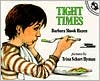
I picked up Tight Times at our library's used book store. I remembered it from watching Reading Rainbow as a child (ah, Reading Rainbow!), and I knew that it was a bargain at $.50. Even though it is meant for younger readers, it worked nicely for making inferences. We stopped and talked about what "tight times" means, how we could use the illustrations to make inferences about the parents' feelings, and what we could figure out about the narrator. (The narrator of this book, who is not named, wants a dog, but his parents tell him he cannot have one because of tight times. Things get worse when the father loses his job. But then the boy finds a kitten in a trash can, and the boy's parents decide that he can keep him.)

"But I didn't like the ending," Mandy said. "The book was so sad at parts, and then it just ended with something funny. I didn't like that." What a great observation! I turned back to the last page and we talked about the ending. (In a way, I have to agree with Mandy.)

When we looked more closely at the last few pages, though, we saw that the illustrator was telling us a little more to the story. "Look! The dad is looking at the newspaper!" Michael noticed.

"What do you think he's doing?" I asked.

There was some puzzlement as students talked about this with their partners. Some students obviously knew about want ads and the classifieds; others did not. "Maybe he's just reading a comic to cheer up?" Keith guessed. This is a classic example of how inferences depend on background knowledge. Luckily, other kids spoke up. "There are lists of jobs in the newspaper," Favia said confidently. "He's probably looking for a job."

On the next page, students noticed that the parents looked happier, and guessed that maybe things were better. "Sometimes the illustrator tells you things that the author does not," I said.

The Gardener by Sarah Stewart, a perfect book for teaching inferencing, worked beautifully with Tight Times. I explained that it was told in letter form (I love stories told this way) and asked students to talk with their partners about these words:

Lydia Grace
1935
Mama and Papa
train
Uncle Jim
windowboxes
bakery
the gardener

"Which words might relate to the setting?" I asked. We talked about the bakery, and the train, and students' guesses about who the gardener might be. "What's a windowbox?" asked Luke. We talked about what a windowbox is and how it related to the story.

This book leads to some great opportunities for making inferences. I was modeling an inference chart (three columns--inference, story clues, background knowledge) and this book was perfect. We weren't three pages in before students started buzzing about how this book was similar to Tight Times. I know that things are working when they start naturally comparing texts--without questions, without probing, without my intervention. "Yes, but the boy in Tight Times didn't have to go live somewhere else," I overheard. "I'd hate to do that!" someone else whispered.

My class this year is very visual, and they helped me to notice some new details in The Gardener--like the way that Lydia is always shown in the light, and how that matches her character so perfectly. "There were things like that in the pictures in Tight Times, too," Maura said. "Like how the dad was looking in the newspaper. And there are cats in both of the books."

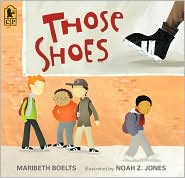
Next week I'm going to expand the inferring into theme, and I've already picked out Those Shoes as a good read aloud for this. What has worked out so well is that, even though I've been officially working on making inferences, these books have given us a chance to dive deeper into making connections and looking for broader themes in text.

Sunday, March 27, 2011

Text-based inferences: Who's Talking?

As we move past state testing and into the last months of the year, I like to have students work in literature circles. Literature circles are a great way to get kids talking about their books and engaging with text.
For my transitional readers, though, the literature circle books I've chosen present some new challenges. In Misty of Chincoteague and Bunnicula, there are exchanges of dialogue in which the speaker is not identified. While I'd like to believe that all of my students have mastered the ability to pick their way through tricky dialogue, I know that this is not the case.

To help them work through the dialogue, my student teacher and I tried this simple activity. After talking about ways that we know how different characters are speaking, we gave students a short snippet of a story and directed them to use colored pencils to underline the dialogue of the different characters.
What a revealing activity this is! Identifying the speaker in dialogue is, after all, a kind of inference. This inference is text-based--that is, it pulls on the reader's background knowledge of how text works. As I talked with students about their work, I was able to gain some insight into how they thought about text. "How did you know that this was Robert?" I asked one student.
"Oh, well," he said. "There were already two people in the kitchen, and then someone else came in. So I pictured him coming in, and then I just knew that he had to be the older brother." Here, I could learn much about how this student was processing the text--he was visualizing the setting, and tracking the movements of the characters. These are the skills he needs to be successful with understanding a story.

But I learned about problems as well. One student underlined the entire first five lines. "But, ___, why did you underline so much? There are no quotation marks," I asked, a little puzzled.

He answered, "Because she's the one who's telling the story, right? So she's talking." Oh! In this case, the student had mistaken the narration of the first-person narrator for dialogue. Think about how this changes his perception of the time of the story and how it unfolds. I grabbed a new copy of the page and tried to explain. "She's the one telling the story, yes. But it's not the same as dialogue. Look, the dialogue is down here--see, with the quotation marks? That's how we know that different people are speaking."

He dutifully took the colored pencil and underlined where I had shown him. But I could tell that he still wasn't convinced. And I was falling down the rabbit-hill of teacher-thinking: trying to figure out how he was building his mental model of the story, and how the time of the first-person narrator was different from the story-time, and how perhaps I should have used a third-person text for this activity, but that maybe it was better to have a first-person text, because now I knew this was a problem, and how this would impact teaching the writing of first person narratives, and maybe this was why some kids were so resistant to adding dialogue to those narratives--because they thought they were already using dialogue.

Lots to think about there! And that, to me, is the hallmark of a great classroom activity--situations like this that get me thinking about all of those spaces between what we think we teach and what kids are actually thinking and learning.

If you'd like to give this activity a try, check it out below or download it here. (And there is more about teaching these kinds of text-based inferences in my book The Forest and the Trees, if you want to know more.)

Wednesday, March 2, 2011

Poetry Picture Books for Making Inferences

When teaching poetry, it's often easy to just break it down into small bits. This bit is personification, this bit is alliteration, this bit is a simile.

But poetry is more than these small bits. Instead, readers need to try to figure out what the author is saying. This process requires a reader to make multiple inferences--sometimes in very few lines of text. Teaching poetry goes hand in hand with teaching inferences. Readers need to use their background knowledge to reach for the meaning of the poem. While the figurative language is important, it's only a piece of the puzzle.
Where to find good poetry for kids? I've had tremendous luck at discount bookstores, like the ones that you find at outlet malls or vacation spots. I have also had luck with combing the shelves of used book sales at libraries. These two sources have opened my eyes to some great books of poetry that I may not have otherwise found. (Plus, they're often inexpensive!) Here are some of my favorites--and the ones that I've picked up for my classroom are all from discount or secondhand sources. While you may not be able to buy them directly anymore, you may still be able to get them from libraries.

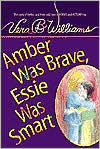
Amber Was Brave, Essie Was Smart: This is a story told in poems. I love the title poem for teaching character traits. Author Vera B. Williams tells us these traits right off the bat, and then supports them with specific details. Throughout the rest of the book, the story of the sisters and their situation unfolds. The copy that I picked up had a different cover, so I think there may still be older editions floating around that you can get for cheap!

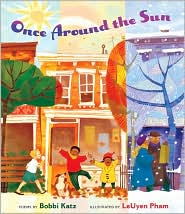
Once Around the Sun: This book goes through the year with a poem for every month. The poems are filled with personification, alliteration, and similes...but even better, the poems are about kid-friendly, concrete topics. The colors of the illustrations evoke the feelings of the seasons. The poems are wonderful for helping students to see how they can take a poem apart to find the different kinds of figurative language, but put it back together to look for a main idea. Definitely a must for your classroom library.

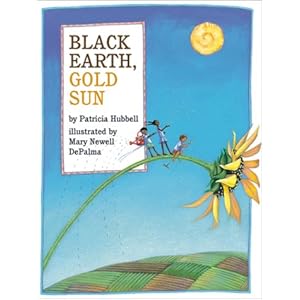
Black Earth, Gold Sun: I love gardening, and this book of gardening poetry is one of my favorites. I bought it as a discard from a library. Just today I read the first poem with a previewing group, looking at how the author uses a simile to compare the freshly dug earth to a chocolate cake. (What an image!) The poems have nice specific vocabulary words to stretch the students' understandings, with supportive pictures help them to put the pieces together.

Hey, You! Poems to Skyscrapers, Mosquitoes, and Other Fun Things: I bought several copies of this over the weekend, and then promptly turned them over to other teachers--so I haven't had much of a chance to explore it much. Hopefully I'll get my copies back.

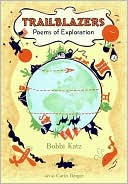
Trailblazers: Poems of Exploration: This book makes a wonderful history connection. Bobbi Katz writes poems from the points of view of various explorers. She chooses a diverse bunch, going beyond the obvious people. Definitely worth looking for, especially if you teach social studies.

Tuesday, October 26, 2010

Making inferences: KSRA

What a great session at KSRA! Thank you to everyone for your insight and participation. Here is a shortened version of the Powerpoint:

Making inferences
View more presentations from Emily Kissner.

Here are some links to other materials for making inferences. They are all on TeachersPayTeachers, and they are all free. (You will need to register.)

Character Traits and Emotions

The Magic School: A story to use to model making inferences

Visualizing Powerpoint

Visualizing story and lesson

If you like these activities, please rate them. Also, check out my books from Heinemann. Links are to the right.


Monday, October 25, 2010

Making inferences: Text-based and reader-based

On October 26, I'll be presenting at KSRA--"Making Inferences, Making Meaning." We'll look at lots of fun ways to help kids make inferences.

The easiest kind of inference is the text-based inference--an inference that depends on a reader's knowledge of text. Most readers make these kinds of inferences without even thinking about it. However, some kids have trouble with these inferences, which include resolving pronouns, figuring out who is speaking in dialogue, and recognizing characters called by multiple names. (More on these inferences can be found in The Forest and the Trees.)

Reader-based inferences, on the other hand, depend on a reader's world knowledge. These kinds of inferences are often more difficult for students. Sometimes, they fail to notice the subtle hints that authors leave. Helping students to understand that details are important can be a difficult task! Here are some activities that you can use to help students make inferences about characters:

http://www.teacherspayteachers.com/Product/Character-Traits-and-Emotions-Making-Inferences

 But the hardest part about helping kids to make inferences is getting them to animate the process. That is, you can have a reader who can find the text clues, and has the background knowledge, but doesn't make the inferences. I think that this is because inferences depend on a reader's curiosity. If a reader has no questions, or is not engaged with a text, then that reader will not have a reason to make inferences. So, if you have students who are not making inferences, a first step may be to work on questioning strategies that get them more involved in the text.