Saturday, April 11, 2015

Examining Character Motives

   Why do characters do what they do?
    This is a big question for intermediate readers. Sometimes, they don't even know the motives behind their own actions! (Dealing with an indoor recess squabble--"Why did you do that?" Student: "I don't know!) 
    Because our reading homework text this week focused on "Theseus and the Minotaur", I decided this was the perfect time to examine this question. After all, there are big questions of motive in "Theseus and the Minotaur"! 

Implied or Stated?

    A character's motive can be implied or stated--and it's important for readers to know the difference. I modeled reading to find the difference between implied motives and stated motives with our read-aloud, Fair Weather. I just love this book! It seems that no matter what I want to teach, I can find it in the books of Richard Peck.

This year I've been keeping a daily log of our reading with the Promethean board, which makes a handy flipchart and a great way for us to keep track of our thinking as we read. After we read the day's chapter, we talked about the actions of the characters. What were their motives--their reasons for doing what they did?

A quick chart showing action and motive can illustrate this. Intermediate readers sometimes try to write the same statement for both action and motive. This reveals a bit of where they are developmentally---they confuse action with reason behind the action. In the chart to the right, it took a bit of discussion before students stopped restating Granddad's action and started guessing at his motives.

We put question marks behind these motives to show that we were guessing at them. These motives are implied in the text, and as readers we had to make inferences to figure them out.  This contrasts with Mama's motives for sending Lottie and Rosie to Chicago--this motive is stated right there in the text, as she wants to "nip it in the bud" Lottie's romance with a neighboring farmhand.

In a novel, readers have to play a long inference game, and we might have to wait a few chapters before we see how our inferences pan out. That's why keeping track of our thinking all along is so important!

Independent Practice

Students then worked with the familiar story "Theseus and the Minotaur" to make some guesses about character motives. (The story and the page are available in February Reading Homework.) I like having a partially filled out chart to scaffold students for success. This activity led to rich discussions between partners. Why did Ariadne betray her father? Why did Theseus go to Athens as a volunteer? 

Most importantly, students had to go back to the text to find evidence to support their thinking about motives. A few groups had put their stories away and tried to complete the task without looking back to the text. I didn't intervene at first, hoping that they would get to a point at which they would realize independently that they had to use the text. Fortunately, they did! And it's so much better for students to come to this conclusion on their own than for it to just be something that I tell them.

I knew the lesson was successful when students started thinking beyond the text. "Why did King Minos build the labyrinth for the Minotaur, anyway?" one student asked. Their version of the myth did not go into detail about this. "And why did he leave Ariadne behind?" another asked. Hopefully once Percy Jackson's Greek Heroes comes out they will be able to find their own answers to these questions. 

The lesson had another layer of success--suddenly students wanted mythology books to read. Any lesson that leads to independent reading books flying off the shelves is brilliant in my book!

More on the reader-based inferences used to figure out character motives can be found in Chapter 6 of The Forest and the Trees.


Friday, April 3, 2015

Teaching Text-Dependent Analysis

    This year I've been putting lots of thought into the new text-dependent analysis tasks that students have to complete for our state tests. My fourth graders will have to write not one but two passage-based essays, in which they will be expected to write introductions and conclusions, weave quotes from the text into their essays, and use "sophisticated" transitions. It's an intimidating task!


Avoiding shortcuts

    I've been thinking carefully about the task because I don't want to use unproductive shortcuts. Too often, hard tasks get reduced to instructional shortcuts. Teachers are worried that a process is too hard for students, break it down into chunks that are as easy as possible, and turn a difficult cognitive process into a formulaic writing response. (Anyone familiar with Four-Square Writing knows what this looks like!) This recipe-making begins with the best of intentions--to make a hard task manageable--but ends with students learning a dead-end "formula" that will not transfer well to new situations.

Meaningful lesson parts

     So then I had to think--what are the most meaningful parts of this experience? Creating a passage-based essay has its own rewards. I also need to think about how some students will not achieve full proficiency with the passage-based essay this year. But it's important to me that each step along the way, everything that I teach, has its own meaning and importance.

1. Low-risk, easy experiences in quoting text details.
Students found sentences with setting details and practiced
writing the quotations correctly.

     I decided that the first thing students would need to be able to do is quote text. If you teach older students, quoting from a text may sound like a simple routine. But it's not! Young readers have to figure out which passages support what they are trying to prove and then copy it correctly. On top of that, they have to put quotation marks around it all!
    Trying to teach this WHILE making a graphic organizer and writing an essay is just too much. Get kids comfortable with writing quotations, and do it often. And if this is as far as a kid gets, it is still a meaning-making endeavor.

2. Creating a thesis statement.
     That's right. A thesis statement.
     Fourth graders can learn what this means, and they can learn how to write this. In fact, lots of great nonfiction picture books have beautifully written thesis statements! (I'm deep into the books of Nicola Davies right now, and her picture books have beautifully written thesis statements.) A thesis statement is just a sentence that explains what the essay will uncover. Sometimes a thesis statement is like an answer to a question in the prompt, but this varies depending on the prompt. 
    Teaching fourth graders to write a thesis statement is challenging, which is why I'm glad that we haven't been working on passage-based essays as our only forms of writing. We just finished our Design-A-Land essays, which include a thesis statement frame. This experience has helped students to transfer their learning about the thesis statement over to passage-based essays.
     I have argued with other fourth grade teachers on this issue. Some think that it's not developmentally appropriate for fourth graders to do this; others think that there is no need to learn the terminology. But I think that writing a thesis statement is the heart of all essay writing. If you are going to skip the thesis, what's the point? 

3. Identifying the areas of analysis.
    This step and creating a thesis statement really overlap. The areas of analysis become the body paragraphs--what students will write about and develop in the essay. How many areas of analysis are there? It depends on the prompt. This flexible thinking is hugely important and essential to the task...and it is what most of the shortcuts and cute acronyms overlook. 
    In the two prompts that we used this week, Prompt 1 lends itself to two areas of analysis--the author's use of headings and chronological order to organize the piece. Prompt 3, on the other hand, only speaks to one area of analysis. Thinking through these areas of analysis help students to consider how many paragraphs they want to use and what text quotes they want to find.

4. Supporting the writing of introductions and conclusions.
     Introductions and conclusions are so hard! I love to use nonfiction picture books as mentor texts for this. This works especially well when students are writing a content-based response, as in Prompt 3 above. When students are writing a structure-based essay, as in Prompt 1, I have choice-based minilessons while students are writing. "Anyone who wants help with a conclusion, please meet me on the carpet," I'll say, and then students come forward and we talk about their issues with conclusions. Sometimes I'll even write up a frame based on our discussion and display it on the Promethean board for the rest of the class. Students like to navigate independently through the flipchart, finding the frames that we've made together and referring back to them.
    Students also like to have access to all of the passage-based essays that they've written before. (It's not that many--we're on our third.) I see them folding back the pages, thoughtfully looking at their previous introductions and conclusions. They certainly can't just copy them--the prompts are completely different--but I like to see how students look back to what they did before. 
    We've had lots of discussions about these paragraphs. "Can an introduction be three sentences?" a student asked.
    "What is the job of an introduction?" I replied. Then we talked together about what an introduction does and how much "space" it should take up. Could it be only one sentence? Two? Or three? Of course it depends! Thinking through this question, and trying to judge the purposes of a writing component, is so much more valuable than just providing a formula.
    Again, other forms of writing have been useful for us. Introductions and conclusions are always necessary, but how do they look different across different kinds of writing?

     We are still on the road to passage-based essays, but students have grown in their use of text quotes and essay components. Fourth graders have an exceptionally hard time of separating content from structure--in fact, I'm beginning to realize that this concept is at the heart of reading instruction for students of this age.
Yes, we are making the classroom look like a cave.
Don't you love this bear that a student made?

    I'm happy, though, because the topics that I have taught are all growing topics--concepts that are important to writing in general, not just writing for this specific task. In fifth grade and beyond students will have to quote text, create areas of analysis, and write introductions and conclusions. We are on our way! 
     And I love fourth grade because we can move between talking about thesis statements and introductions and playing with pond water and decorating our classroom like a cave. Rigorous thinking and playful experiences within five minutes of each other...just the way I like it. 

2016 Update: The wood frog text and prompts, with scaffolded graphic organizers, are included in Close Reading with Chronological Order Texts over at TeachersPayTeachers.

Sunday, March 29, 2015

Teaching Students How to Write Conclusions

    Writing conclusions is tough for young writers. Actually--who am I kidding? I don't think anyone likes to write conclusions. This makes teaching conclusion-writing intimidating for many teachers. "I know they shouldn't just recopy their introduction, but what else can I tell them to do?" one teacher said to me.

   There are lots of ways to teach conclusion-writing! In fact, my favorite way is to invite Nicola Davies to do it for me.

   Well, of course I can't actually invite her. (Wouldn't that be amazing?) But having a huge collection of her books is the next-best thing. Davies has a gift for conclusion writing. Not only are her conclusions musical and just beautiful to read aloud, but they are simple enough to help young writers think, "I can do this!" 

Revisit Main Points

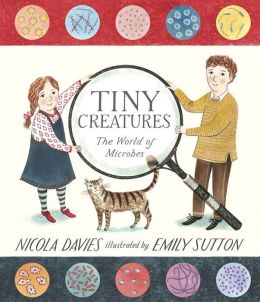
Over the winter I bought Tiny Creatures: The World of Microbes for science class. It is a beautiful read-aloud for teaching about microbes and their role in decomposition. However, I found double purpose for it by using the conclusion as an example of writing a conclusion by revisiting main points. 

The conclusion also engages the reader in thinking about what microbes are doing "right now"...which works well as a model for young writers.  The entire book is a quick read-aloud, perfect for a 15-minute conclusion mini-lesson.

End with the Title

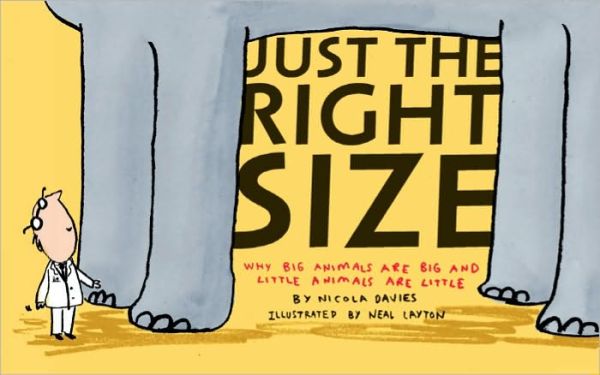
I love Just the Right Size. While I have successfully learned how to like spiders, the idea of giant spiders still makes me shudder. Thankfully, Just the Right Size explains why giant spiders can't exist. Whew! 

This book is a little more complex than Tiny Creatures, and is a longer read aloud. I used it with a fluency group before we read a series of math texts. We were talking about how authors signal big math concepts in math texts, and this book is a great example.

In this book, the conclusion also revisits main points from the text, but Davies structures it so that the conclusion ends with the title of the book. Young writers love this strategy. In the passage-based essays that students wrote this week, students had to explain how the text supported that wood frogs are "tiny forest survivors". Ending the essay with this same phrase was a natural kind of conclusion, and Just the Right Size models how this can be done.

Connect the Introduction to the Conclusion

I have to admit that this is my favorite technique for introductions and conclusions. When authors use this technique well, the entire piece of writing is neatly tied up and the conclusion feels wonderfully satisfying.

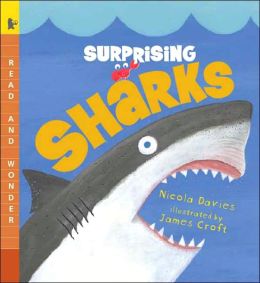
My guess is that Davies likes this technique, too! My two favorite examples of hers are Surprising Sharks and Big Blue Whale. 

In Surprising Sharks, Davies starts out by imagining a reader swimming in the deep blue sea, only to be frightened by hearing the word "Shark!" By the end, after explaining the amazing adaptations of sharks, their behavior, and the dangers they face due to humans, she turns this introduction completely around. It's clever, it's fun, and it totally supports her thesis...all things that we want to teach students how to do!

In conclusion...

Writing conclusions is tough for everyone. Giving young writers a formula keeps them from engaging with the challenge of writing conclusions. Instead, showing them how an author confronts the challenge, again and again, across different topics, can help them see a pathway toward writing a powerful conclusion. And it just might help the process of teaching conclusion-writing to be less intimidating for teachers.

Saturday, March 28, 2015

Becoming a Rain Garden

    Sometimes it feels as if there is negativity coming from all directions. High stakes testing, budget cuts, big classes, uncertainty about next year...even stress from knowing what I have to cover during our state tests! (Yes, I must even cover the clock and the book shelves.)

    All year, I have tried to absorb everything that comes my way and shield students from negativity. But there is a danger to this, as I see the path to burnout and bitterness winding off to one side. If I am just absorbing everything, what is happening to it? Will I become filled with a toxic sludge of worry, self-doubt, and negativity? Is this how teachers who are filled with passion turn into the people that you don't want to sit with in the faculty room?

   I decided that I will become a rain garden.

   Rain gardens are special gardens, planted under downspouts or in other areas with lots of storm water. Rain gardens help to reduce pollution, because they absorb water and keep it from running off into streams. Rain gardens are even home to bacteria that break down pollutants. (See this article for more) 

   Plus they do it all with flowers. In so doing, rain gardens become habitats for many different kinds of animals. 

    It's easy to see the parallels. Rain gardens absorb storm water and pollutants, but are not themselves corrupted by these things--instead, they turn these negatives into something good. And that is my goal--to always turn the negative thinking and the myriad little problems that come my way into something good and meaningful. And I want to create a classroom habitat for my students that fits who they are.

   If you are feeling overwhelmed at this time of year, maybe you, too, will find it comforting to imagine yourself as a rain garden. The frustrations and the worries will still be there, but you will find a way to turn them into a habitat for learning. 


Wednesday, March 18, 2015

Scaffolding Independent Research

This year, I've been working with providing more time for independent research. This research has grown from the center explorations of early in the year, and then expanded into contracts and experiments.

I really love it. There are no grades for these explorations; students are doing them because they really like learning. Seeing what students create and listening to their conversations is a daily affirmation, a reminder to me to stay the course in the face of standardized testing.

Timing
I start each reading class with 15-20 minutes of independent reading time. On several days out of the cycle (mostly based on when I can get the mobile computer lab), this time can also be used for independent research. 

This has worked out fairly well. At first, about half of the students chose not to do any independent research, and used the time for reading. Excellent! As they have seen their classmates' presentations, many students have chosen to move into their own projects. Students who work quickly have gone through two, three, and even four contracts, sometimes taking a break for additional reading time in between projects.

Start with research notebooks

These are very simple--just large pieces of construction paper folded over about 5 sheets of notebook paper. Each page is a sub-topic within the student's research. It takes about 5 minutes to talk to students about how to set this up.

And here is the beautiful part...the students then teach each other. A student who researched golden-bellied mangabeys taught a student researching narwhals about what topics to use: "Well, you can think about where they live, and what they eat, and how they raise their young."

Technology lessons
As with the research notebooks, I don't teach each student individually! This is why it works out so wonderfully to have staggered entry into independent research. I taught the students in the first groups, and then they took on the role of teaching each other. Sometimes there is some good-natured squabbling: "You want me to show you how to get pictures again? I just showed you yesterday!" Even better, students learn multiple ways of doing the same thing, from keyboard shortcuts to using Finder.

Presentation forms
Lots of different kinds of presentations have been going on, from posters to Keynote presentations to plays. (Fourth graders love making Keynote presentations!) Some students have written out essays by hands, imitating the formal style that we are learning in writing class. Words like introduction and conclusion are finding their way into their everyday conversations.

Feedback
I use Learning Notes to provide feedback for students. Each day between 1-3 students present.
During their presentations, I write a narrative to explain what the student accomplished, interpret their accomplishments, and suggest next steps. 

"Next I'm going to..."
Kids are already planning out their ideas for their next contract, and the next. Some students are collaborating together, which is wonderful to watch. The biggest problem is that they do grumble a bit when independent work time is over and the lesson for the day begins...

...which is a pretty positive outcome.

You must have a really small class
Not at all! I have 30 students in my first class. In my second reading class, which I co-teach with the ESL teacher, I have 27. In fact, I find independent research easier to manage and use for targeting individual skills than guided reading. (But that's a post for a different day.)

Friday, March 13, 2015

Teaching Compare and Contrast Text

This week I decided to turn text structure on its head and and start with compare and contrast! I made this decision to provide some additional continuity with our texts, and compare and contrast was the perfect bridge between our Antarctica theme set and text structure.


In the past, I've always started text structure with chronological order. This is the easiest text structure for many students to understand, as it is the structure of narratives and everyday living. But of course there is no rule for where to start, and I have to admit that I thought it would be fun to try things differently.

The teaching is much different, too, when compare and contrast is the first structure for careful examination. Here are some things that I've (re)discovered this week.

1. Not all transition words show similarities and differences.
Compare and contrast text is the perfect place to explore this! Teaching guides for text structure include lists of transition words...but these words often serve multiple purposes. Is the word while showing a similarity or a difference? Or is the author using it to connect two ideas? What about the word like? Even struggling readers can find looking for clue words and analyzing their use to be very meaningful and engaging.

2. Move to student-made charts as quickly as possible.

Beautiful graphic organizers just look so nice, don't they? But I've learned to get kids into making their own charts as quickly as possible. For looking at compare and contrast text, I prefer charts to Venn diagrams. This helps students to think more carefully about how information is organized in the text. Generating criteria for comparison gets readers looking more deeply at what aspects of the topics are being compared.

Student-made charts are gloriously messy. Kids think and rethink and change their columns. And that is all part of the process. When students decide, "I don't like the way I represented these ideas--I'm going to change it," major thinking has occurred! 

3. Connect, connect, connect!
Complex texts reflect complex thinking. Showing connections to the wider world helps students to see how ideas are reflected in the text.

After we read "Peregrine Falcons and Red-Tailed Hawks", we watched the peregrine falcon cam live from Harrisburg. This is always a student favorite. (I love it too!) Then we looked for sentences in the text to support what we were seeing. This got students diving once more back into the text, looking for connections between the live video view and the words on the page.

Our next text, "Vernal Pool or Puddle?", is the foundation text for a short text set about vernal pools. Students will read about vernal pools across several different text structures, hopefully helping them to see how content and organization connect.

Looking back
Teaching the text structure of compare and contrast turned out to be a great introduction to text structure. 

Have you tried changing up the order of any topics in your classroom? What have you noticed?

Texts mentioned
"Peregrine Falcons and Red-Tailed Hawks" is included in Introduction to Text Structure
"Vernal Pool or Puddle?" is included in Compare and Contrast Texts for Teaching Text Structure

Tuesday, March 10, 2015

Where Science and Play Meet

    This year, as I've experimented with contracts, centers, and self-directed research, I've worked to find a balance between "covering" curriculum and exploratory learning. I don't think that these two approaches are mutually exclusive--in fact, I think that they can complement each other. Consider the story I've watched unfold.

Water Bead Crystals
    We experimented with water beads in the classroom a few months ago. Like many new items, they were popular for a time and then slowly faded away. I started drying them out and putting them away, until only one bead in a plastic cup was left.
     I thought that was the end of the water beads, and I've been trying to introduce other interesting items for experimentation and observation, like mealworms.

    But the story wasn't done. The bead in the plastic cup, sitting on the windowsill, was observed by two students who were trying to purify salt water. They started to wonder--could they make a climate for a water bead?
    Over the course of their experimentation, the bead changed. It became a crystal, but didn't shrink in size as the water beads usually do. For some reason, this got some kids very excited.

Crystal Research
    The students requested to have more water beads. One student even brought in some from home. Working together at recess, a new group of students emerged--students who hadn't worked together much before, but were interested in the crystal.
    They pulled together lots of resources from the room, using a box from the "Cool Cardboard Pieces" area, various recycled plastic containers, and other science items. We already had the microscopes out for mealworm observations, so students started looking at the water beads with the microscopes. They created multiple experiments in different places in the room. To the outside observer, their work would have looked a lot like play. They were completely committed to their work. I was listening in but not interacting except to get requested materials (or look in the microscope when they wanted to show me things).
    The teacher-ly part of me was wondering--what science lessons could be learned from the water bead? Were they looking for meaning in a place where they would not find it?

Moving to a Curricular Lesson
    During arrival time, students continued with their work until it was time for our regular science class. I was teaching one of my favorite lessons (decomposers! Awesome!) in which we set up a mold experiment. This is an experiment that we do as a whole class, and I have scaffolded it so that students have to fill in the names of the experiment parts (testable question, hypothesis, procedures). We set up our mold experiment and talked about what we thought would happen.

Regular Curriculum Impacting the Experimentation
    Without any prompting from me, the science lesson changed the water bead play. In the next work session (students from two different classes, choosing to stay in at recess), suddenly words like "hypothesis" were floating around. "We didn't make a testable question!" one student said, and the talk turned to what their testable question was. At library class, several students checked out books about crystals.
    Now there are several containers of water beads in different locations, with students sharing their hypotheses and testable questions. The core group of students doing the investigations have talked with others about their work during transition times and dismissal.

Play, Science, and the Regular Curriculum
    I was so interested to see the words from the science lesson move into the water bead play. It clearly showed how standard lessons can enrich student-led experimentation. In this case, students had a rich context that worked perfectly with the words from the lesson.
    At first I thought it was lucky that this happened at the right time. But luck has nothing to do with it! Building a classroom culture of collaboration and experimentation will lead to these moments.

So the questions that I am thinking about:
-How does play impact science learning for older elementary students?
-How can I strengthen ties between play/experimentation and the regular curriculum?